|
|
|
|
Classic Bikes
Custom Bikes
Individual
Racing Bikes AJP
AJS
Aprilia
Ariel
Avinton / Wakan
Bajaj
Benelli
Beta
Bimota
BMW
Brough Superior
BRP Cam-Am
BSA
Buell / EBR
Bullit
Bultaco
Cagiva
Campagna
CCM
CF Moto
Combat Motors
Derbi
Deus
Ducati
Excelsior
Fantic
GASGAS
Ghezzi Brian
Gilera
GIMA
Harley Davidson
Hero
Highland
Honda
Horex
Husaberg
Husqvarna
Hyosung
Indian
Jawa
Kawasaki
KTM
KYMCO
Laverda
Lazareth
Magni
Maico
Mash
Matchless
Mondial
Moto Guzzi
Moto Morini
MV Agusta
MZ / MuZ
NCR
Norton
NSU
Paton
Peugeot
Piaggio
Revival Cycles
Roland Sands
Royal Enfield
Sachs
Sherco
Sunbeam
Suzuki
SWM
SYM
Triumph
TVS
Ural
Velocette
Vespa
Victory
Vincent
VOR
Voxan
Vyrus
Walt Siegl
Walz
Wrenchmonkees
Wunderlich
XTR / Radical
Yamaha
Zero
Video
Technical
Manufacturer List Contact
|
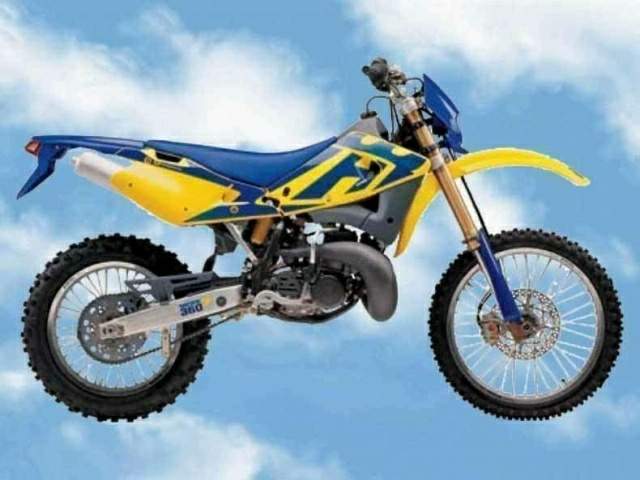
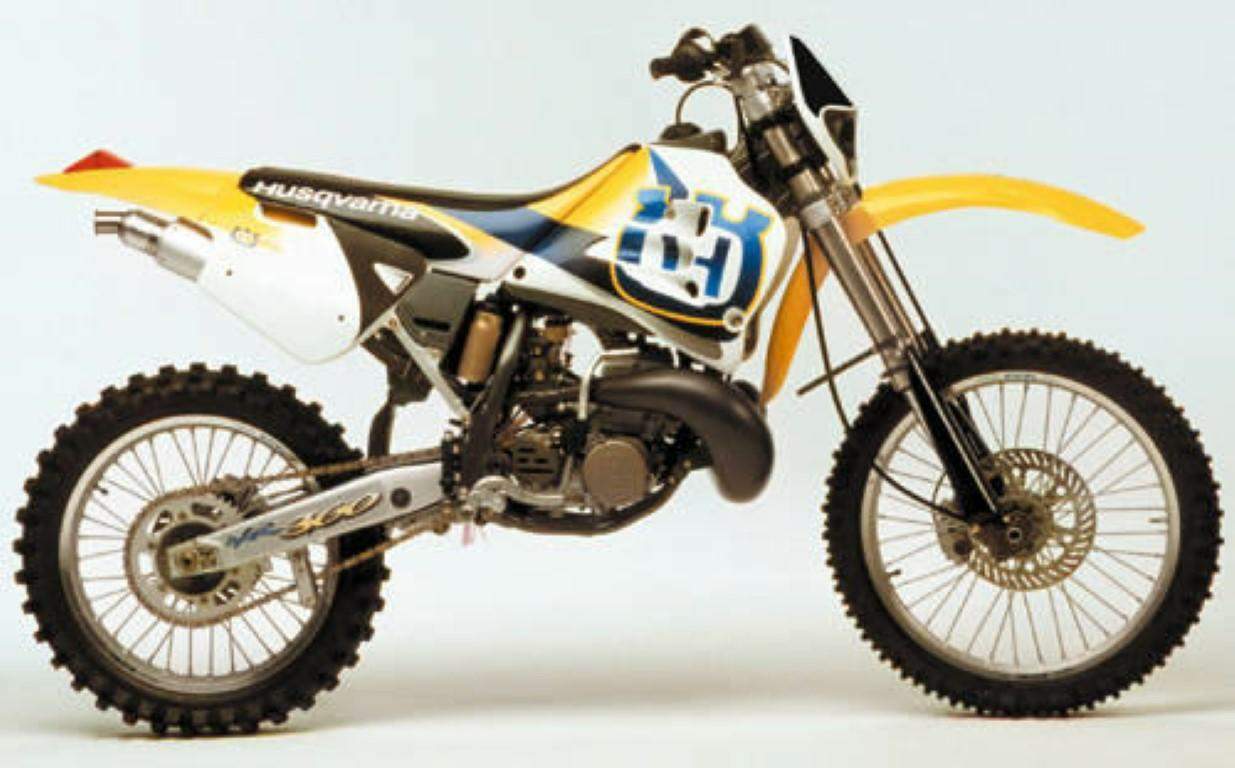
Husqvarna WR 360
Story: Sam
MacLachlan While four-stroke dirtbikes are certainly the flavour of the month, Husqvarna's WR360 two-stroker is far from dead and buried - and that's a good thing! The big bore two-stroke looks to be a dying breed. With mid and large capacity four-strokes such as the Yamaha WR426, KTM 520EXC and even Husky's soon-to-be-released 450TE now just as light, powerful and wieldy as only the two-bangers were in the past, the market is turning its back on the oil-burners. Emission controls are also taking their toll (the whole oil-burning thing), and big two-strokes are dropping from the market place. KTM's 380EXC, for example, is disappearing from the company's price list this coming year. So where does all this leave riders, such as myself, who love two strokes in the bush? The snappy power delivery, the 'on the pipe' scream, the smell... what to do? Well Husqvarna's WR360 is still going strong, and is such a complete motorcycle, so easy to ride, that it makes you wonder why anybody would go to a four-stroke. I know I won't be... THE
BEE'S KNEES It soon becomes apparent the Husqvarna, in stock form, is ready to ride in anger, as most of the tackle a trail-rider/racer needs already adorns the bike - only really fussy riders would need add much more than a few items. The 'standard' rims, for instance are from the Excel stable, and are laced to an enormous set of hubs front and rear - there must be an industrial-sized set of wheel bearings residing in there! Also standard was the pair of puncture-resistant Michelin heavy-duty tubes residing in the aggressive-looking Trelleborg knobbies, in place of the OEM Michelin road-legal treads. The 'speedo' is a trick seven-function digital travel computer, pretty handy deep in the bush, and excellent for keeping an eye on fuel consumption rates and the like. The trip computer is nestled neatly aside the Tommaselli 'bars (which are just the right bend and width for me) meaning it is safe from even the most violent get-offs - you'd have to try pretty hard to damage it. The Acerbis hand guards were fitted by First Class Motorcycles in Lilydale (Vic), and would be probably be one of the few things a new bike owner need bolt on, along with more aggressive knobbies, and maybe a bash plate to protect the engine and pipe. COMPRESSION
DUTIES The standard WR360's compression can be a lot to overcome when it's time to kickstart the beast - in fact the short-ish kick starter can support the weight of a fully grown man without budging! To negate this, the $480 (fitted) head all but removes the cylinder's compression with the bike not running, allowing easy kick starting, not to mention making bump-starting a simple procedure. The head doesn't affect power in any way, and it is possible to buy the kit (some of which Steve has sold overseas) and fit it yourself if you're on a budget. Contact First Class for more information, tel (03) 9739 7277. BIG BORE
GRUNT The 348cc, liquid-cooled single certainly sounded menacing enough at idle, and while Husqvarna doesn't mention any power outputs, I guesstimate it to be in the region of 50-55ps at the crank, with equivalent torque to burn. Steve was at pains to explain that the 360 works best if you just lope along, as opposed to wringing its neck, and let the engine do its torque thing. Once I started riding it, I understood what he meant. The day I had chosen to spend in the bush dawned wet and cold, and the single-track trails of the riding area were a muddy cocktail of puddles, slime and slippery logs. And there was me on a WR360. With tyre pressures reduced, I headed out into the murky bush, quite unsure what to expect from the Husky. It immediately felt spot-on in the ergonomics department, both standing and sitting. The wide footpegs offered plenty of grip for my mud-soaked Alpinestars, and gripping the bike with the knees while standing was easy enough. On Steve's advice, I punted around a gear higher than I could have, and revelled in the traction and drive from the rear Trelleborg. There was still enough grunt to loft the front wheel under power on command, but I still felt in control - it wasn't the scary experience a two-stroke of yesteryear would have provided me.
SIX-STROKE? Hill climbing in particular was a joy, the engine just tractored the Husky up the greasy slopes, and flattered my hill-climbing abilities - I could make mistakes, and get away with it. Brilliant. This point was rammed home when a large hill presented itself, complete with a slick clay coating, ruts and tree roots. Gnarly! While other bikes along for the ride struggled, the 360 bounded up and over with surprising ease, completely unfazed. In contrast to the mellow, torquey method of forward progress, I also tried revving the crap out of the thing, all in the name of bike testing naturally. Aside from sounding absolutely fantastic in my opinion, the progress was no more rapid, and I soon reverted to the recommended method - a much more economical modus operandi for a day in the bush at any rate. LOVELY
LEGS While the damping and spring rates definitely lean towards the competition end of the spectrum, a trail rider won't need to rush off to a suspension technician, unless they are either very heavy or very light. The beefy 45mm Marzocchi USD forks offer a large range of adjustment, effective for fine-tuning the forks to an individual's liking via the rebound and compression adjusters. The progressive action Sachs Borg rear shock, too, is a beauty, and just a click or two was all it took to make a noticeable difference to the action. The suspension is of the sort that can get a rider out of trouble as quickly as they get themselves into it, a feature I put to good use early in the day. A dark, sneaky log jutted halfway onto the trail mid-corner, and I had hit it before I had seen it. The 360 bucked, then continued on, with yours truly laughing hysterically at how easily I had escaped a potentially big one, while compatriot Mav, on a lesser suspended bike, went arse up behind me. CONSPIRACY THEORIES The front Trelleborg had lost its 'sharpness' after 400km of use, and the sheer power of the front 260mm disc brake set up easily overpowered the tyre's grip if used too enthusiastically. After a couple of 'warnings' early on, I became used to the front brake's action, and could use it to good effect. The rear brake was also on the money, powerful without being overly sensitive. The low 104.5kg claimed dry weight is another factor in the brake's performance, and the weight manifested itself in the speed in which the bike responded on the trail - instantly! BIT 'N'
PIECES The engine does have seemingly endless amounts of grunt but, thanks to the joys of powervalve technology, is delivered in such a way that even mildly experienced dirt riders can cope with the power. That's not to say that faster riders won't be happy, light the wick on a 360 and you know all about it! The suspension and brake package is just the icing on the cake. The Husky's only competition circa 2002 lies in Honda's $11,590 CR500E, which it is safe to say is a few levels behind in development and equipment. The Husky abounds with innovative features, and pride of ownership will rate highly on the scale. In my opinion, the WR360 is just one very good reason why two-strokes aren't done yet, especially at that price - it's a bargain. I'm now an even more confirmed oil-burner than before. My apologies to all the hippies out there. Not. Source Bikepoint
|
|
|
Any corrections or more information on these motorcycles will be kindly appreciated. |