|
|
|
|
Classic Bikes
Custom Bikes
Individual
Racing Bikes AJP
AJS
Aprilia
Ariel
Avinton / Wakan
Bajaj
Benelli
Beta
Bimota
BMW
Brough Superior
BRP Cam-Am
BSA
Buell / EBR
Bultaco
Cagiva
Campagna
CCM
CF Moto
Combat Motors
Derbi
Deus
Ducati
Excelsior
GASGAS
Ghezzi Brian
Gilera
GIMA
Harley Davidson
Hero
Highland
Honda
Horex
Husaberg
Husqvarna
Hyosung
Indian
Jawa
Kawasaki
KTM
KYMCO
Laverda
Lazareth
Magni
Maico
Mash
Matchless
Mondial
Moto Guzzi
Moto Morini
MV Agusta
MZ / MuZ
NCR
Norton
NSU
Paton
Peugeot
Piaggio
Revival Cycles
Roland Sands
Royal Enfield
Sachs
Sherco
Sunbeam
Suzuki
SWM
SYM
Triumph
TVS
Ural
Velocette
Vespa
Victory
Vincent
VOR
Voxan
Vyrus
Walt Siegl
Walz
Wrenchmonkees
Wunderlich
XTR / Radical
Yamaha
Zero
Video
Technical
Complete Manufacturer List
|
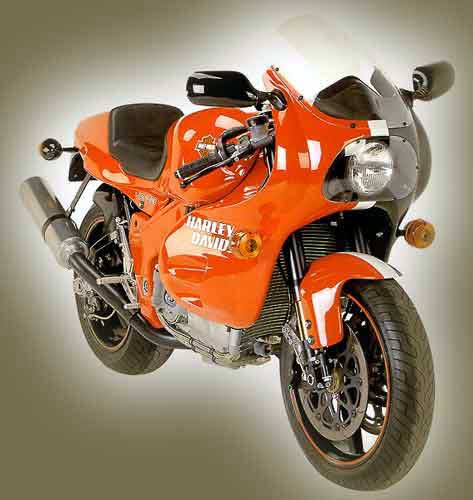
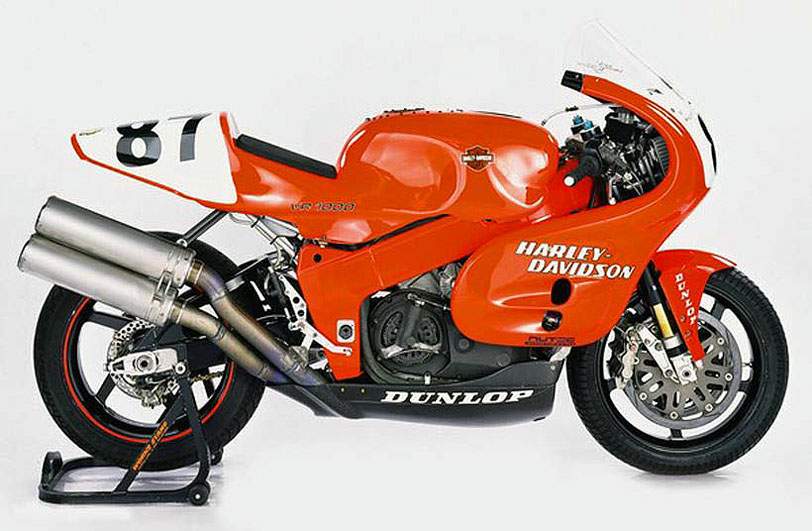
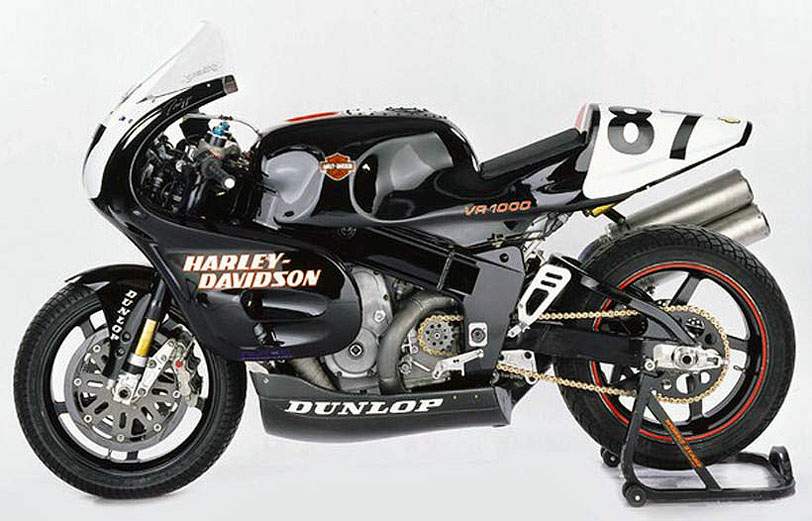
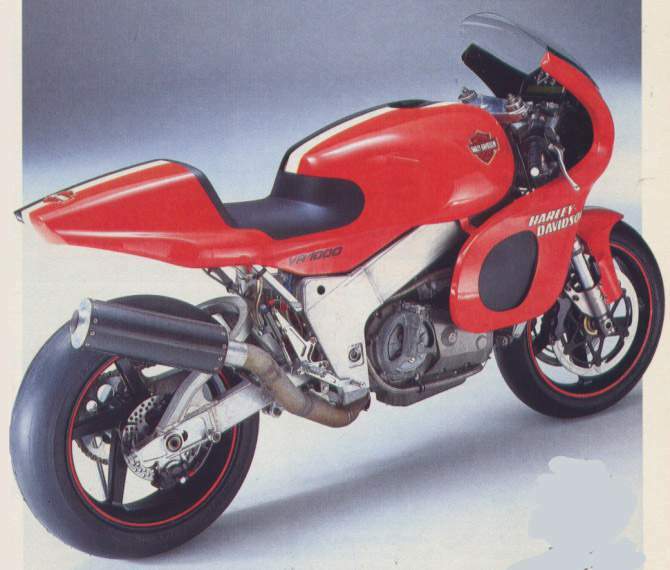
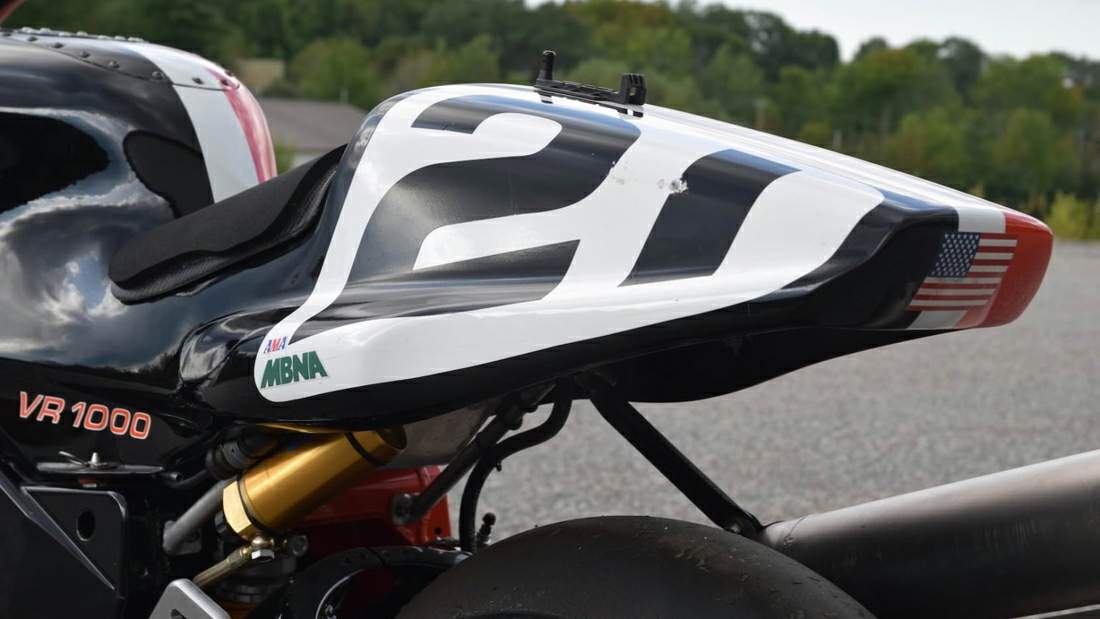
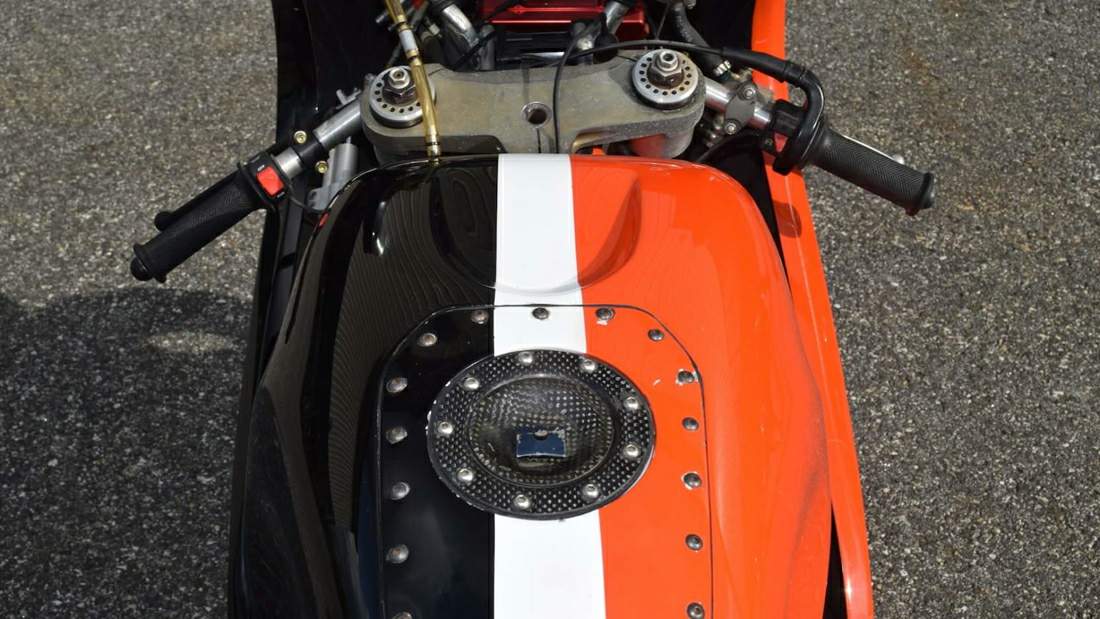
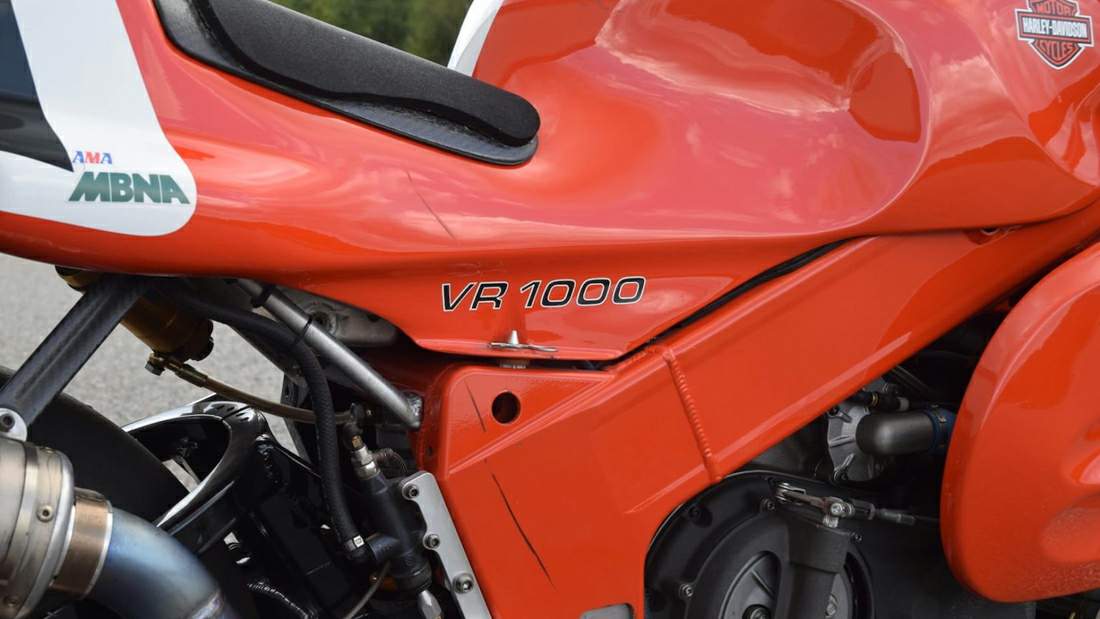
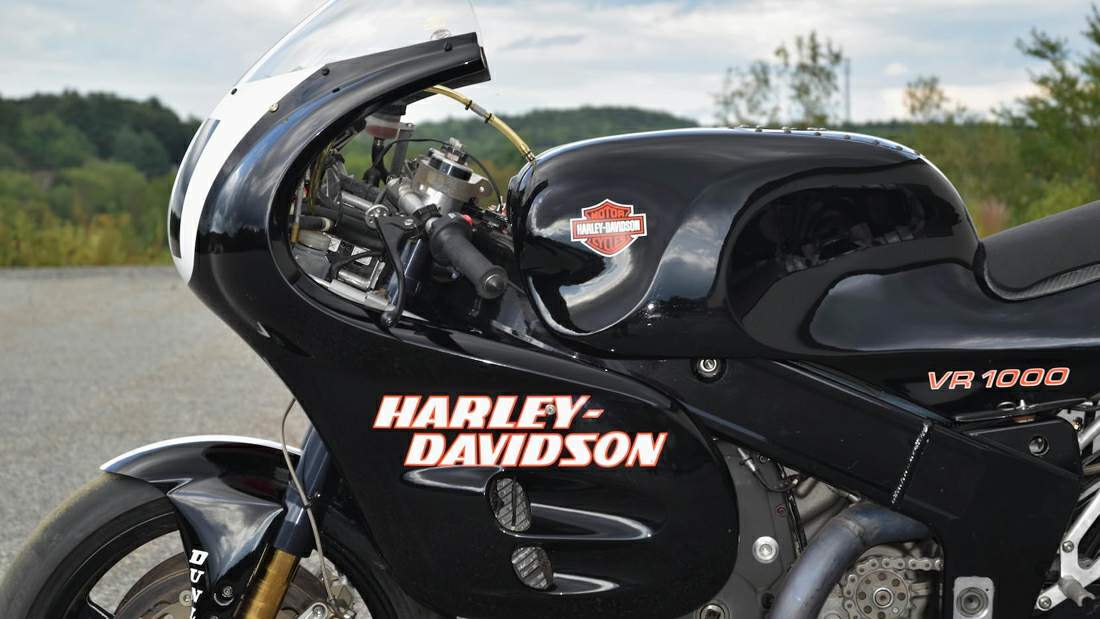
Harley Davidson VR 1000
The 1994 VR 1000 was the first pure racing motorcycle Harley-Davidson ever built. Every other Harley racer, from 1915 through 1993, had been a modified production machine. The VR was purpose-built from the ground up. Milwaukee has never been comfortable with the concept of purebred competition machines. Eighty years earlier the founders had 'been dragged mumbling into the racing game, convinced of its necessity only after Indian had captivated the sporting enthusiasts of the 1910s and 1920s.
But once installed in the Milwaukee hierarchy, the racing department proved itself a continuing resource of team spirit and public good will. People rode their motorcycles to the races, and supported their favorite riders and manufacturers. Harley-Davidson had maintained its support of dirt tack, the traditional American fairgrounds racing, and built a few XR 1000 production-based roadracers. But nothing on Milwaukee's menu suited the demands of Superbike racing in the 1990s. At the upper outposts of "street bike" competition, the track-wise roadsters weigh 375 pounds (170kg) and produce 150 horsepower. Handling and braking factors are tuned to millisecond response margins. All of which is enormously expensive to achieve. With some money in the bank, Harley decided to build its second eight-valve racer, with an American engine, chassis and brakes. Engineer Steve Scheibe headed the team, and called in experienced help from NASCAR and Indy Car racing. The project took five years and produced a double-overhead-cam, 60-degree V-twin, with 4-valve heads, Weber-USA electronic fuel injection and liquid cooling. Power went by gear to a multi-disc dry clutch and through a 5-speed transmission.
The first bikes used a Penske inverted fork and Wilwood six-piston brake calipers. The road model carries an Öhlins fork with titanium-coated stanchions. The body work is constructed of carbon fiber, and the factory listed the dry weight at 390lb (176.9kg). The production schedule was set for 50 copies of the VR 1000, the price of each listed at $49,490. The VR first appeared on the racetrack for the Daytona Superbike race in 1994.
There were few illusions about the early chances, and teething problems were anticipated, but the motorcycle handled remarkably well. Top speed was not at the level of frontrunners, though rider Miguel Duhamel turned in good results on some of the tighter circuits. Results for the 1995 season were disappointing, and rider Doug Chandler had difficulty coming to terms with the machine. National dirt track champion Chris Carr was also on the team and showed a quick learning curve.
Rumors circulated during the offseason that management disputes in Milwaukee cast doubts on the future of the VR 1000. The factions split as they had a half-century before; the economic rationale perceives big-league factory racing as large expense versus small return. The sporting enthusiast segment says racing pays huge dividends in public relations, and puts the company logo on television. And wins hearts and minds.
Review
Thoughts of Harley Davidson motorcycles will invoke images of large, proud, chrome-laden, antiquated cruisers with thumping great paintshaker motors. As for racing and sports bikes, Harley is hardly the marque that conjures up images of on-track glory. Or even any pretences of speed. If you have a good memory you might recall their brief marriage with Aermacchi and a string of two-stroke sporting bikes. More recently, you may have pointed to the (now defunct) Buell lineup of Sportster-powered sportsters. Generally you won’t think Harley when you think of expensive, bleeding edge superbikes built to dominate on a road course.
The VR1000 was to replace the XR platform as a more modern, liquid-cooled, fuel-injected, overhead-cam 8-valve design that was aimed squarely at unseating Ducati’s Desmoquattro on the track in AMA Superbike. Here 750 fours were pitted against 1000cc twins, and Ducati was enjoying remarkable success with its new 851 Superbike. The previous XR designs had been highly tuned versions of the venerable pushrod OHV, iron barrelled, air-cooled motors of yore. The XR had been around since the 60s and managed to stay remarkably competitive into the 80s with constant fettling and a displacement bump from 749 up to 998cc – this despite being considered antiquated and obsolete by the 1970s! But the writing was on the wall, and a new design was needed to remain competitive. Ducati had shown the way forward by coming from near-death and beating the pants off everyone else. The VR shared nothing in common with previous designs, and famously did not share a single part with an existing Harley. To develop the cutting edge machine, H-D had to enlist the aid of outside firms to develop and product components – or poach clever engineers from those firms to do the work in-house. The engine was developed by Roush, the suspenion by Penske, the brakes by Wilwood – the machine was to be an all-American star-spangled superbike.
It was released in 1993.
Source Odd Bikes
|
|
|
Any corrections or more information on these motorcycles will be kindly appreciated. |