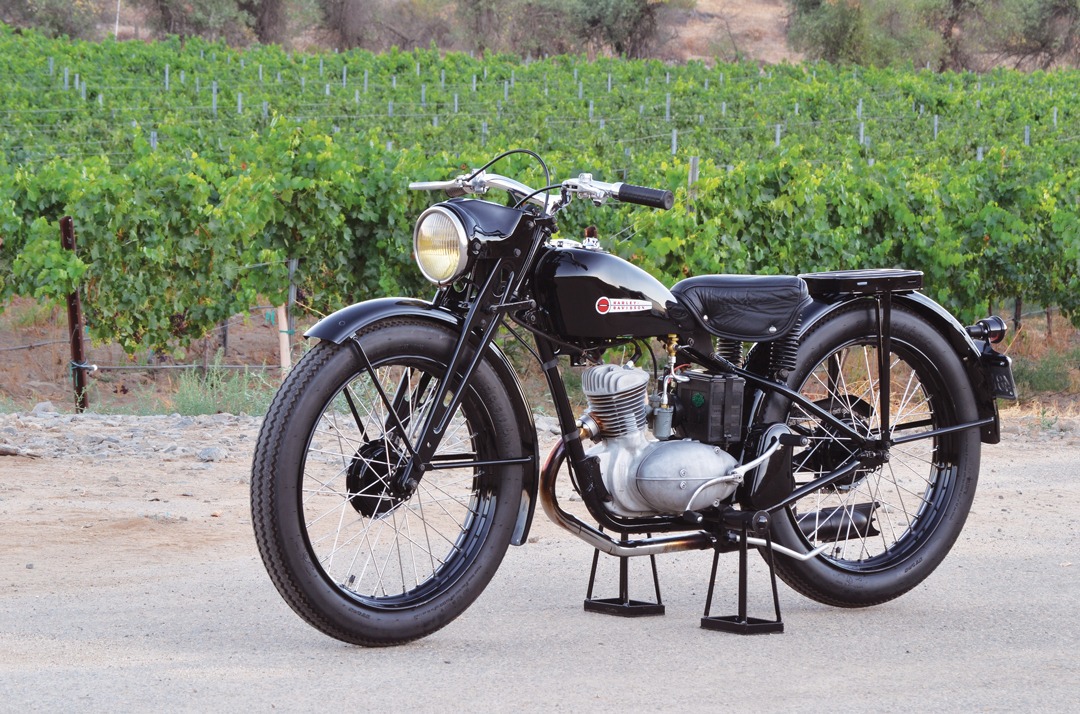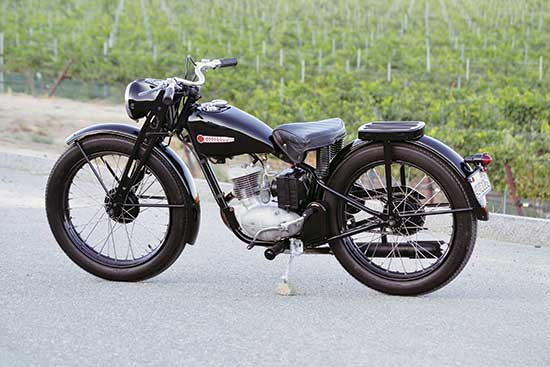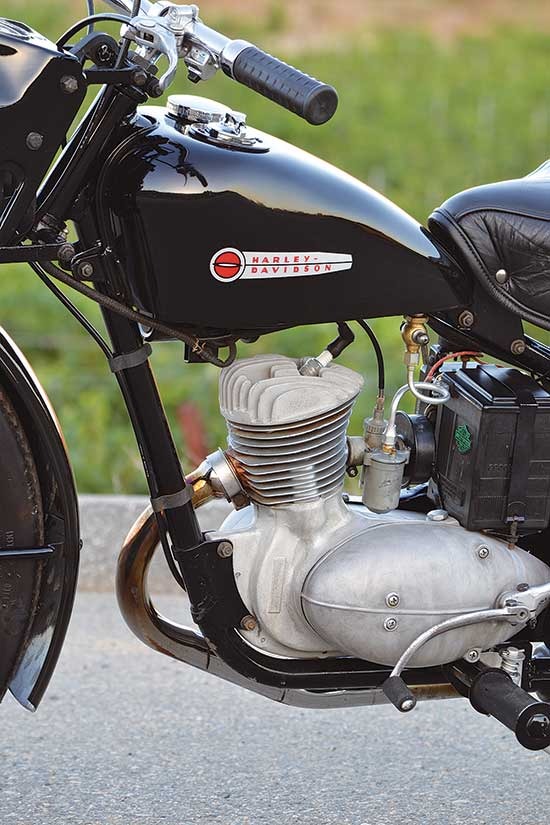


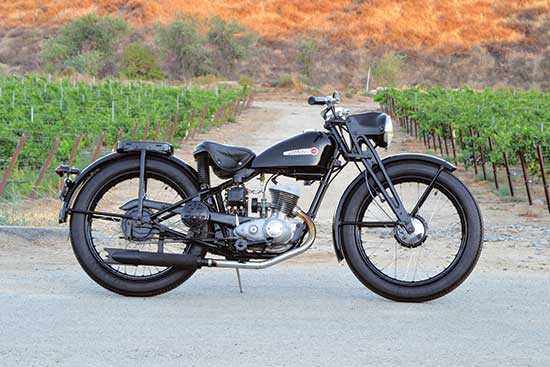
In the years following World War II, Harley-Davidson recognized the demand that lay ahead for economical and efficient motorcycles. In late 1947, production of civilian Big Twins had already swung back into gear, but most surprising for the 1948 model year was the new model S motorcycle.
The 125 model S motorcycle arrived at dealerships with an MSRP of $325, and if the customer could swing the extra $7.50, their new ride came with chrome rims. The single cylinder engine produced about three brake horsepower (bhp), which got the 200 lb. motorcycle up to about 55 mph.
The lightweights that followed over the coming years were important for another reason: They were a response to competitors, mainly European, that were taking advantage of the demand. In 1954, the 125 model S motorcycle was dubbed the Hummer. Following the development of the Hydra Glide front fork in 1949, the 125 model received telescopic front forks and was renamed the Tele Glide. Later incarnations in the 1950s saw an increase to 165 ccs, and sales were excellent.
The name of the Harley-Davidson lightweight was changed in 1960 to the model BT, or Super 10 motorcycle. With the displacement remaining at 165 ccs, the power was increased to nine bhp, but a five bhp version was offered in the U.S., where there were restrictions on the power available to a motorcycle ridden by young people. Sales must have been brisk, because in 1962, a line of lightweights was available, including the Scat, Pacer and Ranger models.
The Scat was dropped in 1963, the same year that Harley-Davidson lightweights were being produced out of the then newly acquired Aermacchi factory, in Varese, Italy. The 1963 Pacer and Scat models even included rear suspensions, which placed the springs beneath the engine, a kind of early version of the Softail model frame!
Harley-Davidson closed out its line of lightweights with the 1966 Bobcat motorcycle, a 175 cc model that also incorporated fiberglass components from the then newly acquired factory in Tomahawk, Wisconsin.