|
|

|
|
|
|
Classic Bikes
Custom Bikes
Individual
Racing Bikes AJP
AJS
Aprilia
Ariel
Avinton / Wakan
Bajaj
Benelli
Beta
Bimota
BMW
Brough Superior
BRP Cam-Am
BSA
Buell / EBR
Bultaco
Cagiva
Campagna
CCM
CF Moto
Combat Motors
Derbi
Deus
Ducati
Excelsior
GASGAS
Ghezzi Brian
Gilera
GIMA
Harley Davidson
Hero
Highland
Honda
Horex
Husaberg
Husqvarna
Hyosung
Indian
Jawa
Kawasaki
KTM
KYMCO
Laverda
Lazareth
Magni
Maico
Mash
Matchless
Mondial
Moto Guzzi
Moto Morini
MV Agusta
MZ / MuZ
NCR
Norton
NSU
Paton
Peugeot
Piaggio
Revival Cycles
Roland Sands
Royal Enfield
Sachs
Sherco
Sunbeam
Suzuki
SWM
SYM
Triumph
TVS
Ural
Velocette
Vespa
Victory
Vincent
VOR
Voxan
Vyrus
Walt Siegl
Walz
Wrenchmonkees
Wunderlich
XTR / Radical
Yamaha
Zero
Video
Technical
Complete Manufacturer List
|
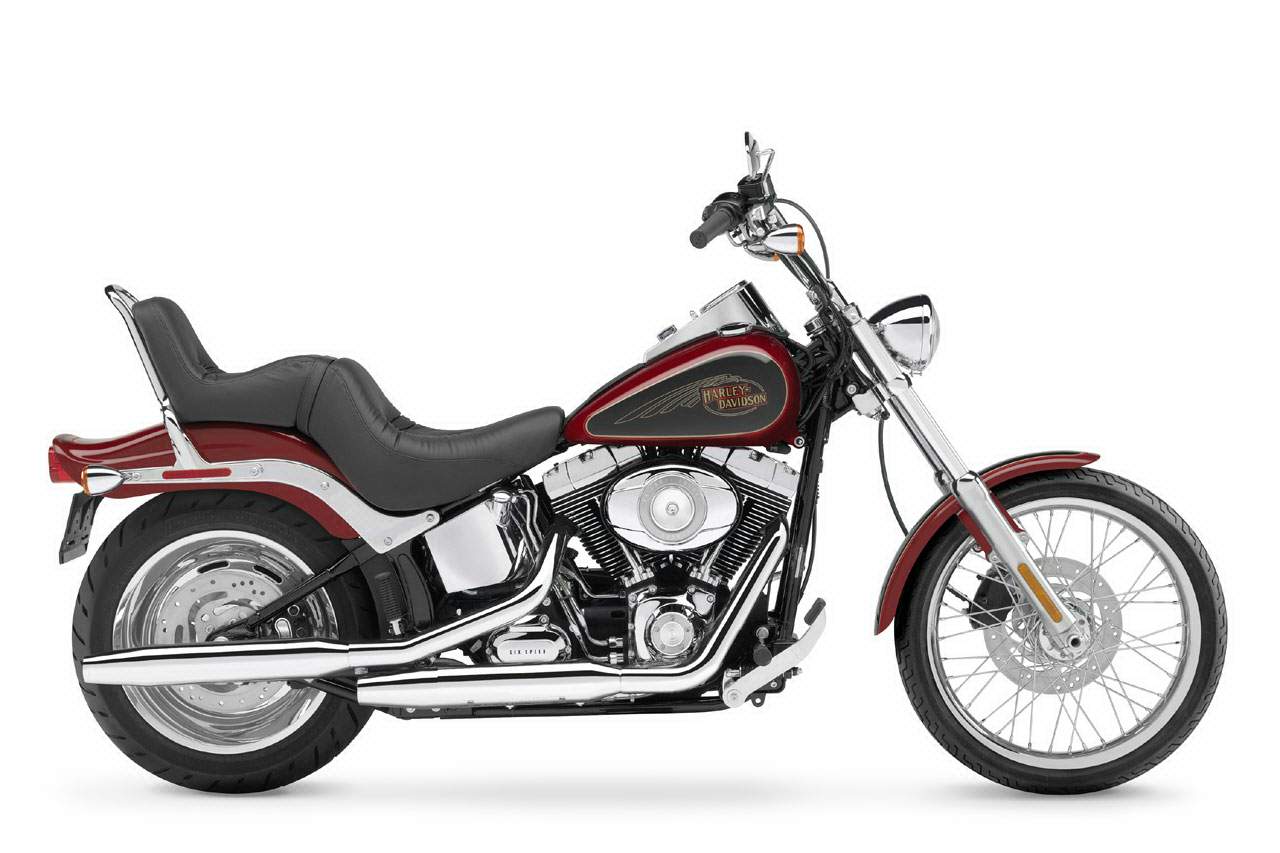
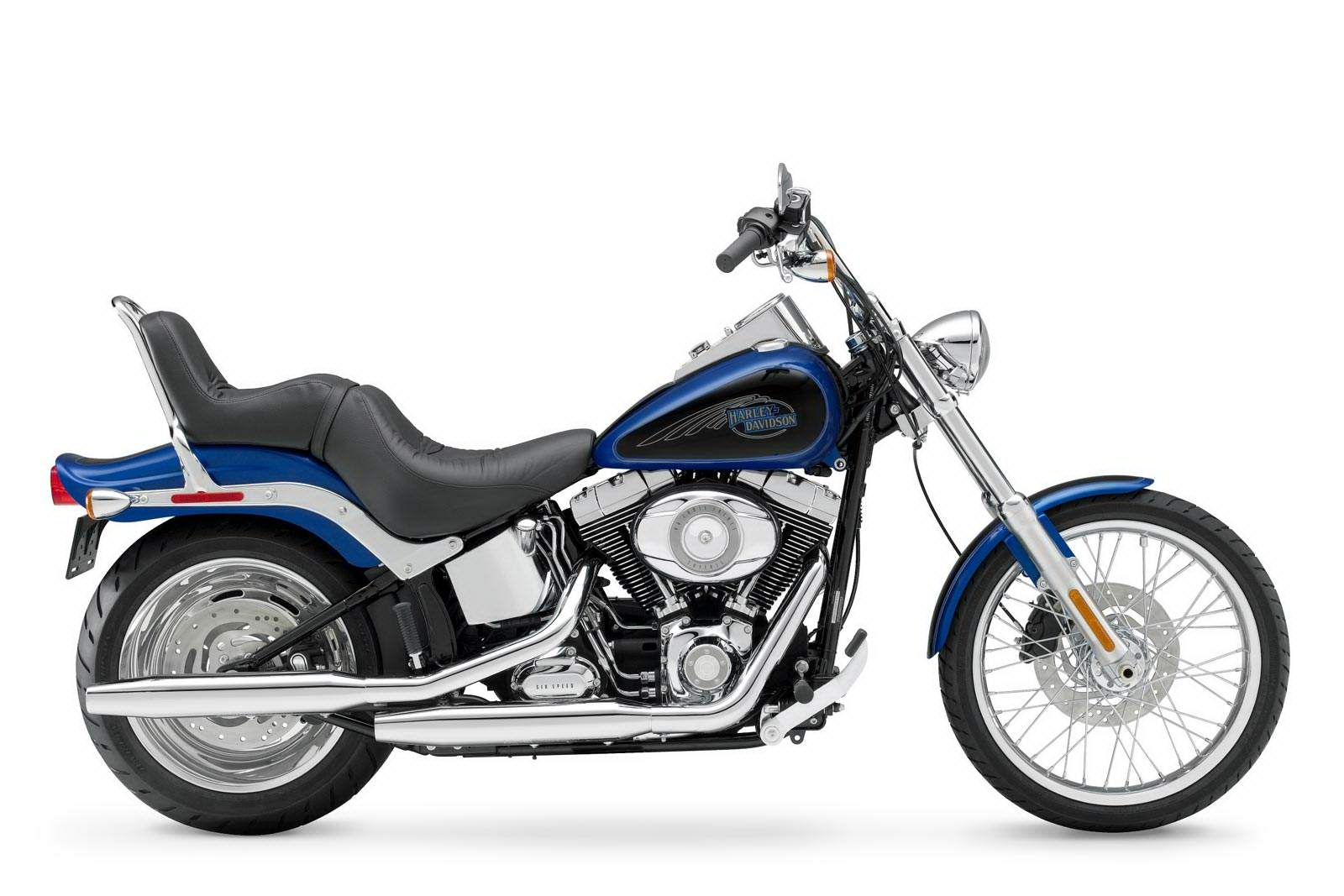
Harley Davidson FXSTC Softail Custom
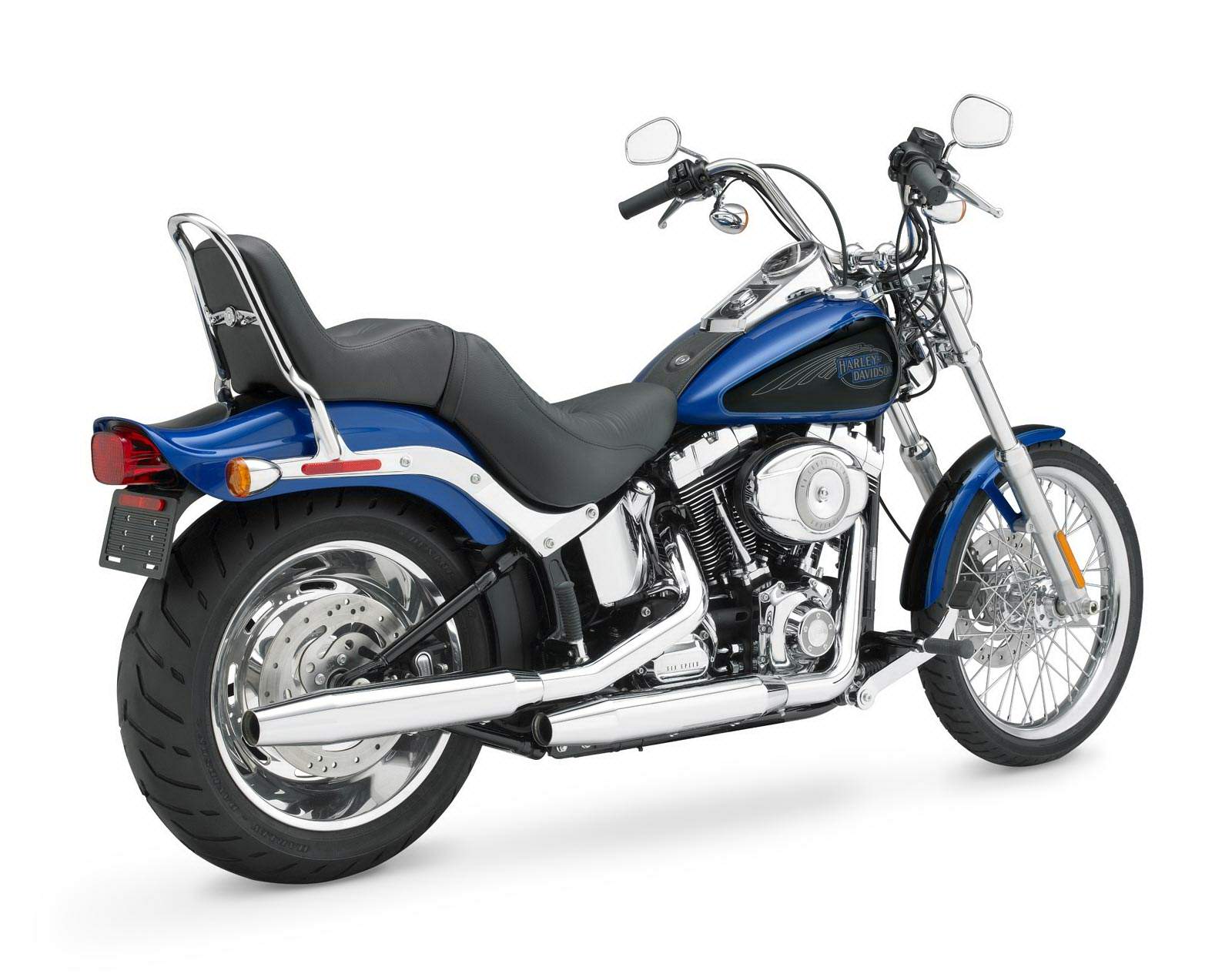
The new FXSTC Softail Custom offers the ultimate ride for those who want to kick back with their feet stretched out for a comfortable solo ride, or with a passenger. The new Twin Cam 96B engine and 6-speed Cruise Drive transmission enhances the ride, while the combination of laid-back chopper-inspired style and the comfort of a two-up seat and backrest is sure to stand out on the street. The Softail Custom goes wide with a 200mm rear tire on a Polished Slotted Disc Forged Aluminum wheel wrapped by a traditional Bobtail fender. A polished stainless steel ape-hanger handlebar towers over a Fat Bob fuel tank adorned with triple laid custom decals and embossed leather tank strap. A bullet-style headlamp rides over a standard 21-inch Chrome Profile Laced Aluminum front wheel. With chrome details adorning the new powertrain, the only thing the Softail Custom brings from the past is its name. Choose from three solid and four two-tone color schemes, plus three two-tone custom color options. New rigid-mount, 1584cc Twin Cam 96B balanced engine
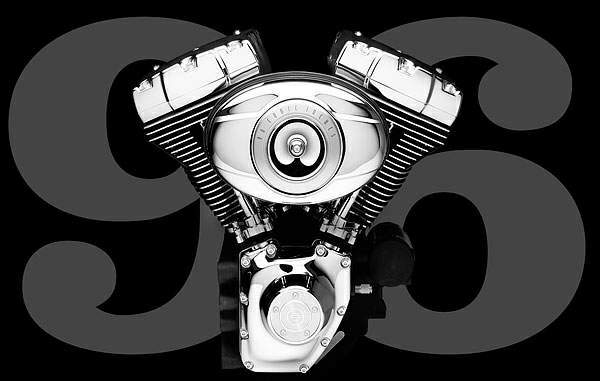
The Harley-Davidson Softail Custom steps out with authority on the I-8 freeway heading away from San Diego. Quickly reaching the speed limit riding into the hills, I drop the tranny into its final sixth cog, which drops the engine’s rpm to a low rumble at 70 mph. The combination of the new Twin Cam 96B engine and the new six-speed “Cruise Drive” transmission allows this Softail to glide down the highway at a more relaxed engine speed than ever before. It's a powertrain that was described just that morning by Bill Davidson, Harley's director of product development and a direct descendent of the founding Davidsons, as something every Harley fan will want to trade up to get. So far, I’d have to agree. The V-twin engine has always been the heart and the soul of Harleys. While the new-for-2007 TC96 engine (and the balanced 96B version for Softails) still looks pretty much the same on the outside, there's a lot that's new on the inside. Only the head and basic architecture remain unchanged from the TC88. Most of the work went into the lower end, with an increase in stroke from 4 inches to 4 3/8 inches. This, in turn, increases displacement from 1,450cc to 1,584cc. Compression ratio rises to 9.2:1, up from 8.9:1. To reduce vibrations usually associated with stroked engines, pistons and rods were redesigned to reduce reciprocating mass. The net result, according to H-D specs, is 90 foot-pounds of torque at 2,750 rpm, an increase of 15 percent in the Softail line. The Dyna pumps out 92 foot-pounds at 3,000 rpm and the Touring platform achieves 93 foot-pounds at 3,500 rpm (an increase of 17 and 13 percent respectively). Harley-Davidson engineers made some additional revisions to the driveline for greater “reliability and durability.” The primary drive and case have been redesigned, in part, to take advantage of the new six-speed by changing the gear ratio. A new auto-adjust primary chain tensioner means there’s no need for manual adjustments any more, so the access door on the outer cover is gone and the case-to-engine seal is improved—going to six fasteners instead of four. The new six-speed transmission is a cassette-style unit with helical-cut gears in second through fourth that, according to Cruise Drive Program Manager Ben Vandenhoeven, offers increased strength while reducing noise. The gears, along with other beefed-up components, increase the new transmission’s torque-handling capacity by 28 percent over the old five-speed, with smoother shifts and a shorter throw at the shifter lever. The final-drive ratio has also been changed, and Harley has switched to a thinner, final-drive belt that's 30 percent stronger. The narrower belt allows the use of wider rear tires with no offset between front and rear wheels. The net result of all the revisions to the drivetrain is an engine that ticks over at only 2,859 rpm at 75 mph. While the new engine and transmission get most of the attention, Harley-Davidson also took another notable step with its 2007 lineup. It is now by far the largest motorcycle manufacturer in the world that produces no models with carburetors. Electronic fuel injection is standard on all 2007 Harleys, including the Sportster lineup. Harley says the new fuel-injection system, which is equipped with an oxygen sensor to adjust to changing conditions, meets or exceeds regulatory requirements in all markets. A Stage One kit can be fitted to the 2007 Harleys and the fuel-injection system will automatically adjust to match. Davidson said millions of dollars and thousands of hours were spent to meet emissions requirements and, at the same time, “We’ve got the potato, potato, potato (exhaust note) back.”
Other features on the 2007s include a new digital clock and two tripmeters you can toggle through in the odometer window, a low-fuel warning light (there's no petcock anymore, so there's no way to switch manually to reserve), and a sixth-gear indicator light on the Big Twins. To see how the new package works, I throw a leg over the all-new Softail Custom. The Softail is the only Big Twin model retaining external oil lines—a sacrifice to styling, according to H-D. All other Big Twins have internal lines flowing from the oil tank, located under the transmission, to the rear engine/transmission hard mount interface. The Custom is actually an older model that left the lineup in 1999 to make room for the Softail Deuce—a highly stylized bike that took many design elements from the aftermarket and showcased the then-new TC88B engine. It somehow seems appropriate that the Custom should return to the lineup to help launch the 96B. H-D says the Custom came back pretty much because of popular demand. Bill Davidson described the Custom as “Easy Rider cool,” referring to the iconic film that made choppers a household name. Quite a few styling cues definitely move in that direction. The handlebars, for instance, are very tall, about the same height as the Street Bob, which for me is about shoulder height. I’m told by a Harley rep that the Street Bob’s bars are slightly angled in more. The wide forks match the width of the bars and come together down at the laced 21-inch front wheel. Feet come forward to meet the controls with the right peg moved out an extra inch for added comfort. I hit the starter button and the new big-inch motor comes to life with a slight metallic slap. Skip Metz, Program Manager of the Big Twin power train, told me the sound is simply a side-effect of the redesigned starter system and high-compression engine. The starter and starter ring are repositioned to eliminate the jack shaft assembly. The starter pushes the compensator sprocket in one direction, and as the motor fires, it suddenly picks up the slack—creating the slap. I found the sound to be mildly alarming, until I heard the explanation. Then I got used to it and it became a non-issue. oving out, I find the ride taut, but not jarring. The suspension handles minor road irregularities with ease. At a stop light, both heels find asphalt—though my right leg just barely misses the exhaust pipe and the left just rubs the primary cover. The seat is actually 3/10 of an inch taller than the one on the Softail Standard and is very plush, so it’s a minor trade-off for the exemplary comfort the saddle provides for both rider and passenger. At a rest stop, I take notice of the ample chrome and Harley-Davidson's almost endless attention to detail. The backrest, for instance, looks like liquid chrome. “We use a process called SSM, or semi-solid material,” a Harley spokesman tells me. “The aluminum is almost a liquid as it goes into the mold. Because of this process, there are no weld marks and the surface is smooth enough to go straight to chrome.” That extra thought put into design is carried throughout, even on mundane parts such as the dipstick and the “six speed” lettering on the transmission. All, according to H-D, were well thought out for style as well as function. As I leave the freeway behind and start winding through the hills, I quickly discover the Softail has some amazing ground clearance for this genre of motorcycle. Obviously, hard parts still drag in the corners if you get too spirited, but it is comforting to know that you can push the bike a bit further than most cruisers, if the need arises. The new six-speed handles shifting duties with ease. I still wouldn’t use the word "snick" to describe dropping down a gear or two to accelerate, but the transition is far smoother than it was with the old five-speeder. The lever effort feels positive and has a lot less slop. The EFI is flawless, with an exceptionally smooth transition from fully closed throttle to slightly open—such as coming out of a turn. Overall, the new powertrain works exceptionally well. Only in the rubber-mounted engines do you get a bit of a vibration—more like a thump—in sixth gear, when engine speed is less than optimal, due to the low rpms at cruising velocity (only 2,500 rpm at 70 mph). With its competitors producing V-twin cruisers with cavernous displacement approaching, or at, a liter per cylinder, Harley was in need of putting the “big” back in their Big Twin. If 96 cubic inches still isn’t enough, H-D’s parts and accessories division is quick to point out that the engine was designed to easily accept the 103 cubic inch (1,690cc) big bore kit upgrade at a cost of around $1,000 (out the door) at your local dealer. Or you can buy the 110 cubic inch (1,800cc) kit—or the CVO models that feature it—but at a substantially higher price. While the Twin Cam 96 engine represents a new era in Harley-Davidson's history, the company remains extremely aware of the importance of its history and tradition. “The essence of Harley-Davidson," says Bill Davidson, "includes three ingredients: look, sound and feel.” The TC96 and 96B powertrain may be all new, but it’s easy to say the Motor Company has retained the nostalgic looks, the classic sound and, most importantly, the feel that fans have come to expect. Source Amadirectlink.com
|
|
|
Any corrections or more information on these motorcycles will be kindly appreciated. |