|
Harley
Davidson
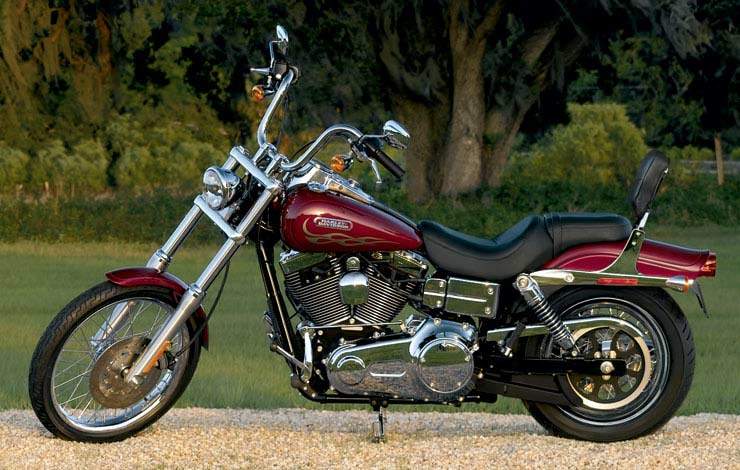
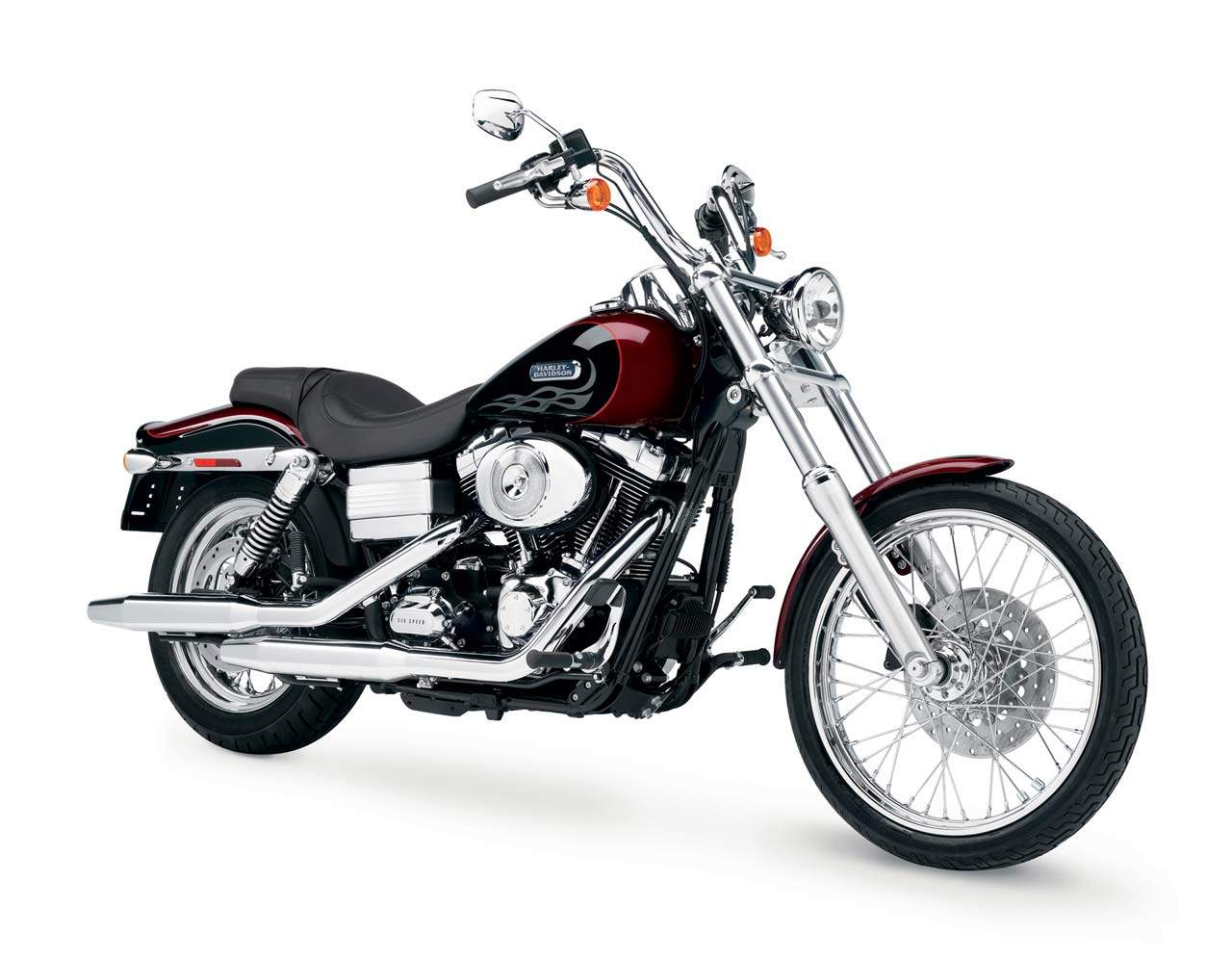
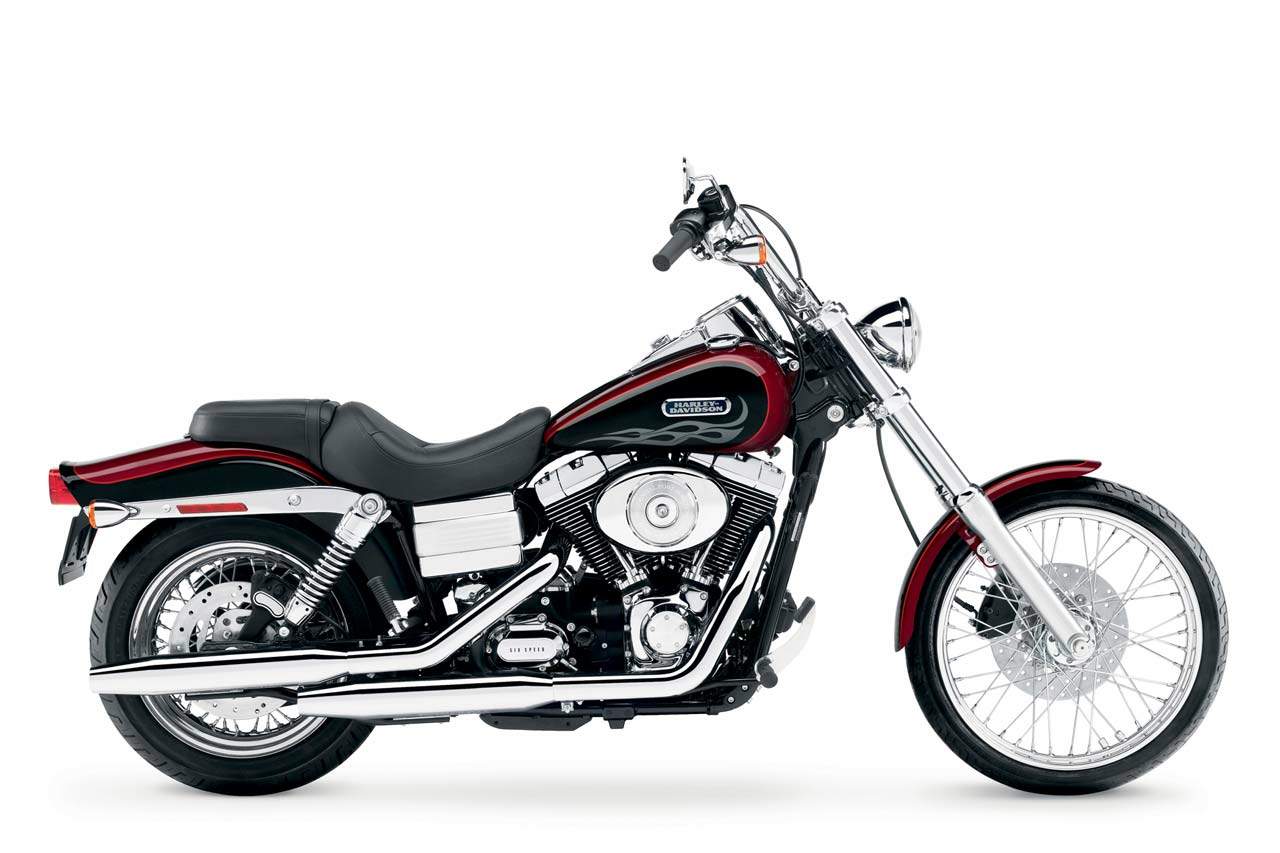
FXDWGI Dyna Wide Glide

|
Make Model |
Harley
Davidson
FXDWGI Dyna Wide Glide |
|
Year |
2006-07 |
|
Engine |
Air cooled, four stroke, 45° V-Twin, OHV, 2
valves per cylinder. |
|
Capacity |
1449 |
|
Bore x Stroke |
95.3 x 101.6 mm |
|
Compression Ratio |
8.9:1 |
|
Induction |
|
|
Ignition /
Starting |
Single-fire, non-wasted, map-controlled spark
ignition |
|
Max Power |
67 hp 48.8 kW @ 5200 rpm |
|
Max Torque |
107 Nm @ 3300 rpm |
|
Transmission /
Drive |
6 Speed / Belt |
|
Frame |
Mild steel, tubular frame; rectangular
section backbone; stamped, cast and forged junctions, forged fender
supports; MIG welded |
|
Front Suspension |
49 mm w/polished aluminum fork triple clamp
and dual-rate springs, 127mm wheel travel |
|
Rear Suspension |
Coil-over shock , 104mm wheel travel |
|
Front Brakes |
Single 300mm disc 4 piston caliper |
|
Rear Brakes |
Single 292mm disc 4 piston caliper |
|
Front Tyre |
MH90-21 |
|
Rear Tyre |
160/70B16 |
|
Dry-Weight |
295 kg |
|
Fuel Capacity |
19.3 Litres |
|
Overview |
Motorcycle Cruiser |

For years, the Harley-Davidson Wide Glide
has been the Dyna with attitude. Its kicked out, wide-set front fork legs and
near-ape-hanger handlebar took it about as close to a real chopper as a
factory-built motorcycle dares go. But even bad-ass choppers must eventually
heed the march of progress, and for 2006, the FXDWG joined the rest of Harley's
Dyna family in series of major upgrades. The headline change is the standard
"Cruise Drive" six-speed transmission, which debuts in the Dyna line, while the
rest of Harley's motorcycles continue to get by with five gearbox cogs.
Six speeds are just the beginning of the list of improvements
for the 2006 Dyna models. Harley sequential-port electronic fuel injection is
now standard, which adds the "I" at the end of the bike's designation. The
clutch requires significantly less lever effort on the 2006 model. The rear tire
is now 160mm wide. Both axles are now a full inch in diameter to further
increase rigidity. The fork legs are beefier too, with stanchion tubes that have
grown to 49mm in diameter. There is a penalty for some of this because the Wide
Glide has gained about 10 pounds between the 2005 and 2006 models.
The twin-shock frame still rubber-mounts the engine, but it's
completely new and stouter. The steering geometry was rearranged this year, and
while all other Dynas have 29-degree steering heads, the Wide Glide's steering
head juts out an additional 5 degrees. Then the triple clamp adds another 2
degrees to give the fork legs a startling 36-degree angle. A narrow 21-inch
wheel completes the attitude adjustment up front.
The completely new gearbox is a huge
advancement, but not just for the additional ratio choice. This new Dyna
six-speed is the best-shifting gearbox in any big twin of any brand. Shifting is
suddenly light, quick, impressively smooth, quiet, and positive. Neutral is easy
to locate too. Helical-cut gears that mesh more much quietly than the
straight-cut gears used previously eliminate that traditional clank. (We know
some traditionalists will miss that hefty clunk, but the 21st century is
happening whether we like it or not.) The lighter lever throw comes by way of
thin steel dog rings that move during gear changes instead of the bigger,
heavier moving gears. Because the dog rings have less mass than gears, shifting
is quicker and smoother, and the throw of the shift lever could be reduced. That
latter change will be appreciated by anyone with arthritic ankles. With the
additional ratio, Harley also made the sixth speed slightly taller than the old
fifth gear, reducing engine speed in top gear.
The improved shifting is matched by the
improved clutch operation. Redesigning the diaphragm-type clutch spring and the
ball-and-ramp disengagement mechanism cut lever effort by more than a third. The
change means more than reducing the strain on your left wrist. Rider control of
clutch engagement is the real story here. It is much easier to pull away in
those challenging situations, where, for example, you have to turn full-lock as
you drive out of a crowded parking spot with a passenger. It's tremendously
easier to feed in the precise amount of clutch engagement you want. Of course,
your right wrist and hand will probably appreciate the reduced lever effort in
stop-and-go traffic as well.
While it was messing with the transmission, Harley's
powerplant design team apparently couldn't resist tweaking the twin-cam engine
just a bit. Lubrication was improved with a higher-flow oil pump with improved
scavenging. Oil-filter and oil-cooler adaptors have been integrated, and oil
passages were incorporated into the redesigned engine-transmission interface. A
cam plate redesign brings new plain bearings for the camshaft, and a new roller
chain with a new hydraulic chain adjuster.
The primary drive ratio has been raised (lowered numerically)
from 1.44:1 last year to 1.353 for 2006. The primary chain now has an automatic
tensioner to eliminate one maintenance chore and the inspection cover needed to
accomplish it. Completing the primary drive system are new inner and outer
housings. However, something didn't turn out quite right because Harley is
telling Dyna owners to bring their bikes in every 15,000 miles to have a primary
drive bearing replaced. Harley is picking up the tab though, apparently for
life, right down to picking the bike up if that's required. We certainly had no
complaints while riding it. In fact, just the opposite; the drivetrain in our
FXDWGI was the very model of smoothness. We'd like to see this gearbox in all
Harley big twins, though we suspect that won't happen until the
primary-drive-bearing issue is resolved.
Though confronting much bigger V-twins with more sophisticated
designs, Harley's big twins have little to apologize for in terms of
performance. Sure those big bikes will outrun the 1450cc H-Ds, but not as much
as the displacement disparity and the relatively simple two-valve pushrod valve
train would suggest. I certainly would not imply that the six-speed Dyna Wide
Glide felt underpowered in any circumstance. On the other hand, the bigger
V-twins might envy the Harley's smooth drivetrain operation and throttle
response. The big guys certainly should envy the Harley's economical fuel
consumption. I consistently returned fuel mileages in the high 40s, with one
tank returning just over 50 mpg.
Sit Up—and Beg
My enthusiasm for the Wide Glide waned a bit when I my
examination wandered from the engine to the chassis. Actually things turn down
right at the point where the engine meets the frame. Like previous Harley Dyna
models, a significant amount of vibration gets past the rubber engine mounts.
Some riders found it bordered on uncomfortable, but I found it just slightly
annoying, and it blurred the mirrors on the highway.
I'm generally not a fan of handlebars as high (a 12-inch rise
on top of 2-inch risers) and wide (32.5 inches) as the Wide Glide's, but the
FXDWGI's ape-hangers actually weren't as bad as I anticipated. For one thing,
Harley turns the ends out and up, so the grips aren't vertical, which forces you
to increase grip pressure just to hang on. The Wide Glide's more natural grip
angle increased comfort and control. I didn't mind them around town, except when
making a full-lock turn at low speed. Then the outside bar became quite a
stretch, creating some awkwardness. Of course, once on the highway, they just
set you up and stretch you up in the wind, requiring sustained effort just to
hold on. The way-forward placement of the footpegs makes matters even worse,
since you can't use any leg pressure to counter wind pressure. The styling of
the 1.25-inch diameter handlebar includes internal routing of the wiring, which
cleans them up quite a bit.
The handlebar/seat/footpeg relationship somehow tended to make
my lower back ache after an hour so, something which never happens. At first I
though it was the seat shape, but as I rode it began to blame the footpeg
location, which is at the limit of reach for my 32-inch inseam. Of course, it's
almost impossible to stand on the rider's pegs to let your legs soak up a bump.
Putting my feet on the passenger pegs afforded some relief, especially on the
highway. The passenger pegs are mounted on the front of the swingarm, so bumps
come through more solidly than if they were attached to a totally sprung part of
the bike.
The 2006 Wide Glide's seat height without a rider aboard is
28.5 inches, about .75 inches higher than for the 2005 model. I'm not sure where
the extra altitude was generated, but it wasn't as a result of more suspension
travel, which at 5.0 and 4.1 front and rear respectively is actually slightly
reduced from the 2005 specification, though still more than you might expect
from a bike with this much attitude styled in. Surprisingly, bumps don't hammer
you any worse than on other cruisers with less attitude. I suspect the
suspension was recalibrated a bit on '06 Dynas, improving ride comfort and
damping control without stretching travel. The shock assemblies have been
restyled with new corged tops.
Lean on Me
Clearly, the Harley Wide Glide is not a motorcycle that puts
handling at the top of its list of desirable attributes. Though steering is
light and fairly responsive initially, as it leans over, it starts to resist and
starts to feel somewhat uncertain and less willing to bend much deeper into the
corner. Though cornering clearance is not excessive, I wasn't comfortable
leaning over far enough to drag the bike, although it would do so when I forced
the issue. I attribute this uneasiness to clashing responses caused by the
skinny front tire and wider rear tire and the somewhat extreme rake, which has
also been increased by two degrees from the previous iteration.
This latests Wide Glide also wasn't as stable as I expected,
especially with all that steering-head rake. If you give the handlebar a hard
shake at highway speeds, the Wide Glide takes longer than the average big
cruiser to settle down again. There are situations where this imparts a slightly
uneasy feeling to the bike.
That narrow front tire obviously doesn't provide a lot of
traction for braking, though during my panic-stop tests I got more braking force
than I expected before it let go (after fair warning). Brake feel and control is
good at both ends, and Harley's new stouter fork and frame make things feel a
bit more connected and less dramatic as you begin to over-brake the front.
Not that I really believe that the typical Harley-Davidson
Wide Glide buyer cares much about such things. If handling, braking, and even
comfort matter to you, then you should be looking at one of the other Dyna
models—any other Dyna model—because frankly the Wide Glide doesn't give a
damn. The first three items on its agenda are attitude, head-turning power, and
looks—and the rest of the list doesn't matter. In fact, its target is so far
from functionality that it almost doesn't make sense to road test this
Harley-Davidson. The surprise is that the redesigned FXDWGI is as acceptable to
ride as it turned out to be, despite the fact it simply wasn't trying to make a
good impression for a road tester. If you want to ride attitude and are willing
to suffer some to do so, then take a ride on a Wide Glide.
Source
Motorcycle Cruiser
|