|
|

|
|
|
|
Classic Bikes
Custom Bikes
Individual
Racing Bikes AJP
AJS
Aprilia
Ariel
Avinton / Wakan
Bajaj
Benelli
Beta
Bimota
BMW
Brough Superior
BRP Cam-Am
BSA
Buell / EBR
Bultaco
Cagiva
Campagna
CCM
CF Moto
Combat Motors
Derbi
Deus
Ducati
Excelsior
GASGAS
Ghezzi Brian
Gilera
GIMA
Harley Davidson
Hero
Highland
Honda
Horex
Husaberg
Husqvarna
Hyosung
Indian
Jawa
Kawasaki
KTM
KYMCO
Laverda
Lazareth
Magni
Maico
Mash
Matchless
Mondial
Moto Guzzi
Moto Morini
MV Agusta
MZ / MuZ
NCR
Norton
NSU
Paton
Peugeot
Piaggio
Revival Cycles
Roland Sands
Royal Enfield
Sachs
Sherco
Sunbeam
Suzuki
SWM
SYM
Triumph
TVS
Ural
Velocette
Vespa
Victory
Vincent
VOR
Voxan
Vyrus
Walt Siegl
Walz
Wrenchmonkees
Wunderlich
XTR / Radical
Yamaha
Zero
Video
Technical
Complete Manufacturer List
|
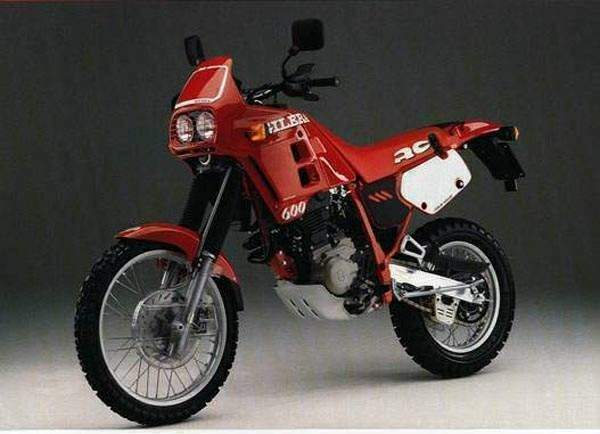
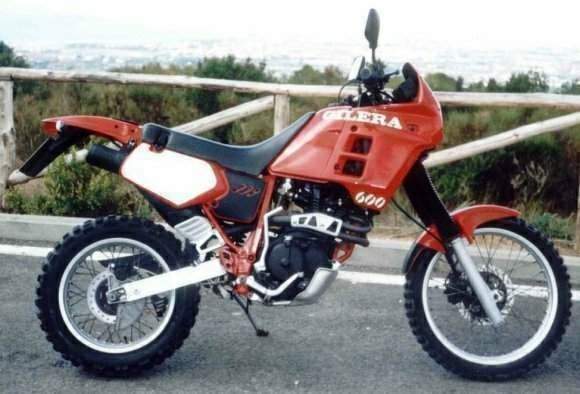
Gilera RC 600 Enduro
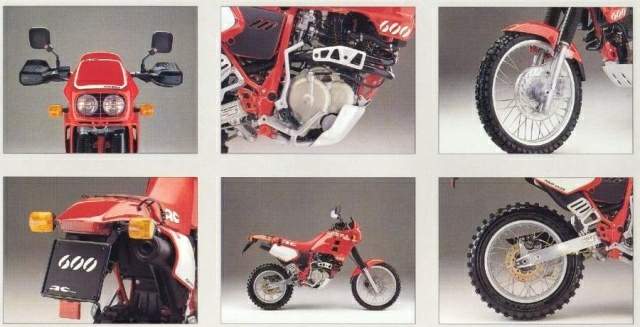
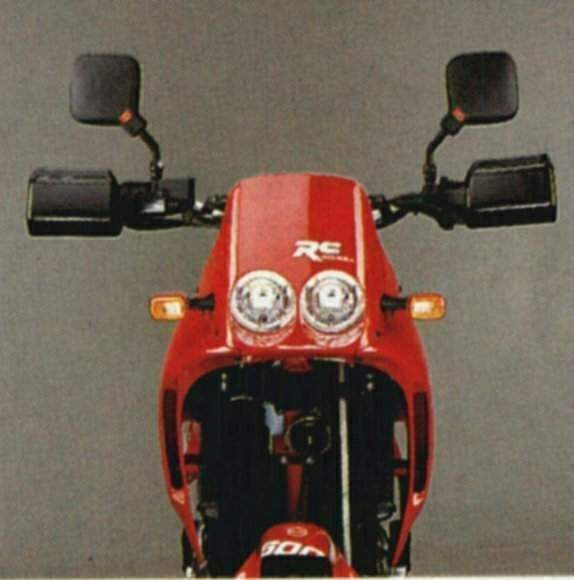
THE RC600 AND NORDWEST Throughout the late 1980s Gilera took a serious interest in the Paris-Dakar and similar rallies. This culminated in 1990 with a Gilera class victory in the Paris-Dakar event. An offshoot of this was a plethora of production models, including the RC600, RC600R and Nordwest. All used a 558cc (98 x 74mm) variant of the motor used on the XRT. Quite why Gilera chose to decrease the bore size by 1mm is unclear, but this had the effect of reducing the capacity from 569 to 558cc. There were other differences too, the carburettor size being increased from the 25mm instruments on the XRT (the same as the Dakar series) to 30mm on these later models. The gear ratios remained the same but outright power was significantly improved - 53bhp on the RC600 and Nordwest and 54.5bhp on the RC600R - all three machines peaking at 7,500rpm.
Works-entered RC600Rs dominated the 1991 and 1992 600cc-class of the Paris-Dakar, making it one of the truly great machines in the history of the event (others including the BMW GS, the Cagiva Elefant and a small number of exotic Japanese factory entries. NORDWEST PROVES A WINNER But it was the Nordwest which really caused a stir with its unique style and beautifully flowing lines. The Nordwest boasted an uprated specification (at least for street use) over the RC600, with its three-spoke cast alloy wheels, twin 270mm semi-floating discs (front) and single 240mm disc (rear) and both wheels shod with Michelin Hi-Sport 17in tyres (120/60 front, 120/70 rear). There were also upside-down 40mm (stanchion diameter) front forks and Gilera's 'Power Drive' rear suspension (single shock). Other features (some of which were shared by the RC600 series) included: an alloy swinging arm, speedo, tacho and temperature gauge, a cast aluminium rear carrier, stylish bodywork, oblong indicators, plastic chainguard and 520-size final drive chain. And, unlike the RC models, the Nordwest did not feature a back-up kick-starter. Gilera also had other four-strokes in the pipeline, but none made it into production. Source Gilera The complete story Mick Walker
|
|
|
Any corrections or more information on these motorcycles will be kindly appreciated. |