|
|
|
|
Classic Bikes
Custom Bikes
Individual
Racing Bikes AJP
AJS
Aprilia
Ariel
Avinton / Wakan
Bajaj
Benelli
Beta
Bimota
BMW
Brough Superior
BRP Cam-Am
BSA
Buell / EBR
Bultaco
Cagiva
Campagna
CCM
CF Moto
Combat Motors
Derbi
Deus
Ducati
Excelsior
GASGAS
Ghezzi Brian
Gilera
GIMA
Harley Davidson
Hero
Highland
Honda
Horex
Husaberg
Husqvarna
Hyosung
Indian
Jawa
Kawasaki
KTM
KYMCO
Laverda
Lazareth
Magni
Maico
Mash
Matchless
Mondial
Moto Guzzi
Moto Morini
MV Agusta
MZ / MuZ
NCR
Norton
NSU
Paton
Peugeot
Piaggio
Revival Cycles
Roland Sands
Royal Enfield
Sachs
Sherco
Sunbeam
Suzuki
SWM
SYM
Triumph
TVS
Ural
Velocette
Vespa
Victory
Vincent
VOR
Voxan
Vyrus
Walt Siegl
Walz
Wrenchmonkees
Wunderlich
XTR / Radical
Yamaha
Zero
Video
Technical
Complete Manufacturer List
|
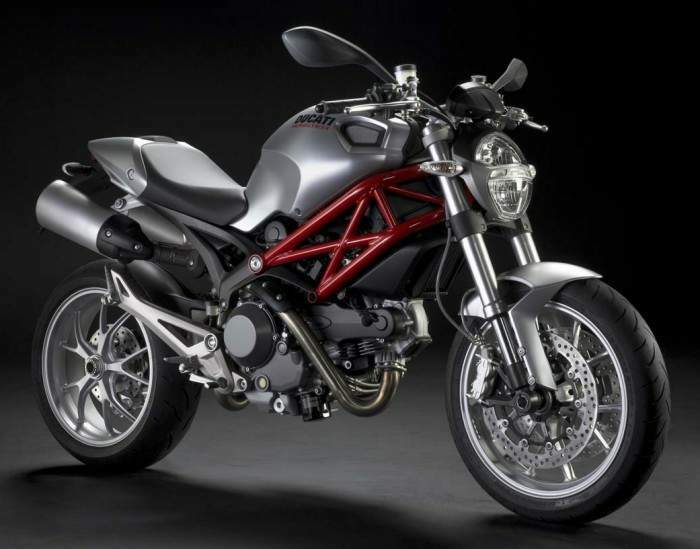
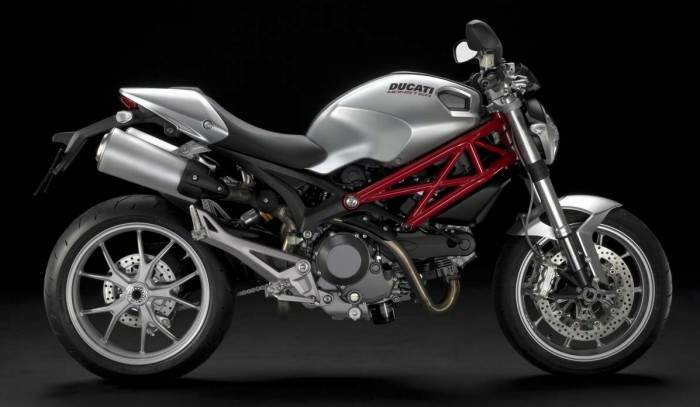
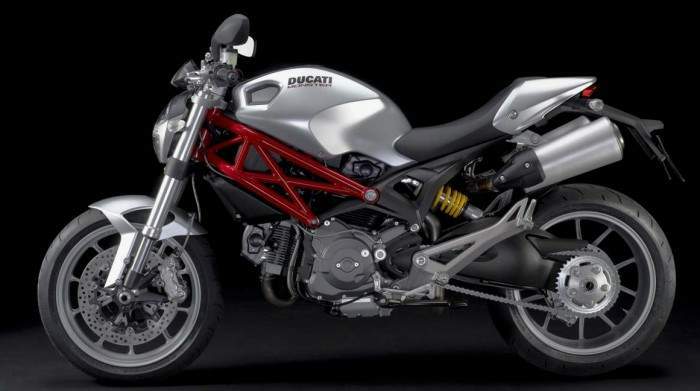
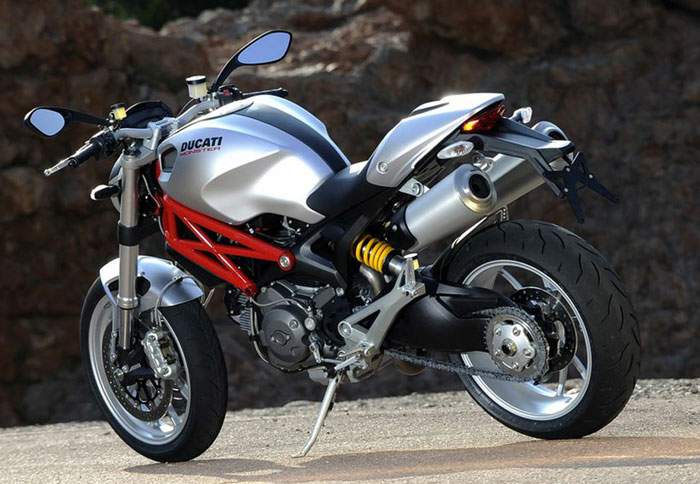
Ducati Monster 1100
The arrival of the new 1100 and 1100 S now increases the size of the Monster family, a family that redefines the naked motorcycle and stakes its claim as the new icon of Italian excellence. The 'less-is-more' philosophy behind all Monsters underlines Ducati's never-ending pursuit of genuinely compact, high performance motorcycles, but these new models have succeeded in being even more 'pared down' than their predecessors. The Monster 1100 weighs 169kg (168kg for the S version), making it by far the lightest bike in its category. The new Monster 1100 design perfectly balances sports performance, riding pleasure and stunning looks. With its new single-sided aluminium swingarm, high level of componentry, race-oriented chassis and 15 years of EVOlution, the Monster 1100 now takes its place at the head of the Monster family. The Monster 1100 S is a pure concentrate of lightness, power, design and exclusivity. The 'S' features fully adjustable 43mm titanium nitride coated Öhlins forks and progressive Öhlins rear shock absorber with adjustable pre-load and return damping. Carbon fibre cam belt covers, silencer guards and front fender reduce weight by a further 1kg (2.2lb). The distinctive racing gold coloured 5-spoke wheels of the Monster 1100 S give it an elegant style and the same sporting look as historical Ducati racing models. Both versions of the new Monster 1100, already come factory-personalised with removable single seat covers and neat micro-bikini fairings, are powered by the charismatic two-valve 1100cc Desmodromic twin-cylinder engine that boasts a 98mm bore and a 71.5mm stroke, delivering 95hp at 7500rpm and an impressive torque of 10.5kgm (79.5lb-ft) at 6000rpm.
Review
You don't need to travel all the way to the French
Riviera to appreciate Ducati's new Monster 1100, but it certainly doesn't hurt.
Racing along the coast road adjacent to Cannes' legendary topless beaches, the
naked Monster looks sexier than ever with a single-sided swingarm showing off a
new Y-spoke wheel. Acceleration is lustier too, thanks to the bored-out Dual
Spark 1100 motor, now with an electronic exhaust valve that enhances torque. At
a claimed 372 pounds dry, it's lost some fat, too-17.6 pounds worth, compared to
the existing Monster S2R. Add it all up-or better yet, experience it on the
curves of France's stunning Alpes-Maritimes-and it's hard not to pronounce this
the most magnificent Monster yet.
The 696 looks right, but the small-bore twin's
pedestrian manners hardly live up to the Monster name. With an advertised 95 bhp
and 76 lbs.-ft. of torque, the 1100 iteration is more aligned with our
expectations. The motor is essentially the same 1078cc, two-valve twin that
powers the Hypermotard and Multistrada 1100, save for new VACURAL vacuum
die-cast crankcases (the first air-cooled application of this Ducati Superbike
technology) that save a significant 6.6 pounds compared to the old motor. An oil
cooler has been added as well, and the Monster 1100 reverts to a dry
clutch-"because enthusiasts like that," Ducati says. The power profile was just about perfect for the tight curves of Cote d'Azur, and it was easy to exploit every last pony thanks to a host of chassis upgrades that make the big Monster even more maneuverable than its little brother. Ride height has been raised by an inch and a half front and rear, increasing cornering clearance. The fully adjustable Showa fork is longer, and the front suspension stroke has been increased from 4.7 to 5.1 inches. The shock, from Sachs, is likewise elongated, and offers rebound-damping adjustment in addition to spring preload. A low seat height was not a primary design goal here.
The Monster 1100 marks the return of Ducati's signature single-sided swingarm,
which is not only stiffer, but weighs a whopping 11 pounds less than a
conventional double arm. The swingarm pivots directly in the engine cases, and
the absence of any rear suspension linkage saves even more weight. Instead, the
cantilevered shock is positioned to compress in a non-linear motion compared to
swingarm movement, creating a progressive effect. Suspension action felt
perfectly balanced front-to-rear and firm enough to push the limits of prudent
street riding. New, lighter Y-spoke alloy wheels slash unsprung weight,
improving handling and suspension action. A 3.5-inch front and 5.5-inch rear
wheel allow fitment of wider rubber than on the 696, with a 120/70 front and
180/55 rear boosting grip and cornering ability.
The view from the cockpit reinforces Il Mostro's spare, simple character. Stylish-and surprisingly useful-mirrors mount cleanly to the top of the lever clamps with a single Allen bolt. The Superbike-style dash is tidy-looking and features unique white back-lighting at night. But it should be re-angled or shaded somehow-glare makes the digital bar tach unreadable in the midday sun, while the digital speed readout in the lower right corner is hard to read in any light. The onboard computer, navigable via a convenient up/down toggle on the left switch cluster, lists service reminders, oil and air temps, lap times and various warning functions. Bonus: The instrumentation accepts the optional Ducati Data Analyzer system, an attractive feature for track-day geeks.
The Monster has been one of our all-time faves for hooning around since it
debuted in 1993, but by 2008 the original design was way beyond its expiration
date. The 696 looked fresh, but budget bits and a small-block motor lacked
hooligan cred. The 1100, on the other hand, comes correct on all counts. This is
the iconic Monster distilled down to its elemental essence: lighter, torquier
and sharper-focused than ever before. Fifteen years is a long time. Fortunately,
it's been worth the wait.
|
|
|
Any corrections or more information on these motorcycles will be kindly appreciated. |