|
|
|
|
Classic Bikes
Custom Bikes
Individual
Racing Bikes AJP
AJS
Aprilia
Ariel
Avinton / Wakan
Bajaj
Benelli
Beta
Bimota
BMW
Brough Superior
BRP Cam-Am
BSA
Buell / EBR
Bultaco
Cagiva
Campagna
CCM
CF Moto
Combat Motors
Derbi
Deus
Ducati
Excelsior
GASGAS
Ghezzi Brian
Gilera
GIMA
Harley Davidson
Hero
Highland
Honda
Horex
Husaberg
Husqvarna
Hyosung
Indian
Jawa
Kawasaki
KTM
KYMCO
Laverda
Lazareth
Magni
Maico
Mash
Matchless
Mondial
Moto Guzzi
Moto Morini
MV Agusta
MZ / MuZ
NCR
Norton
NSU
Paton
Peugeot
Piaggio
Revival Cycles
Roland Sands
Royal Enfield
Sachs
Sherco
Sunbeam
Suzuki
SWM
SYM
Triumph
TVS
Ural
Velocette
Vespa
Victory
Vincent
VOR
Voxan
Vyrus
Walt Siegl
Walz
Wrenchmonkees
Wunderlich
XTR / Radical
Yamaha
Zero
Video
Technical
Complete Manufacturer List
|
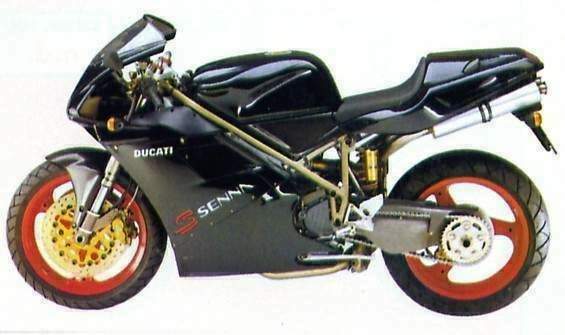
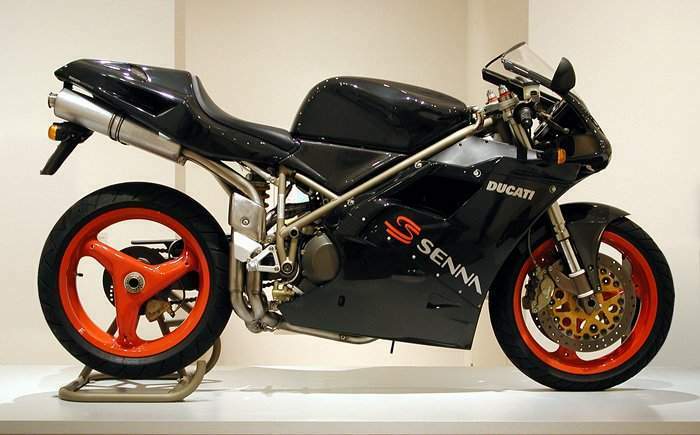
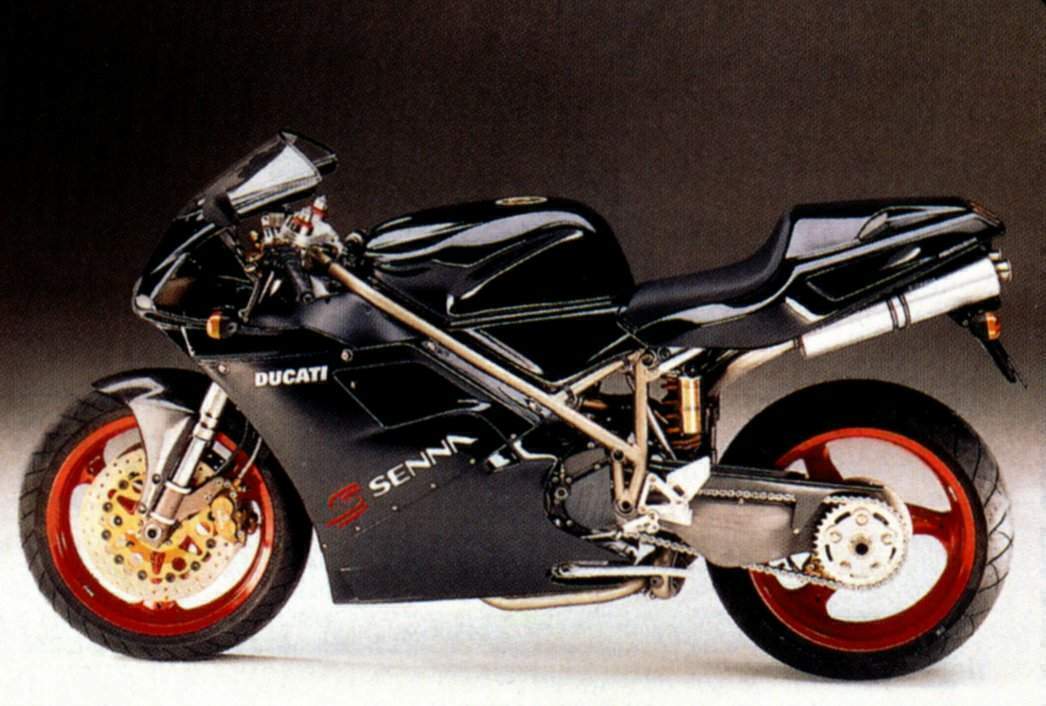
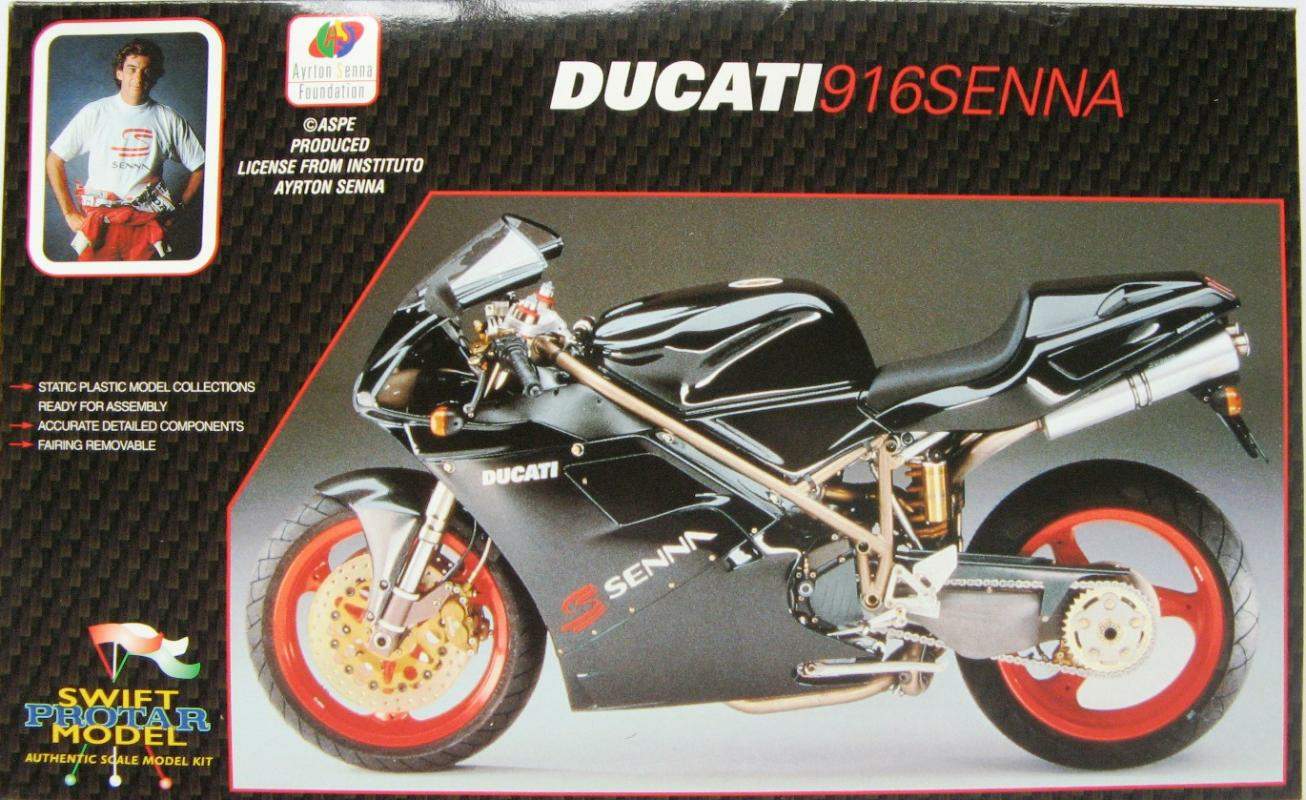
Ducati 916 Senna III
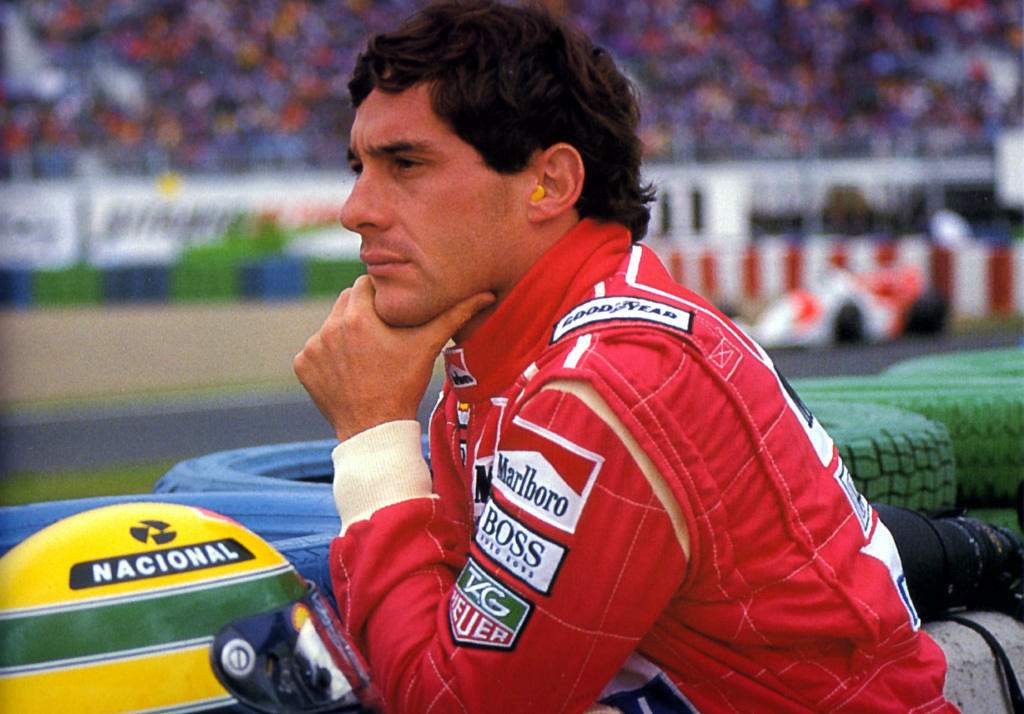
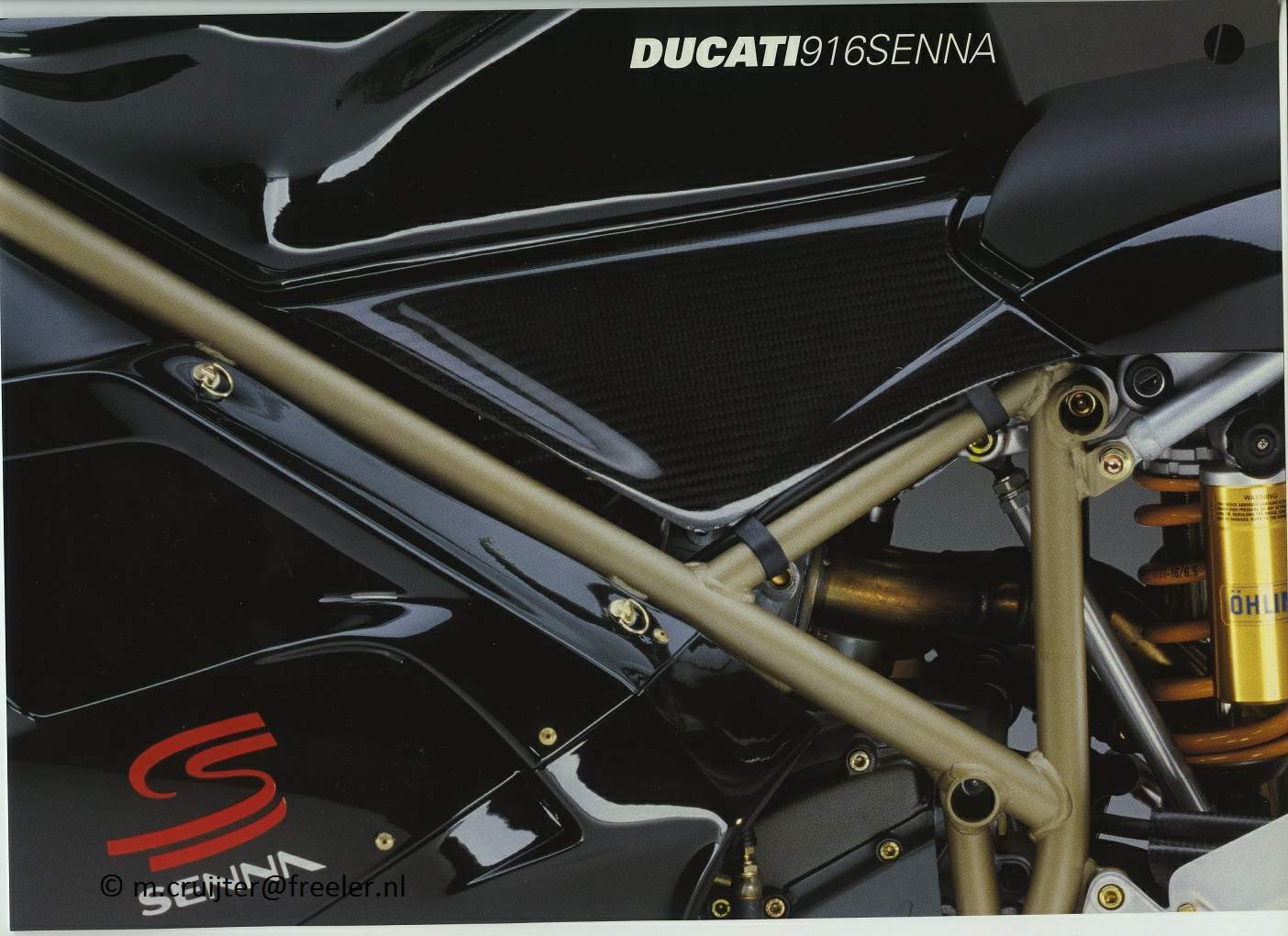
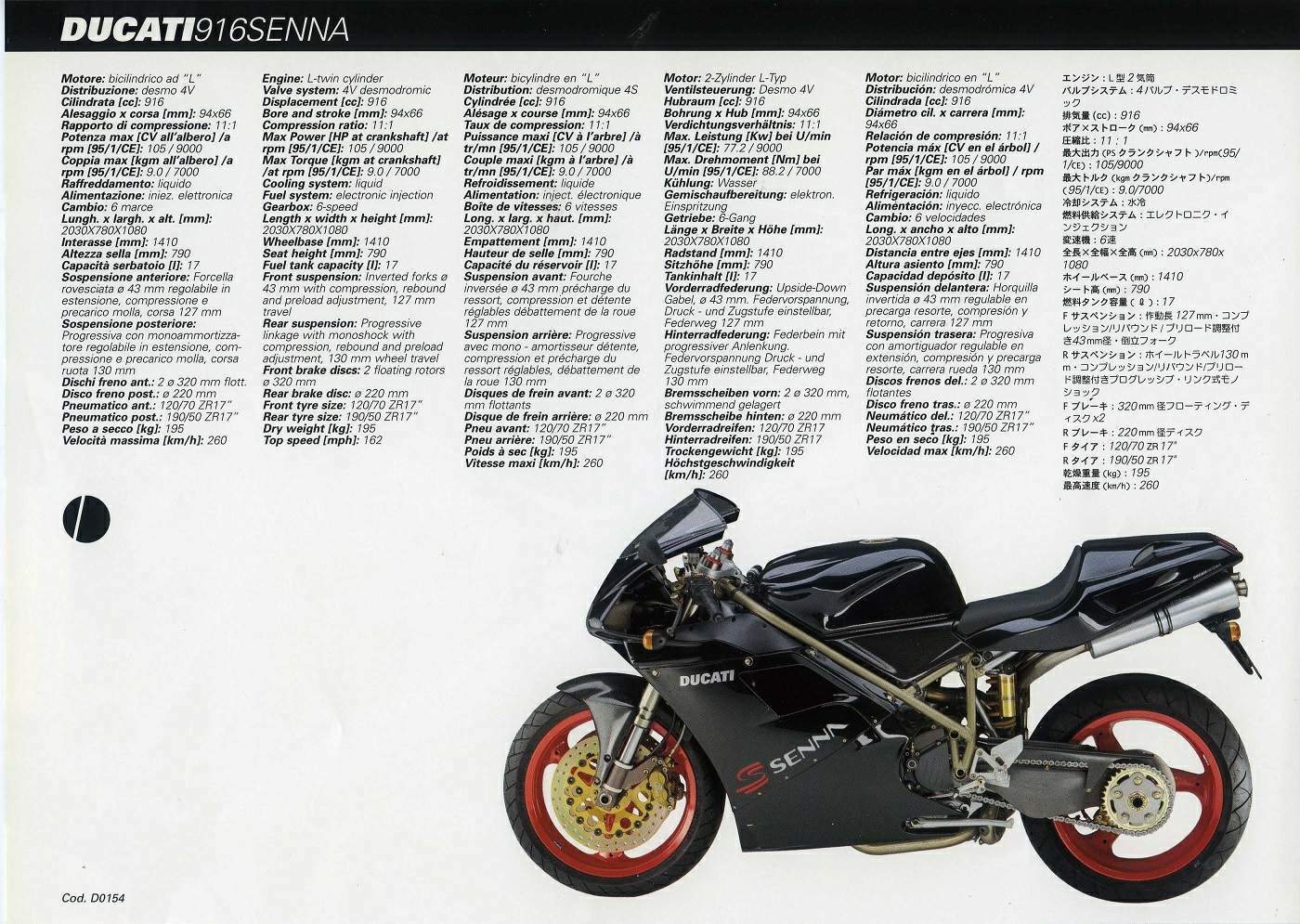
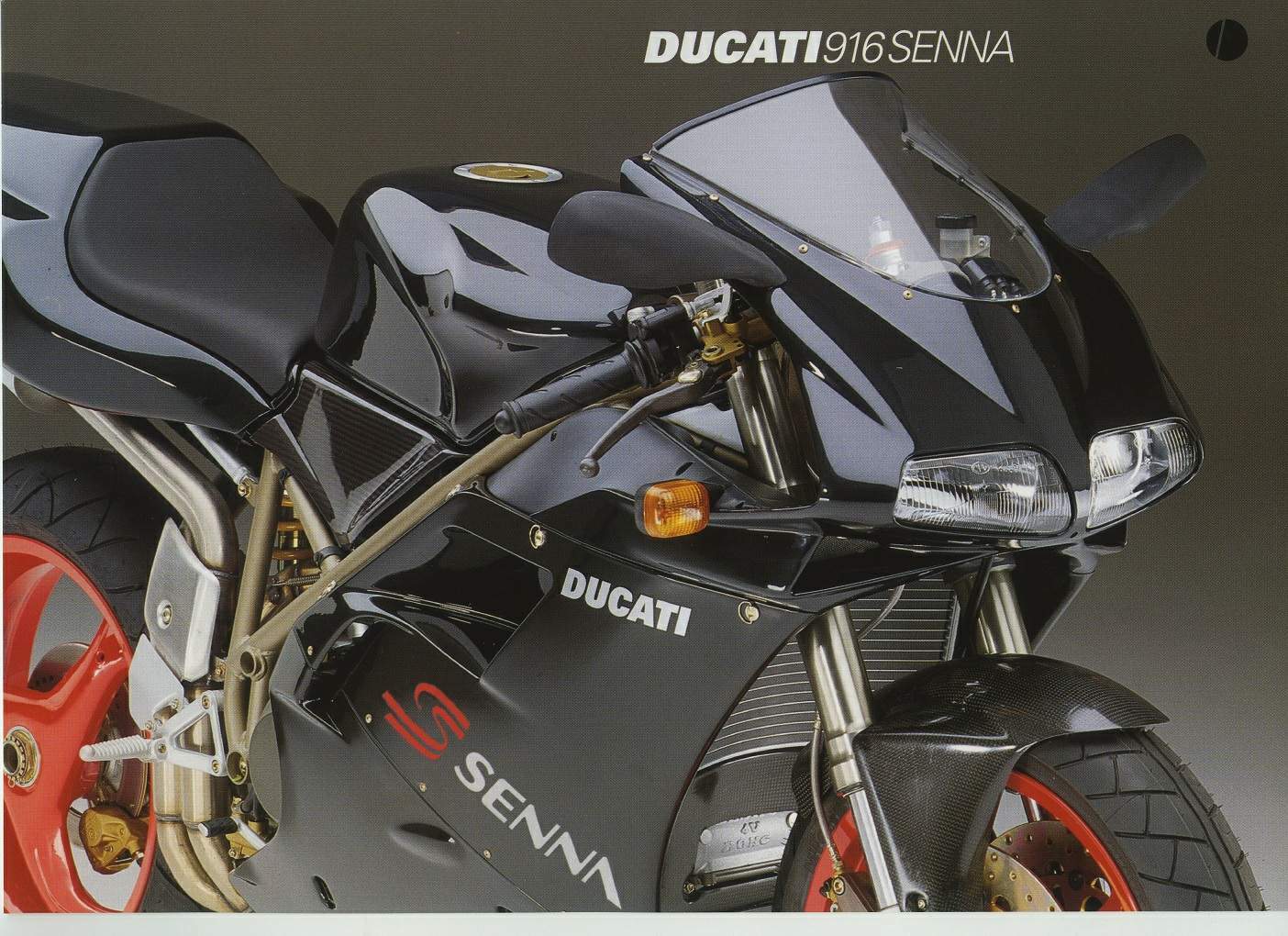
The great Brazilian Formula One driver Ayrton Senna was a friend of the Castiglioni brothers, and an owner of an 851. Only a few months before his death in 1994 Senna agreed to the production of a limited edition 916 Senna, with the profits going to the Senna Foundation. The Senna 1 appeared for 1995, and setting it apart from the regular 916 was the black and gray color scheme with red wheels. Apart from steel Pankl con-rods, the engine specification was that of the 916 Strada, while the chassis was similar to the 916 SP. This included the solo seat, aluminum rear subframe, Öhlins shock absorber, and fully floating cast-iron front brake discs. Also shared with the SP were adjustable brake and clutch levers, stainless-steel brake lines, and carbon-fiber front fender, clutch cover, chain guard, and exhaust pipe insulating panel. Because of production difficulties there was no Senna for 1996, but another series, the Senna II, was produced for 1997. These were virtually identical to the earlier version, but were painted a lighter gray. The final series was produced for the 1998 Model Year. These bikes were painted black and featured a carbon-fiber airbox and exhaust heat shield. The Senna missed the mark as a limited edition model because it was not quite as exclusive as anticipated, and only provided the performance of a 916 Strada.
|
|
|
Any corrections or more information on these motorcycles will be kindly appreciated. |