|
|

|
|
|
|
Classic Bikes
Custom Bikes
Individual
Racing Bikes AJP
AJS
Aprilia
Ariel
Avinton / Wakan
Bajaj
Benelli
Beta
Bimota
BMW
Brough Superior
BRP Cam-Am
BSA
Buell / EBR
Bultaco
Cagiva
Campagna
CCM
CF Moto
Combat Motors
Derbi
Deus
Ducati
Excelsior
GASGAS
Ghezzi Brian
Gilera
GIMA
Harley Davidson
Hero
Highland
Honda
Horex
Husaberg
Husqvarna
Hyosung
Indian
Jawa
Kawasaki
KTM
KYMCO
Laverda
Lazareth
Magni
Maico
Mash
Matchless
Mondial
Moto Guzzi
Moto Morini
MV Agusta
MZ / MuZ
NCR
Norton
NSU
Paton
Peugeot
Piaggio
Revival Cycles
Roland Sands
Royal Enfield
Sachs
Sherco
Sunbeam
Suzuki
SWM
SYM
Triumph
TVS
Ural
Velocette
Vespa
Victory
Vincent
VOR
Voxan
Vyrus
Walt Siegl
Walz
Wrenchmonkees
Wunderlich
XTR / Radical
Yamaha
Zero
Video
Technical
Complete Manufacturer List
|
Ducati 916
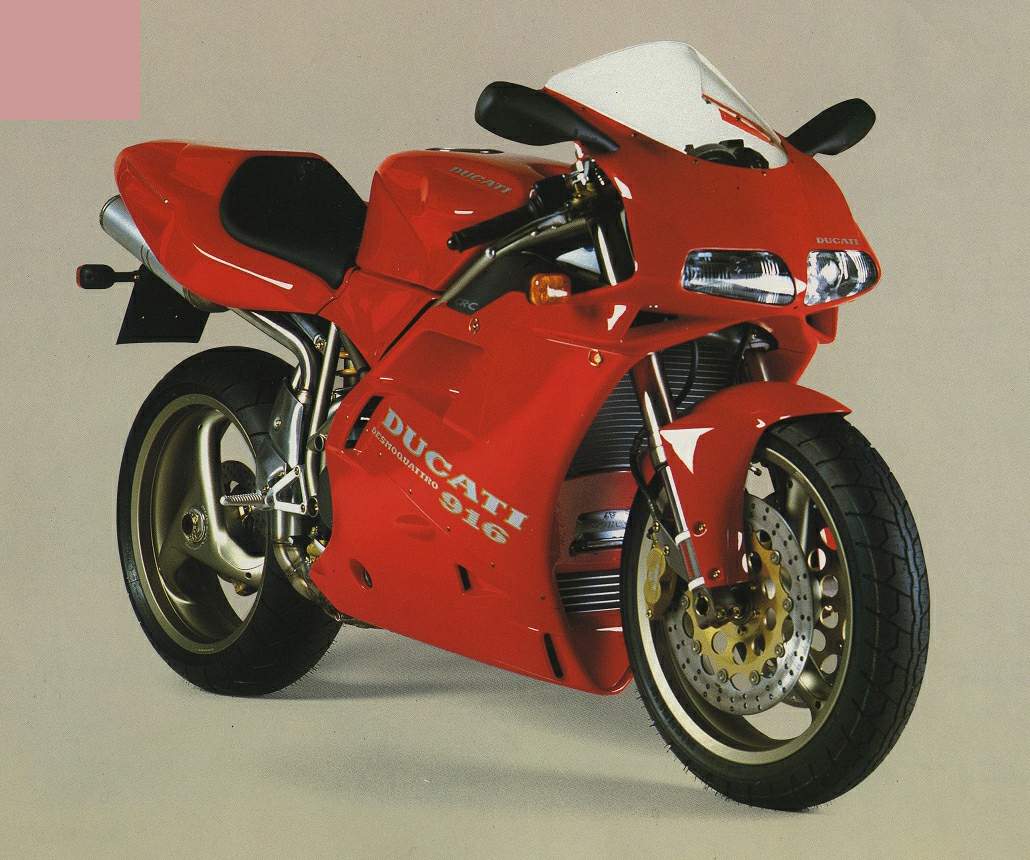
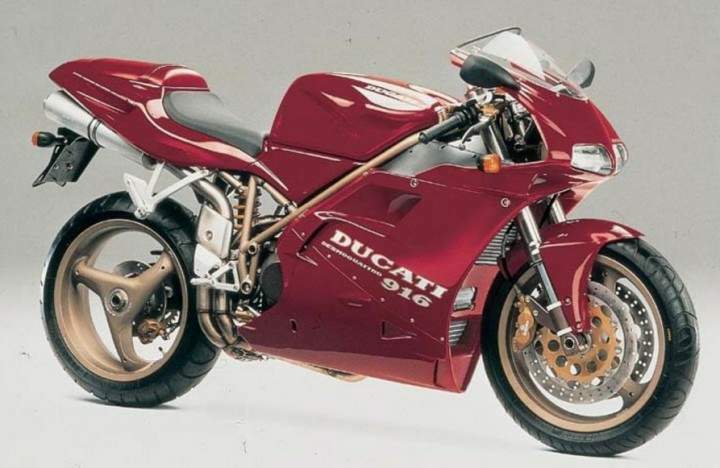
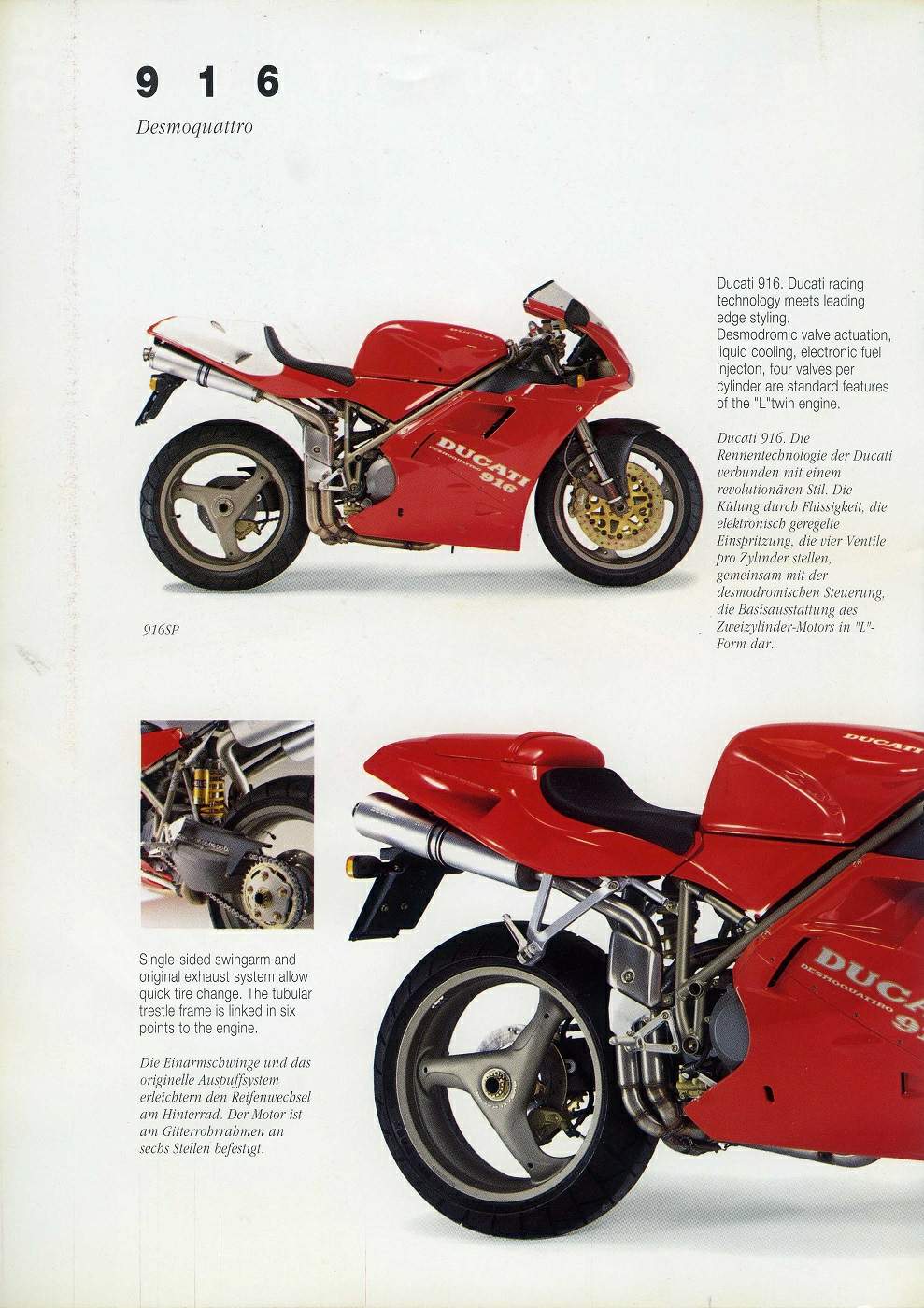
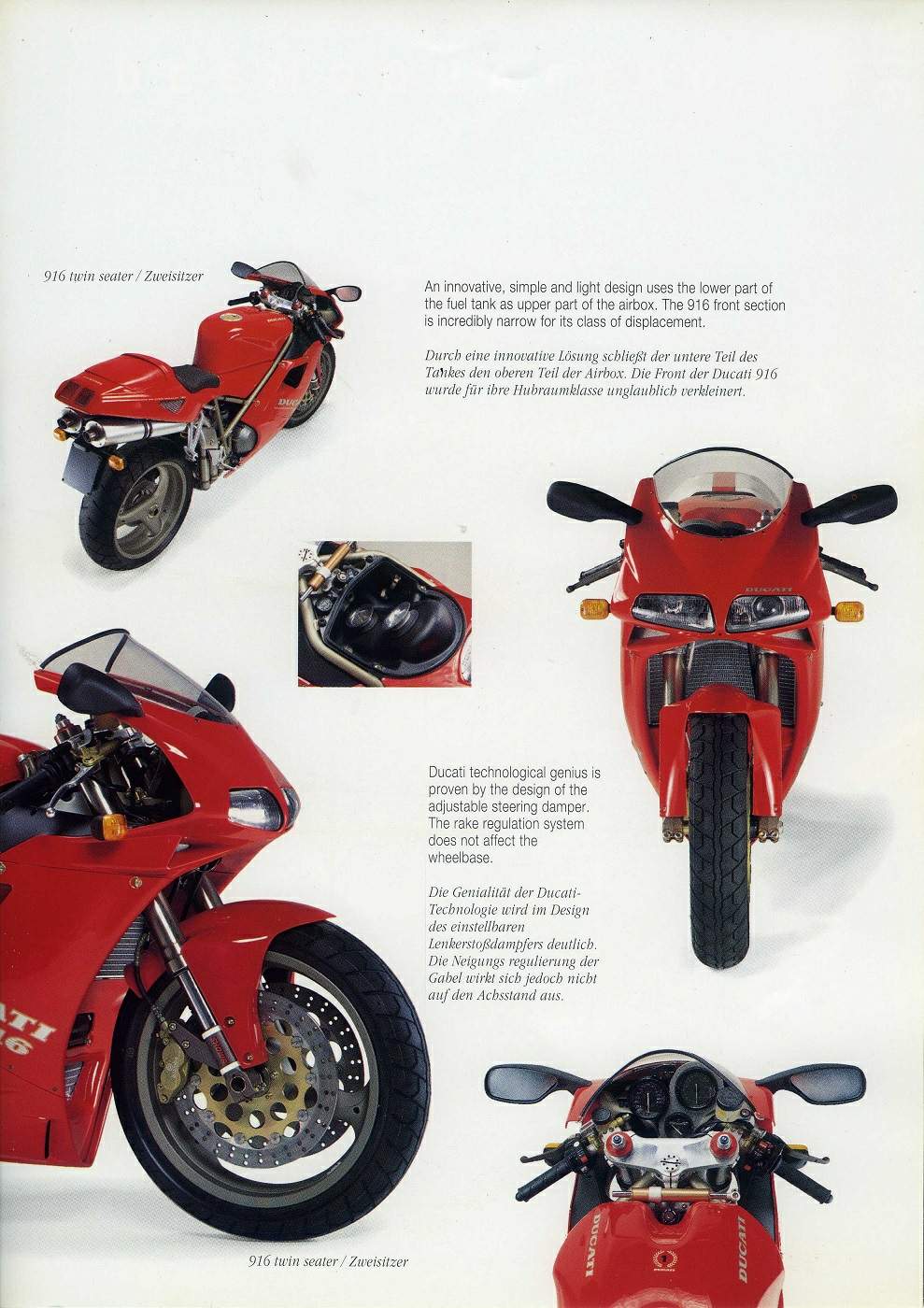
Rarely has a motorcycle combined style and speed to such devastating effect as Ducati's 916. The Italian V-twin's blend of breathtaking beauty, thunderous engine performance and sublime handling made it an instant hit on the bike's launch in 1994. By the end of the decade. 916-based machines had won a string of World Superbike titles. Meanwhile the roadster went from strength to strength, its engine enlarged but its look proudly intact. The 916 was a development of the liquid-cooled, eight-valve desmodromic V-twin line that stretched back to the 851 of 1988. More than simply aerodynamic, designer Massimo Tamburini's creation was inspired. The fairing's sharp nose held aggressive twin headlights. Elegant scarlet shapes were everywhere in the fuel tank and fairing.
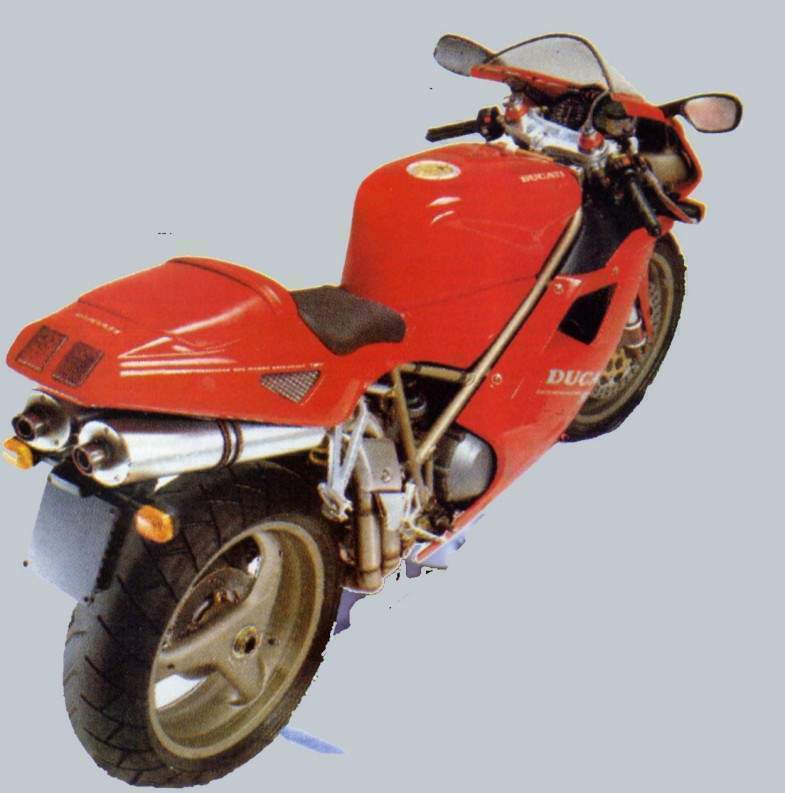
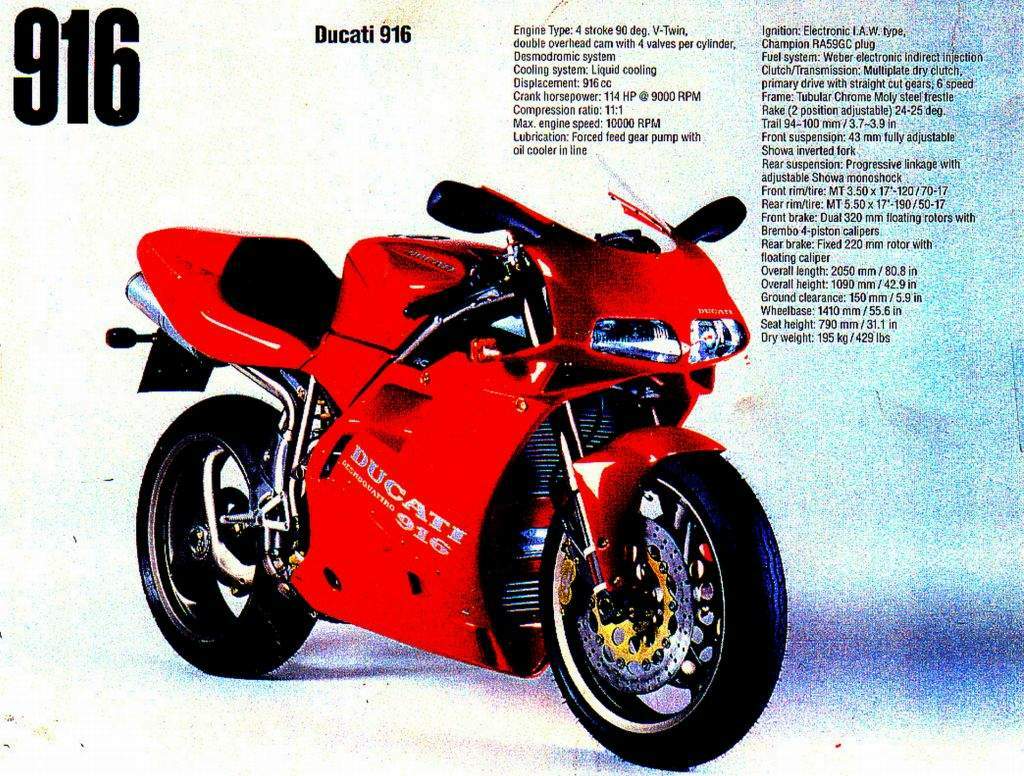
The rear end. with its diminutive tailpiece, high-level silencers and single-sided swingarm, was equally dramatic. Ducati's 916cc motor was a bored-out version of the unit from the previous 888 model. Other changes included a revised Weber fuel-injection system plus the addition of a larger, curved radiator. Breathing was uprated with a large airbox fed by intakes running back from the fairing nose. In combination with a new exhaust system, this raised the eight-valve motor's peak output by a few horsepower to 114bhp at 9000rpm. Chassis design combined Ducati's traditional steel ladder frame with a tubular aluminium rear subframe. The 916 differed from the 888 by using a second rear engine mount for extra rigidity. There was nothing traditional about the aluminium swingarm that curved round the huge 190-section rear tyre before swooping back to anchor the three-spoke wheel. Tamburini admitted that this was not the purest engineering solution, but considered the compromise worthwhile for the boost ii brought to the bike's high-tech image.
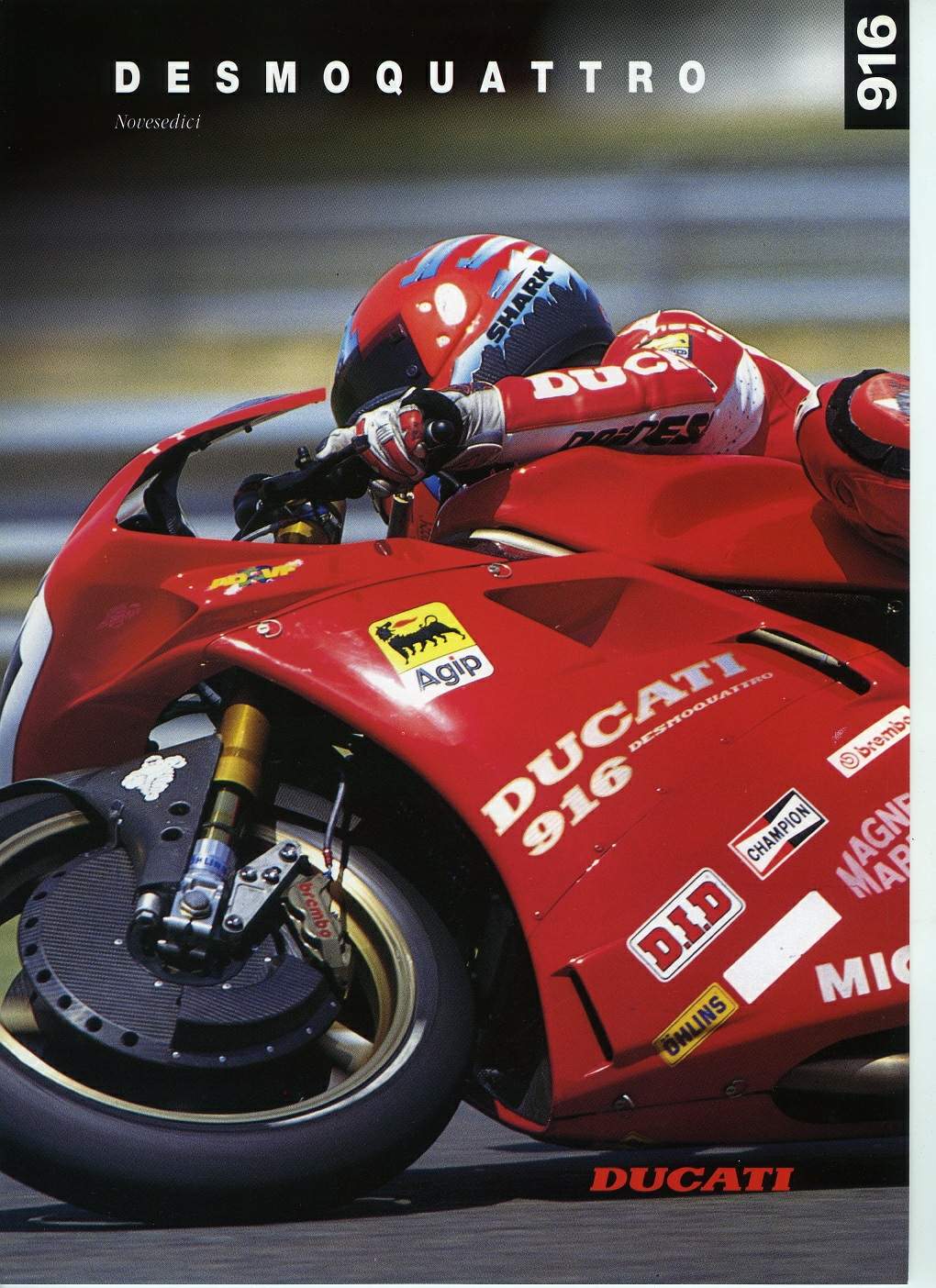
Neat engineering This most purposeful of Italian sportsters was not always an easy companion, especially in town, where its racy riding position, firm suspension and snatchy power delivery made life unpleasant. On the right road, though, the 916 was simply magical: one of those rare machines that left all those who rode it stunned by its unmatched combination of beauty, character and performance. Ducati's Superbike Dominance The roadgoing 916 was a hit in the showrooms, and Ducati's factory racebike of the same name was even more successful in the World Superbike championship. The red V-twins were the dominant force in the most prestigious four-stroke racing series, notably with Carl Fogarty. The British rider won in 1994 and again a year later. Australian ace Troy Corser retained the crown for Ducati in 1996 before Fogarty, who had left for Honda, returned to regain the title in 1998. His fourth championship, in 1999, made it five in six years for the Italian V-twin. Source of review: Fast Bikes by Roland Brown
|
|
|
Any corrections or more information on these motorcycles will be kindly appreciated. |