|
|
|
|
Classic Bikes
Custom Bikes
Individual
Racing Bikes AJP
AJS
Aprilia
Ariel
Avinton / Wakan
Bajaj
Benelli
Beta
Bimota
BMW
Brough Superior
BRP Cam-Am
BSA
Buell / EBR
Bullit
Bultaco
Cagiva
Campagna
CCM
CF Moto
Combat Motors
Derbi
Deus
Ducati
Excelsior
Fantic
GASGAS
Ghezzi Brian
Gilera
GIMA
Harley Davidson
Hero
Highland
Honda
Horex
Husaberg
Husqvarna
Hyosung
Indian
Jawa
Kawasaki
KTM
KYMCO
Laverda
Lazareth
Magni
Maico
Mash
Matchless
Mondial
Moto Guzzi
Moto Morini
MV Agusta
MZ / MuZ
NCR
Norton
NSU
Paton
Peugeot
Piaggio
Revival Cycles
Roland Sands
Royal Enfield
Sachs
Sherco
Sunbeam
Suzuki
SWM
SYM
Triumph
TVS
Ural
Velocette
Vespa
Victory
Vincent
VOR
Voxan
Vyrus
Walt Siegl
Walz
Wrenchmonkees
Wunderlich
XTR / Radical
Yamaha
Zero
Video
Technical
Manufacturer List Contact
|
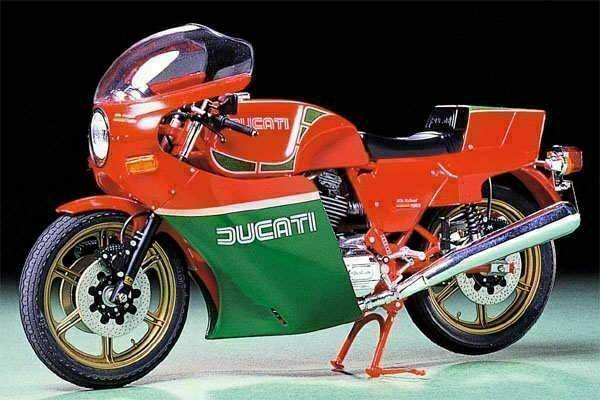
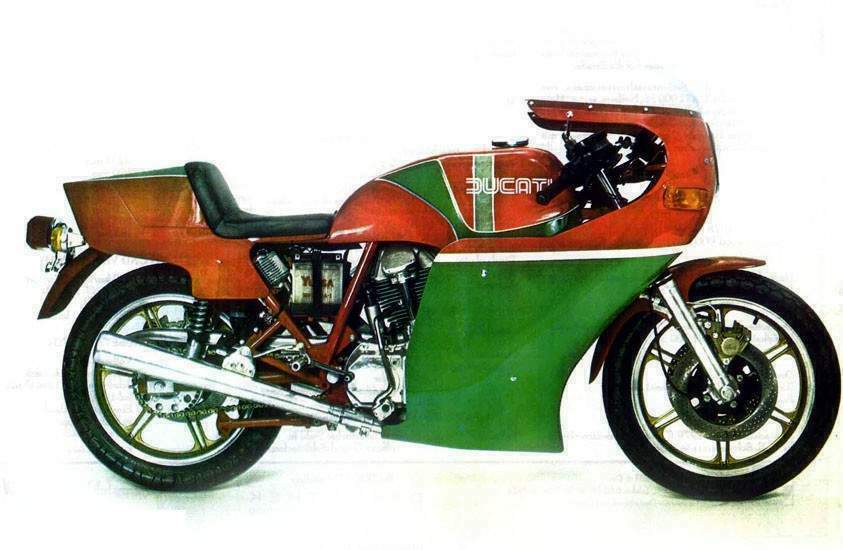
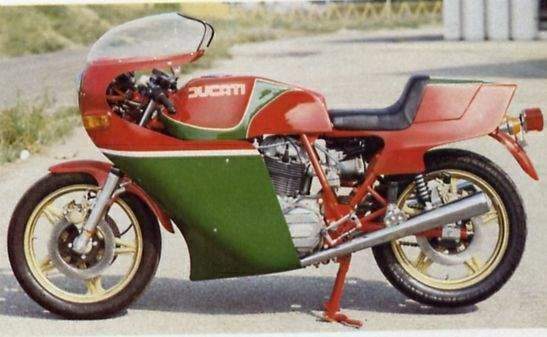
Ducati 900 MHR
The Ducati MHR Mille is a racing legend. In 1978 a many times World Champion named Mike Hail-ood made a fairy-tale comeback aboard a beefed-up street bike and against all odds won one of the most prestigious races of all time - the gruelling, six lap, 226 mile Formula One TT on the Isle of Man.
Hailwood's bike was a hastily-cobbled together factory Ducati which beat much more powerful fully-fledged Japanese racers on its way to the chequered flag. Ducati were so pleased with the success, they released a limited edition of Mike Hailwood Replica (MHR) machines shortly afterwards. That bike was a 90 degree, V-twin of 864cc capacity, a design essentially unchanged since 1975. A lot of troubled water has flowed under Ducati's bridge since then. They were taken over by Cagiva and their 500, 600 and 900cc engines and frames have been updated and restyled, and are now sold under the Cagiva banner.
In 1984 however, a bike was launched to thrill every Ducati lover the world over - a 1000cc MHR, a bored and stroked version of the popular 900MHR, bigger and better than ever. The big V-twin's calling card has always been massive torque. The bike has tall gears and long legs while the motor sports two of the biggest pistons in captivity. It is not a high-rewing engine but makes plenty of power low down, in a relaxed, unhurried manner. The new 1000 machine has been substantially updated and comes with revised bevel drive, Nickasil barrels, a hydraulically operated dry clutch and a new, one piece, nitrided crankshaft running in plain bearings. In perfect primary balance, the 90 degree V-twin still features Ducati's original desmodromic valve operation with rockers that both open and close the valves.
The frame is a delicate-looking but immensely strong and rigid open spine type cradle using the crankcase as a structural member.
The large full fairing hides the skeletal, rather elemental profile of the bike though nothing can disguise its thunderous performance. There is nothing frantic about riding a Ducati even on an open road. The low frontal area and a very long wheelbase give excellent stability and roadholding.
The Ducati is a pure, unadulterated thoroughbred; a lean and hungry racer, one of the last real motorcycles. Many have described the essential Ducati experience as being akin to riding God's own motorcycle.
Despite its considerable charisma and the myths and folklore that have sprung up around it, it is a fact that in the real world, a large Ducati is as fast on a tar road, point-to-point, as any comparable bike. Long may Ducati continue to flourish.
History Early in 1983 work began on updating the 900 MHR. Over the previous two years the 900 MHR had been the mainstay of the Ducati bevel-drive line-up but. as with the 900 Super Sport a year earlier, itsdays were numbered as a kick-start only motorcycle. When the time came for an update with an electric start, Ducati chose to base the new MHR on the 900 S2 rather than the earlier SS. The new series 900 MHR was also offered as kick-start only, featuring the earlier square-case engine in thenewchassis, but the majority of 1984 900 MHRs were electric start. There also wasn't a direct transition between kick-start engines with the older or new chassis, but all electric start MHRs featured the new chassis, as did the 25 kick-start 900 MHRs built in 1984. The kick-start engine was shared with the 900 S2, and all the updates covered in the previous section. Engine Although maintaining the same basic architecture as the existing square-case engine, the 1984 updates were the most significant since the first 860 appeared back in 1974. Developments included a dry clutch, revised electrics, a new electric start, and restyled outer engine covers. The resulting 900 was one of the finest bevel-drive engines, and even smoother and more powerful than other 900s. As the new engine was electric start, engine numbers continued that of the 900 S2, beginning around DM860. The new crankcases also featured the same developments that appeared on the kick-start engine after DM860 096314. These included the different crankcase screws, oil level sight glass and spin-on oil filter, but there was now an additional magnetic sump plug. The dipstick filler was removed and the hole cast over. Most of the engine internals were unchanged, including the pressed up crankshaft with 38mm crankpin. needle roller big-end bearings, one-piece forged 145mm con-rods, and 20x59mm gudgeon pin. The only difference between the new and older crankshaft was a slot machined in the right end of the crankshaft for ignition timing checking. Although the same 9.3:1 compression ratio was maintained, the forged Cermetal NC20 86mm pistons were now matched with Gilnisil-coated cylinders without removable liners. Only two bushes were now used to locate the cylinder head with the cylinder, and there were new cylinder base gaskets. To reduce engine noise, each cylinder had 22 rubber plugs in the fins. There was no change to the design of the desmodromic cylinder head, but all valve guides were cast-iron, as were the valve seats. 25 rubber plugs were inserted between the cooling fins. The camshaft drive was unchanged, the lower bevel gear pins including the retaining circlip as on the final kick-start engines. Apart from a new oil pump casing the oil pump was unchanged, as was the lubrication system. All electric start 900 MHRs featured a spin-on oil filter. Although the Bosch ignition system was ostensibly unchanged, there was also a new ignition rotor on the crankshaft and the maximum advance was reduced to 28 degrees, with a static figure of five degrees. As on the 900 S2 the ignition coils were now Motoplat instead of Bosch, without the two Bosch resistors, and mounted on the front frame downtubes. The high voltage resistance was still 8800 Ohm, but the Motoplat coils were less reliable than the Bosch. While the same helical 32/70-tooth primary drive ratio was retained, the gears were new. The flywheel was lighter, with machined flat sides, the crankshaft gear and the clutch driving gear now inboard of the steel dry clutch basket. This clutch driving gear was supported by 25x52x15mm and 25x47x12mm bearings and splined to the outer clutch drum. The hydraulically-actuated dry clutch was a significant update over earlier designs featured a revised clutch plate layout. Similar to that of the Pantah, this now included six metal driven plates with seven friction driving plates. There was an outer metal pressure plate and six 42mm springs. Early in the 1984 model year an additional metal driven plate was added to reduce clutch slipping. The clutch actuation system through the gearbox main shaft was similar but for modifications to include the hydraulic slave cylinder. There was little change to the gear box; the only updates were to the main shaft to incorporate the dry clutch, and an internal oil seal. The output gear was also revised to include an improved internal oil seal. Although the basic electric start system was unchanged, there was a much smaller (and lighter) 0.7kW Nippon Denso starter motor. A lower chain drive gear accompanied this to the crankshaft drive. Although the Nippon Denso motor was troublesome on the later Mille. it had no problem starting the 864cc engine with its ball and roller bearing crankshaft. A two-piece outer clutch and primary drive cover incorporated the new electric start and dry clutch, and was accompanied by a new alternator and hydraulic slave cylinder cover on the right. The result was very attractive, and the electric start and alternator covers more compact. The alternator cover now included a removable plate with 'ELECTRONIC IGNITION' engraved on it, as well as a plastic oil filler plug. This was an unusual feature considering electronic ignition had been featured on the bevel-drive engine for nearly 10 years, and also considering the ignition was actually on the other side of the engine. Carburetion was by Dell'Orto PHM 40BDand BS carburettors, breathing through individual air filters as on the 900 S2. Also like the S2 the air filter boxes were painted red and breathed though normal rigid plastic intakes. The aluminium intake manifolds were now identical front and rear, although the front incorporated a special screw for a line to the vacuum fuel tap. Both carburettors had cable-operated chokes, with the plastic black lever being situated near the regulator. The exhaust system was also shared with the 900 S2 and included Silentium mufflers, although Contis were an option. For some markets a two-into-one Conti exhaust was fitted as standard, this exiting on the left. The claimed power for the new 900 was 72 horsepower at 7000rpm, with a top speed of 222km/h. Chassis While retaining strong visual links with the previous 900 Mike Hailwood Replica, the 1984 version was 900 S2-derived rather than Super Sport-based. Despite factory claims the new 900 MHR was heavier, longer, and taller than its predecessor. The red-painted frames for both the kick-start and electric start 1984 900 were identical. As the clutch was still cable-operated, the black clutch lever, bracket, and adjustment mechanism was as on the 1983 900 MHR. The black brake lever was also from the earlier model, as were the Verlicchi handgrips. New black Verlicchi clip-on handlebars set the electric start 900 MHR apart. These were also forward-set, but provided adjustment in three planes. The clutch master cylinder (with black dog-leg lever) was on the left handlebar, and the plastic twin-cable Verlicchi throttle was the 900 S2 type, incorporating the starter button and engine stop switch. Most of the frame fittings were from the 900 S2, including the aluminium foot levers and the folding footpegs with rubbers. The gearshift and brake pedals used the earlier rubbers, these changing to a ribbed type during 1984. The gearshift linkage still used a balljoint with a clevis pin. and the passenger footpegs were the newer 900 S2 type. The electrical system was similar to the 900 S2, but the electric start version featured some updates. This included a 170mm Carello H4 60W headlamp and a revised instrument panel with eight LED warning lamps under an opaque cover. Designed for the impending Mille, the fuel and oil pressure indicators weren't connected on the 900. Kick-start versions retained the earlier warning light arrangement between the Nippon Denso speedometer and tachometer. Both kick-and electric start models shared the larger CEV taillight and stalk-mounted indicators with the 900 S2. Although the 1984 900 MHR was considered an interim model, many more electric start versions (1457) were produced than the later Mille. By 1984 the Mike Hailwood Replica was really an anachronism as 18in wheels and twin shock absorber rear suspension was unfashionable. This year was a transitional one for Ducati as it moved towards Cagiva ownership and the 900 MHR was a confused product. While the engine demonstrated the finest aspects of a decade of evolution, the chassis was seemingly designed to appease style and practicality. The result was a motorcycle functionally inferior to its predecessor, but one that would see the bevel-drive engine through until its demise. Source Ducati Bible
|
|
|
Any corrections or more information on these motorcycles will be kindly appreciated. |