|
|

|
|
|
|
Classic Bikes
Custom Bikes
Individual
Racing Bikes AJP
AJS
Aprilia
Ariel
Avinton / Wakan
Bajaj
Benelli
Beta
Bimota
BMW
Brough Superior
BRP Cam-Am
BSA
Buell / EBR
Bultaco
Cagiva
Campagna
CCM
CF Moto
Combat Motors
Derbi
Deus
Ducati
Excelsior
GASGAS
Ghezzi Brian
Gilera
GIMA
Harley Davidson
Hero
Highland
Honda
Horex
Husaberg
Husqvarna
Hyosung
Indian
Jawa
Kawasaki
KTM
KYMCO
Laverda
Lazareth
Magni
Maico
Mash
Matchless
Mondial
Moto Guzzi
Moto Morini
MV Agusta
MZ / MuZ
NCR
Norton
NSU
Paton
Peugeot
Piaggio
Revival Cycles
Roland Sands
Royal Enfield
Sachs
Sherco
Sunbeam
Suzuki
SWM
SYM
Triumph
TVS
Ural
Velocette
Vespa
Victory
Vincent
VOR
Voxan
Vyrus
Walt Siegl
Walz
Wrenchmonkees
Wunderlich
XTR / Radical
Yamaha
Zero
Video
Technical
Complete Manufacturer List
|
Ducati 851 Superbike Kit
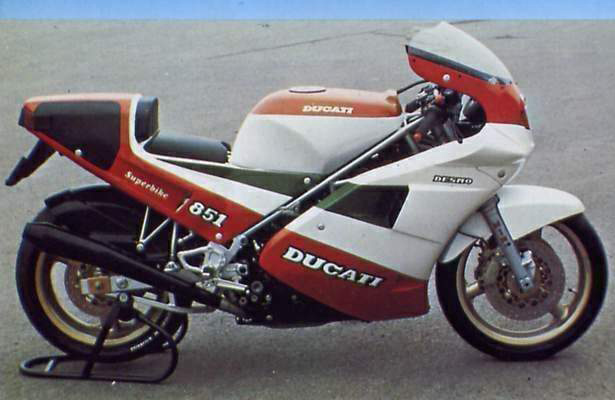
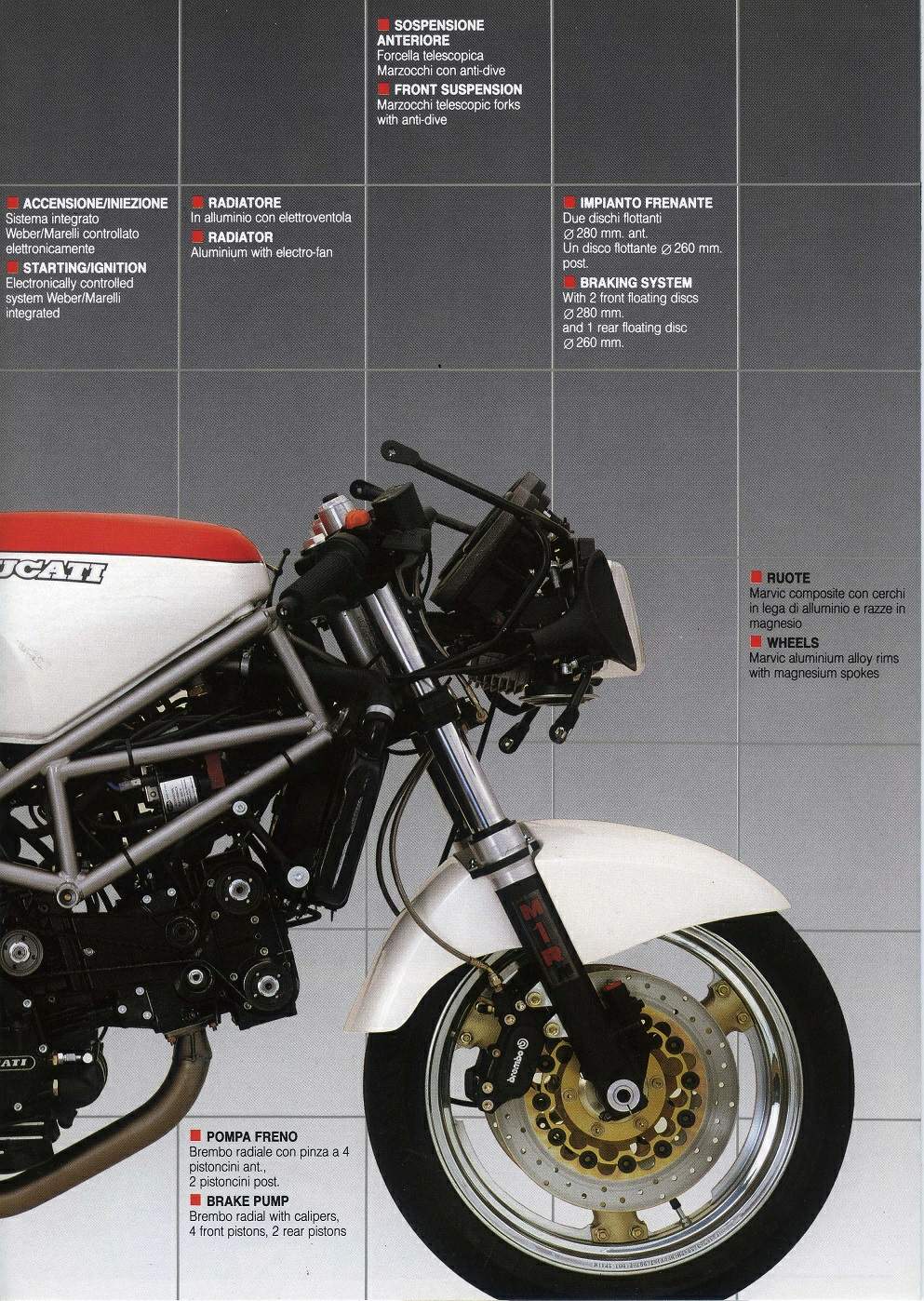
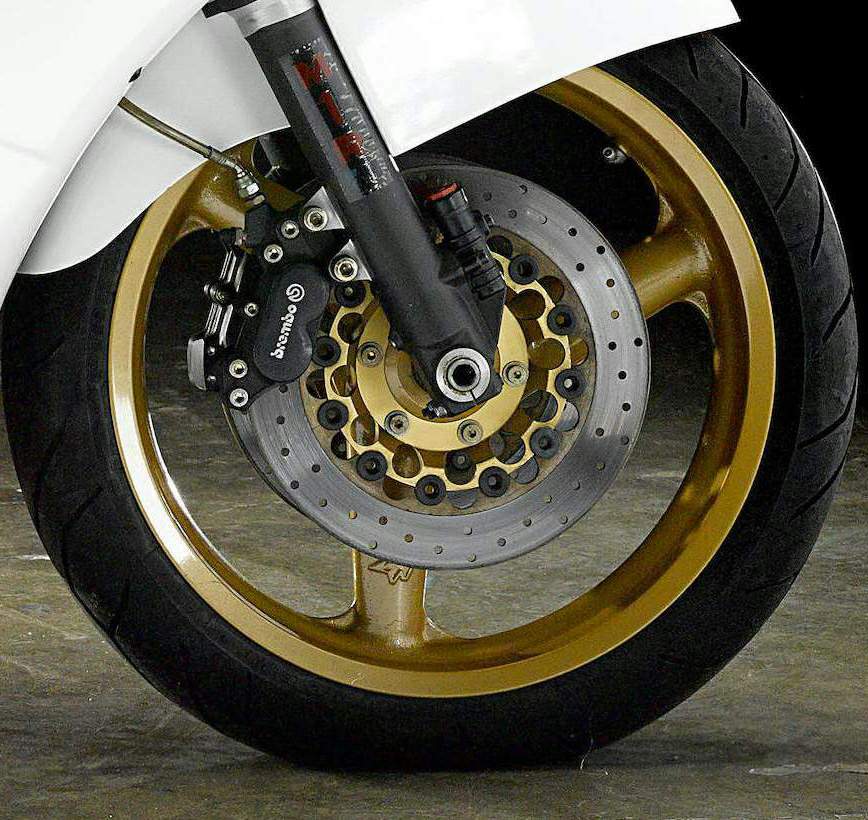
The first production ducati desmoquattro was the 851 of 1988, with four-valve desmodromic cylinder heads, liquid cooling and weber marelli electronic fuel injection. only a small number of tri-colore 851's were produced during 1988, with approx. 54 designated for the us. the 851 superbike kit was the homologation model for world superbike racing and approx 20 came to the us. the tubular steel frame was derived from the f1 with an aluminum swing arm and a rising rate linkage rear suspension. the wheels on the 851 superbike kit are 17 inch racing magnesium. these bikes came with an electric start, headlight and taillight. the brakes are full floating brembo. Differences between Strada and Superbike kit 851 Superbikes Kit version Braced swingarm Close ratio gearbox Open dry clutch cover and factory race clutch 17 inch magnesium Marvic light wieght wheels ( slicks supplied ) Race cam shafts Race ECU Faring cut out on the left hand panel for air ram duct Reverse cone race mufflers Tacho and temp guages only Plastic shield on the head light for endurance racing at night One thing that was a tell tail sign of it being a Kit was a round ring on the seat which only the 1st 200 bikes had , it was a fault in the mould for the seat by the manufacturer. There was only 207 units hand built of this bike and they are basically a factory race bike with a output of 120hp and not actually road legal in this trim. Ducati 851 Superbike Kit Motorsprint Test 1988
851 Superbike Strada 16 inch marvic and akront composite wheels Street ratio gear box Street cams Unbraced swing arm Closed clutch cover Full dash with speedo Road legal mufflers
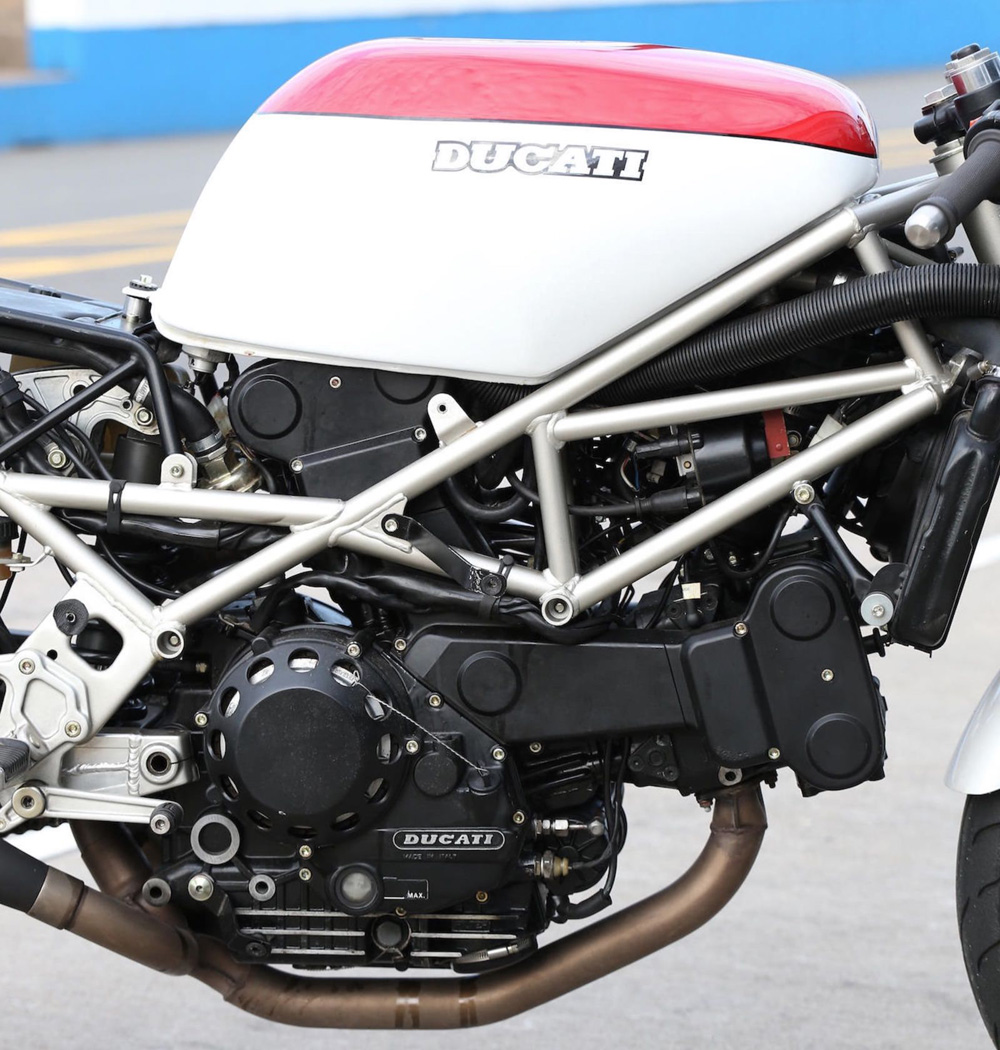
Ian Falloon from Motorcycle Trader magazine looks at the bike which started Ducati down the path to dominance in world superbike racing... Ducati stunned the motorcycle world 21 years ago by unveiling a new liquid-cooled, four-valve, fuel-injected twin at the Bol d'Or 24-hour endurance race. Displacing 748cc to comply with FIM regulations the 748 set a new standard for ugliness, and only lasted 13 hours. Despite this inauspicious race debut the Desmoquattro (Desmodromic cams with four valves per cylinder) project was up and running. Ducati's great engineer Fabio Taglioni had favoured building a V-four but when the four-valve V-twin engine exceeded 100 horsepower on the factory dyno in 748cc form its future was assured. The Desmoquattro soon grew to 851cc then 888cc before EVOlving into the 916 and 996 versions and eventually the Testastretta. Over its twenty-one year history this has been one of the most successful motorcycle designs ever, both on and off the race track. As Ducati was a manufacturer producing less than 50,000 motorcycles a year the homologation requirements for the new World Superbike series required 200 units of the 851 to be built for 1988. This homologation machine was the 851 Superbike Kit, a confused mixture of racer and street bike. It was certainly the only racing bike that came from the factory with Michelin racing slick tires, electric start, headlight and taillight. Alongside the 851 Superbike Kit was the first street series of 851, the 851 Strada. These were limited production machines, with only 304 manufactured in April 1988. Compared to any other twin on the market in 1988 the 851 Strada was groundbreaking. It was the only motorcycle with an open-loop fully-mapped electronic fuel injection system. The Weber Marelli IAW system was originally developed for the Ferrari F40 sports car and Formula One and incorporated a computer with an EPROM (electronically programmable read only memory). This contained a map of fuel and ignition requirements derived from dyno tests. Although the first 851 Strada only produced a modest 102 horsepower at 9,000 rpm this was considerably more than any other twin available in 1988.
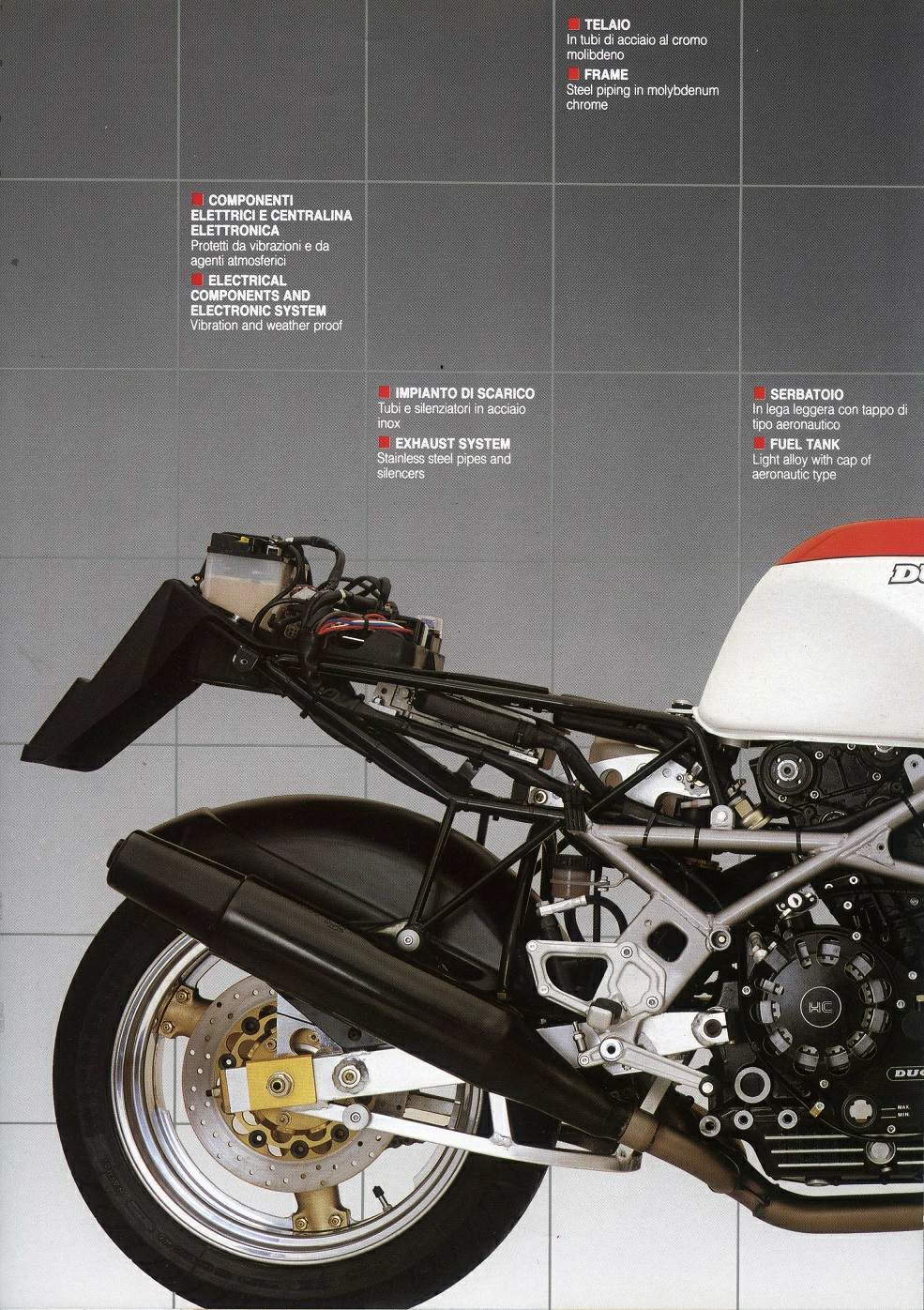
When it came to the frame and suspension Ducati continued its tradition of EVOlution of existing designs. The frame was based on the 750 F1, but with a rising-rate rear end and the 16-inch Marvic/Akront composite wheels (aluminium rims with magnesium spokes) from the limited edition 750Montjuich. As it was a limited production item many of the components were individually crafted, including the 20-litre aluminium fuel tank and rear-suspension rocker linkage. Unfortunately, while the quality of execution was high the 1988 851 Strada was a flawed motorcycle. The performance was disappointing considering the hype, and the claimed dry weight of 185 kilograms was optimistic. Yet while the 851 Strada didn't live up to every expectation it is important because this is where the Desmoquattro story began. At the first World Superbike race at Donington on April 3, 1988 Marco Lucchinelli rode the factory 851 to overall victory. It was the beginning of nearly twenty years of desmo domination that shows no sign of abating.
FIVE THINGS ABOUT THE 851 1. Ing. Massimo Bordi joined Ducati in 1978 after completing an engineering thesis on an air-cooled, four-valve, desmodromic cylinder head. He initially worked on diesel engines before assisting Fabio Taglioni with the bevel-drive Mille. 2. Bordi was also a particular admirer of Cosworth, an English company created by Mike Costin and Keith DuckWorth, that produced some of the most successful ever Formula One car racing engines. 3. From September 1985 until January 1986 Bordi worked with Cosworth on the four-valve cylinder head design. Cosworth offered to develop and produce a prototype non-desmodromic engine for 1.5 billion Lire. As it had unsuccessfully experimented with desmodromics on its DFV/DFY V-eight it wouldn't commit to a desmo. 4. Bordi considered four-valve heads with conventional valve springs, five valves (as with the Yamaha), or six valves (Maserati) but finally decided on a four-valve desmo. Bordi wanted to call it the 850 but Gianluigi Mengoli persuaded Bordi to call it the 851, to avoid any association with the doomed Fiat 850 automobile. 5. In early 1986 Mengoli began initial engine drawings, completing these in April. The first design had straight ports inclined at 30 degrees, with very close rockers and side-mounted spark plugs but was soon revised to allow space for a central spark plug. Following Bordi's departure from Ducati in 2001 Mengoli has been technical director. Source Bikepoint
|
|
|
Any corrections or more information on these motorcycles will be kindly appreciated. |