|
|
|
|
Classic Bikes
Custom Bikes
Individual
Racing Bikes AJP
AJS
Aprilia
Ariel
Avinton / Wakan
Bajaj
Benelli
Beta
Bimota
BMW
Brough Superior
BRP Cam-Am
BSA
Buell / EBR
Bullit
Bultaco
Cagiva
Campagna
CCM
CF Moto
Combat Motors
Derbi
Deus
Ducati
Excelsior
Fantic
GASGAS
Ghezzi Brian
Gilera
GIMA
Harley Davidson
Hero
Highland
Honda
Horex
Husaberg
Husqvarna
Hyosung
Indian
Jawa
Kawasaki
KTM
KYMCO
Laverda
Lazareth
Magni
Maico
Mash
Matchless
Mondial
Moto Guzzi
Moto Morini
MV Agusta
MZ / MuZ
NCR
Norton
NSU
Paton
Peugeot
Piaggio
Revival Cycles
Roland Sands
Royal Enfield
Sachs
Sherco
Sunbeam
Suzuki
SWM
SYM
Triumph
TVS
Ural
Velocette
Vespa
Victory
Vincent
VOR
Voxan
Vyrus
Walt Siegl
Walz
Wrenchmonkees
Wunderlich
XTR / Radical
Yamaha
Zero
Video
Technical
Manufacturer List Contact
|
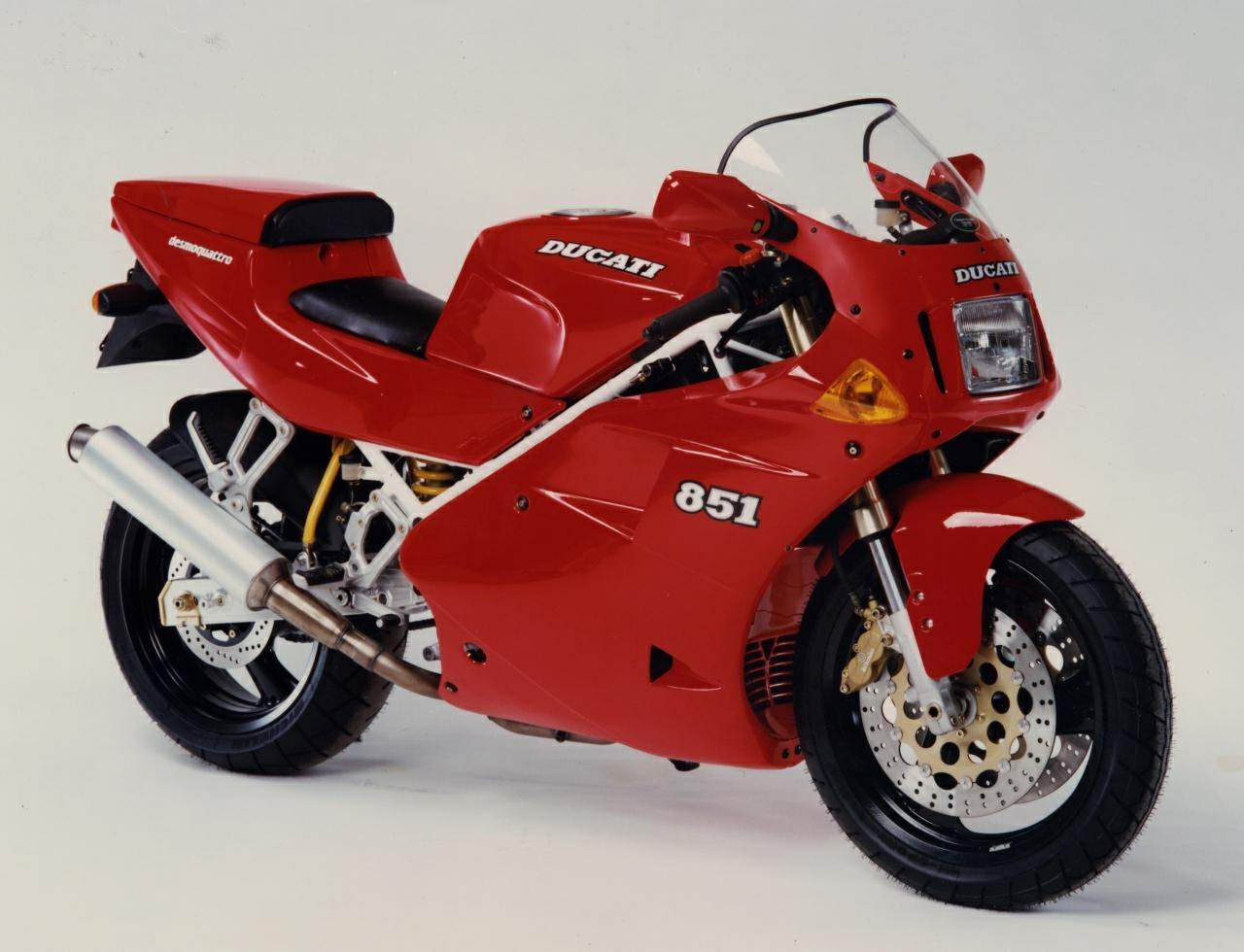
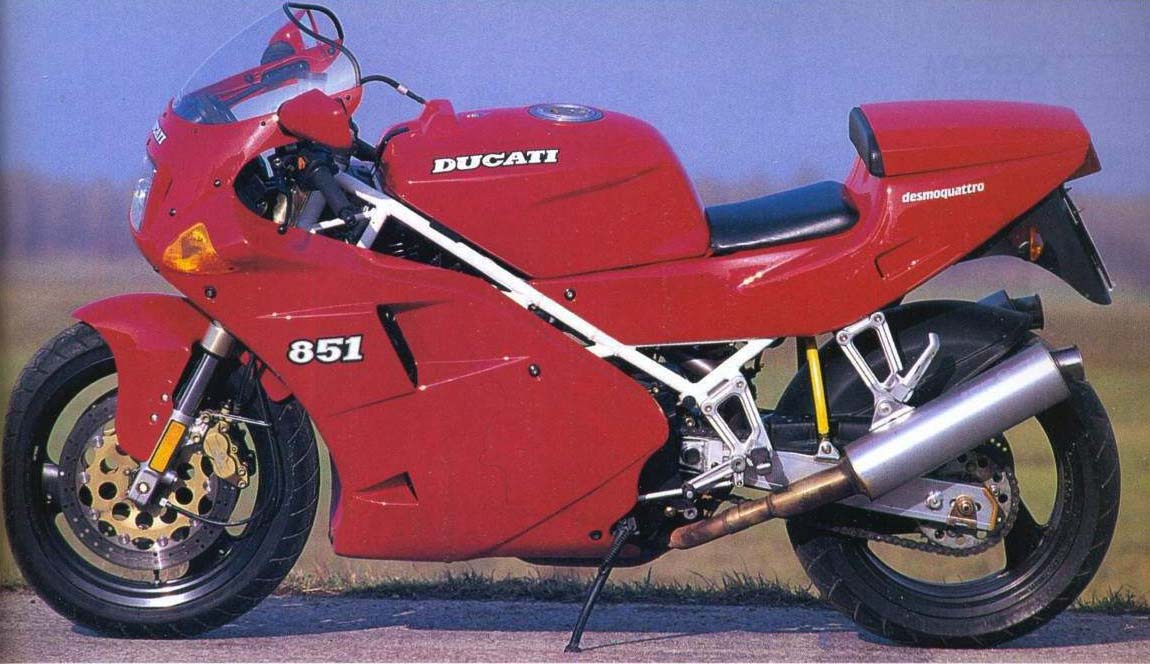
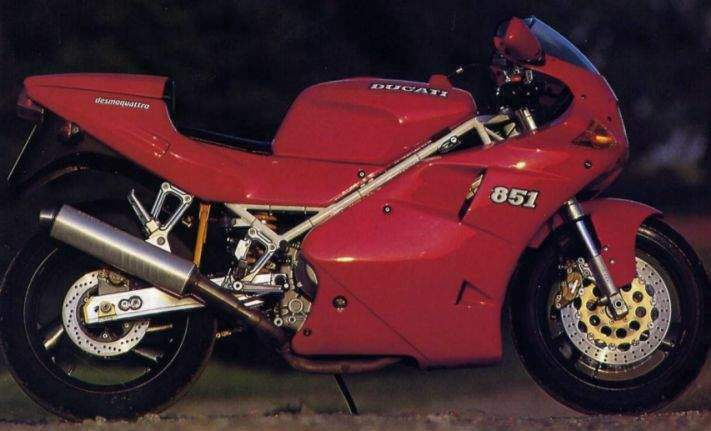
Ducati 851 Strada
Moto Guzzi vs Ducati 851 IN BETWEEN DUFFING UP Ice Warriors, scrapping with Sea Devils, dicing with Daleks and playing 'hide mm the sonic screwdriver' with Jo, Sarah and The Brigadier, Dr Who — the Jon Pertwee Dr Who that is — would have bimbled about on a Guzzi Daytona. Just the thing to go with his 200mph jalopy and inter-stellar telephone kiosk. "Jo, Jo," the good Doctor might have said one pleasing 1972 Sunday morning just after Follifoot but before Farmers World, "wanna go for a burn?" He didn't, of course, but like all such things, Pozi-drives that perform micro surgery and yellow charabancs that blow off villainous Mk III Jags, the new Guzzi Daytona is too good to be true. On paper, it's a basic relic. On the street, it's a very able, credible and enjoyable sports tourer. Performance-wise, it's a revelation. In short, this is a damn good bike.
OK, SO IT LOOKS A BIT strange; you need legs as long as 'Magic' Johnson to .operate the sidestand; in the middle of the frame's side plates is what looks like a Fiesta kitchen roll dispenser and the stainless collector box is about as aesthetically appetising as a colostomy bag. But, to hell with it, the Daytona goes, fantastically, and makes anything so much as a Le Mans seem the idiosyncratic pile of history it now is. Even a first look impresses. Neat white-faced Veglia clocks and crisp Honda-style switchgear give an air of no-frills purpo-sefulness, which, for the first time in years, I was inclined to believe. That's more than can be said for the neutral light, of course, and the Guzzi's style and finish may not yet be up to Ducati standards - but at least it now looks like it's from the same decade. Where the 851, after three or four redesigns since 1987, looks as pure as a snooker ball and is the sexiest thing since Kylie discovered fishnet, the Daytona betrays rough edges, hints at safe compromise and strange-looking women on the shores of Lake Como (location of Guzzi's factory).
Where the enfuriatingly-gorgeous Duke is all wafer-thin fibreglass; delicate latice-work tubing, and scanty ally castings -lightweight, single-minded and not exactly durable - the inside of the Daytona's thick, gleaming fairing looks like a homemade canoe and the rough cast, chunky aluminium side plates seem about three times as thick and four times as heavy as they need be. It may be like comparing a cream cracker to a house brick, but I know which I'd bet on surviving 30,000 miles. The Guzzi is the sports-tourer to Ducati's sportster; the redoubtable old-stager rather than young gun; the John Wayne rather than Emilio Estevez. Its red paint isn't as brazen. Its lettering is in classic gold rather than the Ducati's stark white, and the grey seat is built for comfort rather than speed. It's also, still, unmistakably heavy metal Guz Gorilla. Straddle the seat, bash your knees on the rocker boxes, curse the springy sidestand and remind yourself of the Guzzi lurch to the right when the mill fires and the crank turns its first. But after that, it's all purposeful, no mucking about, no excuses performance. The advantages the Daytona's fuel injection brings are the most immediately obvious. The throttle action is light, the response brisk, the bark from the twin Lan-franconis a rather muted, stately rumble that Lord Wossisface probably had in mind when he tried to build a grand tourer V-twin 10 years ago but instead came up with the Hesketh. This is not the impressive/ deafening/attention-grabbing bellow-(of the exhaust)-ker-chinng (of the dry clutch) which the Ducati emits. But so what? The impressive/deafening/attention-grabbing bellow of the DucaH is what got me nicked by some swine with a hairdrier and I'd quite happily live without that, now, thank you. If you don't mind. Add to that the Daytona's light flywheel and you end up with free-revving fluidity that rivals the similarly-inducted Duke and makes any pre-injection Guzzi feel like it's got no oil and square pistons. Come to think of it, quite a few of them probably had. Next: clutch. Two left fingers, a neat click and a 'dum-de-dum-wonder-if-the-chippy's-still-open-gotta-buy-some-Whiskas' out of the car park before I'd realised things never used to be this way. No Ducati-style stretched tendons and clonks, no brittle screeches. Is this really a Guzzi? New-found respect was overcoming hardened scepticism quicker than Doohan overtakes Peter Graves.
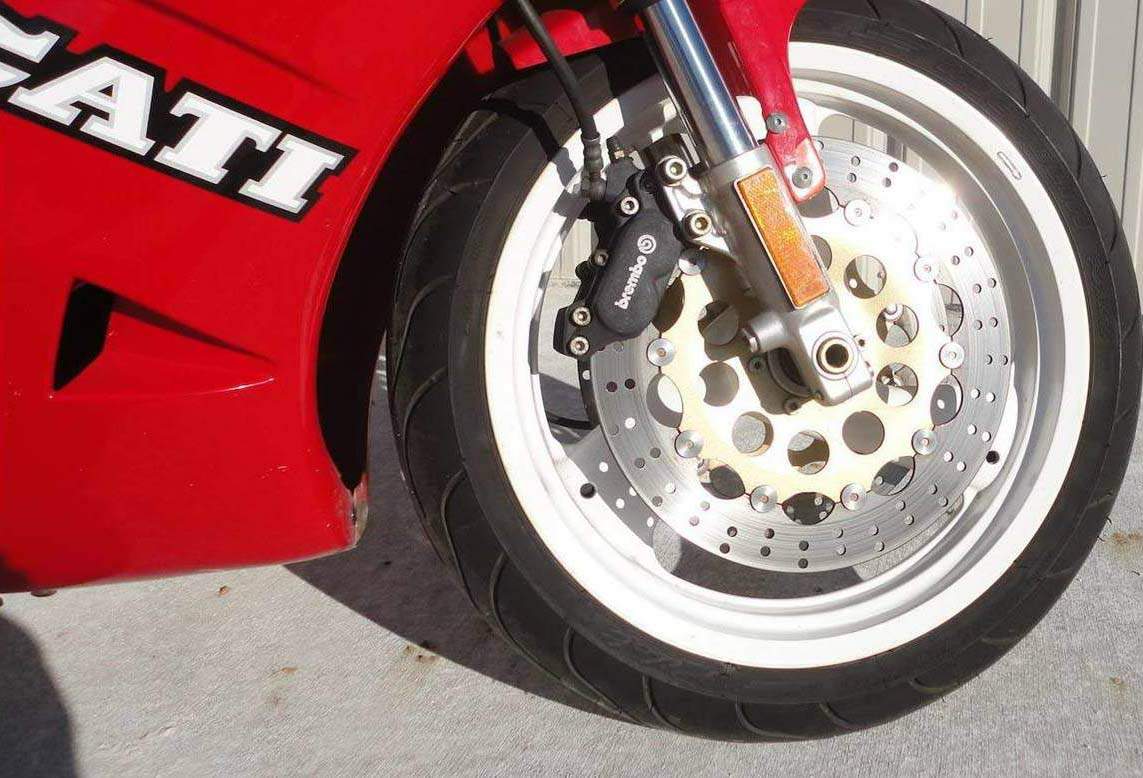
I could go on, but the point I'm trying to make is that, basic configuration aside, the Daytona's drivetrain is simply EONS ahead of anything Mandello has churned out before. Power is unwaveringly progressive from 2500 to the 8000rpm redline, at which point, in top, you're looking at a speedo with 150mph written on it (surely the quickest air-cooled twin ever?) and commending a sizeable fairing and generously proportioned, relaxed riding position that largely renders you oblivious of the fact. That the delivery is so smooth and the throttle so light and precise, overshadows the expected gobs of characteristic Guzzi midrange. It's still there, it's just disguised because the new four valve mill delivers so much solid gold easy action either side. Where the booming Duke really needs its featherlight throttle pointed between six and eight thou before playtime, short-shifting through the Daytona's box so you can just chug around on the throttle remains a typical Guzzi pleasure - its just that now there are others besides. The tall first gear and still high all-up weight means, acceleration-wise, the Day tona was always going to lose out to the bounding, eager, lithesome Duke - but impressive wheelies can be had. This is due mostly to the overslung torque arm between shaft-drive housing and frame which, similar to BMW's Paralever, manages to eliminate the rear-end jack-up often characteristic of shafties on the gas. At speed, the Daytona's heavily-revised gearbox is light and relatively snickable. Again it may not yet be quite the match of the Duke, is prone to false neutrals and, with one cog less, loses out to the Ducati at the top end. But the new four-valve revability now makes redlining and measured changes Guzzi territory too. If you like. ^ And with this chassis, you do. Being a close replica of the successful Dr John racer, the Daytona was never going to be a prize turkey, it was just hard convincing myself of that beforehand, that's all. In essence, this is a gentlemanly grand tourer of a sportbike next to the hard-breathing blood Ducati. If they were boxers, the Guzzi would be the Edwardian bare-knuckle Lord Jim, the 851 the stylish pug-nosed bantamweight with the hammer punch. If they were middleweight Kawas, the Guzzi would be the redoubtable GPZ500, the 851 the wild ZXR400. You get the idea. The Daytona has the longer wheelbase of the two—because of the bulky gearbox housing and 18inch rear wheel it was bound to have. Its head geometry is a lazy, comfortable 26°/100mm utterly in keeping with the extremely comfortable semi-sports riding position, compared to the 24°30'/94mm of the razor, take-no-prisoners, uncompromising, front-biasy, up or down Ducati. But both are supremely stable at speed. A new universal joint (ungaitered and exposed to the elements, tsk, tsk) in the Daytona's output shaft enables wider 160-section rubber to be squeezed in at the rear (the last Le Mans-wore a piffling 130 rear tyre which these days is out-fatted by most 125s). While the 851, of course, gets the fattest available — which this week is a 180. Both bikes wear Michelin's fantastically-grippy Hi Sport tyres. Guzzi, in other words, have just invented 120mph trundling. Where with the Duke everything is hard and cramped and sharp and splatter-gun raucous, the Guzzi is a mellower, softer chap. Though the Daytona's cantilever rear-end does a fantastic job of nullifying much of the shaft-drive's torque complications, there's still no way the whole package will perform quite like the more sophisticated II Duce. The frame's not quite as stiff, the steering not as sharp; the Koni rear shock comparatively undersprung (ours required preloading up, though a heavier spring is available), the conventional front forks don't give quite the same crisp feedback and the un-linked brakes, though virtually identical Goldline Brembos to the Duke, lack quite the same fearsome bite. On the other hand, shove 200 mixed miles under my nose and I'd probably be reaching for the Guzzi's keys before you could say "desmodromic". As a pure sportster, the Duke wins hands down. But for lots of fast miles, or even pottering around town, the Daytona is soothing and invigorating like no other. Comfortable it is, slim too and with a decent fairing, tank range (even without a reserve tap) and steering lock, where the Duke comes up with aching wrists, numb bum and as much manouvrability as a drag bike. And this is the Daytona's strength, a strength marred only by the lack of a pillion seat (an option is apparently coming) and main stand, a ridiculously awkWard side-stand and slightly suspect finish in some areas.' But Guzzi fans have had to wait a long time for a competent, modern sportster and this, really, is it. More to the point, the Daytona is proof that Guzzi once again has the desire and wherewithal to compete with the best. Ducati's over-long reliance on blinkered, antiquated notions such as 'character' and 'pedigree' almost killed them in the early/mid-eighties until the Castaglionis breathed new life and a hefty dose of reality into their portal doors. The Daytona, hopefully, is evidence that Guzzi is now looking forward rather than back. It's not perfect, it has plenty of rough edges and only 50 are coming into the UK out of a production run of 500. But if, as Alessandro de Tomaso has stated, this is the first of a new family of Guzzis; and if the Daytona becomes as developed and refined as the 851 (an SP version is rumoured), then I can't help feeling that the next will be fantastic. Shame then that Dr Who couldn't have brought that one back first. Source Bike Magazine1992
|
|
|
Any corrections or more information on these motorcycles will be kindly appreciated. |