|
|
|
|
Classic Bikes
Custom Bikes
Individual
Racing Bikes AJP
AJS
Aprilia
Ariel
Avinton / Wakan
Bajaj
Benelli
Beta
Bimota
BMW
Brough Superior
BRP Cam-Am
BSA
Buell / EBR
Bultaco
Cagiva
Campagna
CCM
CF Moto
Combat Motors
Derbi
Deus
Ducati
Excelsior
GASGAS
Ghezzi Brian
Gilera
GIMA
Harley Davidson
Hero
Highland
Honda
Horex
Husaberg
Husqvarna
Hyosung
Indian
Jawa
Kawasaki
KTM
KYMCO
Laverda
Lazareth
Magni
Maico
Mash
Matchless
Mondial
Moto Guzzi
Moto Morini
MV Agusta
MZ / MuZ
NCR
Norton
NSU
Paton
Peugeot
Piaggio
Revival Cycles
Roland Sands
Royal Enfield
Sachs
Sherco
Sunbeam
Suzuki
SWM
SYM
Triumph
TVS
Ural
Velocette
Vespa
Victory
Vincent
VOR
Voxan
Vyrus
Walt Siegl
Walz
Wrenchmonkees
Wunderlich
XTR / Radical
Yamaha
Zero
Video
Technical
Complete Manufacturer List
|
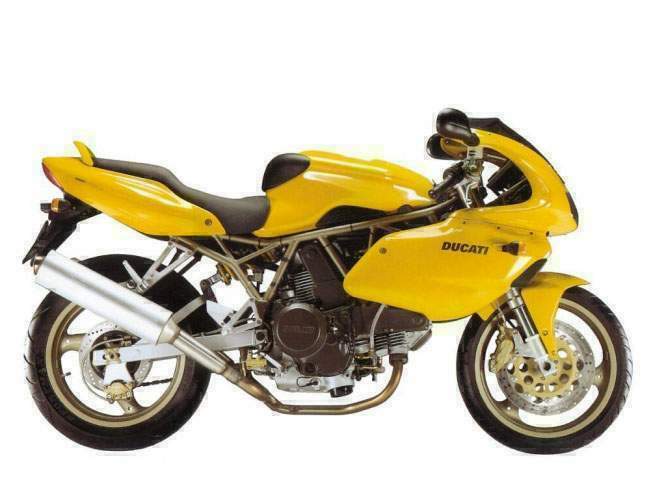
Ducati 750SS
The 750SS has an illustrious past, as far back as the 750 Sport of 1970. The basic layout of an air-cooled desmodromic-valve 90s V-twin first appeared as a 750, later growing into the 900, and later into the water-coled superbikes. The latest 750SS is a pleasing mix of traditional and modern technology. The rather elderly engine design isn't the most powerful available, but has been modernized with a reliable, smooth electronic fuel-injection system. With the firm, narrow chassis, the torquey, low-revving twin is most at home on flowing, twisty backroads, where its lazy power delivery supplies surprisingly quick progress. The suspension units are basic, but high-quality items, and the Brembo front brakes are very effective.
Heritage dates back to 1972 at the first Imola 200 mile race and
the triumph of the Ducati 750s of Smart and Spaggiari. This victory inspired the
creation of 750 SS, which was first launched in 1973. SS have been among the
Company’s most popular and best selling for over 2 decades. Exemplifies the
Ducati spirit and its legendary roots in contemporary motorcycling and during
this time the SS family has undergone a series of design and technical updates
while retaining its essential characteristics. The new Ducati SS bikes aim to
reassert their pure sports commitment but remain easy and enjoyable, unbeatable
on mixed terrain, accessible, and unique in their combination of traditional
motorcycling qualities. SuperSport segment maintains the heritage of Ducati and
is aimed at riders that prefer improved handling and smooth power delivery to
maximum HP. Characterized by lightweight, superior handling, and tight cornering
ability, easy to tame by someone getting on a sports-bike for the first time. Updates for 2000:
Styling:
Extra Styling:
Fittings:
Ergonomics and comfort:
Chassis:
Engine:
Safety:
|
|
|
Any corrections or more information on these motorcycles will be kindly appreciated. |