|
|
|
|
Classic Bikes
Custom Bikes
Individual
Racing Bikes AJP
AJS
Aprilia
Ariel
Avinton / Wakan
Bajaj
Benelli
Beta
Bimota
BMW
Brough Superior
BRP Cam-Am
BSA
Buell / EBR
Bultaco
Cagiva
Campagna
CCM
CF Moto
Combat Motors
Derbi
Deus
Ducati
Excelsior
GASGAS
Ghezzi Brian
Gilera
GIMA
Harley Davidson
Hero
Highland
Honda
Horex
Husaberg
Husqvarna
Hyosung
Indian
Jawa
Kawasaki
KTM
KYMCO
Laverda
Lazareth
Magni
Maico
Mash
Matchless
Mondial
Moto Guzzi
Moto Morini
MV Agusta
MZ / MuZ
NCR
Norton
NSU
Paton
Peugeot
Piaggio
Revival Cycles
Roland Sands
Royal Enfield
Sachs
Sherco
Sunbeam
Suzuki
SWM
SYM
Triumph
TVS
Ural
Velocette
Vespa
Victory
Vincent
VOR
Voxan
Vyrus
Walt Siegl
Walz
Wrenchmonkees
Wunderlich
XTR / Radical
Yamaha
Zero
Video
Technical
Complete Manufacturer List
|
Ducati 750SS
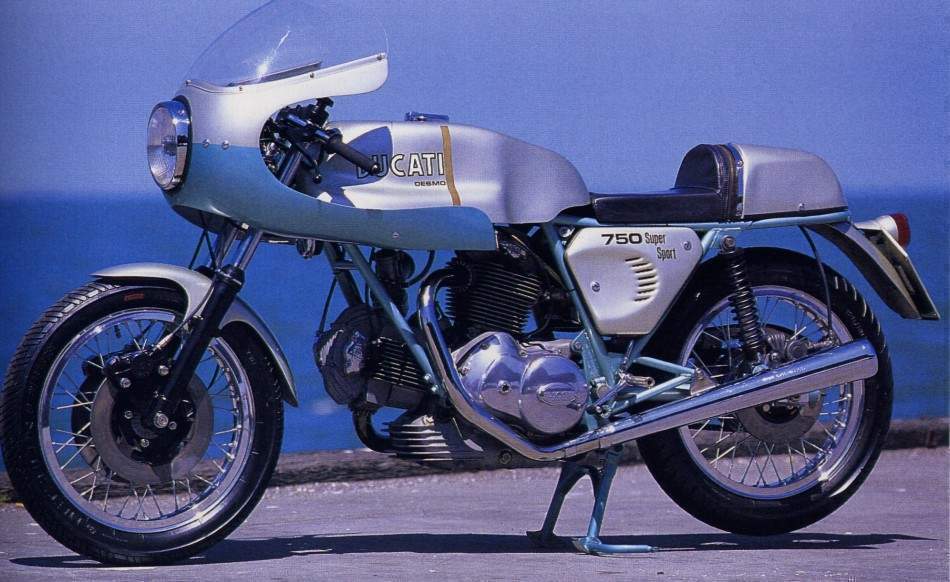
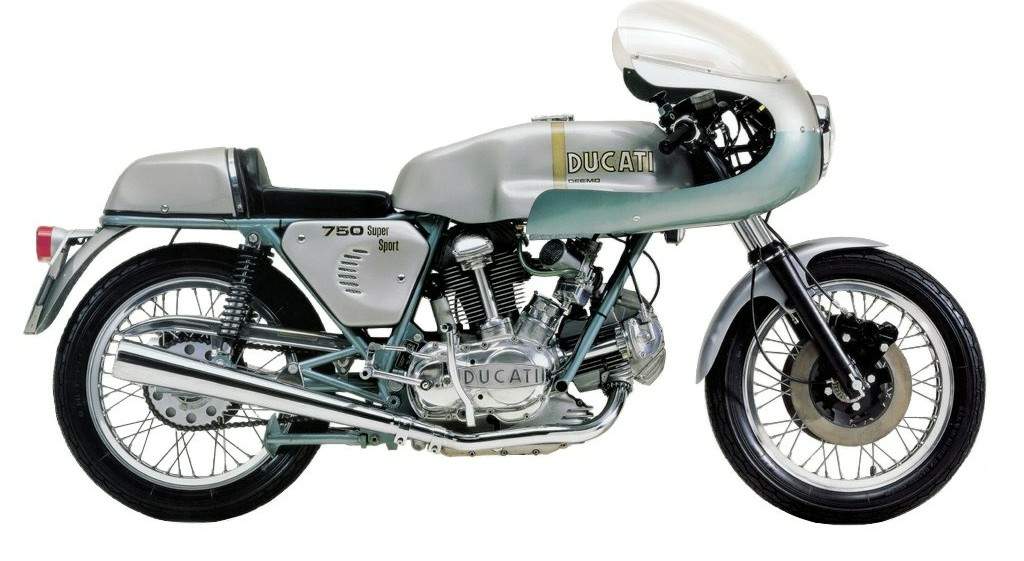
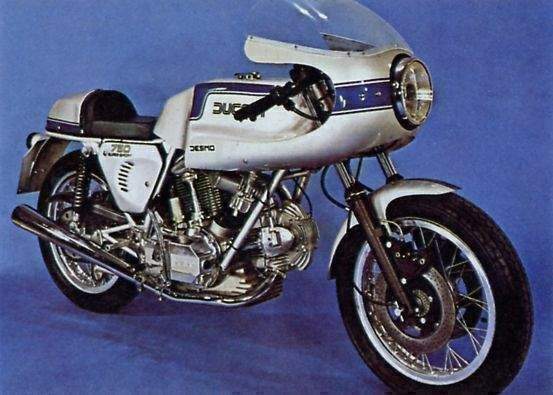
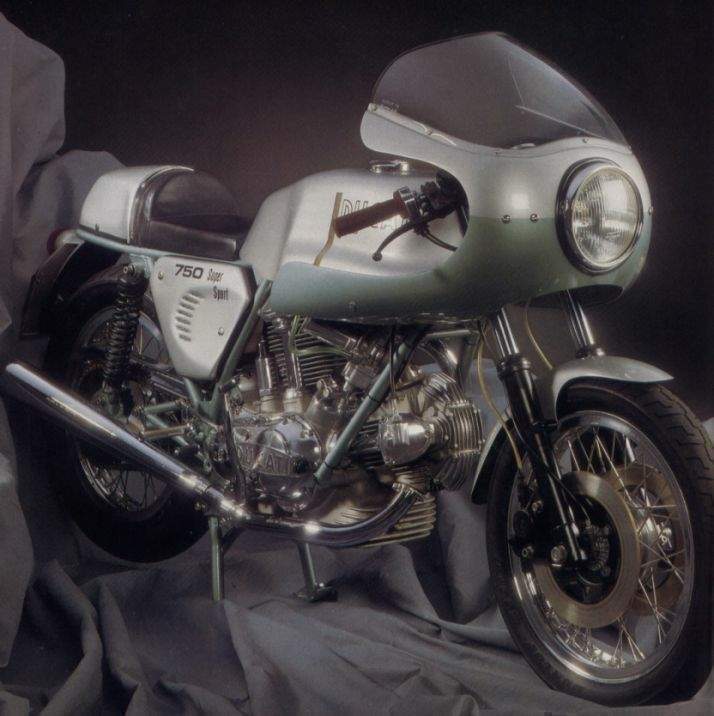
Ducati has always prided itself on building no-compromise sport bikes, as well suited to the track as to the street. By and large, its GT-style bikes have always been moderate sellers at best. Its sport bikes, though, have been considered the "ne plus ultra" of motorcycling. When the Ducati 750 Super Sport was released in 1973, it was accorded instant classic status. It was also the most desirable production racer available. Based on Ducati's Imola-winning bike of 1972, the SS boasted impressive credentials right from the start. The engine was a 90-dcgree V-twin; the valve actuation was unique in that it was desmodromic, or Desmo for short. In the Desmo engine, the valves are both opened and closed by the camshafts. The opening cycle is accomplished as one would expect; the cam lobe pushes down on a hardened lash cap setting atop the valve. To close the valve, an additional lobe is called into service. This pushes down on an inverted rocker arm with a forked end. This fork works against another adjuster (and keeper) located on the valve stem. This system obviates the need for valve springs, and their potential for unrestrained valve movement at high rpm; in short, since the valve action is controlled in an absolute and positive manner, the valves simply cannot float. The down side of this is that adjustment is time consuming, complicated and frequent. Ducati had pioneered desmodromic valve actuation (although Mercedes Benz gets the credit for the concept). It had heretofore only been used in its GP racers and the 250/350 singles of the late 1960s through the early 1970s.
The engine breathed through a pair of 40mm Dell'Orto pumper carbs; no air filters were fitted (pumper refers to the built-in accelerator pumps). A pair of Conti megaphones were thinly disguised to look like mufflers. To quicken the steering, both rims were 18 inches. The front boasted a dual-disc brake and the rear a single-disc brake. Early bikes had Lockheed components, while later ones were equipped with Scarab. The frame was a typical Ducati masterpiece; using the engine as a stressed member, it was supremely rigid. The bike simply didn't flex. Suspension, fore and aft, was capably if stiffly handled by Marzocchi. The 750SS was and is superbly rider friendly. It makes its horsepower the old-fashioned way - huge amounts of low- and mid-range torque to get you on your way, and an incredible linear flow of horsepower that seems to go on forever. Couple that to a frame that responds to the subtlest rider input and brakes that are smooth, progressive and fade-free, and you have a bike that makes a poor rider look good, a competent rider fantastic, and a good rider feel like he's gone to heaven. To be sure, the 750SS had a few minor flaws. The switches and lights were more appropriate for a moped than for a serious bike. (The headlight was generally replaced with a number plate though, so it really didn't matter). The paint on the tank seldom matched the paint on either of the fenders (which often didn't match each other) or the fairing. The fiberglass had a disturbing tendency to stress-crack; and on the first test bike offered to Cycle magazine, there was actually a fly embedded in the top of the tank! Honestly, though, no one really cared about the little details. Those big "Dues" were meant to be ridden hard, and at that they excelled. Source Cycle Magazine
|
|
|
Any corrections or more information on these motorcycles will be kindly appreciated. |