|
|
|
|
Classic Bikes
Custom Bikes
Individual
Racing Bikes AJP
AJS
Aprilia
Ariel
Avinton / Wakan
Bajaj
Benelli
Beta
Bimota
BMW
Brough Superior
BRP Cam-Am
BSA
Buell / EBR
Bullit
Bultaco
Cagiva
Campagna
CCM
CF Moto
Combat Motors
Derbi
Deus
Ducati
Excelsior
Fantic
GASGAS
Ghezzi Brian
Gilera
GIMA
Harley Davidson
Hero
Highland
Honda
Horex
Husaberg
Husqvarna
Hyosung
Indian
Jawa
Kawasaki
KTM
KYMCO
Laverda
Lazareth
Magni
Maico
Mash
Matchless
Mondial
Moto Guzzi
Moto Morini
MV Agusta
MZ / MuZ
NCR
Norton
NSU
Paton
Peugeot
Piaggio
Revival Cycles
Roland Sands
Royal Enfield
Sachs
Sherco
Sunbeam
Suzuki
SWM
SYM
Triumph
TVS
Ural
Velocette
Vespa
Victory
Vincent
VOR
Voxan
Vyrus
Walt Siegl
Walz
Wrenchmonkees
Wunderlich
XTR / Radical
Yamaha
Zero
Video
Technical
Manufacturer List Contact
|
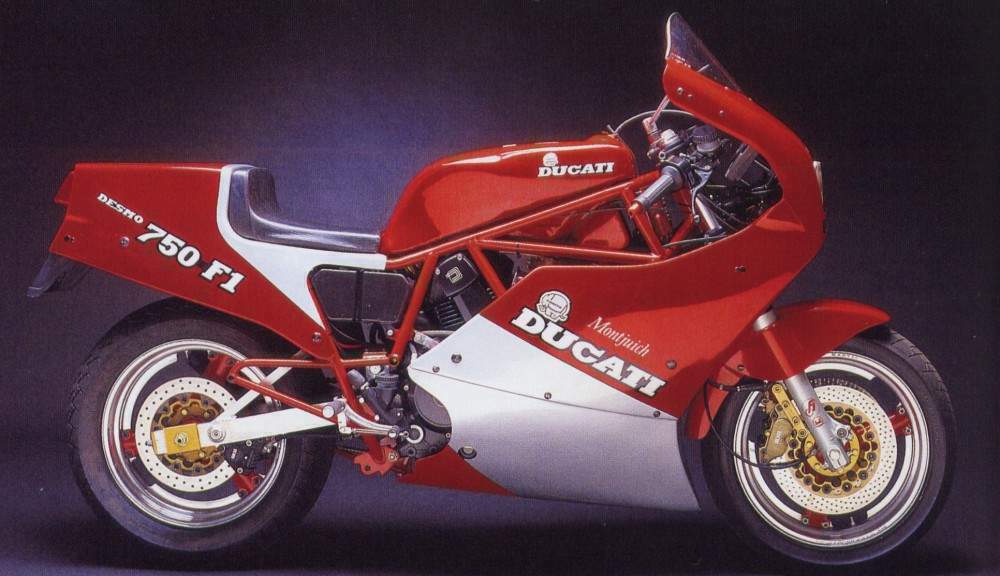
Ducati 750F1 Montjuich
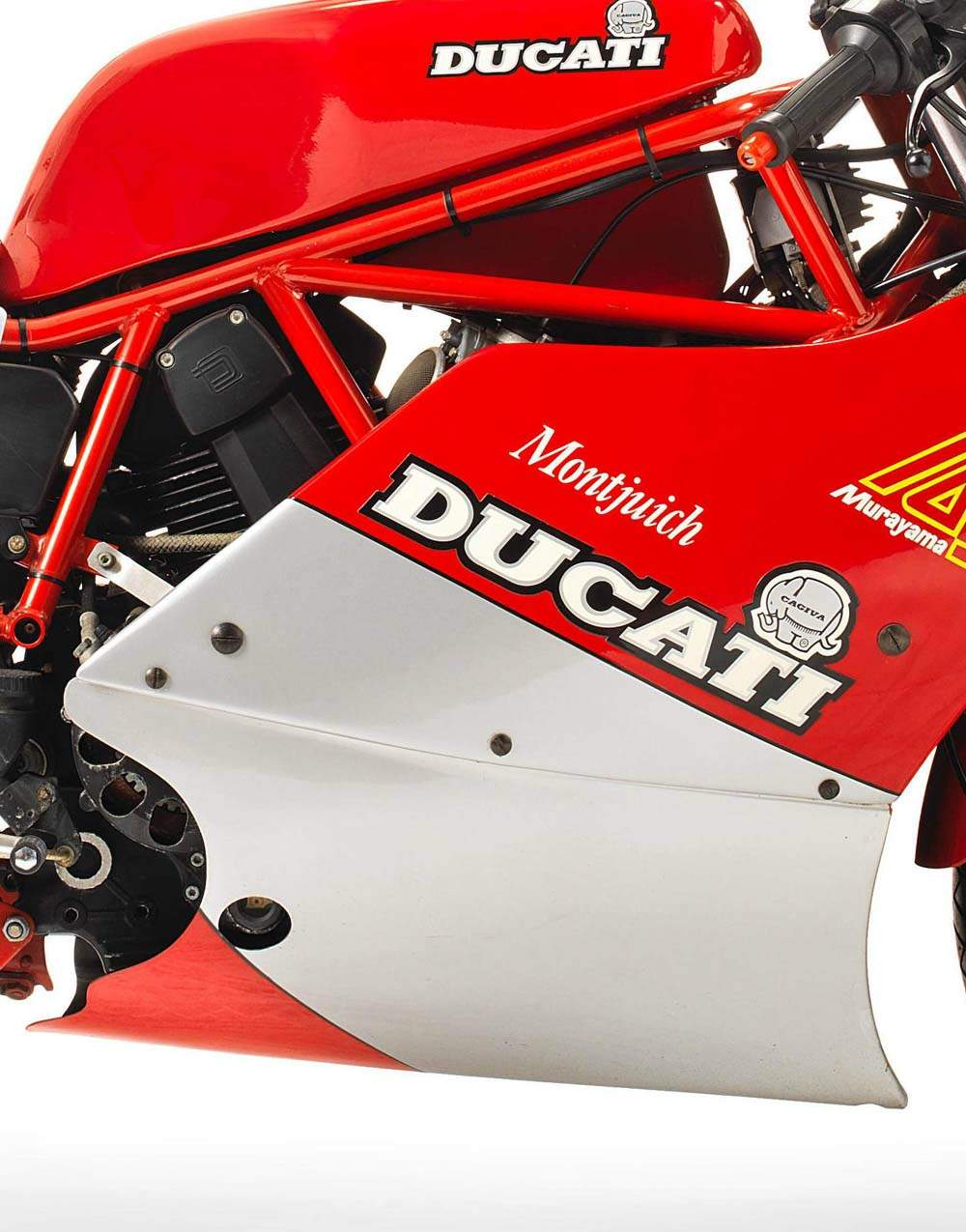
Named after one of Ducati's happiest racing hunting grounds—the Montjuich Park circuit in Barcelona, Spain—the Montjuich was a development of the 750 Fl. While similar to the 750 Fl, the Montjuich engine included different crankcases to accept larger gearbox mainshaft bearings, along with a different mainshaft and second driving gear. The outer clutch drum was aluminum and the external cover vented. Although the valve sizes were unchanged, the Montjuich cylinder heads had larger inlet ports, much hotter cams, and larger carburetors. All Montjuichs came with Kokusan ignition.
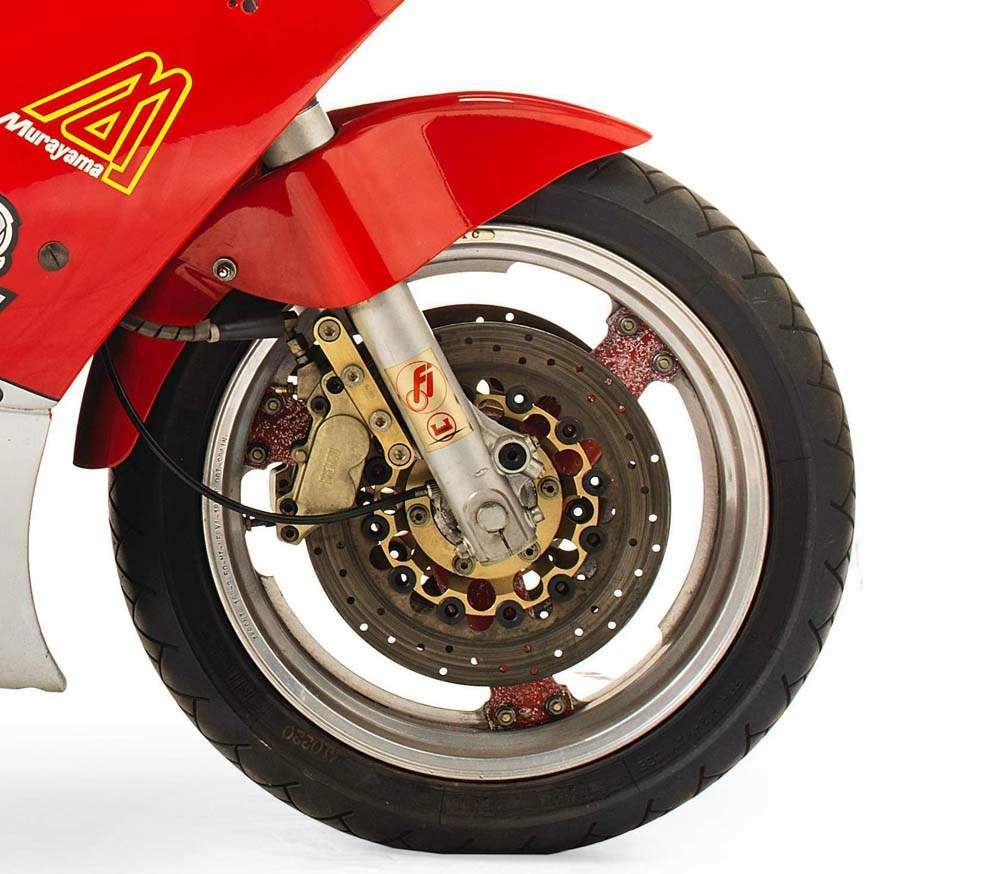
But for an aluminum swingarm, the frame was the same as the Fl. There was no centerstand, and the gas tank was aluminum. To provide for the wider front tire, there was a two-piece front fender, and the suspension included a higher-quality rear Marzocchi shock absorber with adjustable damping. The biggest changes in specification occurred in the wheels and brakes. The wheels were composite Marvic/Akront magnesium/aluminum: a 3.50 x 16-inch on the front, and 4.25 x 16-inch on the rear. With polished aluminum rims and three red-painted magnesium spokes, these were much lighter than the Oscams of the Fl.
The rear brake disc was now fully floating, and the front brakes were significantly upgraded to include racing Brembo P 432 D "Gold series" with four-piston calipers.
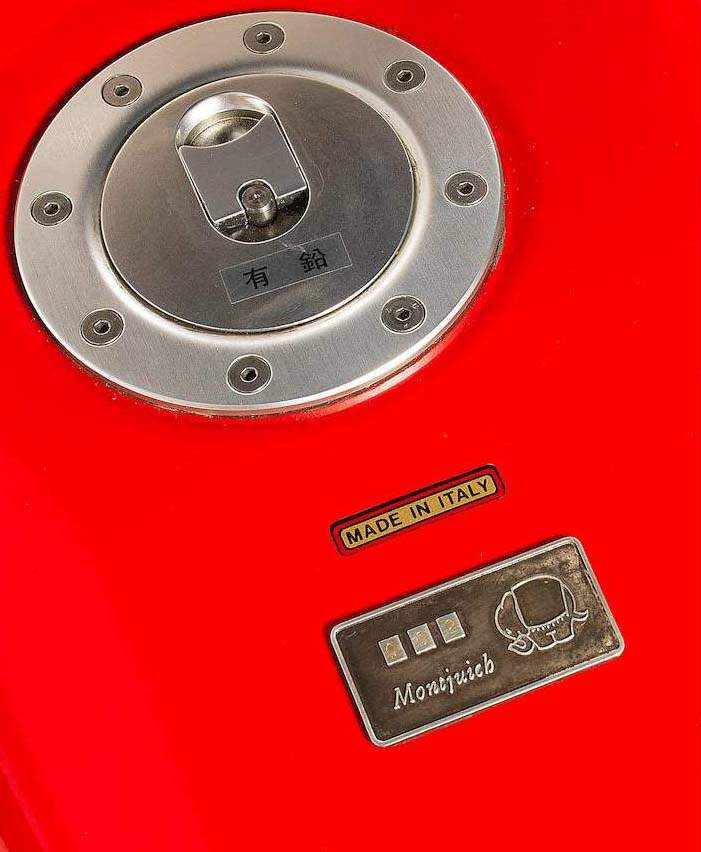
Each Montjuich came with a numbered plaque on the fuel tank. They were loud and uncompromising machines. Although they could have been more effective if they were more closely related to the factory TT racers of 1984 and 1985 (with a rising-rate rear suspension), they remain beautiful and highly desirable. In every respect, the Montjuich was a considerably faster and more effective sports motorcycle than a stock 750 Fl.
Source of overview: Ducati by Ian Falloon
|
|
|
Any corrections or more information on these motorcycles will be kindly appreciated. |