|
|

|
|
|
|
Classic Bikes
Custom Bikes
Individual
Racing Bikes AJP
AJS
Aprilia
Ariel
Avinton / Wakan
Bajaj
Benelli
Beta
Bimota
BMW
Brough Superior
BRP Cam-Am
BSA
Buell / EBR
Bultaco
Cagiva
Campagna
CCM
CF Moto
Combat Motors
Derbi
Deus
Ducati
Excelsior
GASGAS
Ghezzi Brian
Gilera
GIMA
Harley Davidson
Hero
Highland
Honda
Horex
Husaberg
Husqvarna
Hyosung
Indian
Jawa
Kawasaki
KTM
KYMCO
Laverda
Lazareth
Magni
Maico
Mash
Matchless
Mondial
Moto Guzzi
Moto Morini
MV Agusta
MZ / MuZ
NCR
Norton
NSU
Paton
Peugeot
Piaggio
Revival Cycles
Roland Sands
Royal Enfield
Sachs
Sherco
Sunbeam
Suzuki
SWM
SYM
Triumph
TVS
Ural
Velocette
Vespa
Victory
Vincent
VOR
Voxan
Vyrus
Walt Siegl
Walz
Wrenchmonkees
Wunderlich
XTR / Radical
Yamaha
Zero
Video
Technical
Complete Manufacturer List
|
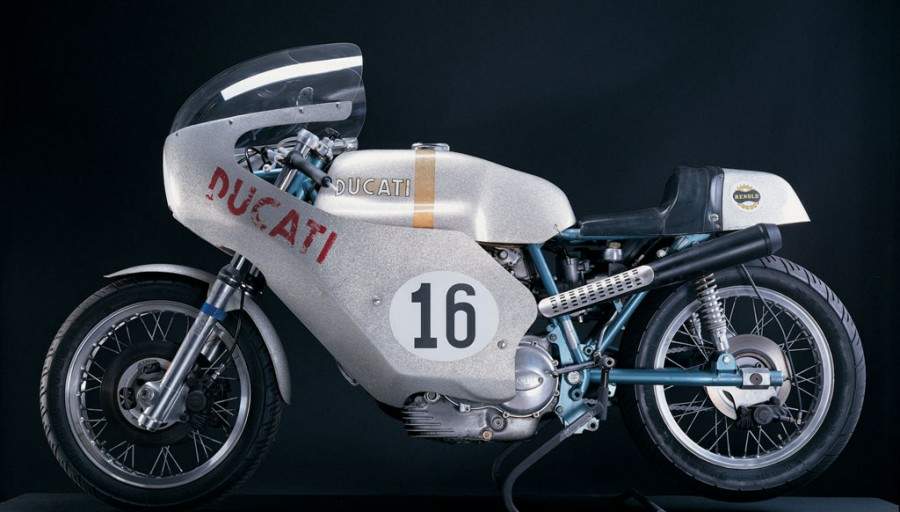
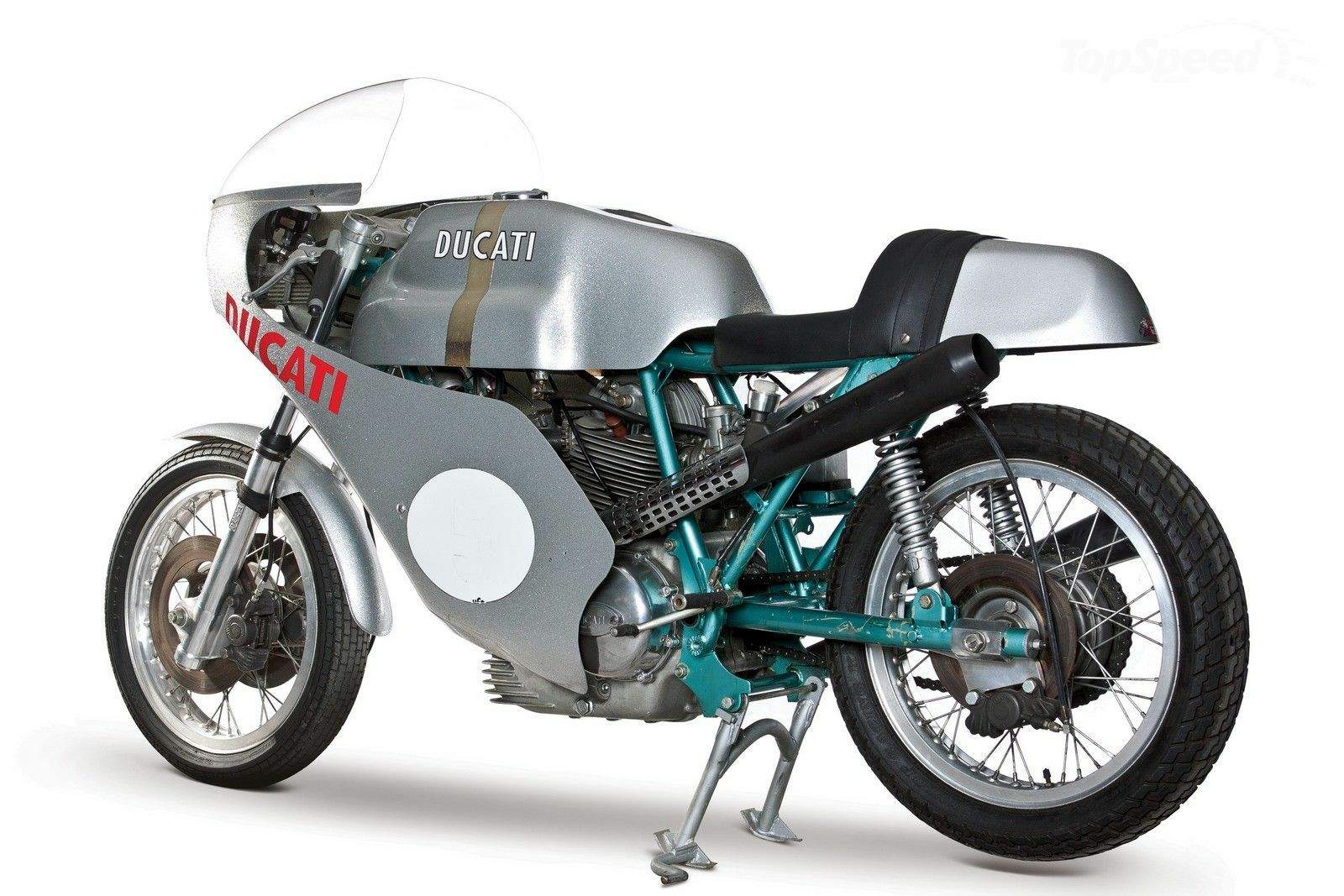
Ducati 750SS Imola Desmo
Source Ducati.com
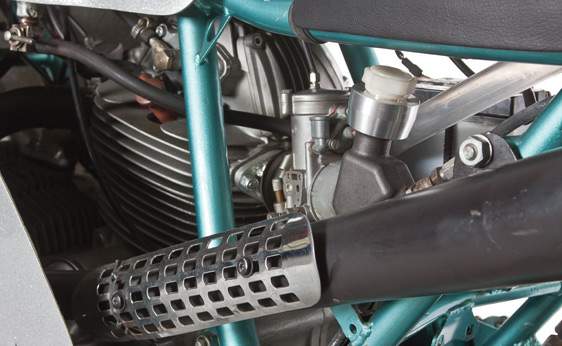
Ducati 750 Imola Story The center of attraction of the American motorcycle market is the annual big race at Daytona Beach, Florida. By the early 1970s the Daytona 200 was the most popular motorcycle race in America. It also attracted people from the Old World, mainly because of the enterprising spirit of Francesco Costa, the dean of Italian race organizers. Costa transplanted a little piece of the United States onto the track at Imola, creating a "Daytona of Europe" with the Imola 200 Miles. The first edition of this race was held in 1972, with the fastest motorcycles available and racing teams from many countries all over the world. Ducati made its official return to racing at Imola, entering a new 750 designed by Fabio Taglioni. Of course the engine of the new Ducati 750 was four-stroke and the distribution was "desmodromic"— these were basic elements of Taglioni's conception of motorcycle design. But this time the control system of the valves had a single overhead camshaft carrying the opening and closing cams. The single camshaft embodied years of experience with production models. The tuning of the Ducati for the Imola 200 was meticulous, and several trial sessions were held to be extra sure that the motorcycle was in tip-top racing form. Bruno Spaggiari, who was still driving an official Ducati after thirteen years, unofficially lowered the Modena track record, which had been set by Giacomo Agostini's four-cylinder MV Agusta 500. The Imola 200 Miles was a real triumph for Ducati. Spaggiari led the field from beginning to end, but he was forced to cede first place to his teammate on the last lap because he ran out of fuel. A year went by and the Ducati 750 was almost the only competitive four-stroke engine in a mass of two-cylinder engines of various displacements. Again the Ducati went to Imola, but this time prospects were not as rosy. Several Japanese and American teams were there with the newest Suzukis and Kawasakis, Daytona models that generated more than 100 hp. At the 1973 Imola, Ducati was unable to repeat the triumph of the year before, but Spaggiari came in second and Bruno Kneubhuler drove the fastest lap in the first heat of the race, showing that the Ducati could stand up to the finest Japanese motorcycles. Jarno Saarinen won with a Yamaha 350, putting in a fantastic performance.
|
|
|
Any corrections or more information on these motorcycles will be kindly appreciated. |