|
|

|
|
|
|
Classic Bikes
Custom Bikes
Individual
Racing Bikes AJP
AJS
Aprilia
Ariel
Avinton / Wakan
Bajaj
Benelli
Beta
Bimota
BMW
Brough Superior
BRP Cam-Am
BSA
Buell / EBR
Bultaco
Cagiva
Campagna
CCM
CF Moto
Combat Motors
Derbi
Deus
Ducati
Excelsior
GASGAS
Ghezzi Brian
Gilera
GIMA
Harley Davidson
Hero
Highland
Honda
Horex
Husaberg
Husqvarna
Hyosung
Indian
Jawa
Kawasaki
KTM
KYMCO
Laverda
Lazareth
Magni
Maico
Mash
Matchless
Mondial
Moto Guzzi
Moto Morini
MV Agusta
MZ / MuZ
NCR
Norton
NSU
Paton
Peugeot
Piaggio
Revival Cycles
Roland Sands
Royal Enfield
Sachs
Sherco
Sunbeam
Suzuki
SWM
SYM
Triumph
TVS
Ural
Velocette
Vespa
Victory
Vincent
VOR
Voxan
Vyrus
Walt Siegl
Walz
Wrenchmonkees
Wunderlich
XTR / Radical
Yamaha
Zero
Video
Technical
Complete Manufacturer List
|
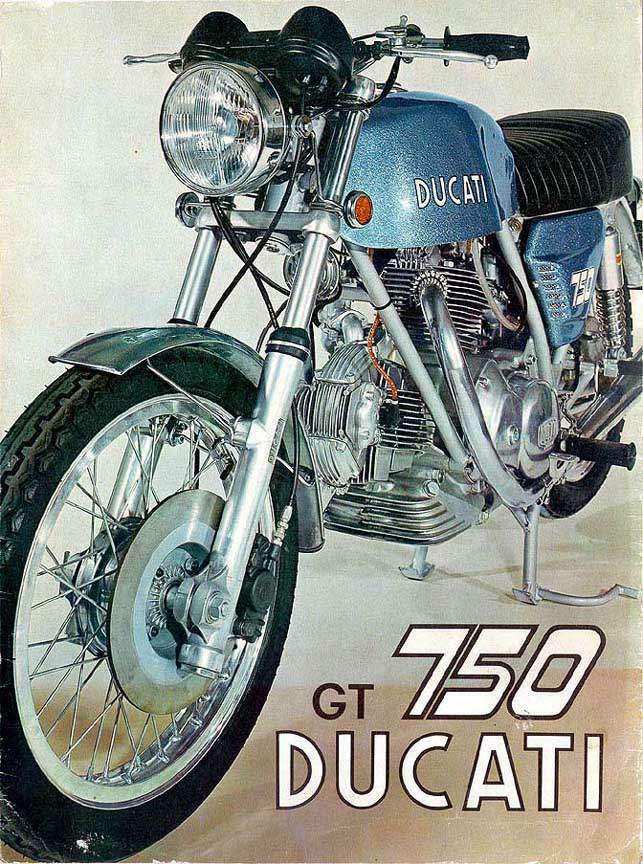
Ducati 750GT
While origins are often cloaked in mystery, the precise
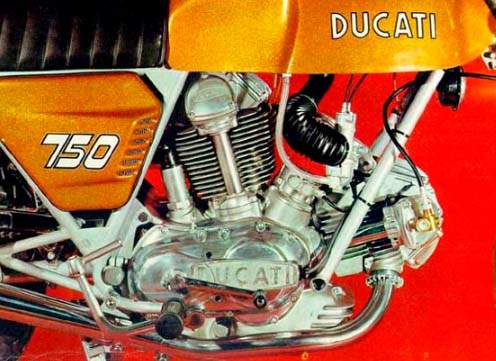
evolution of the Ducati 750 GT is still discernible. The bevel-gear twin
cylinders with a 90° V configuration, long known as an “L-twin” configuration,
have a precise date of birth: March 20, 1970. British historian Ian Faloon
relates that Fabio Taglioni drew the first sketch of what is perhaps his most
famous and best loved engine, which over the years was to acquire the
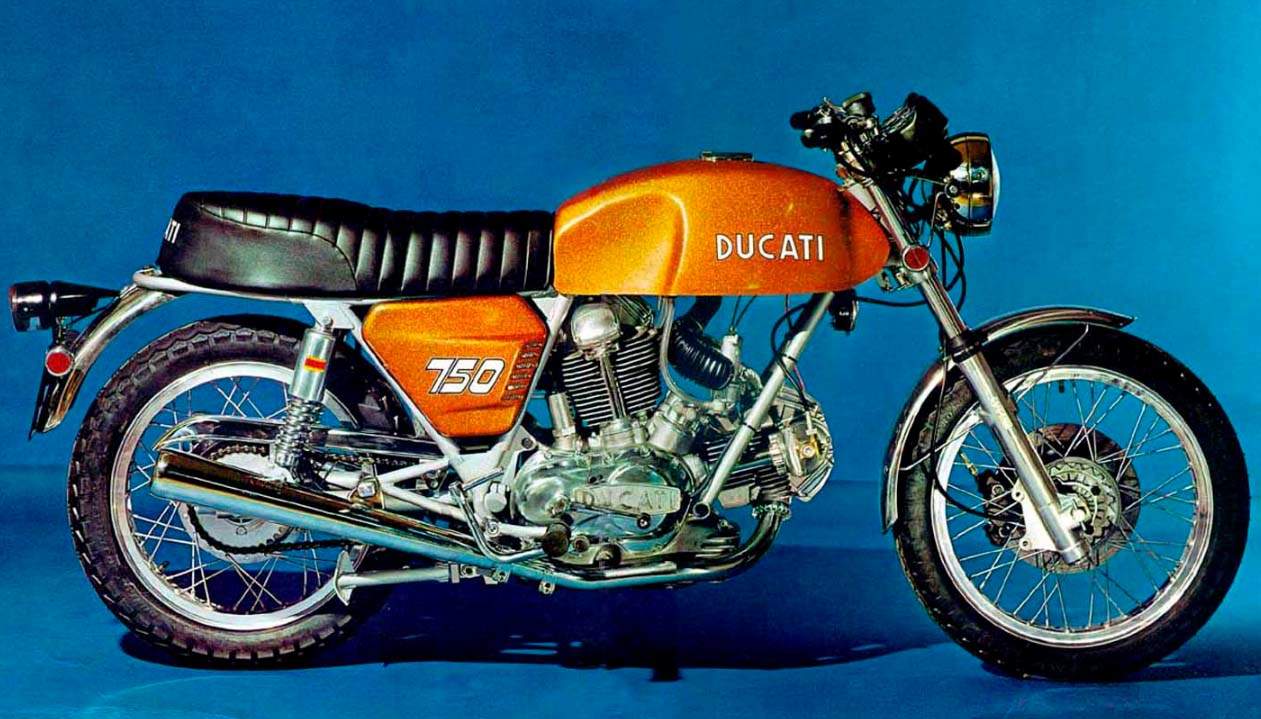
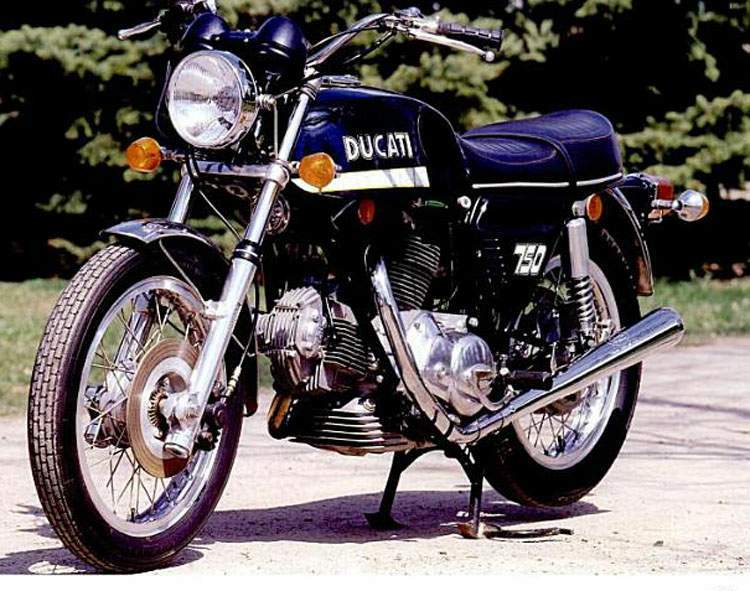
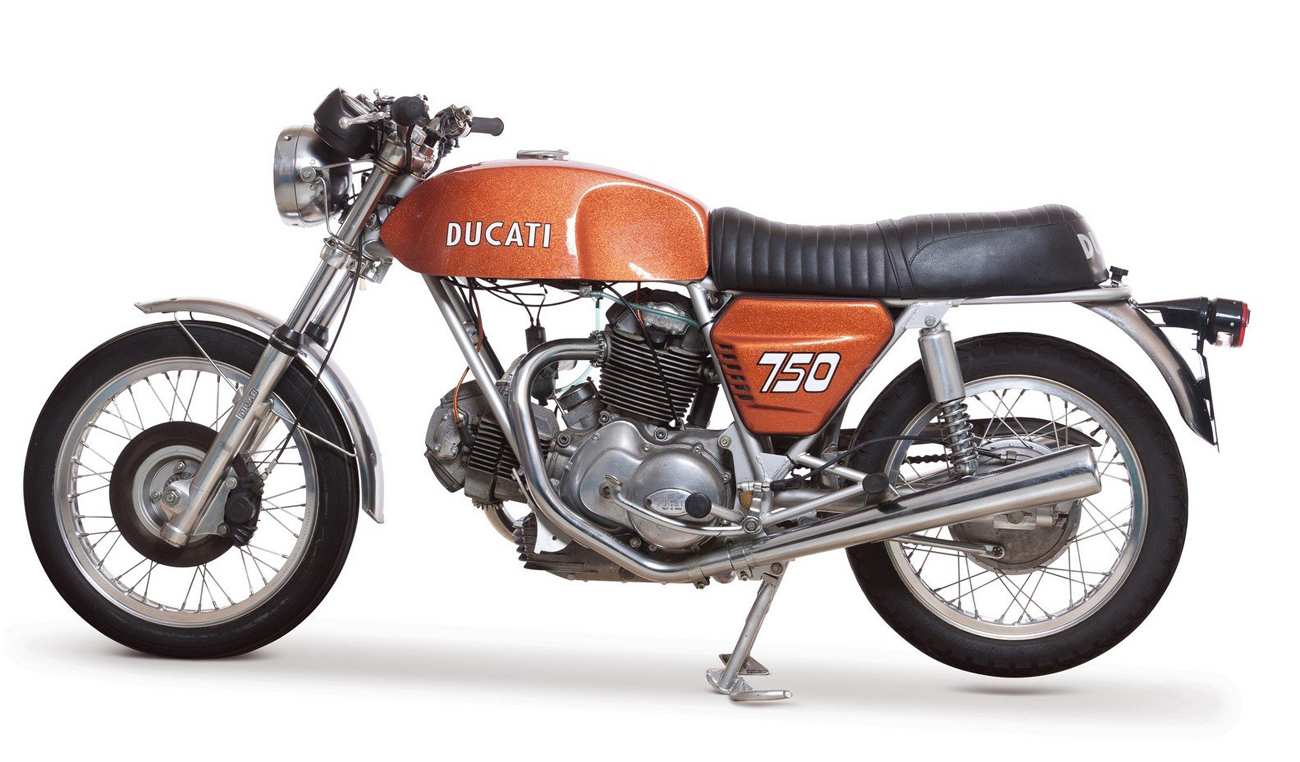
affectionate name of “pompone” (“big pump”), on the last day of winter 1970. The final bike was very similar to the prototype. The GT 750 appeared in June 1971. Its frame was more proportionate than that of the prototype, while the carburetors were 30 mm Amal Concentrics. It was also fitted with a front Lockheed disk brake. Its very name, Gran Turismo, immediately revealed that it was no sports bike, but the potential of this twin was immediately apparent to its enthusiasts. The round case bevel engine is the loveliest piece of mechanical art ever put in a motorcycle frame. It looks like a slice of a 30's aviation radial! It had Contis which sounded like armageddon. The most wonderful sounding motorcycle I've ever heard. The super torquey engine pulled beautifully and made it a joy to ride. In its day, this was the hottest motorcycle money could buy. After riding a 1967 Triumph Bonneville for years, it was an absolute revelation. It is on a whole other level in terms of handling stability and performance. The frame is the most solid of its era. It does feel very long and high, and with shockingly little steering lock, it's a real handful at low speeds. Until you get used to it, you are always whacking the steering to the lock and then having to stick out your leg to keep from falling over. On the open road it's just a joy. It feels soooo stable on very high speed corners. Trying this on a contemporary Japanese bike would be absolutely terrifying. It really outclasses anything from the 70's, except maybe a Guzzi V7 sport or LeMans, but the Ducati engine is in a class by itself.
First introduced to the market in 1971, the 750GT was the personification of a flash-bang Ducati. It was flashy, to say the least. The first examples of the 750GT came with silver painted frames with the tank and side covers finished in a colorful blend of metallic colors that included gold, lime green, bright blue, or red. Colors notwithstanding, the true highlight of the 750GT was its 748 cc SOHC V-twin engine that was capable of hitting top speeds in excess of 120 mph. The surest sign that Ducati went and invested a whole lot in the 750GT was because of the laborious and painstaking detail they took just to build one. The construction of the engine was so precise that it took up to eight hours to assemble one unit, making sure that all the bevel-drive gears and bearings were correctly set up. If it was a racing engine, Ducati would take two days to build one. Initially, the bike’s sales lagged until Paul Smart won at Imola in 1972 with the 750GT, beating some of the best manufacturers this side of the galaxy. As a result, the 750GT became a legend of sorts, with Taglioni even saying that its engine was the best he ever designed.
|
|
|
Any corrections or more information on these motorcycles will be kindly appreciated. |