|
|
|
|
Classic Bikes
Custom Bikes
Individual
Racing Bikes AJP
AJS
Aprilia
Ariel
Avinton / Wakan
Bajaj
Benelli
Beta
Bimota
BMW
Brough Superior
BRP Cam-Am
BSA
Buell / EBR
Bultaco
Cagiva
Campagna
CCM
CF Moto
Combat Motors
Derbi
Deus
Ducati
Excelsior
GASGAS
Ghezzi Brian
Gilera
GIMA
Harley Davidson
Hero
Highland
Honda
Horex
Husaberg
Husqvarna
Hyosung
Indian
Jawa
Kawasaki
KTM
KYMCO
Laverda
Lazareth
Magni
Maico
Mash
Matchless
Mondial
Moto Guzzi
Moto Morini
MV Agusta
MZ / MuZ
NCR
Norton
NSU
Paton
Peugeot
Piaggio
Revival Cycles
Roland Sands
Royal Enfield
Sachs
Sherco
Sunbeam
Suzuki
SWM
SYM
Triumph
TVS
Ural
Velocette
Vespa
Victory
Vincent
VOR
Voxan
Vyrus
Walt Siegl
Walz
Wrenchmonkees
Wunderlich
XTR / Radical
Yamaha
Zero
Video
Technical
Complete Manufacturer List
|
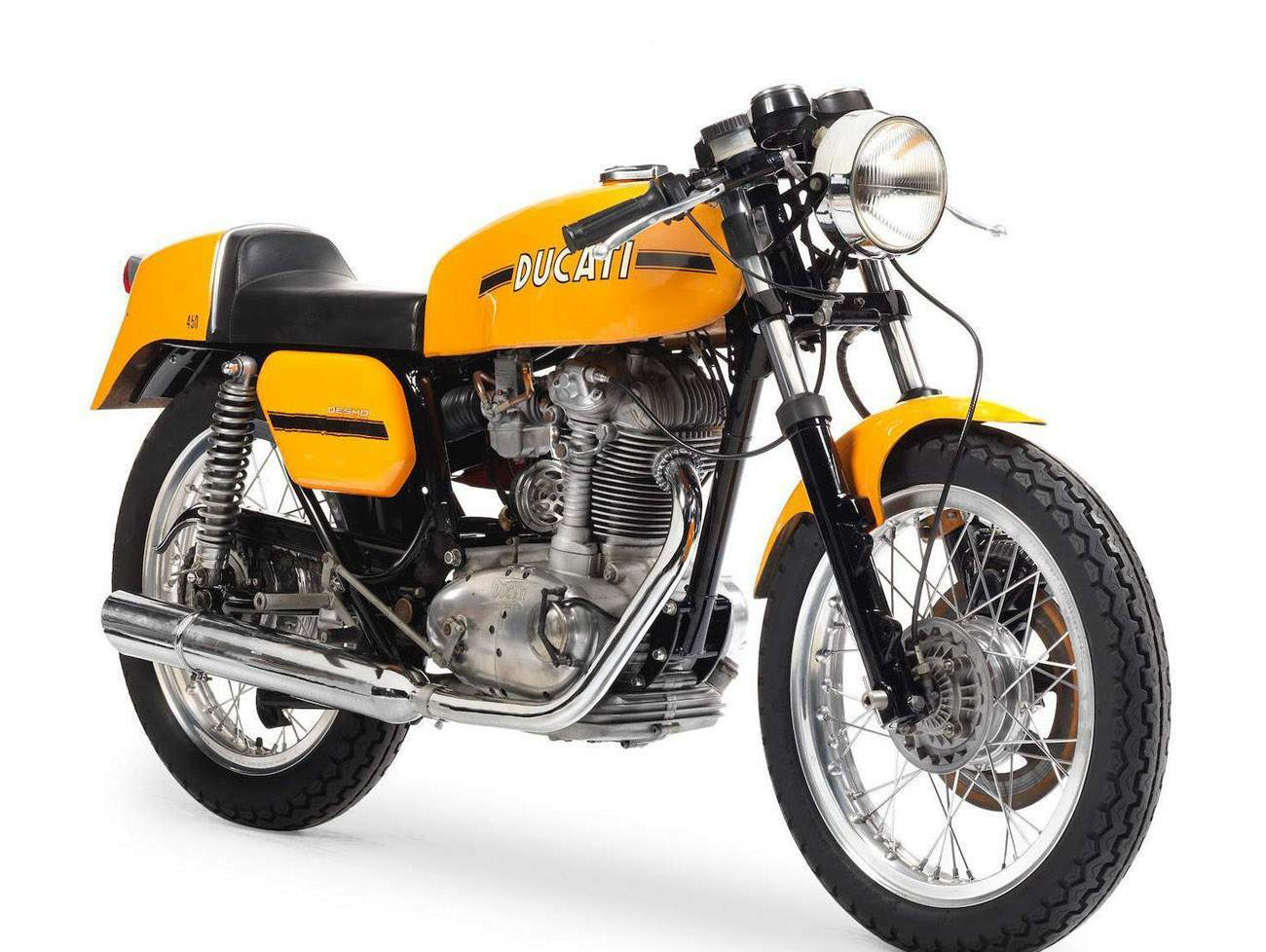
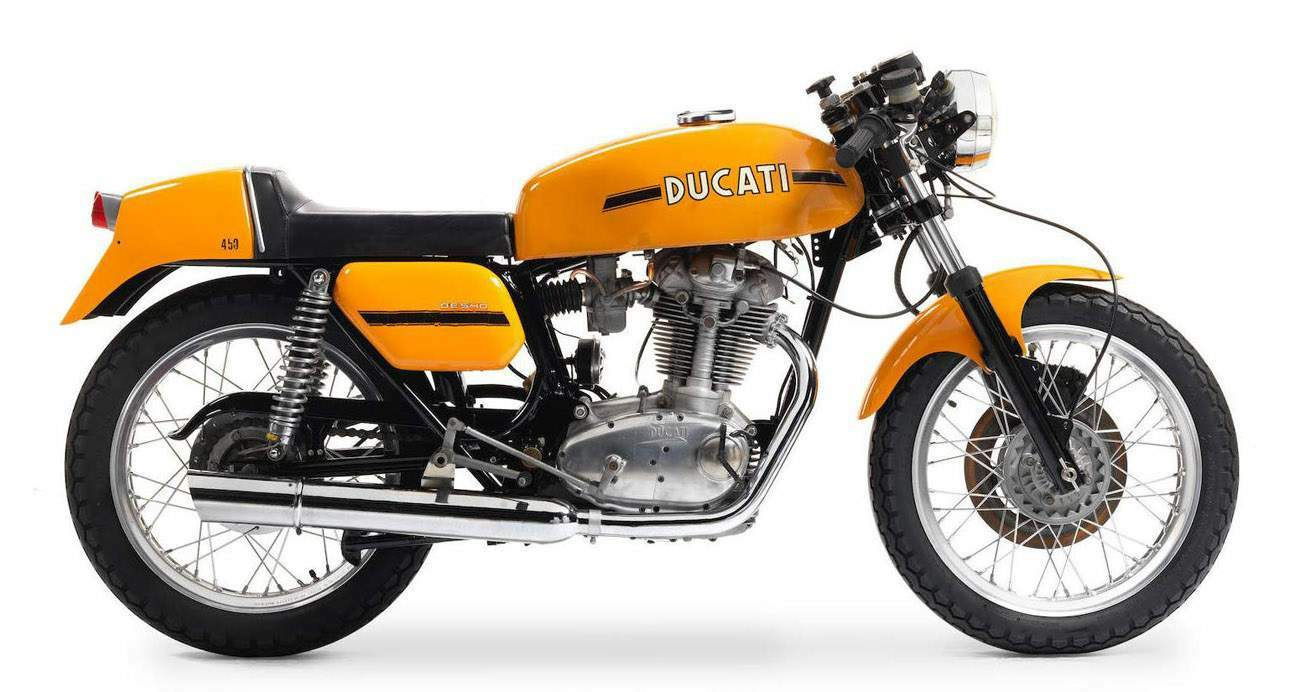
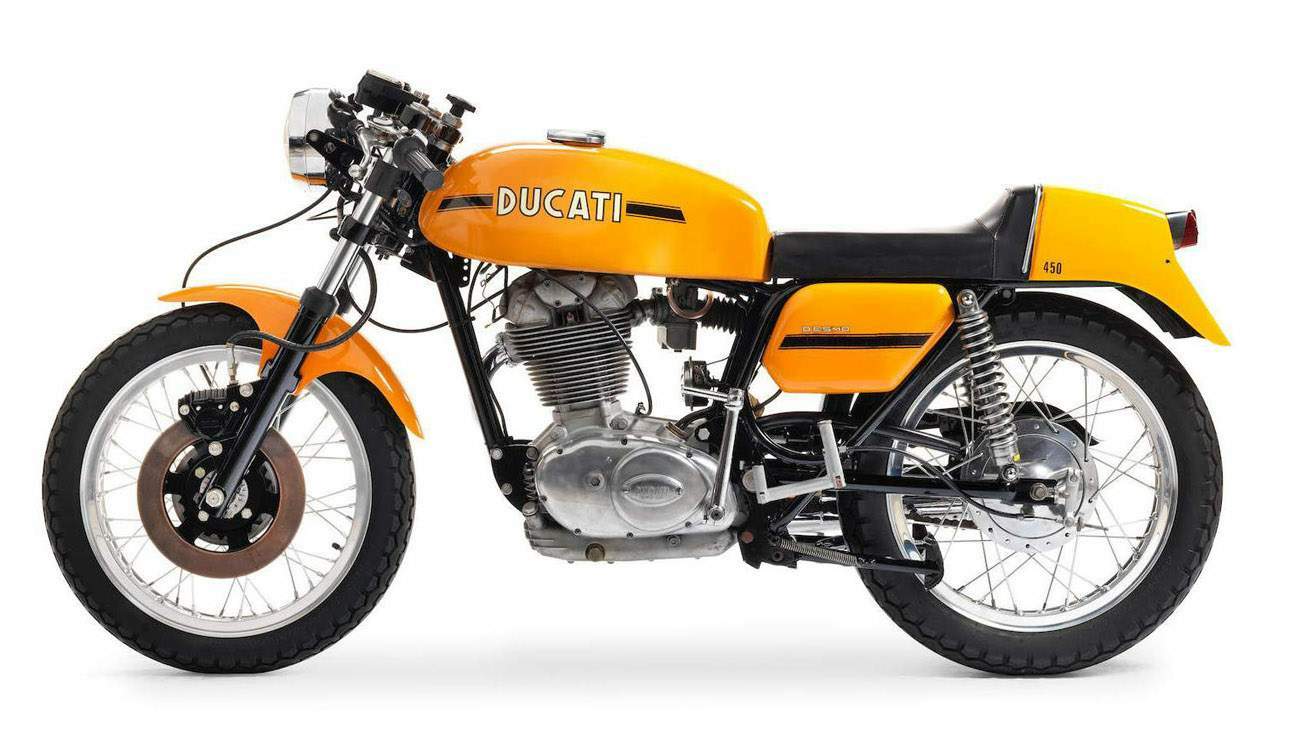
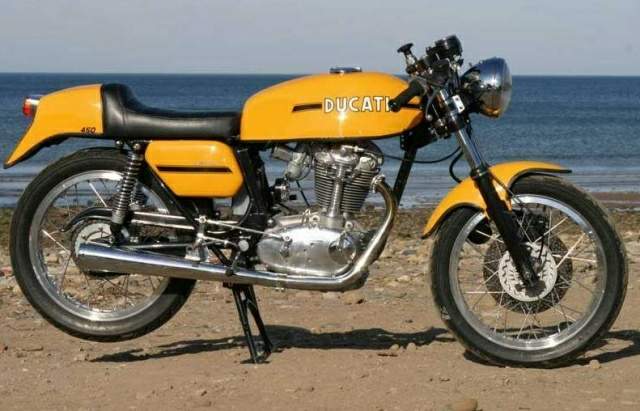
Ducati 450 Mark 3D
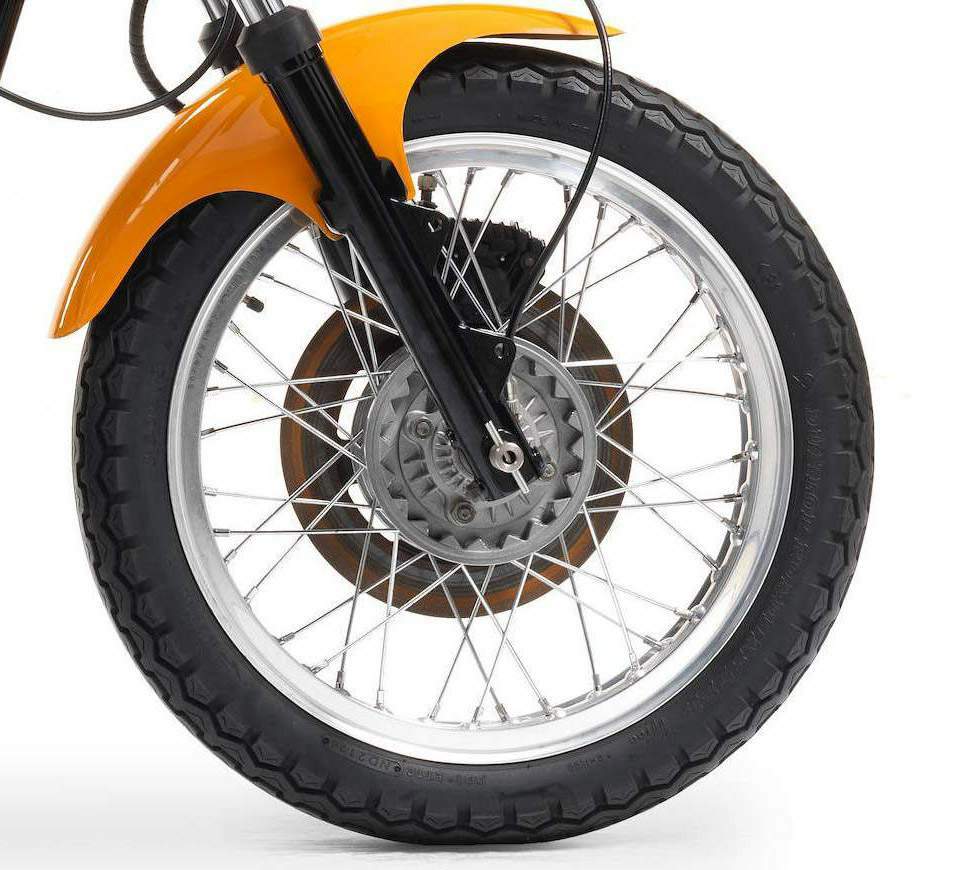
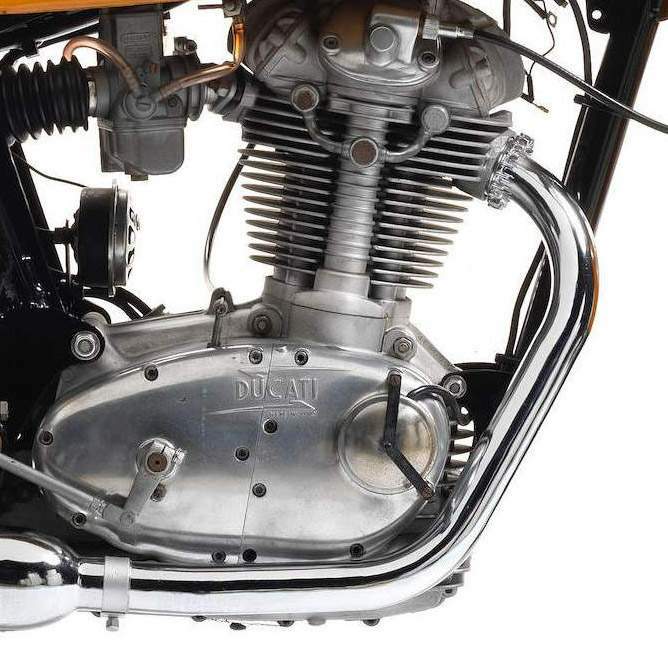
Designed by one of the most celebrated motorcycle engineers of all time, Fabio Taglioni, Ducati's first overhead-camshaft single appeared in 1955. Desmodromic valve operation, whereby closure as well as opening was effected by cams, was a feature of the racing versions and would later be applied to the sportier roadsters. A new range of Desmo roadsters was introduced in 1971, and these new 250/350/450 Desmos soon acquired the sobriquet 'Silver Shotgun', a reference to their eye-catching silver metallic paintwork. Standard equipment included Marzocchi 35mm front forks, Borrani 18" alloy wheel rims, a Grimeca 180mm 4LS front brake, rear-set footrests, clip-on handlebars, and a white-faced Veglia rev counter, while the fuel tank, seat base, side panels, and front mudguard were made of a lightweight glassfibre. For 1973, the Desmo range was mildly restyled by Italjet's Leopoldo Tartarini, also responsible for the Ducati 750 Sport, the colour scheme switching to yellow/black at the same time. Production effectively ended in 1974, though a tiny handful was produced in 1978.
It is often the case that the best example of a bike is found at the very end
of the model's life. This is certainly true of the 450 Desmo Ducati of 1973
which can trace some elements of its bloodline all the way back to Ducati's
125cc GP racer which made its debut in 1956. Desmo engines were capable of sustained high rpm and thus could be made with a
very short stroke. The camshafts were opened and closed by means of a bevel
drive - the same as a Manx Norton - which required extremely accurate
engineering on the part of the manufacturer and meticulous oil changes by the
owner. Extensively re-equipped by the Italian government after the Second
World War, Ducati were probably the only European factory capable of mass
producing a bevel gear engine.
Earlier Ducati singles had a reputation for fragility, particularly in terms
of the big-end which did not take kindly to being plonked around in high gears
under load. However, by the time 450 had arrived, with its wider and stronger
crankcases and much increased big-end bearing size, the biggest of the desmos
was more user friendly. Source Motorcycles-USA
|
|
|
Any corrections or more information on these motorcycles will be kindly appreciated. |