|
|
|
|
Classic Bikes
Custom Bikes
Individual
Racing Bikes AJP
AJS
Aprilia
Ariel
Avinton / Wakan
Bajaj
Benelli
Beta
Bimota
BMW
Brough Superior
BRP Cam-Am
BSA
Buell / EBR
Bultaco
Cagiva
Campagna
CCM
CF Moto
Combat Motors
Derbi
Deus
Ducati
Excelsior
GASGAS
Ghezzi Brian
Gilera
GIMA
Harley Davidson
Hero
Highland
Honda
Horex
Husaberg
Husqvarna
Hyosung
Indian
Jawa
Kawasaki
KTM
KYMCO
Laverda
Lazareth
Magni
Maico
Mash
Matchless
Mondial
Moto Guzzi
Moto Morini
MV Agusta
MZ / MuZ
NCR
Norton
NSU
Paton
Peugeot
Piaggio
Revival Cycles
Roland Sands
Royal Enfield
Sachs
Sherco
Sunbeam
Suzuki
SWM
SYM
Triumph
TVS
Ural
Velocette
Vespa
Victory
Vincent
VOR
Voxan
Vyrus
Walt Siegl
Walz
Wrenchmonkees
Wunderlich
XTR / Radical
Yamaha
Zero
Video
Technical
Complete Manufacturer List
|
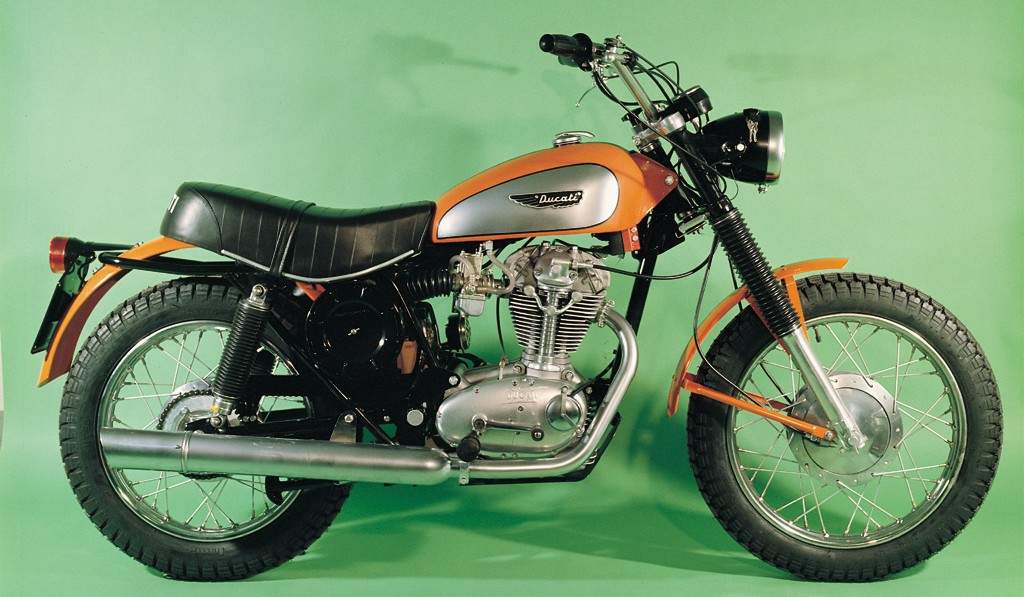
Ducati 350 Scrambler
|
|
Make Model |
Ducati 350 Scrambler |
|
Year |
1968 - 71 |
|
Engine |
Four stroke, single cylinder, SOHC, bevel gear driven |
|
Capacity |
340.2cc / 20.8 cu in |
| Bore x Stroke | 76 x 75 mm |
| Compression Ratio | 10:1 |
|
Induction |
Dell'Orto SS1 29D |
|
Ignition |
Coil, 6V 30W generator |
|
Battery |
SAFA 3L3 13.5 Ah |
|
Starting |
Kick |
|
Max Power |
17.5 kW / 24 hp @ 8500 rpm |
|
Clutch |
Wet, multiplate |
|
Primary Drive |
2.111:1 |
|
Transmission |
5 Speed |
|
Gear Ratios |
1st 2.46 / 2nd 1.73 / 3rd 1.35 / 4th 1.10 / 5th 0.97:1 |
|
Final Drive |
Chain |
|
Final Drive Ratio |
3.214:1 |
|
Front Suspension |
35 mm Marzocchi telecsopic hydraulic fork |
|
Rear Suspension |
Swingarm, Dual Marzocchi shocks |
|
Front Brakes |
180 mm Drum |
|
Rear Brakes |
160 mm Drum |
|
Front Tyre |
3.50 -19, Pirelli |
|
Rear Tyre |
4.00 -18, Pirelli |
|
Dimensions |
Length: 2120 mm / 83.5 in Width: 940 mm / 37.4 in Height: 1150 mm / 45.3 in |
|
Wheelbase |
1380 mm / 54.3 in |
|
Dry Weight |
133 kg / 293 lbs |
|
Fuel Capacity |
10 Litres / 2.6 US gal / 2.2 Imp gal |
The narrow case Ducati single cylinders were selling well and known worldwide through out the decade. Later in the decade when Ducati introduced the wide-case production models they represented the pinnacle of Ducati singles for the times. A single camshaft that was driven by bevel gears characterized the wide-case Ducati motorcycles.
As a direct descendent of the narrow-case family, the Ducati 250cc and 350cc versions of the wide-case models were first produced in the spring of 1968. The Ducati 450cc was added in the following year. The performance and elegant mechanics of the motorcycles immediately caught the attention of motorcycle enthusiasts worldwide.
Perhaps the most famous wide-case Ducati was the Scrambler. The Ducati Scrambler motorcycle sold tens of thousands around the world, leading to its legendary status. The fast and agile Ducati Mark 3 sports model was soon joined by the Ducati Mark 3D - the first Ducati with the now famous Desmodromic valve gear on a production model.
The word ‘Desmodromic' is not actually derived from Italian but rather from two Greek roots, desmos (meaning - linked) and dromos (meaning - track). The Ducati Desmodromic system is unique in that the valves are positively closed and opened by a cam and leverage system, rather than relying on standard valve springs. The same basic Desmodromic layout continues to win world championships today and is deeply seated in the Ducati Brand identify.
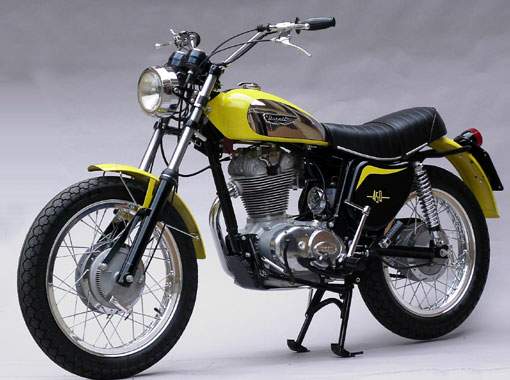
Le Ducati Scrambler equipaggiate con
il nuovo motore monocilindrico a carter larghi disegnato da Fabio Taglioni
muovono i loro primi passi nel 1966, ma è solo due anni dopo che i modelli di
250 e 350 cc fanno il loro debutto sul mercato.
Il successo commerciale è immediato, grazie ad una linea estremamente indovinata
e proporzionata, con il bel monocilindrico dalla linea pulita in evidenza e il
serbatoio a goccia con i fianchi cromati. E dire che le Scrambler sono
nate su pressioni dei fratelli Berliner (i potentissimi importatori
statunitensi di Ducati e Moto Guzzi) per i motociclisti americani, ma
piacciono anche da noi. Segno che anche in Italia i tempi sono maturi
per motociclette meno tradizionali e più “libere” nello spirito.
“Sul misto è favolosa. E anche in città, per affrancarsi dalla morsa del
traffico, per avere più tempo libero, per reagire alla nevrosi che ci attanaglia
quando siamo lì, in fila, chiusi dentro le nostre scatolette a 4 ruote. E se poi
si vuole andare in campagna, per i sentieri, per i prati, in completa libertà la
Scrambler sa fare anche questo. La Scrambler dà uno stile nuovo alla nostra
personalità, alla nostra libertà”. Questo il Ducati pensiero evidenziato in un
pieghEVOle pubblicitario edito dalla Casa di Borgo Panigale.
Sull’onda del successo, al Salone di Milano del 1969 viene presentata la
versione di 450 cc che nei primi anni prenderà il sopravvento sulle
altre due, ottenendo i maggiori consensi fra i motociclisti, anche perché è
quella che più si avvicina al fatidico mezzo litro, segno distintivo per i
motociclisti “arrivati” dell’epoca.
I tre modelli conservano il medesimo cuore:
il monocilindrico 4 tempi a coppie coniche che Taglioni aveva concepito
surdimensionato proprio per creare una gamma di modelli di diverse cilindrate
con il maggior numero di particolari in comune. Dalla serie stradale
Mark 3 e Desmo, le Scrambler ereditano anche il telaio monotrave a culla aperta
con il motore che ha funzione di elemento portante (simile, fatto salvo la
diversa conformazione della triangolazione posteriore e i differenti attacchi
degli ammortizzatori), i freni e gran parte della componentistica. oche le
modifiche apportate ai diversi modelli nel corso degli anni: gran parte delle
350 e tutte le 450 adotteranno un decompressore per facilitare l’avviamento.
Poche le modifiche apportate ai diversi modelli nel corso degli anni: gran parte
delle 350 e tutte le 450 adotteranno un decompressore per facilitare
l’avviamento a freddo, mentre a partire dagli ultimi mesi del 1972 arriva
l’accensione elettronica su tutte le versioni.
Fra i 3 modelli, la 350 è quella che offre il miglior equilibrio
peso-potenza-prestazioni-consumi. Mettendo da parte le velleità
fuoristradistiche, la Scrambler si rivela (come le sorelle) un’ottima
motocicletta per i percorsi misti, grazie alla sua estrema
maneggEVOlezza e al peso contenuto. Mal digerisce invece i lunghi tratti
autostradali perché le possenti vibrazioni, sensibili a tutti i regimi
e inutilmente mitigate dalle manopole a botticella delle prime versioni, causano
la rottura di alcuni componenti (come la strumentazione), crepe e dissaldature
varie, allentamento della bulloneria. Il male è endemico e dovuto al motore,
montato al telaio con 6 attacchi senza silent-block...
Altro punto a sfavore, soprattutto per la 450, è la difficoltà di
avviamento. Con la Scrambler si deve andare giù decisi con una
scalciata molto forte, altrimenti il ritorno del pedale è “critico” per caviglie
e dintorni.
Ma il più delle volte il problema deriva dalla difficoltà nel mettere
correttamente in fase l’accensione (non esiste alcun segno di riferimento sul
motore per agEVOlare l’operazione).
Gli anni d’oro per le Ducati Scrambler sono a cavallo fra gli anni Sessanta e
Settanta. Poi l’invasione delle maxi e il boom delle moto da Regolarità
fanno tramontare la stella di questa tranquilla moto polivalente.
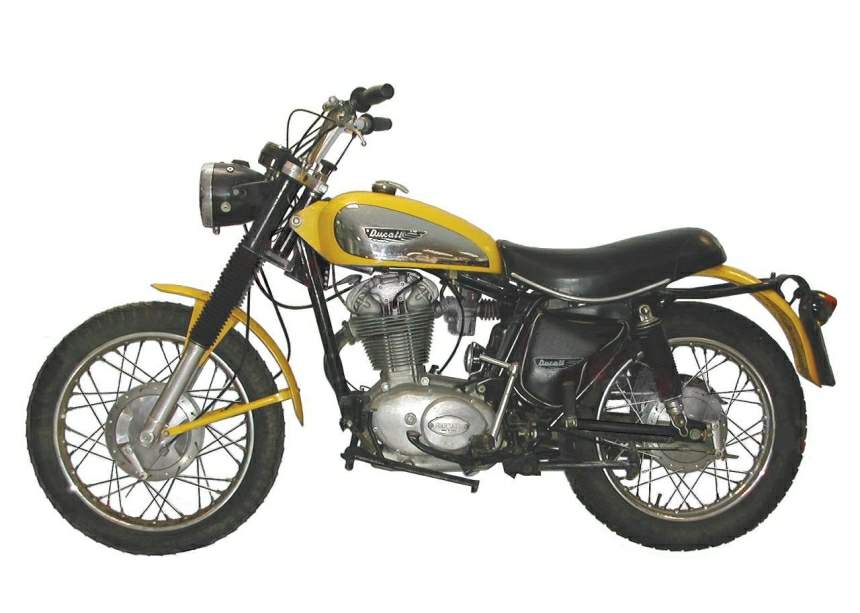
Oggi sul mercato delle moto d’epoca la 350 sta prendendosi la meritata rivincita, dopo che molte
delle sue sorelle di 450 cc sono state trasformate in altrettante “Spaggiari
replica” preparate per le gare di Gruppo 5, sparendo così dalla circolazione.
Con una cifra ragionEVOle si può entrare in possesso di una moto ancora godibile
in tutte le situazioni e dalla spiccata personalità.
La disponibilità dei ricambi è ancora piuttosto buona e, come potete
leggere nell’apposito box, ci sono diversi specialisti che possono prendersi
cura dei mono Ducati. Un’ultima considerazione sul motore: i mono a carter
larghi sono robusti, razionali e per la loro produzione in Ducati non si
è risparmiato sui materiali. Nonostante questo, non bisogna
dimenticarsi la manutenzione ordinaria perché si tratta comunque di motori con
più di trent’anni di onorato servizio alle spalle che hanno bisogno di attente
cure.
Source Motociclismo
|
Any corrections or more information on these motorcycles will be kindly appreciated. |