|
|

|
|
|
|
Classic Bikes
Custom Bikes
Individual
Racing Bikes AJP
AJS
Aprilia
Ariel
Avinton / Wakan
Bajaj
Benelli
Beta
Bimota
BMW
Brough Superior
BRP Cam-Am
BSA
Buell / EBR
Bultaco
Cagiva
Campagna
CCM
CF Moto
Combat Motors
Derbi
Deus
Ducati
Excelsior
GASGAS
Ghezzi Brian
Gilera
GIMA
Harley Davidson
Hero
Highland
Honda
Horex
Husaberg
Husqvarna
Hyosung
Indian
Jawa
Kawasaki
KTM
KYMCO
Laverda
Lazareth
Magni
Maico
Mash
Matchless
Mondial
Moto Guzzi
Moto Morini
MV Agusta
MZ / MuZ
NCR
Norton
NSU
Paton
Peugeot
Piaggio
Revival Cycles
Roland Sands
Royal Enfield
Sachs
Sherco
Sunbeam
Suzuki
SWM
SYM
Triumph
TVS
Ural
Velocette
Vespa
Victory
Vincent
VOR
Voxan
Vyrus
Walt Siegl
Walz
Wrenchmonkees
Wunderlich
XTR / Radical
Yamaha
Zero
Video
Technical
Complete Manufacturer List
|
Cagiva Raptor 1000
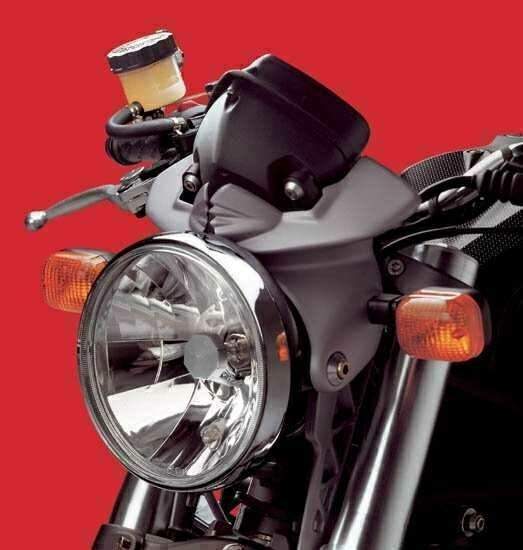
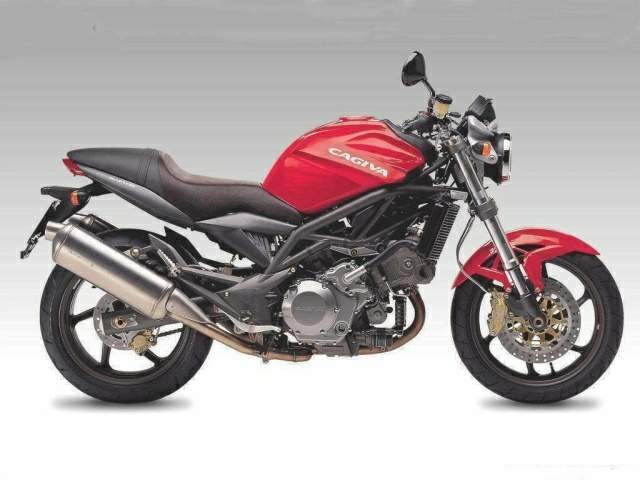
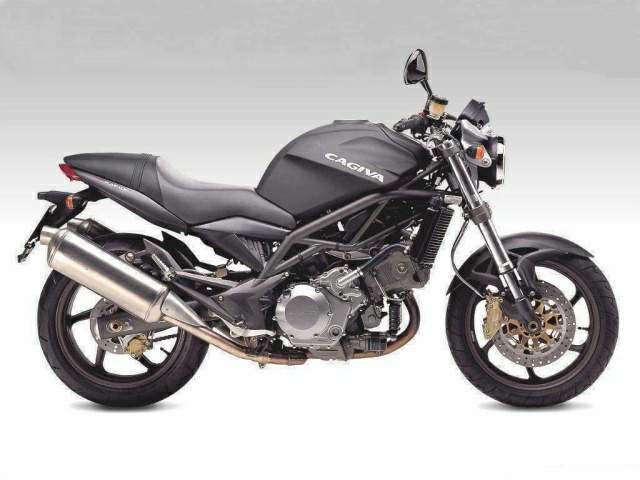
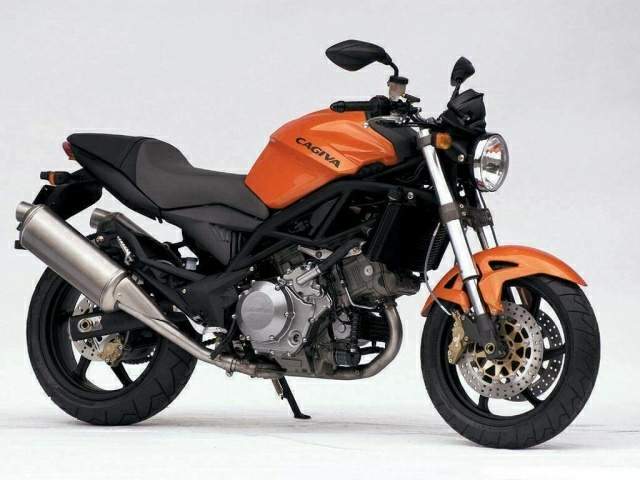
Cagiva's Raptor is just about the perfect bike for the south of France. With its wacky looks and upright riding position it demands to be noticed, and it's comfortable enough at slow speed to facilitate checking your reflection in the glass of Nice's posh shopfronts. Yet this bike has enough performance to be equally at home at the traffic-light grand prix and out of town in the mountains, on the great biking roads that in these parts are always close at hand. A comparison with Monster is no coincidence, of course, because the Raptors' designer, Argentinean-born Miguel Angel Galluzzi, is the man who sketched the original naked Ducati V-twin and persuaded his bosses to put it into production. That first M900 spawned a whole family of Monsters, became the Bologna firm's best-selling model, and triggered a major comeback for the simple roadster with aggressive styling and attitude to match. I'm sitting at the lights on the wide seafront road in Nice, 3pm on a Tuesday afternoon in mid-February, and the view through my dark visor is good. The sun is shining, girls are in-line skating past on the broad pavement, an old man sits on the sea wall reading a newspaper, people are outside Cafés with coffees and beers. And here at the head of the traffic queue along with two scooters and a trail bike, I'm sitting astride the Italian V-twin that is just about the coolest, most imaginative example of a new naked motorbike to strut its stuff on the Promenade des Anglais since... ooh, since Ducati's Monster kick-started the naked bike revival back in 1993. Suddenly the lights change and we're off. I'm snicking into gear, surging away ahead of the other bikes on a torrent of big V-twin torque, enjoying the warm wind on my chest, just about resisting the temptation to tweak the throttle harder and send the front wheel into the air... and then slowing for the next set of lights, to begin the process all over again. Cagiva's Raptor is just about the perfect bike for the south of France. With its wacky looks and upright riding position it demands to be noticed, and it's comfortable enough at slow speed to facilitate checking your reflection in the glass of Nice's posh shopfronts. Yet this bike and its more conservatively styled Raptor sibling (see picture above) have enough performance to be equally at home at the traffic-light grand prix and out of town in the mountains, on the great biking roads that in these parts are always close at hand. That comparison with Monster is no coincidence, of course, because the Raptors' designer, Argentinean-born Miguel Angel Galluzzi, is the man who sketched the original naked Ducati V-twin and persuaded his bosses to put it into production. That first M900 spawned a whole family of Monsters, became the Bologna firm's best-selling model, and triggered a major comeback for the simple roadster with aggressive styling and attitude to match. Ducati has since been sold by Cagiva but Galluzzi has stayed with his old boss Claudio Castiglioni in Varese, and has now come up with two bikes that are visually different but very similar under the skin. Each is powered by the 996cc liquid-cooled V-twin engine from Suzuki's TL1000S, and most of their chassis parts are shared. Together they represent the first stage of Cagiva's attempt to establish the marque's name, alongside that of its MV Agusta subsidiary, as a major force in the big-bike market. Galluzzi has certainly given the Raptor an eye-catching look. With its sharp beak, from which dramatic fake air-scoops lead back to the tank, it has a unique profile that perfectly matches its name Raptor is a Latin word for bird of prey. Like the basic Raptor, which looks rather Monster-like at first glance, it incorporates heaps of neat details, from the centrally placed triangular tacho (with digital speedo underneath) to the claw-like castings below the rear footrests. Cagiva's development team kept the TL's 90-degree, eight-valve engine internally standard, but fitted their own intake and exhaust systems. The lower part of the airbox is retained but the top wouldn't fit inside the Raptor fuel tank so it's new, as are the intake manifolds. The exhaust is a new stainless steel system, and the fuel-injection system is reprogrammed, mainly with the aim of smoothing out low- and medium-rev power delivery. The result of all that is a little confusing. Cagiva quotes a modest-sounding 105bhp at 8500rpm, well down on the TL1000S's claimed 121bhp. But the Italians take their measurements at the rear wheel, not at the crankshaft like Suzuki, and on Cagiva's dyno the Raptor's output is only a couple of horsepower down on that of the TL. Likewise its peak torque output of 98N.m at 7000rpm, measured at the rear wheel, compares well with the Suzuki's 103N.m at the crank. Chassis design is based on a vaguely Ducati-style tubular steel frame, with 40mm diameter main tubes, and uses the engine as a stressed member. A semi-elliptical steel swing-arm works the vertically mounted Sachs shock, which is offset to the left by 40mm to clear the rear cylinder's exhaust downpipe. Up front, non-adjustable 43mm Marzocchi upside-down forks hold 300mm discs and four-pot Brembo calipers. Both Raptors have the same distinctive instrument console, which incorporates a sophisticated diagnostic system that allows a dealer to track down an electrical malfunction. They also use the same seat, which at 770mm high is designed to allow average-sized riders to put both feet flat on the ground. The V-Raptor also comes with a suitably sculpted removable cover for the pillion section. This and the V-Rap's other bold (although, functionally speaking, useless) bodywork parts certainly made the bike look right at home in fashionable Nice, and in other ways too the Cagiva proved a great bike for urban posing. Its handlebars are wide and flat, giving plenty of steering lock and leaning you forward very slightly over those outrageous fake scoops. Combined with the fairly soft suspension, that made for a ride that was comfortable in town and was also fine at higher speeds, aided by a degree of wind protection from the nose fairing and clocks. As the owner of a TL1000S myself I was already addicted to the big V-twin's ever-ready reserves of midrange torque. Happily, that is still present and correct. Cagiva's intake and exhaust tuning, combined with a lowering of the overall gear ratio (from 17/39 to 16/40), has succeeded in making the low-rev delivery a touch more user-friendly. This bike felt a little less snatchy than the TL at urban speeds, although in slow-moving traffic it was still best to short-shift up to third gear for a smooth ride. Most importantly, though, tweaking the loud handle at almost any speed sent the bike hurtling forward in traditionally explosive TL fashion.
Suzuki's liquid-cooled lump provides distinctly more muscle than the relatively old-fashioned aircooled, sohc Monster engine. Whether I was lazily winding it on with as little as 2000rpm on the tacho, or holding on tight as the needle sped towards the 10,300rpm redline, the Raptor's straight-line stomp never failed to impress. With its slightly detuned motor and shorter gearing this bike wouldn't approach the TL Thou's 160mph-plus top speed, but on straighter, less busy roads you could expect to see at least 150mph on the digital speedo. Some vibes come through pegs and seat at high revs, but generally the Cagiva was pleasantly smooth. Its six-speed gearbox shifted with typical Suzuki efficiently and more importantly for many owners, no doubt the V-Raptor needed very little provocation to hoist its front wheel skywards. It also went round corners every bit as well as you'd expect of a big Italian V-twin, at least one designed as much for comfort as for speed. At 197kg the V-Raptor is respectably light (the standard Raptor model is 5kg lighter). And although its geometry is not particularly sporty, with 25.2 degrees of rake and 110mm of trail, the wide handlebars gave enough leverage to allow pleasantly quick, neutral steering. Up in the mountains when the follow-the-leader launch pace got really hot, the Cagiva's suspension started to feel a little soft, particularly under heavy braking, when some fork adjustment would have been handy. But at more sensible speeds the V-Raptor worked just fine, staying rock-solid on the straights and floating round bumpy mountain hairpins with ease. Brakes and tyres were well up to the job, too. Brembo's four-potters didn't have quite the absolute power of some sports bike systems, but bit hard given a reasonably firm squeeze of the lever. For this type of bike and its possibly less experienced owners, that arguably made the stoppers ideal. And Bridgestone's BT56 tyres, the rear a 180/55 cover, coped well with the often dubious road surfaces. Predictably the basic Raptor felt very similar in nearly every respect, though it drew considerably less attention when parked. From the saddle the main difference apart from not having those fake airscoops in front of you is that the bars are slightly higher and less pulled-back, giving a marginally more upright riding position. The V-Raptor's small amount of wind protection from its beak would make that bike slightly more useful over long distances, but there's not much in it. Given these two bikes' similarities, it's tempting to conclude that the basic Raptor, which at £6699 on the road is £450 cheaper than the £7149 V-Raptor, is better value of the two. Some riders will doubtless find the V-Raptor too extreme, and Cagiva is expecting to sell more of the basic model. Personally I'd pay the extra for one of the most distinctive bikes on the road. Whether you like the V-Raptor's looks or not, both bikes are cleverly designed and well executed machines that confirm Galluzzi has succeeded in his aim of evolving the naked bike concept. They are eye-catching, powerful and competitively priced, and leave Ducati's Monster, now available in tweaked M900S version but little changed these last seven years, playing catch-up. And these two bikes are just the start for Cagiva, whose links with Suzuki are allowing rapid model development. Production of the dual-purpose Navigator, also TL1000S engined, is due in May, and the Varese firm is also working on smaller Raptors, powered by Suzuki's SV650 engine, for next year. Rumours of four-cylinder Cagivas can be discounted as such a bike would compete with MV Agusta, but a sports-touring V-twin is also likely in the near future. Cagiva's future as a serious producer of large-capacity roadsters starts right here. Source .insidebikes.com
|
|
|
Any corrections or more information on these motorcycles will be kindly appreciated. |