|
|
|
|
Classic Bikes
Custom Bikes
Individual
Racing Bikes AJP
AJS
Aprilia
Ariel
Avinton / Wakan
Bajaj
Benelli
Beta
Bimota
BMW
Brough Superior
BRP Cam-Am
BSA
Buell / EBR
Bullit
Bultaco
Cagiva
Campagna
CCM
CF Moto
Combat Motors
Derbi
Deus
Ducati
Excelsior
Fantic
GASGAS
Ghezzi Brian
Gilera
GIMA
Harley Davidson
Hero
Highland
Honda
Horex
Husaberg
Husqvarna
Hyosung
Indian
Jawa
Kawasaki
KTM
KYMCO
Laverda
Lazareth
Magni
Maico
Mash
Matchless
Mondial
Moto Guzzi
Moto Morini
MV Agusta
MZ / MuZ
NCR
Norton
NSU
Paton
Peugeot
Piaggio
Revival Cycles
Roland Sands
Royal Enfield
Sachs
Sherco
Sunbeam
Suzuki
SWM
SYM
Triumph
TVS
Ural
Velocette
Vespa
Victory
Vincent
VOR
Voxan
Vyrus
Walt Siegl
Walz
Wrenchmonkees
Wunderlich
XTR / Radical
Yamaha
Zero
Video
Technical
Manufacturer List Contact
|
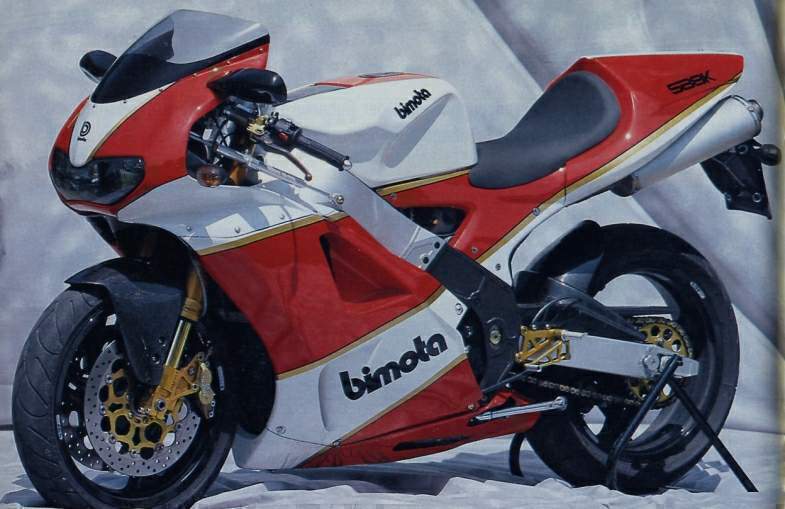
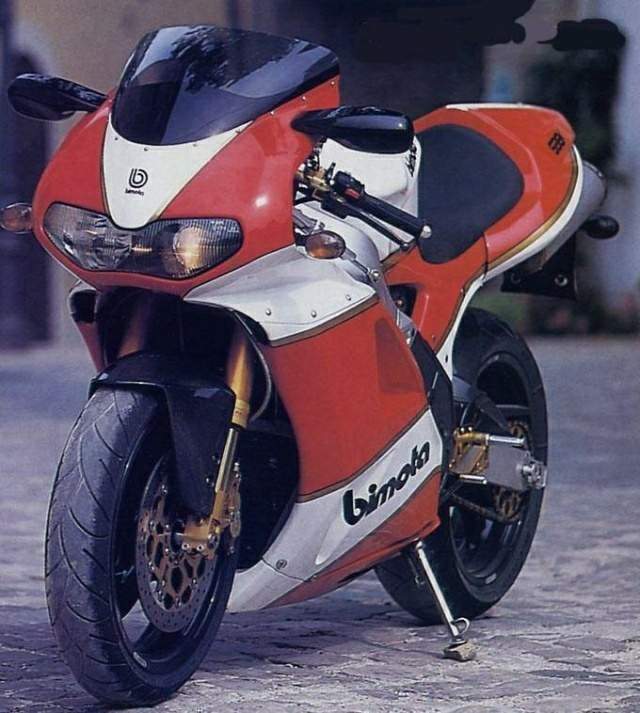
Bimota SB8K
Bimota caused a sensation at the start of the 2000 World Superbike season when the small and financially troubled Italian firm's rider. Australian Anthony Gobert. won a race at only the team's second ever meeting. Gobert's machine was Bimota's new SB8K. powered by Suzuki's TL1000R V-twin engine. Although the win owed much to an inspired tyre choice on a damp Philip Island track, it gave Bimota a huge boost and focused attention on the SB8K. The production SB8K roadster on which Gobert's racer was closely based was essentially a homologation special: a redesigned, more aerodynamic and slightly more powerful version of the previous SB8R model, which used the same 996cc engine. Bimota planned to build only 150 units in 2000: the minimum number required by World Superbike rules. Like the SB8R. the K model was an exotic machine that combined the TL's liquid-cooled. 90-degree V-twin engine with a frame whose twin aluminium main spars incorporated carbon-fibre sections at the swingarm pivot. In Bimota tradition the eight-valve motor remained internally standard, though the SB8K gained a little power from a new Weber Marelli unit with larger. 59mm throttle bodies for improved high-speed flow. The new bike's larger airbox was fed by a conventional system from the fairing nose, rather than the SBSR's more flamboyant arrangement of large ducts running up over the fuel tank. Bimota optimistically claimed that the SB8K. which was also modified with revised injection mapping and a new high-level exhaust, produced 149bhp. fully I5bhp more than the standard Suzuki. There was no change to the SB8R's composite main frame or the suspension: thick 46mm Paioli upside-down forks plus a horizontally mounted Öhlins shock, situated inside the right frame spar and worked by an aluminium rod from the swingarm. But the race-ready SB8K incorporated some extra details including adjustable swingarm pivot points for tuning racetrack handling. Thunder and aggressionAt 3791b (172kg) the SB8K was slightly lighter than the SB8R and a substantial 551b (25kg) down on the TL1000R. This combined with the extra power to give storming straight-line performance. The Bimota's big V-twin power pulses sent the bike thundering forward with even more force and aggression than riders of the ultra-torquey Suzuki had come to expect. The SB8K was wonderfully responsive in the lower gears, although it had a stiller throttle action than the TL. which made accelerating smoothly while leant over in mid-comer more difficult. At higher revs the Bimota really started making use of it big throttle bodies, as it charged towards it top speed of over 160mph (257km/h). Although the blend of potent V-twin motor, light weight, short wheelbase and racy geometry could have made the bike a real handful, the SB8K's rigid frame and top-quality suspension ensured otherwise. It steered quickly and easily, yet stayed stable even under hard acceleration. Fat radial tyres gave typically high levels of grip, and Brcmbo's front brake set-up was powerful. Demand for the SB8K was strong and took off following Gobert"s remarkable victory at his home round in Philip Island, but things went downhill fast for Bimota. Firstly the racebike suffered a string of mechanical problems, one of which caused Gobert to crash heavily. Then the race team was disbanded in mid-season, after a main sponsor disappeared owing a large amount of money. Finally Bimota. already in severe financial trouble following the disastrous introduction of the 500 V-due. with it clean-burning but unreliable two-stroke engine, found itself in a worse financial position than ever before. Production ceased completely before most of the SB8Ks had been completed, and the future looked bleak for the famous and forward-thinking Rimini firm which, for almost 30 years, had built some of the world's fastest and finest superbikes. Source Fast Bikes by Roland Brown
|
|
|
Any corrections or more information on these motorcycles will be kindly appreciated. |