|
|
|
|
Classic Bikes
Custom Bikes
Individual
Racing Bikes AJP
AJS
Aprilia
Ariel
Avinton / Wakan
Bajaj
Benelli
Beta
Bimota
BMW
Brough Superior
BRP Cam-Am
BSA
Buell / EBR
Bultaco
Cagiva
Campagna
CCM
CF Moto
Combat Motors
Derbi
Deus
Ducati
Excelsior
GASGAS
Ghezzi Brian
Gilera
GIMA
Harley Davidson
Hero
Highland
Honda
Horex
Husaberg
Husqvarna
Hyosung
Indian
Jawa
Kawasaki
KTM
KYMCO
Laverda
Lazareth
Magni
Maico
Mash
Matchless
Mondial
Moto Guzzi
Moto Morini
MV Agusta
MZ / MuZ
NCR
Norton
NSU
Paton
Peugeot
Piaggio
Revival Cycles
Roland Sands
Royal Enfield
Sachs
Sherco
Sunbeam
Suzuki
SWM
SYM
Triumph
TVS
Ural
Velocette
Vespa
Victory
Vincent
VOR
Voxan
Vyrus
Walt Siegl
Walz
Wrenchmonkees
Wunderlich
XTR / Radical
Yamaha
Zero
Video
Technical
Complete Manufacturer List
|
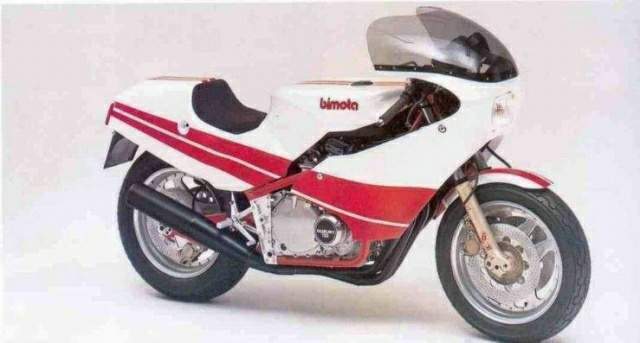
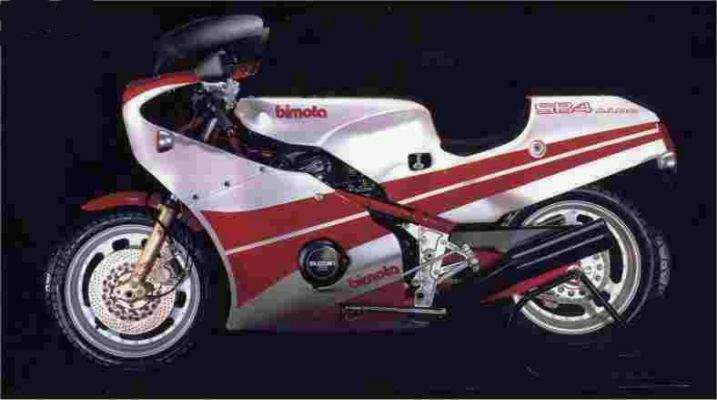
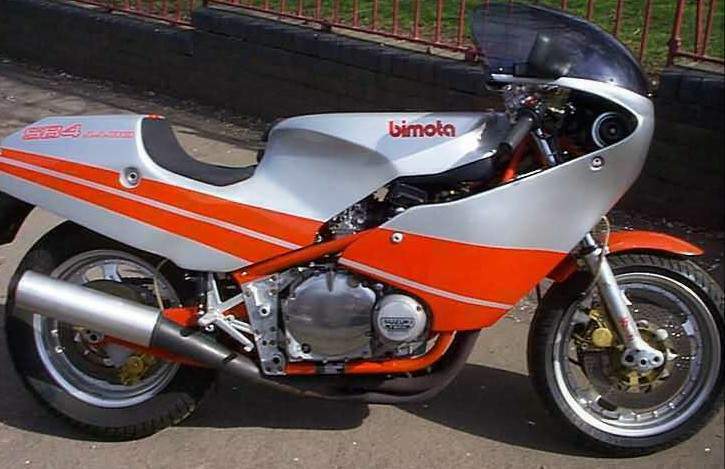
Bimota SB4 Mirage
Bimota have the distinction of making the world's most expensive motorcycles. They are handmade, bespoke creations using all the very best components. They are labour intensive to make, beautifully finished and very fast. Bimota make exclusive, expensive, luxurious sports bikes that approach motorcycle perfection, that ideal but elusive marriage between Japanese horsepower and a frame that can deliver the goods. Take one large Japanese powerplant and place it in a unique frame with the best suspension, wheels and brakes money can buy. The SB4 is built around Suzuki's GSX1100 with the engine carried by Bimota's chrome-moly, semi-cradle that supports the motor from the sides with the top tubes unusually joining ahead of the forks and steering head for extra rigidity. The swing-arm and rising-rate, rear suspension are anchored to the frame by a huge plate of Avional 14, an aircraft quality alloy. This crucial structure is milled from a solid block, glued and then bolted in place, all in pursuit of the perfect steering head/swing-arm relation. The frame plus swing-arm weigh just 351b.It is light and low on the move with 16in wheels fitted with low-profile radial tyres. Bimota are the only company to fit radials as original equipment rubber. Suspension is by Ceriani telehydraulic forks with seven-way adjustable rebound damping and a De Carbon unit at the back. The rear rocker arm and all the linkages are lovingly made, rose joints and quality alloy details are everywhere. The motor is stock except for a four-into-two Bimota exhaust and some extremely high gearing. The tall ratios complement Bimota's aerodynamic fairing and bodywork to achieve high speed and give the GSX1100 full top end expression, ISOmph and still pulling. The riding position is uncompromising and built for maximum speed work. The rider is stretched, fully prone, reaching down to the clip-ons across the broad back of the tank, feet high on the rearsets, knees tucked into the tank cutaways. It is cramped but strangely comfortable. Everything about the Bimota sparkles with quality. Little is cast, it is all either machined from solid or press-forged with TIG welding throughout. The bodywork is all in fibreglass-reinforced plastic and fits like a glove. The bike exudes class and confidence. The later SB5 uses the bigger 1135cc Suzuki engine but is essentially unchanged except for a longer wheel-base and different weight distribution. The one outstanding difference is the provision of a dual seat. Previous Bimota bikes had all been strictly solo machines. Source: The Worlds Fastest Motorcycles by Michael Scott & John Cutts
|
|
|
Any corrections or more information on these motorcycles will be kindly appreciated. |