|
|
|
|
Classic Bikes
Custom Bikes
Individual
Racing Bikes AJP
AJS
Aprilia
Ariel
Avinton / Wakan
Bajaj
Benelli
Beta
Bimota
BMW
Brough Superior
BRP Cam-Am
BSA
Buell / EBR
Bullit
Bultaco
Cagiva
Campagna
CCM
CF Moto
Combat Motors
Derbi
Deus
Ducati
Excelsior
Fantic
GASGAS
Ghezzi Brian
Gilera
GIMA
Harley Davidson
Hero
Highland
Honda
Horex
Husaberg
Husqvarna
Hyosung
Indian
Jawa
Kawasaki
KTM
KYMCO
Laverda
Lazareth
Magni
Maico
Mash
Matchless
Mondial
Moto Guzzi
Moto Morini
MV Agusta
MZ / MuZ
NCR
Norton
NSU
Paton
Peugeot
Piaggio
Revival Cycles
Roland Sands
Royal Enfield
Sachs
Sherco
Sunbeam
Suzuki
SWM
SYM
Triumph
TVS
Ural
Velocette
Vespa
Victory
Vincent
VOR
Voxan
Vyrus
Walt Siegl
Walz
Wrenchmonkees
Wunderlich
XTR / Radical
Yamaha
Zero
Video
Technical
Manufacturer List Contact
|
Benelli 500 Quattro
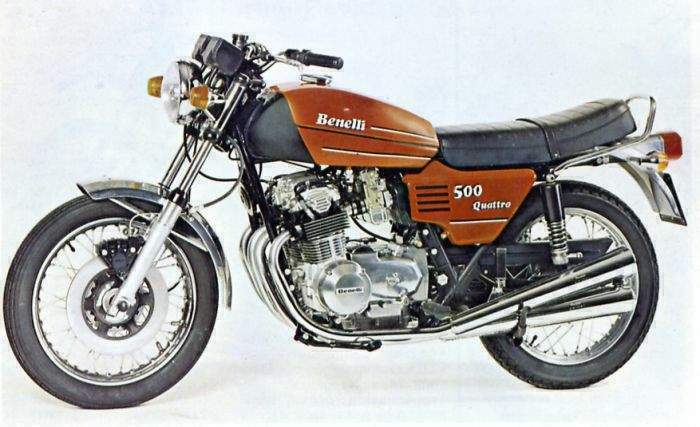
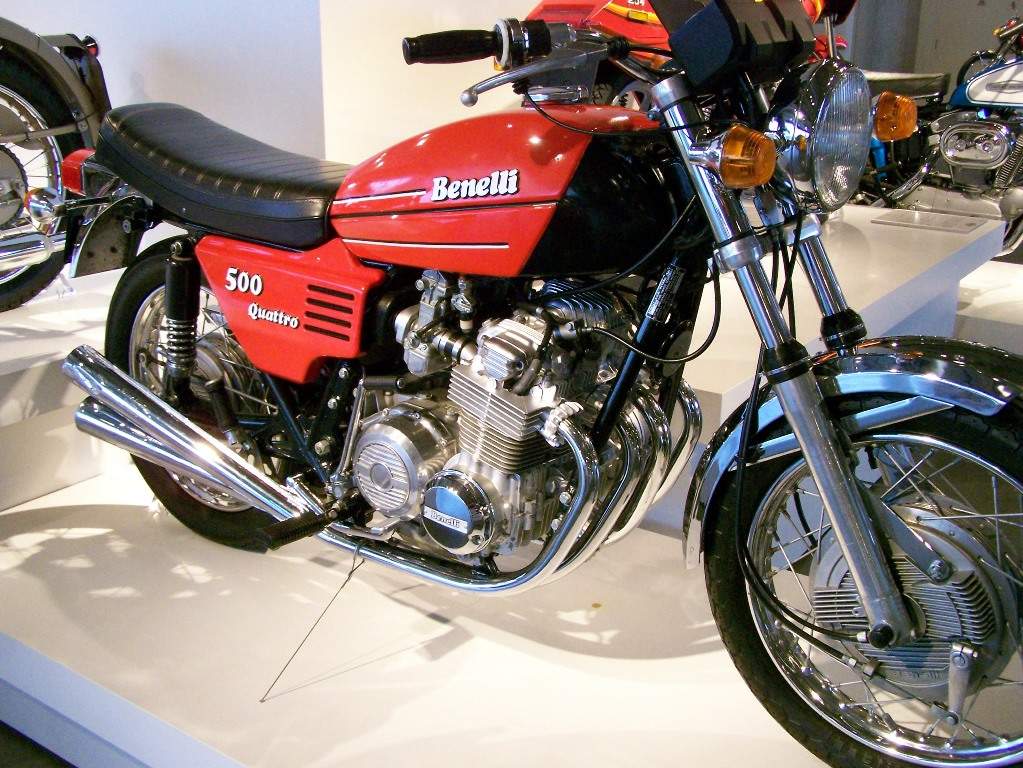
The most striking thing about the 500 Benelli is that it bears more than a passing resemblance to another four-stroke, four-cylinder half-litre machine, the 500 Honda. The similarity centres on the engine which not only looks like the Japanese bike's unit, but also sports the same cylinder dimensions: 56 x 50.6 mm. However, with a 10.2:1 compression ratio, the Benelli produces slightly more power with 55 bhp available at 9800 rpm. The single-overhead-camshaft engine, which is fed by four Dell'Orto carburettors, can push the 440 lb bike to a top speed of 112 mph. Because of the bike's relatively low weight, fuel consumption is good and 50 mpg is easily possible. Although initially available with two powerful drum brakes, the 500 is now equipped with a two disc front and single disc rear layout, a move dictated by the public's reaction to the many disc-braked Japanese bikes. Styling is typically Italian with wide flat handlebars and boxy panels, tank and instruments. Incidentally, the bike's engine is manufactured at the Moto Guzzi factory in Mandello del Lario, as are all the Benelli four-stroke engines, while the two-stroke units of the two companies are built at Benelli's Pesaro works. This has been the case since motor magnate Alejandro de Tomaso bought out the ailing companies a few years ago. Since that time, the single-cam Honda lookalike engine has been the basis for most of the companies' four-stroke range. 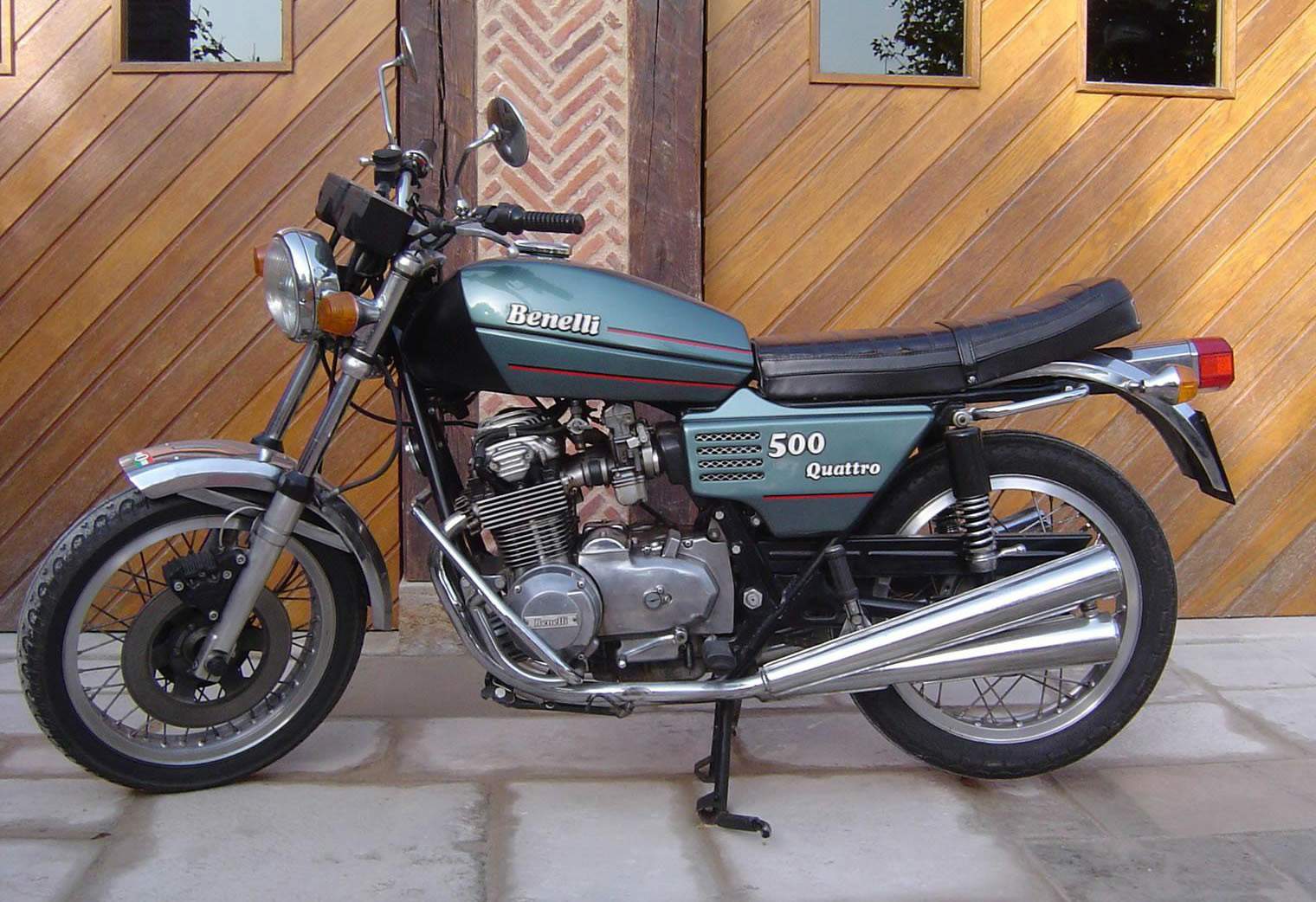
|
|
|
Any corrections or more information on these motorcycles will be kindly appreciated. |