|
|
|
|
Classic Bikes
Custom Bikes
Individual
Racing Bikes AJP
AJS
Aprilia
Ariel
Avinton / Wakan
Bajaj
Benelli
Beta
Bimota
BMW
Brough Superior
BRP Cam-Am
BSA
Buell / EBR
Bultaco
Cagiva
Campagna
CCM
CF Moto
Combat Motors
Derbi
Deus
Ducati
Excelsior
GASGAS
Ghezzi Brian
Gilera
GIMA
Harley Davidson
Hero
Highland
Honda
Horex
Husaberg
Husqvarna
Hyosung
Indian
Jawa
Kawasaki
KTM
KYMCO
Laverda
Lazareth
Magni
Maico
Mash
Matchless
Mondial
Moto Guzzi
Moto Morini
MV Agusta
MZ / MuZ
NCR
Norton
NSU
Paton
Peugeot
Piaggio
Revival Cycles
Roland Sands
Royal Enfield
Sachs
Sherco
Sunbeam
Suzuki
SWM
SYM
Triumph
TVS
Ural
Velocette
Vespa
Victory
Vincent
VOR
Voxan
Vyrus
Walt Siegl
Walz
Wrenchmonkees
Wunderlich
XTR / Radical
Yamaha
Zero
Video
Technical
Complete Manufacturer List
|
Laverda 750S
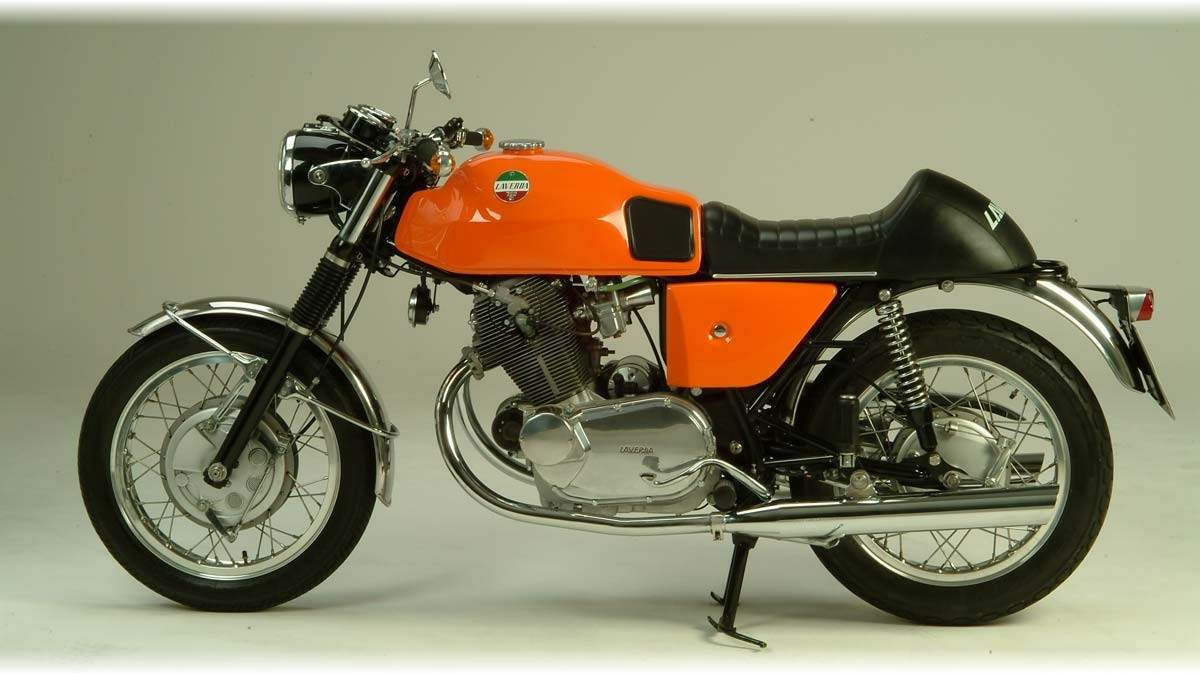
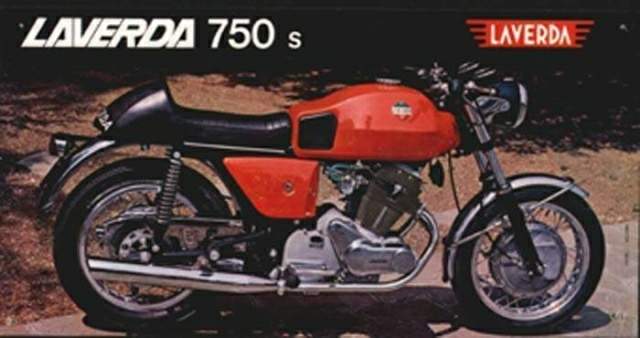
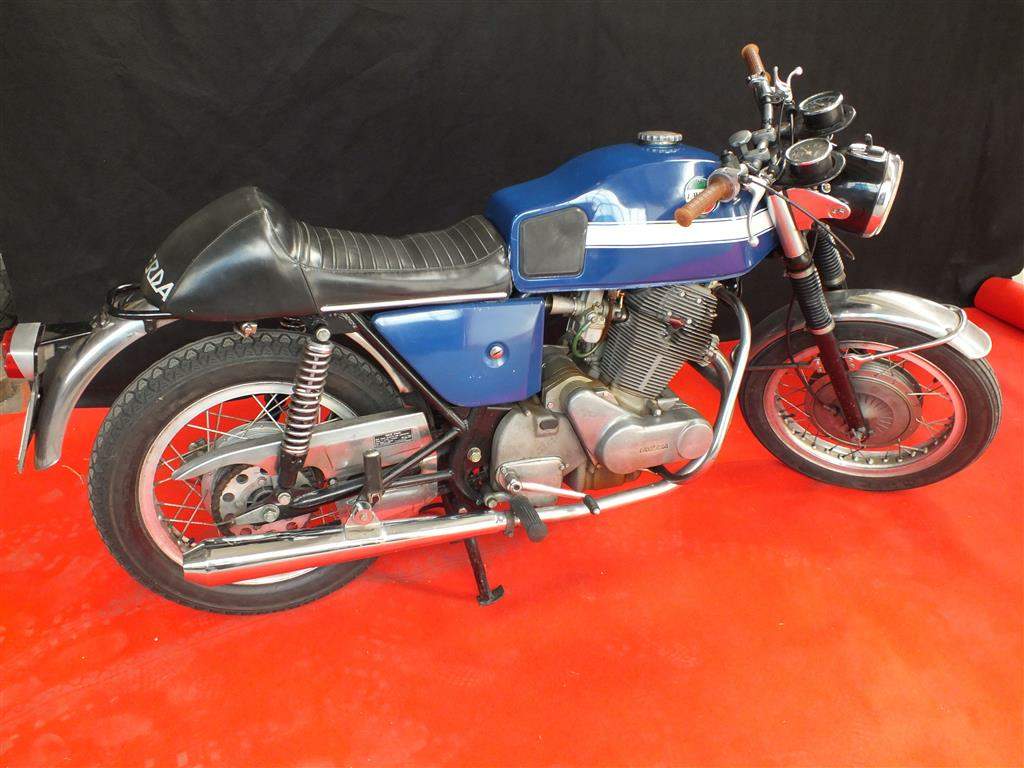
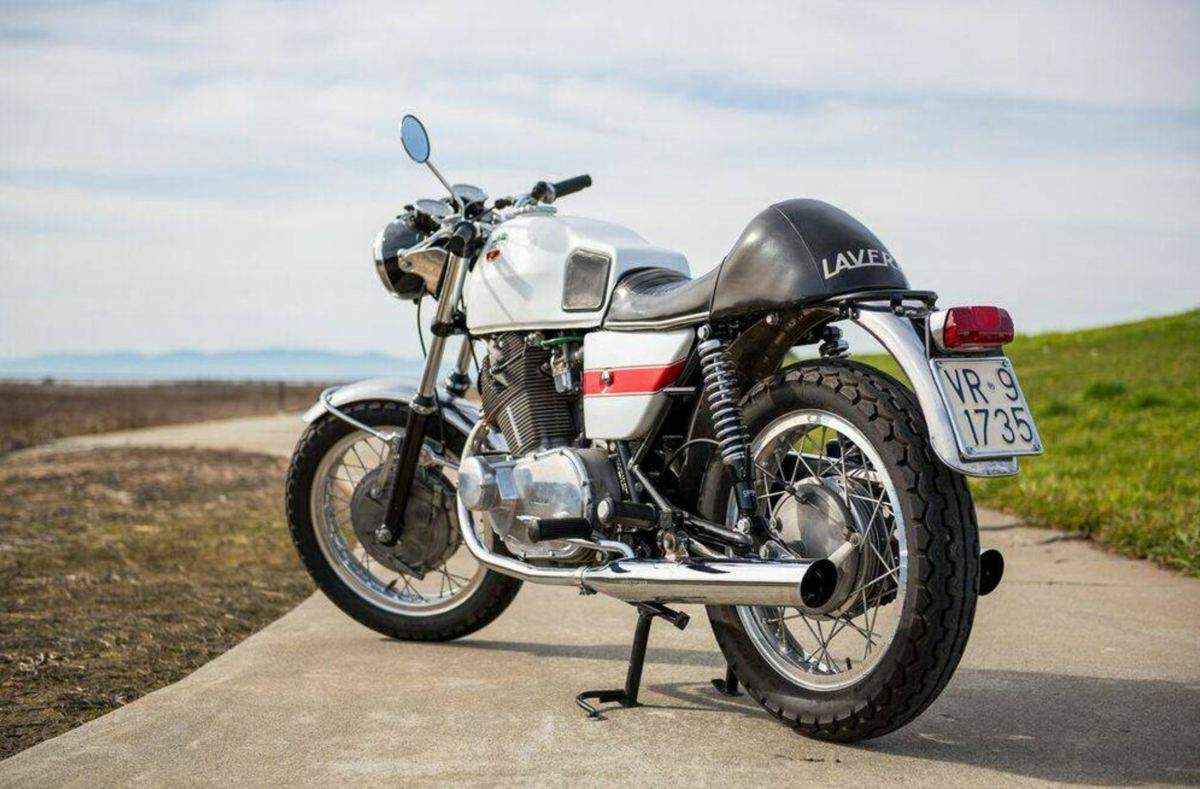
THE 750S The 750GT (which was never officially imported into Britain) was joined in early 1969 by the 750S ('S' standing for 'Sport'). This was built until late 1970, when the two models effectively merged to become the SF ('Super Freno', meaning 'super brake') model. The differences in styling between the GT and S affected the handlebars, seat, fuel tank, mudguards (the GT having square-section, the S rounded, both enjoying the luxury of stainless-steel assemblies), and front forks (the GT having enclosed, the S exposed fork tubes, both 35mm Ceriani). There were also several differences between the two models in the state of tune. The carburettors on the GT were equipped with an air filter, the S's were not, having polished bellmouths instead. The GT ran a 7.7:1 compression ratio, the S 9:1. The S used a 1mm larger carb size than the GT 30 (against 29mm); both were of the square slide VHB type. The GT used a softer camshaft profile (8) than the S (4/s). In the power stakes, the GT produced 52 bhp @ 6,600rpm against the S version's 60bhp @ 6,600rpm. In terms of the fuel tank, the GT shared the same 19-litre (4.2-gallon) capacity as the 650GT, against the 20-litre (4.4-gallon) capacity for the 750S. Both machines shared the same basic frame with the 650GT, with rake and trail figures of 28 degrees/82mm respectively. The three machines all shared a steering damper, which worked in the traditional manner, being fitted through the steering stem nut and down through the steering head. An alloy knurled top nut affected adjustment. Later Laverdas were not fitted with any form of steering damper. Another component shared only by these three early twins was the Bosch 155mm headlamp, which was rated at 12 volts 45/40 watts for Europe, and at 35/35 watts for the USA. Most of the other electrical components on the early twins were also of Bosch manufacture, including the switchgear. The instruments were British Smiths; rear lights were CEV, either round or alloy-bodied assemblies. Although never imported officially into the UK, the 750GT was none the less an important motorcycle in the evolution of Laverda's big twin. There were many differences between it and the 750S, both cosmetic and in the engine department
TEST COMMENTS Roger Slater's company (originally Roger Slater Engineering), based at Woodcote, Bromsgrove, Worcestershire, became Laverda distributor for Great Britain in late 1969. An early test of a 750S by John Ebbrell in the 30 September 1970 issue of Motor Cycle reported that 'the Laverda has the lazy-loping gait dear to British riders. With a tremendous punch and flexibility, it feels like a superior Royal Enfield Interceptor.' On the subject of engine smoothness, Ebbrell wrote that 'vibration, only slight at first, smooths out as rpm rise. Certainly, the Laverda is the smoothest rigidly-mounted 360 degree parallel twin I have ridden!' Ebbrell went on to comment as follows: Acceleration is leisurely, for the engine will not be hurried through the gears. And why should it? The bike can easily hold 30mph in the 4.62-to-l top gear. At 4,500rpm, near enough to the 70mph speed limit, the engine seems hardly to be ticking over. Headwind, gradient, traffic baulk: no need to change down to fourth, just tweak the throttle and the bike surges forward. For a rider long accustomed to rev-hopping twins, this is the most impressive thing about the Laverda! Other aspects of the bike reviewed by Ebbrell included steering ('first-class'), suspension ('stiff'), starting ('instantaneous cold, needing three or four "whirls" hot'), lighting ('indifferent'), fuel consumption on the motorway ('breathtaking'), exhaust note ('beautiful, mellow'). In his opinion, the bike's worst feature was its brakes (230mm dual leading shoe Grimeca at the front, with a 200mm single leading shoe Grimeca at the rear). His exact words were: 'The rear one is no better than adequate, and the front, with double leading shoes can only be described as lethal. It is feeble on light application, fierce under heavy pressure. In wet weather the effect is like slotting a baulk of timber between the spokes!' At the time, the British importer planned to install a front brake of its own manufacture as standard equipment, but this was to prove unnecessary. Moto Laverda was to provide a remedy itself, in the shape of drum brakes designed by Francesco Laverda, which became standard fitment not only on the 750 twins, but also on the early triples. Production of the 750 series with the new brakes began in mid-1970, when the factory workers returned from their annual holidays. These were vastly improved units, both of 230mm diameter -both had an air scoop for improved cooling; the rear scoop was located on the right (offside), in the sprocket carrier. The S, with its new brakes, was thereafter known as the SF. For a description of this variation of the seven-fifty twin, see the section entitled '750SF -Easy Guide'; for a description of the SFC, see Chapter 5. The major reason why the Laverda 750 series needed decent brakes was because of its weight. As the 1970 Motor Cycle 750S test said, 'The feeling of weight as you get astride the machine is no illusion. Ready for the road it turns the scale at 5021b [228kg], 101b [4.5kg] more than a BSA-Triumph Three and 871b [40kg] more than a Norton Commando.' The engine castings were described as 'Teutonically massive'. In truth, the Laverda twin was certainly not under-engineered, and this is a major reason by it was to prove such a popular series over the years all around the world. In the 1970s, some 18,500 machines were built. Probably the best single word to describe the Laverda twin is 'tough' - just like its extra-stiff clutch! Source Laverda Twins & Triples
|
|
|
Any corrections or more information on these motorcycles will be kindly appreciated. |