|
|
|
|
Classic Bikes
Custom Bikes
Individual
Racing Bikes AJP
AJS
Aprilia
Ariel
Avinton / Wakan
Bajaj
Benelli
Beta
Bimota
BMW
Brough Superior
BRP Cam-Am
BSA
Buell / EBR
Bultaco
Cagiva
Campagna
CCM
CF Moto
Combat Motors
Derbi
Deus
Ducati
Excelsior
GASGAS
Ghezzi Brian
Gilera
GIMA
Harley Davidson
Hero
Highland
Honda
Horex
Husaberg
Husqvarna
Hyosung
Indian
Jawa
Kawasaki
KTM
KYMCO
Laverda
Lazareth
Magni
Maico
Mash
Matchless
Mondial
Moto Guzzi
Moto Morini
MV Agusta
MZ / MuZ
NCR
Norton
NSU
Paton
Peugeot
Piaggio
Revival Cycles
Roland Sands
Royal Enfield
Sachs
Sherco
Sunbeam
Suzuki
SWM
SYM
Triumph
TVS
Ural
Velocette
Vespa
Victory
Vincent
VOR
Voxan
Vyrus
Walt Siegl
Walz
Wrenchmonkees
Wunderlich
XTR / Radical
Yamaha
Zero
Video
Technical
Complete Manufacturer List
|
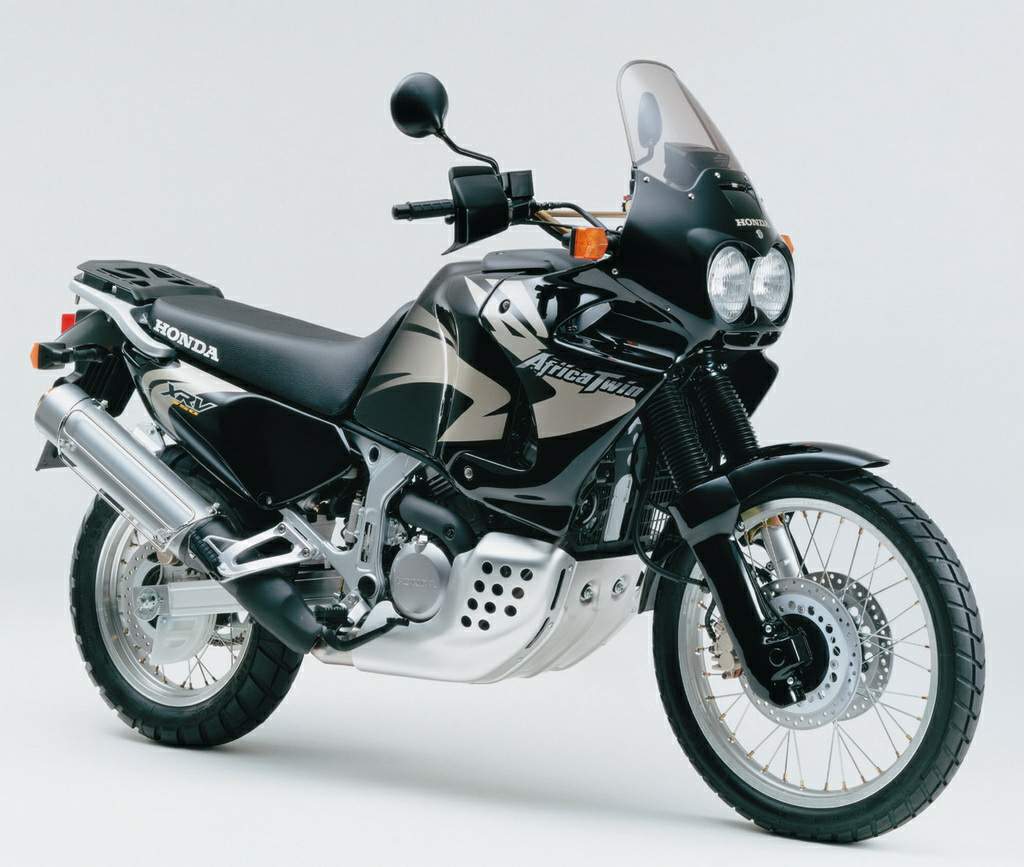
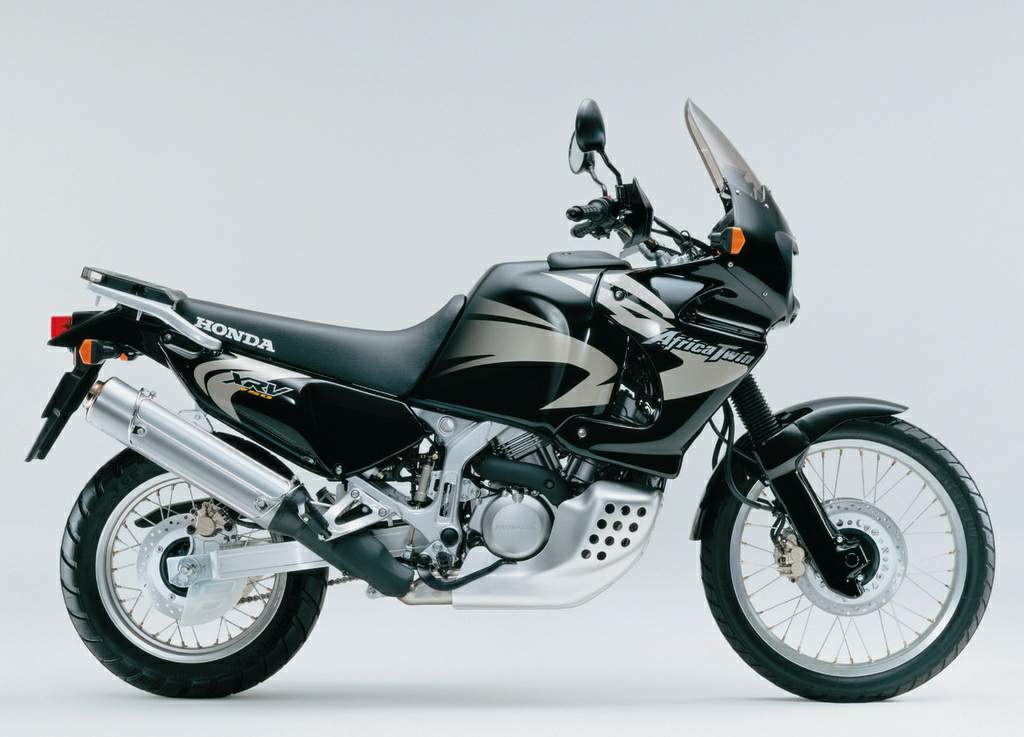
Honda XRV 750 Africa Twin
"Buy the best, it’s less bother in the long run." That’s the good advice my Gran gave me many years ago, when I was on my first
pair of Cuban heeled boots. Which split. Thing is, the same motto still has more
than a grain of truth, as many an owner of a slowly rusting `bargain bike’ has
learned, eventually. This is a Honda that oozes old school quality, from the days when the company was a genuine market leader in all things two-wheels, keen to create brand new concepts. You only have to look at the massive alloy bashplate under the XRV750’s engine, the guards for the forks, the rear brake disc and the exhaust, plus the overall finish of the paintwork, to appreciate that this bike was designed to travel a long, long way. More importantly, Honda expected its owners to ride along desert roads, mountain trails, farm tracks and the like – places where you wouldn’t find a jetwash and a tube of Solvol at the end of the road. The thing looks durable, which is a rare thing in biking these days. STEADY NOW Fire up the Africa Twin and a slightly disappointing flat burble comes from the classy looking exhaust pipe. It’s typically smooth off the mark, with a steady power delivery, all the way up to around 8,000rpm, when it begins to lose its punch. You can rev it more, but it doesn’t feel any faster, which is not surprising, as the motor is one of the most under-stressed engines made by Honda, kicking out about 50-55bhp.
It’s just enough power to see the
tall machine push past an indicated 110mph flat out, although the Africa Twin
can cruise all day at 80-90mph on a motorway. Two other factors; increasing
vibration from the motor, plus a bit of helmet buffeting from the screen, also
conspire to make 80-ish about as fast as you want to go. Especially off-road. This bike is an off-roader in the same way that a Range Rover is good for rounding up sheep in the Outer Hebrides – great on paper, but mildly insane in practice. I did try a little excursion along a farm track, but even at 40mph the bike simply slithered through mud in any direction it felt like going, not where I was pointing the front wheel. But on the road - any road in fact - the Africa Twin delivers exactly what it says on the tin. It turns bumpy city streets into a smooth commute, with its supple suspension and commanding riding position. The rear shock in particular is excellent – if only the XRV’s saddle was as comfortable. The bike actually handles much better than something this tall and heavy has any right to. It dives a little bit too much on the brakes of course, but if you get everything done long before the turn, the Africa Twin can hustle its way around corners very well indeed, with lots of feedback from the suspension allowing the rider to push the tyres that bit more. Ground clearance is also very good, much better than the Honda’s big brother Varadero 1000 by the way. The key characteristic that the XRV750 has is balance; the engine doesn’t have anything like enough power to stress the chassis, and this lets you build up speed, then carry it through the corners with minimum effort. PRACTICAL LESSONS The devil is in the details, goes the old saying, but with the XRV750, it is the
details which impress you.
The thing is, journey times were
pretty much identical on the Honda. You sit up straight on the Africa Twin, with nice wide handlebars, complete with hand-guards, plus mirrors that are set even wider, giving a good view. The fairing and screen are narrow, but the wind is deflected quite well from the rider’s body. The forks don’t just have placcy guards over their lower legs, but proper gaiters too. The only annoying feature on the XRV for me is the hard, enduro type saddle, which doesn’t belong on what is in reality, a touring bike. Honda should have changed it years ago. There’s also a lack of space under the seat, with a small cubby hole being insufficient, even for a lightweight pair of waterproofs. It’s also worth remembering this bike has an old fashioned 21 inch front wheel, restricting your tyre choices. ALL ROUND PACKAGE After ten years in production, it looks like the XRV750 will soon be phased out, in favour of the Varadero 1000, which is a real shame in some ways. The Varadero is a much softer kind of bike altogether, lacking the steering precision, ground clearance, fuel economy and build quality of the XRV750. The Varadero wins on comfort, with a bigger fairing and wider, softer saddle, making it the better choice for two up riding, but the old Africa Twin still has a little bit of the spirit of adventure inside its crankcases. It’s also cheaper, at just over £6,300 on the road, although you can get them for about £5500 from the parallel import dealers. For that sort of money, you are buying a bike that rivals machines like the BMW R1150GS in terms of on/off road ability, overall durability and future re-sale value. You don’t see such a thing as a cheap Africa Twin secondhand – I’ve looked! The XRV deserves to be developed further, retaining its genuine character, its strength of purpose, that still gets under your skin. A modern 750cc V-twin motor, kicking out about 70bhp, with a tweaked chassis and touring seat option, would be a fantastic bike – trouble is, it make the Varadero 1000 redundant overnight, so I don’t see Honda producing a new Africa Twin. This is the last of a line that stretches back to those great days of the Paris-Dakar in the 80s, when the factories went in with big guns blazing, building monster off-roaders, which became softer, more touring roadsters, when made street legal. Honda got it right first time with the XRV750, so while they’re still making them, get yourself a demo ride.
|
|
|
Any corrections or more information on these motorcycles will be kindly appreciated. |