|
|
|
|
Classic Bikes
Custom Bikes
Individual
Racing Bikes AJP
AJS
Aprilia
Ariel
Avinton / Wakan
Bajaj
Benelli
Beta
Bimota
BMW
Brough Superior
BRP Cam-Am
BSA
Buell / EBR
Bultaco
Cagiva
Campagna
CCM
CF Moto
Combat Motors
Derbi
Deus
Ducati
Excelsior
GASGAS
Ghezzi Brian
Gilera
GIMA
Harley Davidson
Hero
Highland
Honda
Horex
Husaberg
Husqvarna
Hyosung
Indian
Jawa
Kawasaki
KTM
KYMCO
Laverda
Lazareth
Magni
Maico
Mash
Matchless
Mondial
Moto Guzzi
Moto Morini
MV Agusta
MZ / MuZ
NCR
Norton
NSU
Paton
Peugeot
Piaggio
Revival Cycles
Roland Sands
Royal Enfield
Sachs
Sherco
Sunbeam
Suzuki
SWM
SYM
Triumph
TVS
Ural
Velocette
Vespa
Victory
Vincent
VOR
Voxan
Vyrus
Walt Siegl
Walz
Wrenchmonkees
Wunderlich
XTR / Radical
Yamaha
Zero
Video
Technical
Complete Manufacturer List
|
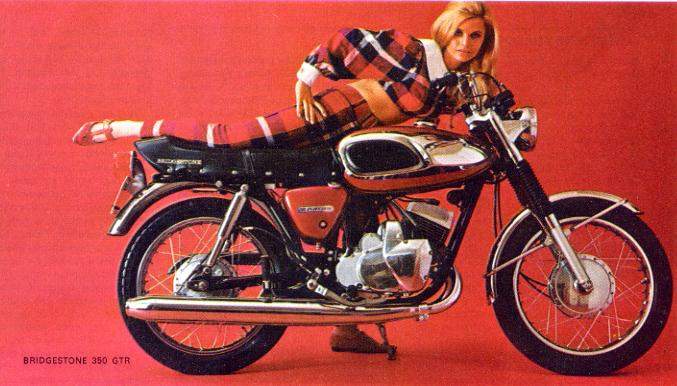
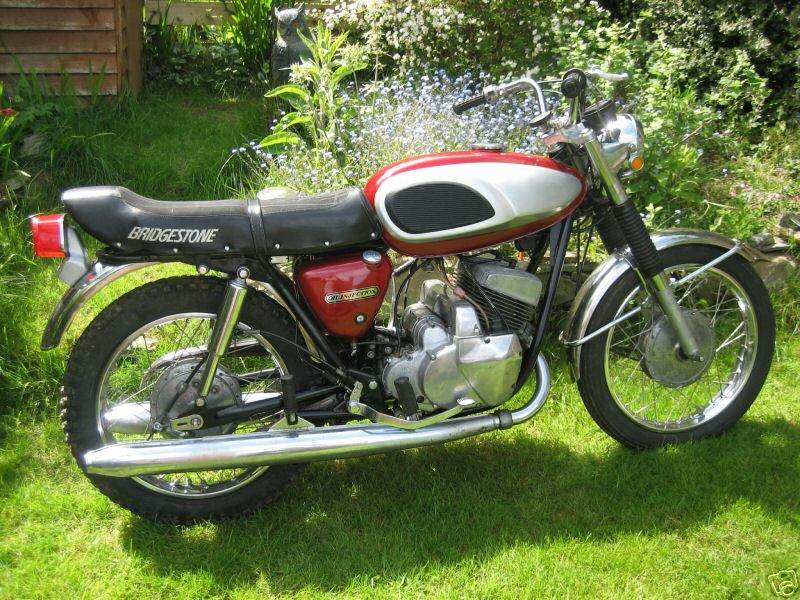
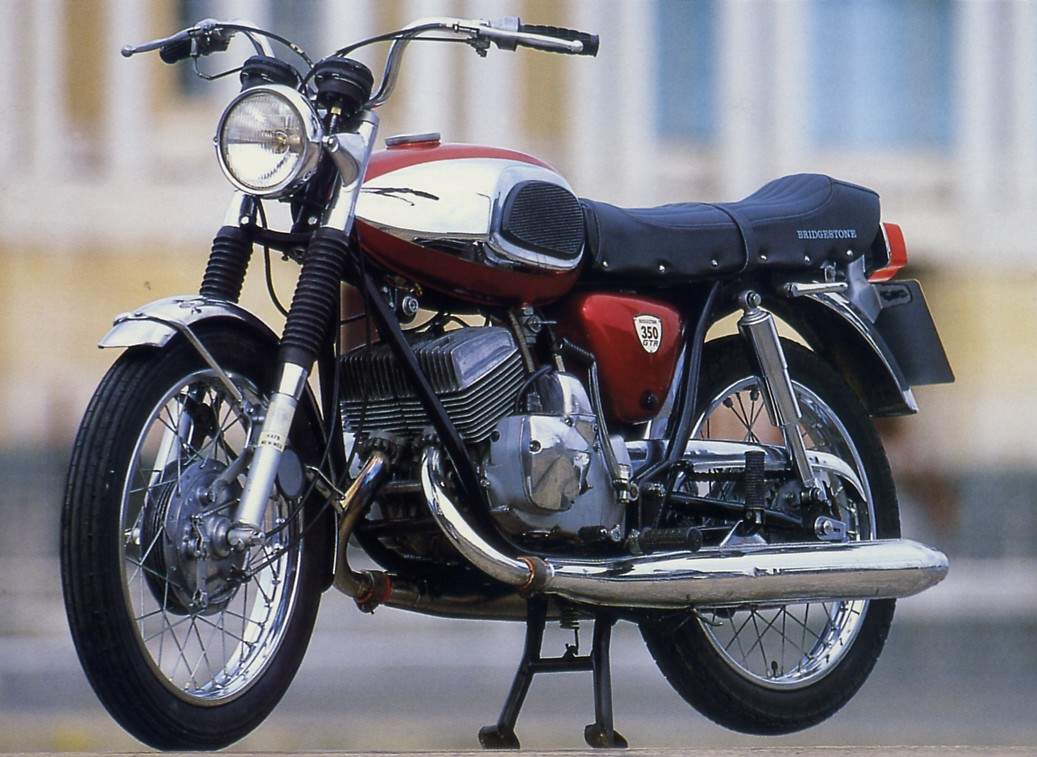
Bridgestone GTR 350
Accelerating out of a curve with the two-stroke
engine revving hard, sun gleaming off the chromed tank and a high-pitched
exhaust note providing a vivid soundtrack, it’s easy to understand why
Bridgestone’s 350 GTR was widely regarded as one of the best Sixties
middleweights around. It’s also a bit sad to think that this model was the high
point for a firm that abandoned motorcycle production shortly after it was
built.
Induction production Years produced: 1967-1971 Source motorcycleclassics.com
Bridgestone Motorcycles History In While heading Bridgestone's US bicycle division, Petersen was able to express and evangelize his passions for traditional good designs. A passion that had been fed by old world cycling traditions from Europe and spread with the bike boom of the 1970's. But was endangered by the marketing and flash culture surrounding the rise of the mountain bike. Petersen was able to use Bridgestone's massive production capacity to make inexpensive, high quality bikes that were aimed at a market that valued long term use as well as performance. So the Bridgestone team took the inherent advantages of the steel frame, mated them with well thought out components and produced bikes that supported longer rides, greater comfort, durability, everyday use and of course style without sacrificing performance. They looked back at the Fin de Siecle bike boom and promoted the classic aesthetics of that period. The bikes, which had always been nice now began to look nicer, riders had the opportunity to sport Bridgestone manufactured classic wool jerseys with nut buttoned shoulders and classic looks. The bikes became better and better,
new designs were less flashy but better thought out than the rest of the market,
especially among major producers, which Bridgestone was. However, at some point
things began to go wrong. The Bridgestone ideology began to undermine sales.
Quiet quality will sell bikes to educated consumers but for any number of
reasons a shiny cheap bike will sell as quick. Bridgestone finally disappeared
from the American market when the rising yen made profitability impossible. Source motorbike-search-engine.co.uk
|
|
|
Any corrections or more information on these motorcycles will be kindly appreciated. |