|
|
|
|
Classic Bikes
Custom Bikes
Individual
Racing Bikes AJP
AJS
Aprilia
Ariel
Avinton / Wakan
Bajaj
Benelli
Beta
Bimota
BMW
Brough Superior
BRP Cam-Am
BSA
Buell / EBR
Bullit
Bultaco
Cagiva
Campagna
CCM
CF Moto
Combat Motors
Derbi
Deus
Ducati
Excelsior
Fantic
GASGAS
Ghezzi Brian
Gilera
GIMA
Harley Davidson
Hero
Highland
Honda
Horex
Husaberg
Husqvarna
Hyosung
Indian
Jawa
Kawasaki
KTM
KYMCO
Laverda
Lazareth
Magni
Maico
Mash
Matchless
Mondial
Moto Guzzi
Moto Morini
MV Agusta
MZ / MuZ
NCR
Norton
NSU
Paton
Peugeot
Piaggio
Revival Cycles
Roland Sands
Royal Enfield
Sachs
Sherco
Sunbeam
Suzuki
SWM
SYM
Triumph
TVS
Ural
Velocette
Vespa
Victory
Vincent
VOR
Voxan
Vyrus
Walt Siegl
Walz
Wrenchmonkees
Wunderlich
XTR / Radical
Yamaha
Zero
Video
Technical
Manufacturer List Contact
|
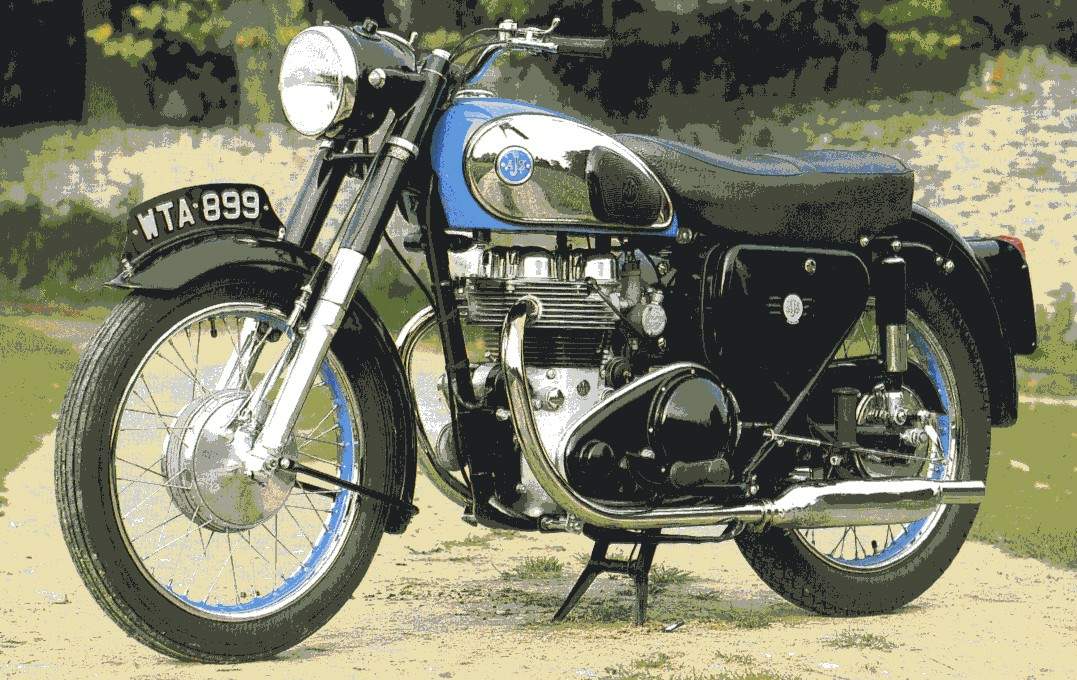
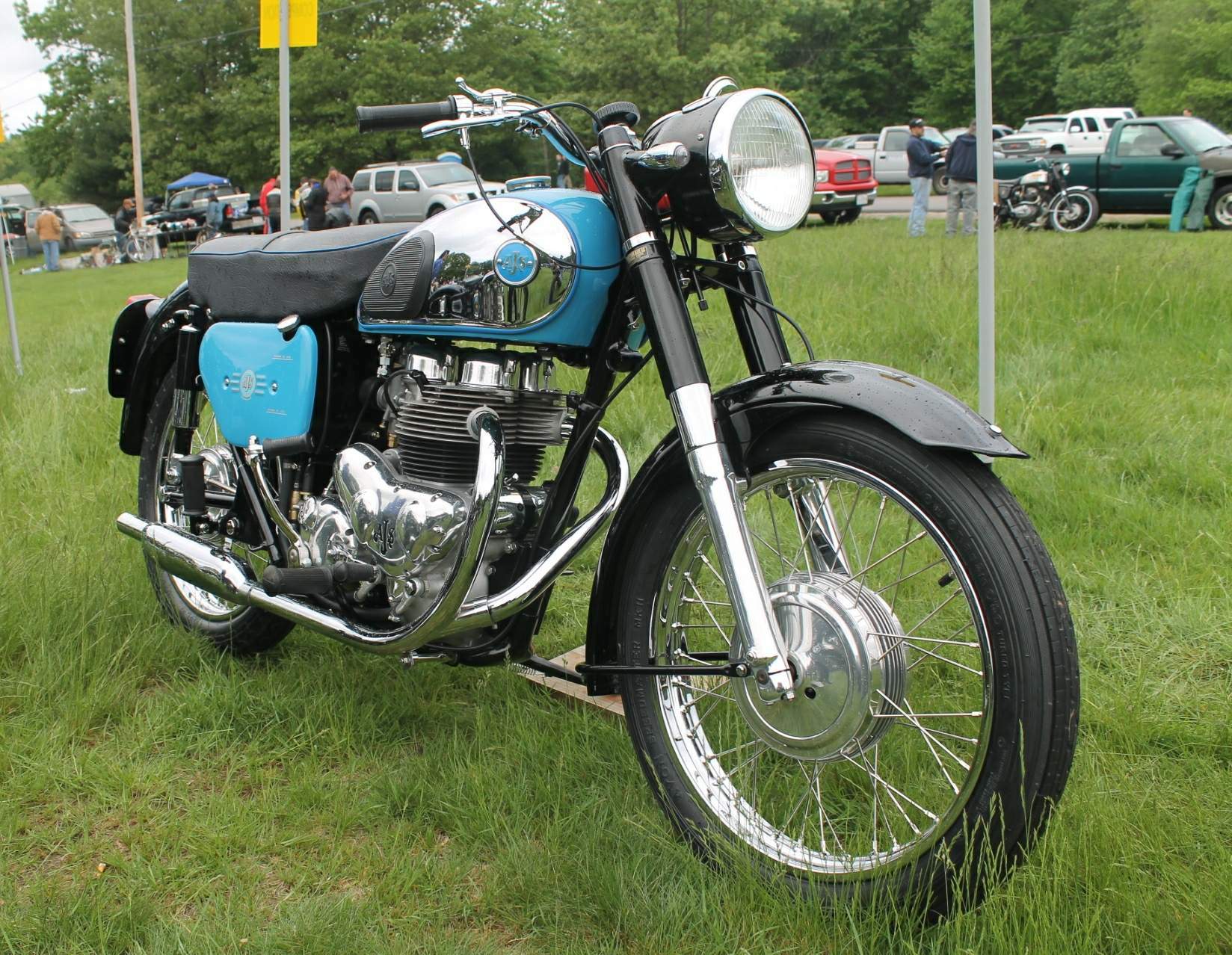
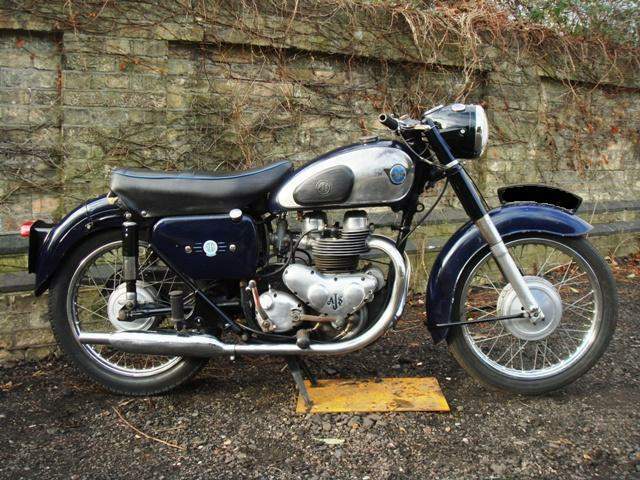
AJS MODEL 30 600
Like most AJS roadsters, the 600cc Model 30 of the late 1950s suffered from a case of dual personality. Almost exactly the same bike, differing only in paint colour, badges and exhaust system, was also sold as the Matchless Gil — a result of the Wolverhampton-based AJS firm having been taken over by Matchless of London in 1931. The combined firm in turn became part of Associated Motor Cycles (AMC) in 1938, but the AJS and Matchless names were retained and used in an attempt to attract the continued support of each of the brand's enthusiasts. AJS had originally been founded by Albert John Stevens in Wolverhampton around the turn of the century, and won the Junior TT in 1914. But AJS's greatest racing feats came later, notably when Les Graham won the first ever 500cc world championship on the Porcupine twin in 1949.
The most popular AJS racebike was the single-cylinder 350cc 7R, known as the "Boy Racer". Introduced in 1948, the 7R was hugely successful and was later enlarged to 500cc to make the Matchless G50. Most of AJS's roadsters were less spectacular singles and parallel twins such as the Model 30, whose 600cc engine had almost square dimensions, and gave a smoother ride than most other models. Peak output was only 33bhp but the twin was capable of cruising fairly smoothly at 70mph (112kph). Handling was predictable and made for a relaxed, comfortable bike over distances. The Model 30 was also well-made, reliable and economical. Unfortunately such attributes were not enough to keep AJS in business. Poor sales led to parent company AMC becoming part of Norton Villiers in 1967. Some AJS bikes were then built incorporating Norton parts, but they were not successful and the factory ceased production shortly afterwards.
|
|
|
Any corrections or more information on these motorcycles will be kindly appreciated. |