|
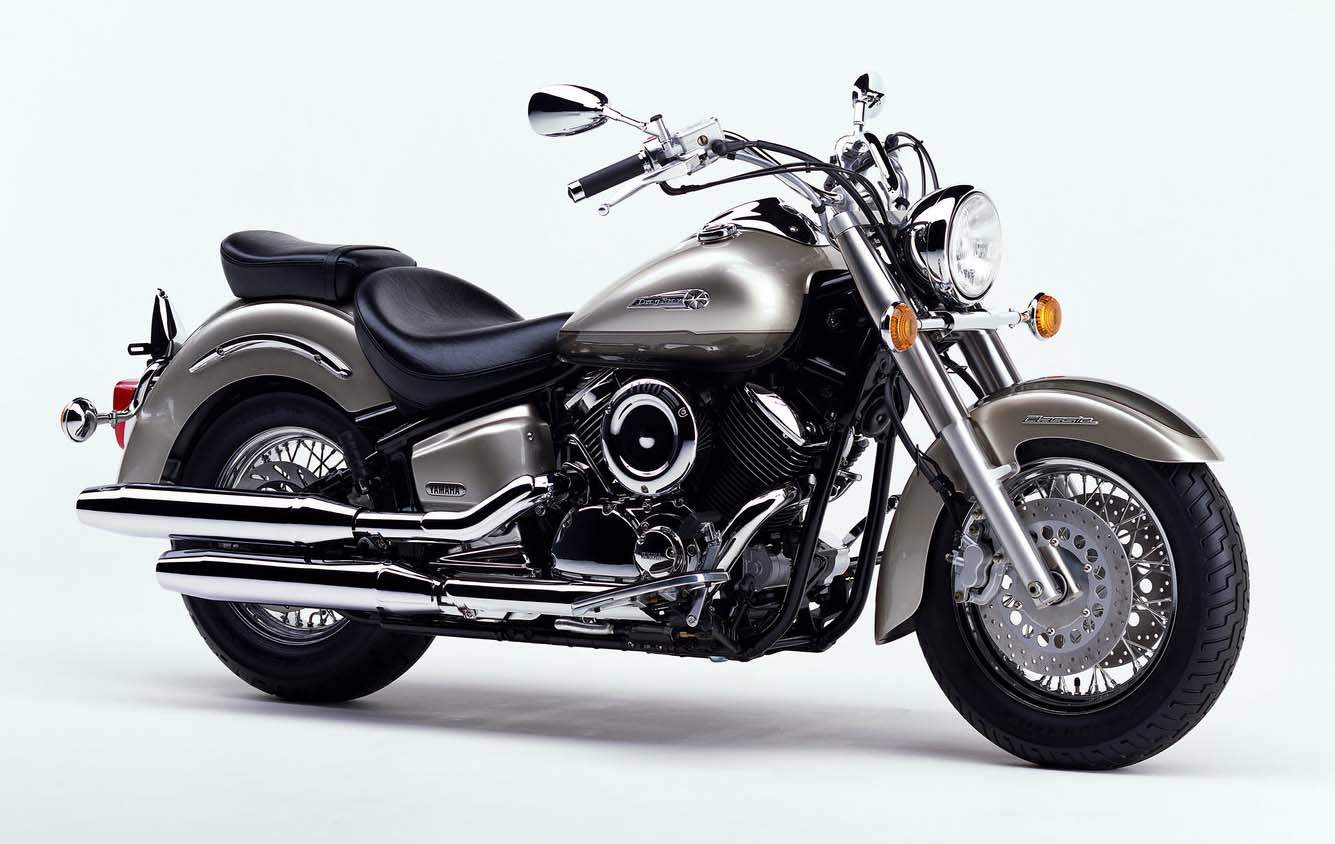
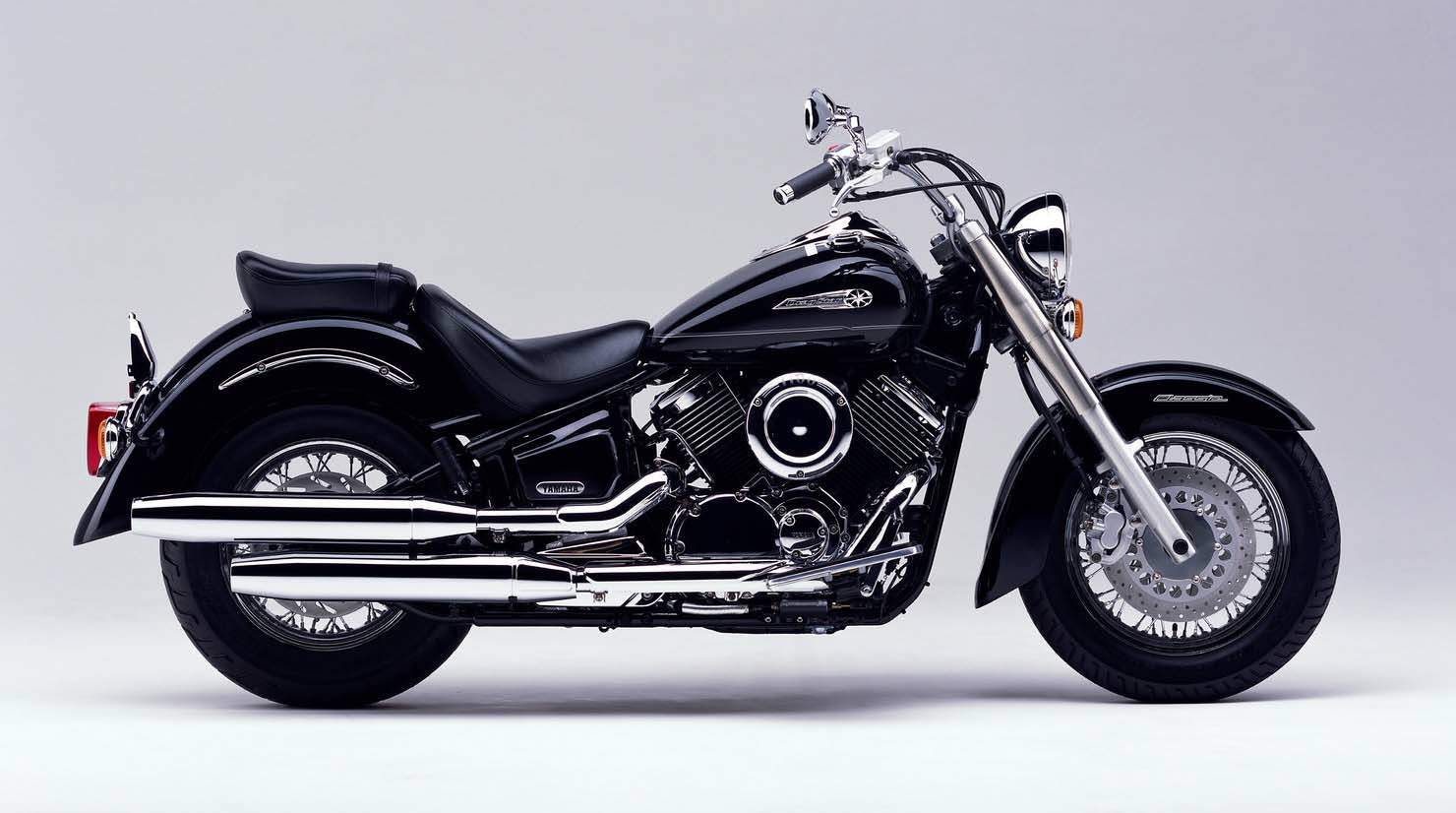
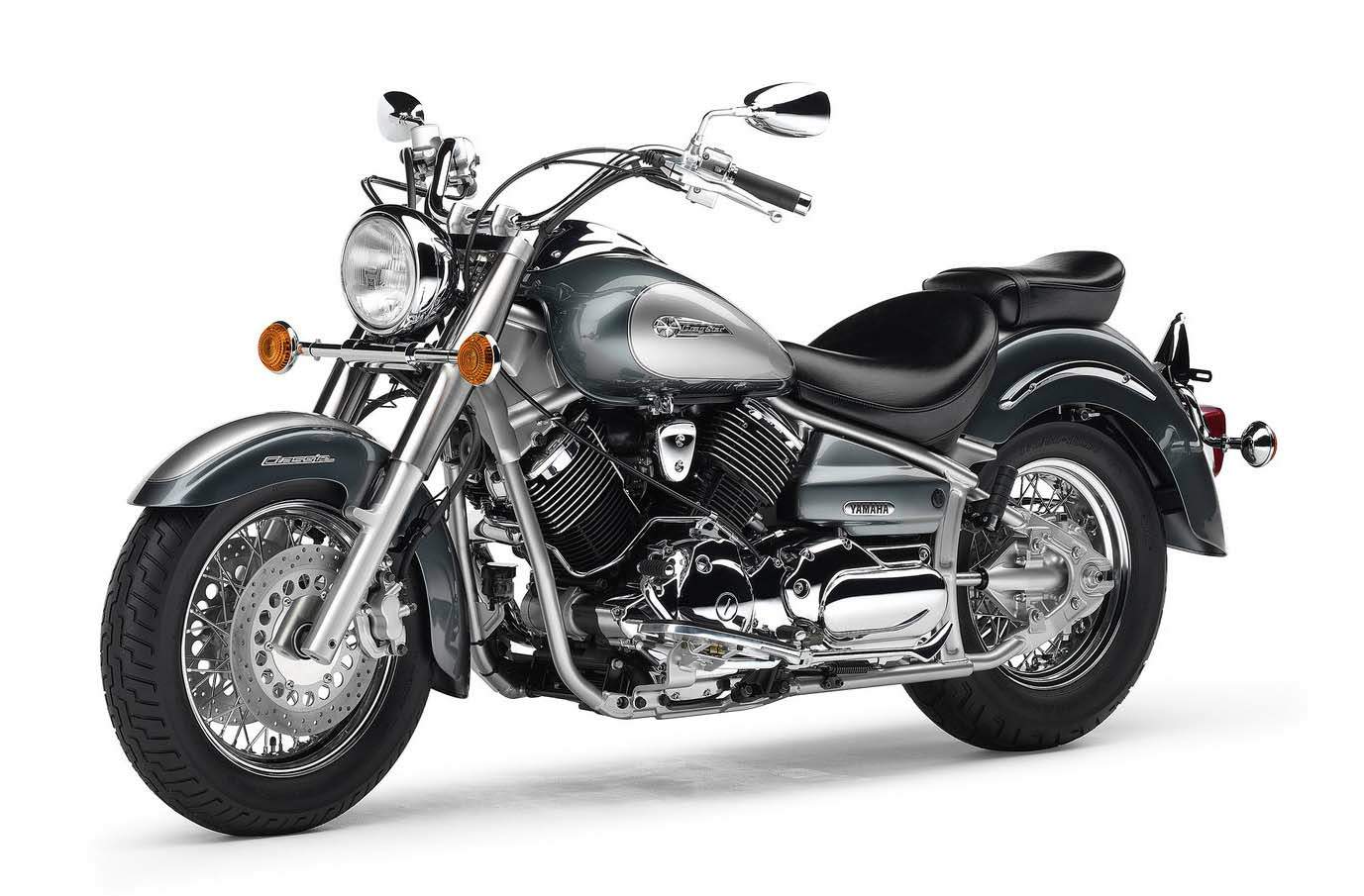
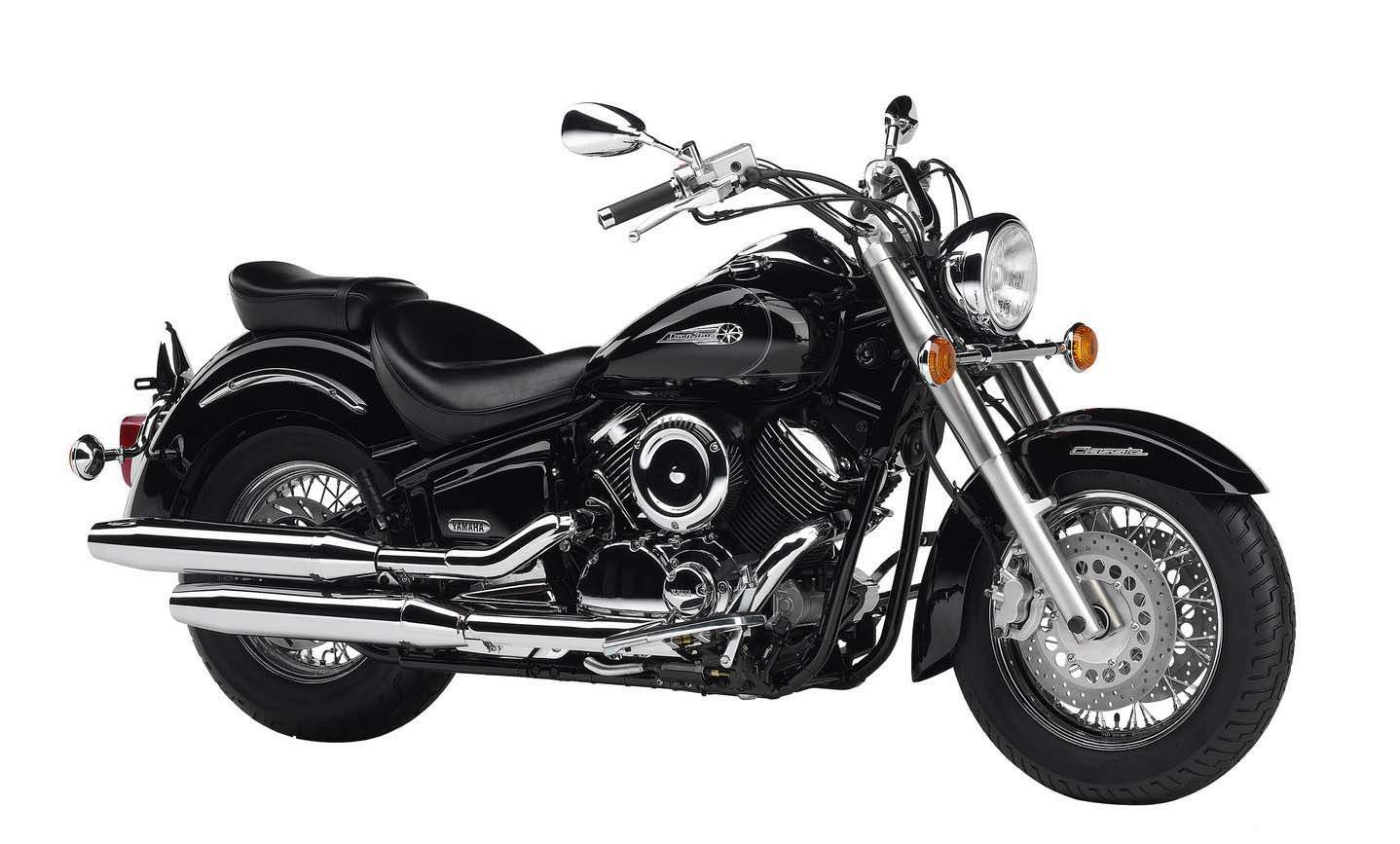
Yamaha XVS 1100 Drag Star

|
Make Model |
Yamaha XVS 1100 Drag Star |
|
Year |
1999 |
|
Engine |
Air cooled, four stroke, 75° V-twin cylinder SOHC, |
|
Capacity |
1063 |
|
Bore x Stroke |
95 x 75 mm |
|
Compression Ratio |
8.3:1 |
|
Induction |
|
|
Ignition /
Starting |
- / electric |
|
Max Power |
62 hp 45.2 kW @ 5750 rpm |
|
Max Torque |
85 Nm @ 2500 rpm |
|
Transmission /
Drive |
5 Speed / shaft |
|
Front Suspension |
Telescopic forks with 140mm wheel travel. |
|
Rear Suspension |
Swingarm monoshock with 113mm wheel travel. |
|
Front Brakes |
2x 298mm discs 2 piston calipers |
|
Rear Brakes |
Single 282mm disc 1 piston caliper |
|
Front Tyre |
110/90-18 |
|
Rear Tyre |
170/85-15 |
|
Dry-Weight |
261 kg |
|
Fuel Capacity |
17 Litres |

Motorcycle Road Test: Yamaha V-Star 1100 Custom
The larger of Yamaha's V-Star motorcycle family offers big-bike power and style
at a middleweight price. From the August 1999 issue of Motorcycle Cruiser
magazine.
Photography by Dean Groover
Somehow the social process makes us chase things that are bigger, because for
some reason we perceive them as better. Maybe it's an American thing, since
riders in other parts of the world cherish their modest-size motorcycles. Think
about it. Should it really be about size, or satisfaction?
Yamaha's fresh-from-the-ground-up V-Star 1100 is a bold new entry in the
middleweight market. It stands next to the venerable Virago 1100 in relative
size and equipment. Both utilize a 1063cc, air-cooled, single overhead-cam,
two-valves-per-cylinder V-twin engine with dual carbs, wide-ratio five-speed
transmission and shaft final drive. The similarities end there, however. The new
V-Star represents an entirely different perspective. For example, many people
think the faithful Virago is ugly -- virtually everyone will agree the new
V-Star is not.
The V-Star 1100 follows the same concept as the very popular V-Star 650. As our
1998 Cruiser of the Year, the entry-level V-Star Classic won high marks for
value, visual appeal and overall package performance. Both 650s, released in
1998, retail for well under $6000. It's no wonder they are their manufacturer's
best-selling cruisers. Yamaha has now created an affordable and thoroughly
worthy option for those yearning for something a bit more substantial, but not
too costly. The V-Star 1100 will retail for a suggested $7799, right at the
bottom of the 1100-class price range.
Yamaha's attempt to overShadow the competition is well-executed. All of the
models in the Star cruiser series feature a striking visual balance and keen
exhaust note. The V-Star 1100's long, low stance, consolidated components and
rounded edges integrate in a flowing visual effect. If worthiness were based on
beauty alone, this new V-Star would be runner-up only to Honda's Shadow Aero
($9700). We love the drag bars, spoked wheels and pert bobtail rear fender. And
the hidden monoshock leaves the V-Star looking clean and hard in the tail.
There's always more than meets the eye, though, and the new Yamaha is up to the
challenge in that area too. In terms of performance, the V-twin-powered V-Star
1100 is, alas, easily outrun by its fraternal twin, the Virago -- reigning King
of Performance in the 1100 class. The Honda Shadow Aero, A.C.E. and Spirit are
left behind in that order, when it comes to acceleration and top speed.
Power is delivered evenly and efficiently through the rpm range, with enough
torque at low rpm to let you start in second gear. Throttle response provided by
the two Mikuni carbs is smooth and crisp.
It almost seems as though the "V" in "V-twin" also stands for "Vibration," and
the V-Star does exude fairly intrusive engine feedback. There's only a faint
oscillation at lower rpm felt through the pegs, grips and fuel tank (if your
knees contact it). At highway speeds the vibration becomes more vigorous and
radiates through the chassis and up through the seat as well. If, for some silly
reason, you're cruising above suggested freeway speeds and roll on additional
throttle, you'll feel like you put a quarter in a "magic fingers" mattress. But
regardless of the price you pay in pulse, the power is there -- and there always
seems to be a little left in reserve.
Most riders rated the seat highly, but don't expect passengers to beg you to
keep riding if you retain the standard rear pad.
Yamaha uses a double-cradle frame in the V-Stars and draws out the chassis
length for a long, low look. Overall length is a hearty 94.6 inches and the
wheelbase measures 64.5 inches. It's no longer than its smaller displacement
stablemates -- the 650 Classic and Custom -- but then all of the V-Stars are
stretched to big-bore proportions. The seat height on the 1100 is a friendly
27.0 inches, allowing new riders and those short in the inseam, to keep their
feet firmly planted on the ground. We enlisted a 5-foot-5 rider to sit on the
V-Star and she could easily touch the ground, with both feet. While the low seat
works to the advantage of some, it is likely to be an irritant for those with
more spindly legs. The 1100 weighs in at 616 pounds with the tank full, falling
right in the middle of the typical range for 1100s.
The seating position puts the rider in a bit of a stretch, but those of average
proportions found it inviting and not exaggerated to the point of discomfort.
One point of contention, however, is the protruding air-cleaner steals legroom.
The footpegs are set fairly far forward, so taking the weight off your bum
requires shifting your feet to the passenger pegs. Unfortunately, the rear pegs
are mounted very high in order to stay in relation to the stepped passenger
seat, so keeping your feet on them bends the legs in a manner only small
children are capable of sustaining.
The seat itself is comfortable, and after 1700 miles of testing we don't have
any major complaints about its cushioning ability. Those with more substantial
seats of their own wished for a bit more width. The forward edge of the
passenger pad can feel confining to some riders and can become especially
irritating when you factor in vibration. The passenger seat is easily removed
with a single bolt, and its bracket can be removed separately for a finished
look. You may as well do this immediately because no one is going to want to
ride with you unless you install a custom passenger seat. The pillion on the
V-Star feels about as comfortable as squatting on a vibrating loaf of day-old
French bread. The rider's ergonomics are comfortable with the drag-style bars
set low but graduating rearward. The low bars provide good steering feel with a
nice degree of leverage.
We are pleased to see cruiser brakes steadily improving. Case in point, the dual
discs on the big V-Star.
Steering the V-Star 1100 doesn't require exertion and the bike hooks up and
travels solidly and smoothly in every cornering situation, from parking-lot
maneuvers to high-speed sweepers. However, cornering clearance significantly
limits lean angle.
Some might find fault with the rear suspension as well. It leans toward harsh.
Set at factory specs and unloaded, the bike occasionally wants to skip across
the pavement in hard cornering, which can be disconcerting if you're trailing
sparks off the footpeg. On the highway the effect is jarring -- but remember,
there's probably one dentist for every 10 potholes in this country.
The rear monocross single shock is preload-adjustable and can be accessed by
removing the seat and a plastic fender port cover. Setting it full-soft makes
only a minimal difference. Lighter riders felt that it looked and acted like a
hardtail. The front telescopic fork feels solid, yet obedient in contrast.
The V-Star drivetrain is smooth and easy to manipulate. The five-speed
transmission worked flawlessly and the well-staged gear ratios were appreciated.
The 1100 employs large double discs on the front and a single disc on the rear.
We noted plenty of stopping power and no fade.
Handlebar controls are easy to access and the low bar provides a nice visual
frame for the tank-mounted gauges. The nostalgic speedometer numbers carry the
vintage flavor down to detail. It's always a compromise when you have to take
your eyes off the road to check speed, mileage or indicator lights; we'd add a
tripmeter and a clock to the LCD odometer display. And as a conclusive touch on
otherwise well-done aesthetics, we'd like to see the unit's three mounting bolts
further finished or capped flush to the casing.

As with 650cc V-Stars, the 1100 uses a unique exposed drive shaft. The
single-shock rear-suspension design keeps the back end clean but it is hard to
adjust.
Our test unit started showing us an oil warning light with only 250 miles on the
odometer. Hayward Kawasaki-Yamaha, in Northern California, tracked the problem
to a faulty oil-sender switch.
The V-Star is eager to start and quick to idle. The tone emitting from the dual
exhaust is pleasing to the ear, although it's forced to compete with a good
amount of top-end noise. Brasfield, who rode the bike at the European press
introduction, didn't remember hearing such valve clatter.
Mirrors on the V-Star are stylishly small and teardrop-shaped. They fit the
visual format of the bike, but because the small viewing area is coupled with
prevalent vibration in the bar, the mirrors work for placement of objects only.
The other fundamental feature suffering on the V-Star is the headlight's ability
to illuminate the road at night. The halogen lamp casts a rectangular beam that
lights the side angles nicely but it doesn't travel very far on the road ahead.
And when you're leaned into a corner, the beam doesn't cover an overall surface
area large enough to be comforting. You must apply the high beam more often than
vehicles in the vicinity appreciate.
We've spent more than one 400-mile day on the new 1100 and found it to be
pleasingly tripworthy. The 4.3-gallon fuel tank permitted the V-Star to travel
for 110 miles regularly before asking for reserve, which offers more than a
gallon before the engine goes silent.
Basically a Virago 1100 mill with a major facelift, the V-Star engine makes a
bit less power than the Virago. The air-cleaner case conflicted with some
riders' knees.
Packing on the V-Star was a bit of a challenge since the fender is high and the
rear wheel is mostly exposed. If you're going to use soft saddlebags you'll need
to install saddlebag guards to keep them from contacting the tire. Securing
bungee cords was another challenge since everything is so tightly integrated
within the frame.
Like the other bikes in the V-Star lineup, the 1100's overall performance
package is more than worth the asking price. Even if nothing else seems to set
it apart from its competition, the price point surely does. It may not deliver
the grunt of Yamaha's 1600cc pushrod V-twin Road Star or approach the Royal Star
in visual refinements, but the V-Star 1100 is an extremely well-balanced,
middle-of-the-road motorcycle. In our opinion, it's the best package being
offered in the 1100 class this year.
IN BRIEF
High Points: Great price, good looks, solid power.
Low Points: Stiff suspension, vibration, poor passenger accommodations,
ineffective headlight and mirrors.
First Changes: Brighter headlight bulb, new seat if carrying passengers.
RIDING POSITIONS
Andy Cherney: Give me your poor, your vertically challenged, your power-hungry
masses. Let them yearn for cruisers with clean lines and slinky paint jobs. They
shall also demand fistfuls of stopping power, and a manageable handlebar instead
of wheelbarrow grips. Gather them all and point them in the direction of
Yamaha's V-Star 1100.
You'd call it a middleweight at first blush. It's long and low, and not a
bad-looking scoot at that. A narrowish bar and way-low seat height ensure
comfort and confidence for those closer to the ground. The handling is light and
responsive and the power is much beefier than you'd expect; even though it's an
1100, its low, crouched stance gives the illusion of a much smaller powerplant.
The brakes are solid -- double discs up front with plenty of grab on the wheel
and none of the usual brake fade. Requisitely smooth throttle response, good
low-end grunt and a fairly comfortable (did we already say "low"?) seating
position round out the basic goodies.
Another thing that'll grab you is the price -- for 7800 bones, you're getting a
solid middleweight you won't grow out of in a few years, and -- it shore is
purty. Love it or hate it, that distinctive gold metalflake two-tone paint
scheme will turn your retinas inside out. People notice these things.
Such a deal! 1100cc of middleweight magic for less than eight grand. You can
cruise in style without having to sacrifice your lavish gourmet dinners. Lemme
jes dust off the ol' checkbook here and...
E-mail your McDonald's coupons to Cherney at: Andy.Cherney@primedia.com.
Jamie Elvidge: Boy, this bike gets the looks. In the two weeks I had it I hardly
parked once without someone reminding me how pretty it was. It's quite a catch
for the cash and it offers enough performance to back up the visual attitude. I
think it raises the bar in the 1100 class and I'd be the first to recommend it,
especially to a competent beginning rider. It is well-mannered and physically
manageable, yet it won't leave you hemming and hawing in a year. It's a great
package, and the silver-and-gold paint combination is striking.
But if I could just ride and never have to actually look at my bike, I'd be
likely to opt for the Virago 1100. It might have missed out on the pretty pills,
but it has the power and handling characteristics I appreciate. On the other
hand, if I looked at my motorcycle more than I rode it, Honda's Shadow Aero 1100
would be my pick. Luckily, in the real world, we get to do a lot of both -- and
the newest V-Star is poised in the balance.
When Elvidge doesn't have V-Stars in her eyes she's reading e-mail at:
Jamie.Elvidge@primedia.com.
Art Friedman: Virago lovers, I feel your pain. This upstart threatens the future
of your venerable 1100 V-twin. And why? Because it's fashionable this week?
Because somebody decided that new is better?
Brasfield, who had attended the V-Star intro, wondered if I'd still prefer the
Virago -- which has been one of my favorite twins for a long time. Having seen
the photos and heard from him what it was like, I was pretty sure I'd surprise
him and like the V-Star more.
Sorry. I still prefer the Virago by the smallest of margins. I expect the
V-Star, with its sleek good looks, to outsell its stablemate severalfold this
year, even though the new bike got a late start. But I think I'd stay with the
faster, smoother, and -- for me -- more comfortable Virago, and also get the
centerstand, tachometer and other features. I score the Star slightly higher for
saddle and suspension but the Virago feels like it was built for my dimensions
and riding style. Yes, the V-Star is prettier, but it still has a surprising
number of warts when you look at it up close. It definitely has the nicer
profile, though.
That is actually one of the problems. If I bought the Virago, I'd be sorry that
the V-Star is slower. It would be nice if it was a little faster, so it could
stay where I could look at those pretty lines rather than just a shimmering dot
receding from my rearview mirrors.
If you'd like to discuss warts with Friedman, e-mail him at Art.Friedman@primedia.com
or at ArtoftheMotorcycle@hotmail.com.
These (blue and black) are the 2004 colors. The V-Star 1100 Custom has changed
little in five years. The 2004 price is $7899.
Suggested base price: $7799
Standard colors: Black, cranberry/red, silver/gold
Standard warranty: 12 mos., unlimited miles
Recommended service interval: 8000 miles
Yamaha web site: www.yamaha-motor.com
Owners groups web sites:
MSN Yamaha Star Club
Star Touring and Riding
Source
Motorcyclecruiser.com

|