HOME   CONTACT  |  TECHNICAL  |  CONVERTER  |  VIDEO  |  LINKS  


Classic Bikes
Custom Bikes
Racing Bikes


AC Schnitzer
AJS
Alfer
Aprilia
Ariel
Arlen Ness
ATK
Bajaj
Bakker
Barigo
Benelli
Beta
Big Bear
BigDog
Bimota
BMS Choppers
BMW
Borile
Boss Hoss
Boxer
Brammo
Britten
BRP Can-am
BSA
Buell
Bultaco
Cagiva
CCM
Confederate
CR&S
Daelim
Deus
Derbi
DP Customs
Drysdale
Ducati
Dunstall
Exile Cycles
Factory Bike
Fischer
Foggy Petronas
GASGAS
Ghezzi Brain
Gilera
Harris
Harley Davidson
HDT
Hesketh
Highland
Honda
HPN
Horex
Husqvarna
Husaberg
Hyosung
Indian
Italjet
Jawa
Kawasaki
KTM
Kymco
Laverda
Lazareth
Lehman Trikes
LIFAN
Magni
Maico
Matchless
Matt Hotch
Megelli
Midual
Mondial
Moto Guzzi
Moto Morini
MotoCzysz
Mr Martini
MTT
Münch
MV Agusta
MZ
NCR
Norton
Oberdan Bezzi
OCC
Paul Jr. Designs
Piaggio
Radical Ducati
Richman
Ridley
Roehr
Roland Sands
Royal Enfield
Rucker
Sachs
Saxon
Sherco
Suzuki
Terra Modena
Titan
TM Racing
Triumph
Victory
Vincent
Viper
VOR
Voxen
Vyrus
Waken
Wrenchmonkees
Wunderlich
Yamaha

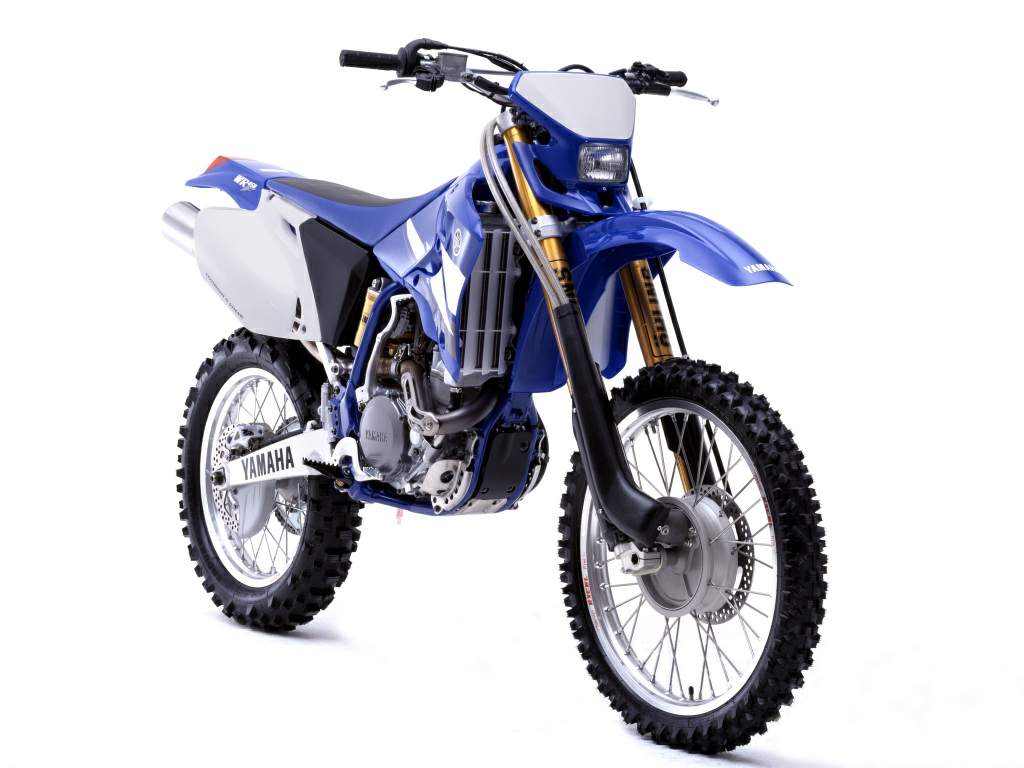
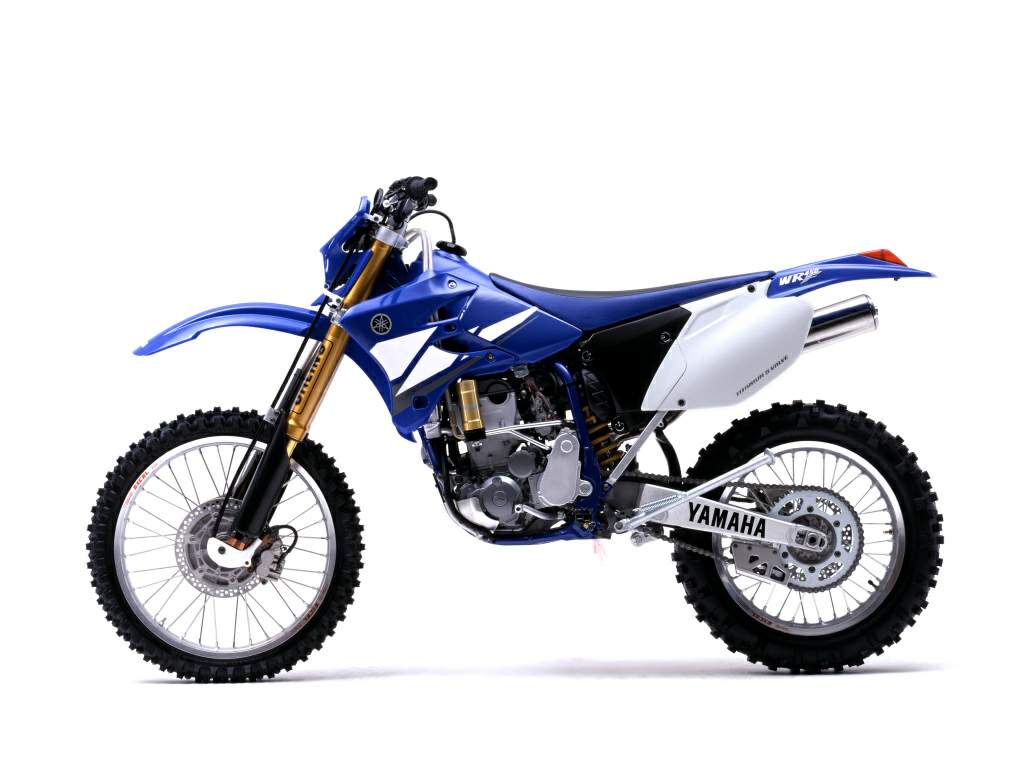
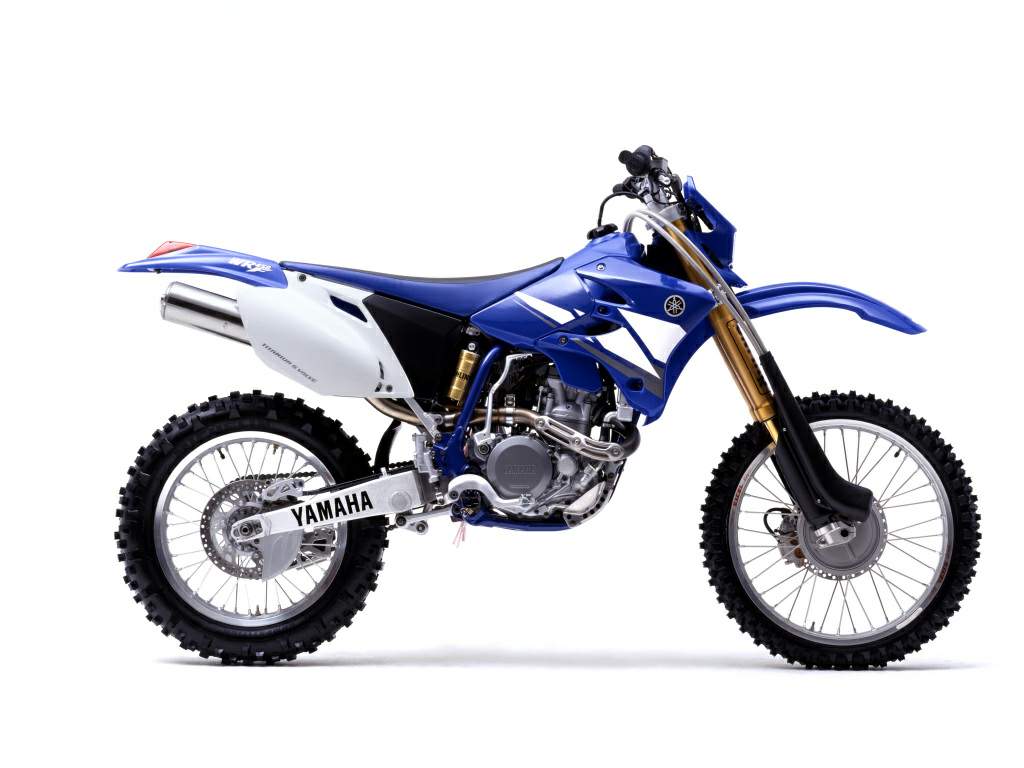
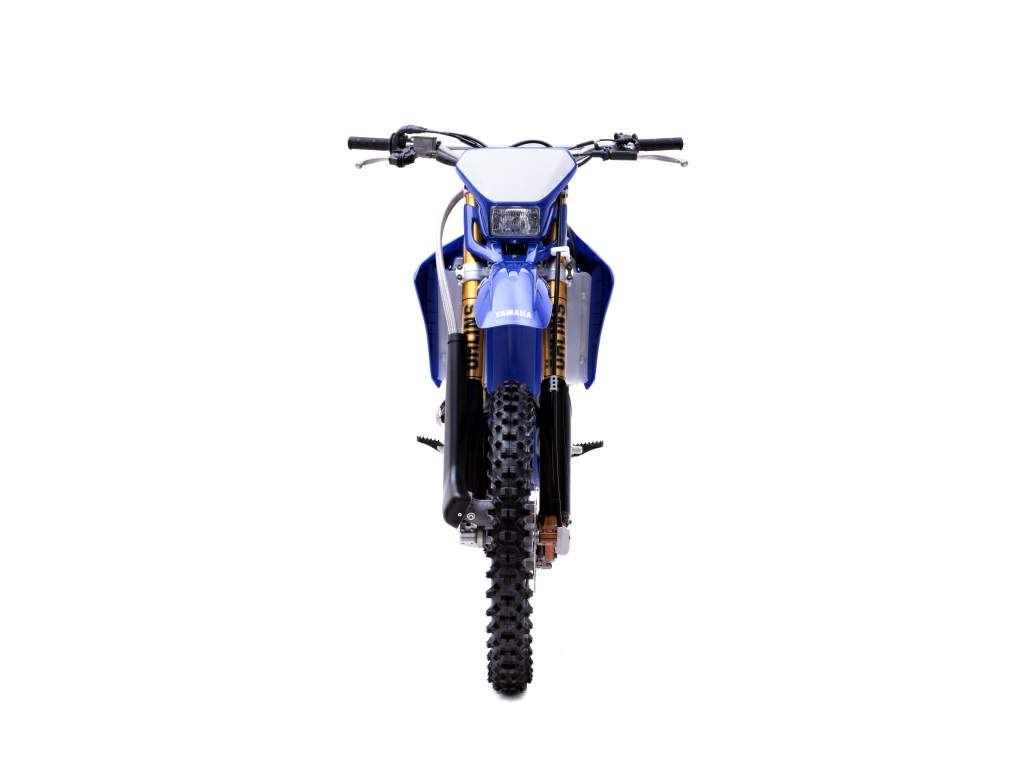
Yamaha WR 450F 2-Trac


Make Model

Yamaha WR 450F 2-Trac

Year

2004

Engine

liquid cooled, four stroke, single cylinder, DOHC, 5 titanium valve per cylinder.

Capacity

449
Bore x Stroke 95 x 63.4 mm
Compression Ratio 12.5:1

Induction

39mm Keihin FCR flat-slide throttle position sensor

Ignition  /  Starting

Digital CDI  /

Max Power

58 hp 42.3 kW @ 9000 rpm

Max Torque

49 Nm @ 7000 rpm

Transmission  /  Drive

5 Speed  /  chain

Front Suspension

46mm Kayaba inverted telescopic fork compression and rebound damping adjustable.  300mm wheel travel.

Rear Suspension

Fully adjustable Kayaba single shock, 315mm wheel travel, separate  speed compression adjustment

Front Brakes

Single 250mm disc 4 piston calipers

Rear Brakes

Single 245mm disc  2 piston caliper

Front Tyre

80/100-21

Rear Tyre

110/100-18

Dry-Weight

8 Litres

Fuel Capacity 

Yamaha France flew just a handful of journalists to Laayoune, in Southern Morocco to test the 2-Trac on part of the course of the Shamrock Rally, where they already had two works 2-Trac machines competing in the week-long event.

Four of us had two days sharing two 2-trac machines and two conventionally driven WR450s, swapping between them at will. All four machines had the full complement of Öhlins equipment, so we were able to make a fair assessment of the pros and cons of two wheel drive in a whole variety of conditions, from huge soft dunes to salt lakes and ‘flat-out’ but stony desert with plenty of treacherous rocks hidden by the scrub and sand. We covered a full lap of the rally course on each of the two days, some 400kms in all, with extra excursions into the dunes for photographs and 1WD vs 2WD comparisons.

The first day’s terrain was a mixture of dunes and rocky going, but also included a 40km thrash down the beach, while the second day started and finished with 50kms of tarmac road and included some higher dunes, a rocky plateau and camel-inhabited scrubland.

In view of all the fast going, the test bikes were fitted with tall 15/47 front and rear sprockets instead of the standard 14/50 gearing.

In simple terms the two wheel drive system can be explained as follows:  The gearbox output sprocket drives a short, fully enclosed chain to a pump, which in turn pushes the oil (not hydraulic fluid) to the front hub via the pipe and back via the parallel pipe. There's no drive at all until the rear wheel starts to spin and only a maximum of 15% of the power goes to the front at any time.

We didn’t have to go far on our first outing to find the first challenge for the 2-trac WR450. Less than half a kilometre from the hotel, and only 200 metres from the tarmac road, we were confronted by a wall of sand, 10 metres high. That’s what it looked like to me anyway. There was no avoiding it – this was the start of Day Five of the Shamrock Rally and everyone, cars, bikes and quads was funnelled straight into this wall of sand by the tapes from the start line. (Not all at the same time, thankfully!) Talk about ‘in at the deep end’! The 2-trac didn’t let me down. It just motored up the near-vertical dune as if it was a grassy knoll. No problem.

On the other hand, it didn’t take long to establish that two wheel drive is no substitute for riding ability either. I struggled to keep up with our valiant leader Alexandre Kowalski from Yamaha France, who led us a merry dance across the dunes on a near-standard, one wheel drive WR450. He was like a two-wheeled ‘Pied Piper’, hopping and skipping across the treacherous obstacles while I confirmed my ‘non-expert’ status by taking two dives over the handlebars in the first five minutes.

The two wheel drive does inspire confidence though, especially in soft sand and it does make a real difference, as I discovered when I swapped back to the rear wheel drive bike. In the dunes, I needed more of a run-up to get up the same near-vertical climb and when I got stuck, the conventional bike required much more effort to extract it, while the 2-Trac actually pulls itself out by the front wheel. The front wheel drive assists you when you’re riding down a dune too, helping to stop the front wheel from ‘tucking in’.

On flat soft sand, whether standing up or sitting down, you can turn tighter and get the power on quicker without the front washing out, as it does if you try the same thing with rear wheel drive only. The 2-Trac also gives you more confidence blasting flat out down the beach, providing more stability and reducing the amount of flapping about from both ends of the bike.

It was even more reassuring on fast but twisty soft going, where the terrain required frequent changes of direction, often across deep ruts. You can feel the front wheel towing you along and keeping you out of trouble.

On the other hand, the advantages were much less clear-cut on the hard going which we also encountered, both fast and slow. The extra 7kgs of weight, much of it unsprung in the front hub, makes for a heavier feel at the bars. This makes it harder to lift the front to avoid rocks and other obstacles, and means you hit them harder when they can’t be avoided. Swapping back onto a conventional machine, the steering immediately felt lighter and the whole bike felt slightly more lively.

The engine will also rev a little more willingly, although this doesn’t mean it will actually get you anywhere any quicker – the whole point of two wheel drive is to prevent power being wasted in useless rear wheel spinning. Yamaha claim the 2-Trac is faster in a straight line on soft going, although the difference was not noticeable in our long, 40km blast down the beach. It did feel less scary though. It should need less fuel to maintain a given speed too.

The Öhlins suspension and steering damper fitted to all the test bikes was impressive, on both the one and two wheeled machines. I survived several big ‘moments’ at high speed on both machines when I hit hidden rocks and other obstacles where I thought I was definitely heading for a hospital bed, yet each time the WRs just seemed to shrug off the impact, straighten themselves out and carry on regardless while I just hung on in disbelief.

There was no opportunity to test the 2-Trac’s reputed extra grip on wet tarmac, but on dry tarmac roads, both on the straight and in corners, it felt like what it was – a normal bike with a slightly heavy front wheel.

Overall I was left with no doubts that two wheel drive is a great boon in soft sand and it’s probably at least as much help in a bog. Overall, it’s probably more of an aid to novices and average riders than to the riding gods who can get a conventional dirt bike up, over or through practically anything. As a very average rider, I want one!

It’s probably the only bike that I would contemplate returning to the masochistic madness of the Le Touquet beach race on. And for anyone deranged enough to enter the Dakar, I suspect that having two wheel drive might well make the difference between finishing the event and not finishing it, even for a good rider.

Yamaha Motor France and David Frétigné won the 450cc class in the 2004 Dakar.  The Frenchman was the revelation of the event, winning the 450 class on his two-wheel-drive Yamaha WR450F 2-Trac and stunning riders of the more powerful 660 and 950cc machines by winning three stages outright and finishing seventh in the overall standings – an amazing achievement for a Dakar rookie on a 450cc machine.  He’s also the first rider to win a stage with a sub-500cc bike for about 20 years!

The 18-day, 11,052 km event also provided the toughest test yet for the 2-Trac system. Yamaha entered just one machine for the event but it performed flawlessly, proving its resilience and giving the engineers plenty of vital feedback to help develop the system further

The general consensus amongst our group of testers was that most serious enduro riders would probably prefer to stick with conventional lighter bikes in hard or twisty going but might well opt for 2WD in bogs or on beaches. If the championship organisers allowed it, one could imagine riders fitting a 2WD kit for some courses and reverting to standard drive for others. An official bolt-on kit may well be made available before long.

Impressive though the Öhlins kit is, Yamaha would sell far more 2-Trac machines if it kept the standard Kayaba suspension which would make the 2-TRAC WR450 thousands cheaper. But since it’s such a limited edition machine, they’ll probably sell them all anyway.

As for 2WD road bikes and scooters arriving into dealer showrooms, the word from Yamaha was definitely ‘not for a while yet’. Yamaha personnel were keen to deny previous reports in a British magazine that ‘you’ll see 2-Trac on scooters very quickly’ since no scooter has yet even been tested with the system. A supermoto version of the WR450 seems the most likely next arrival in 2-Trac form, since it would require nothing more than a change of rims and tyres.

Meanwhile, the only other 2WD machine commercially available is Rokon’s balloon-tyred, shaft driven Trail Breaker which has

been around in various forms since 1968. It has little power and no suspension.


Yamaha is planning to build only 250 2-Tracs this year, and all of them will be built at their Belgarda factory in Italy. In addition to the Öhlins suspension and steering damper that was fitted to our test prototypes, the production machines will also have alloy rather than steel handlebars and revised plastics around the forks and oil feed pipes.

The bike will be sold as a competition machine for about 12,000 Euros although it will be possible to individually register a 2-Trac for the road by fitting Yamaha’s optional 500 Euro WR450 road legal kit. All our test bikes were road registered and fitted with road legal Pirelli MT21 Rallycross tyres.

In Australia one would expect the two wheel drive machine to be up around the $20,000 mark but Yamaha Australia have no indication as yet to how much the machines will cost on our shores. Yamaha Australia has confirmed that they have a limited number of the machines on order but are unsure as to when they are expected to arrive.

Source MCNews.au


NOTE: Some of the photos on Motorcycle Specs are owned by somebody. If you see any of your photos, you can let me know so that I can acknowledge it, or if you object to it, I can remove it altogether. If any copyright holder objects  to their articles being placed on Motorcycle Specs, it will be removed upon request.  Any correction or more info on these bikes will kindly beappreciated                                          Contact Me      Privacy Policy     Website Stats