|
|

|
|
|
|
Classic Bikes
Custom Bikes
Individual
Racing Bikes AJP
AJS
Aprilia
Ariel
Avinton / Wakan
Bajaj
Benelli
Beta
Bimota
BMW
Brough Superior
BRP Cam-Am
BSA
Buell / EBR
Bultaco
Cagiva
Campagna
CCM
CF Moto
Combat Motors
Derbi
Deus
Ducati
Excelsior
GASGAS
Ghezzi Brian
Gilera
GIMA
Harley Davidson
Hero
Highland
Honda
Horex
Husaberg
Husqvarna
Hyosung
Indian
Jawa
Kawasaki
KTM
KYMCO
Laverda
Lazareth
Magni
Maico
Mash
Matchless
Mondial
Moto Guzzi
Moto Morini
MV Agusta
MZ / MuZ
NCR
Norton
NSU
Paton
Peugeot
Piaggio
Revival Cycles
Roland Sands
Royal Enfield
Sachs
Sherco
Sunbeam
Suzuki
SWM
SYM
Triumph
TVS
Ural
Velocette
Vespa
Victory
Vincent
VOR
Voxan
Vyrus
Walt Siegl
Walz
Wrenchmonkees
Wunderlich
XTR / Radical
Yamaha
Zero
Video
Technical
Complete Manufacturer List
|
Yamaha TZR 250R
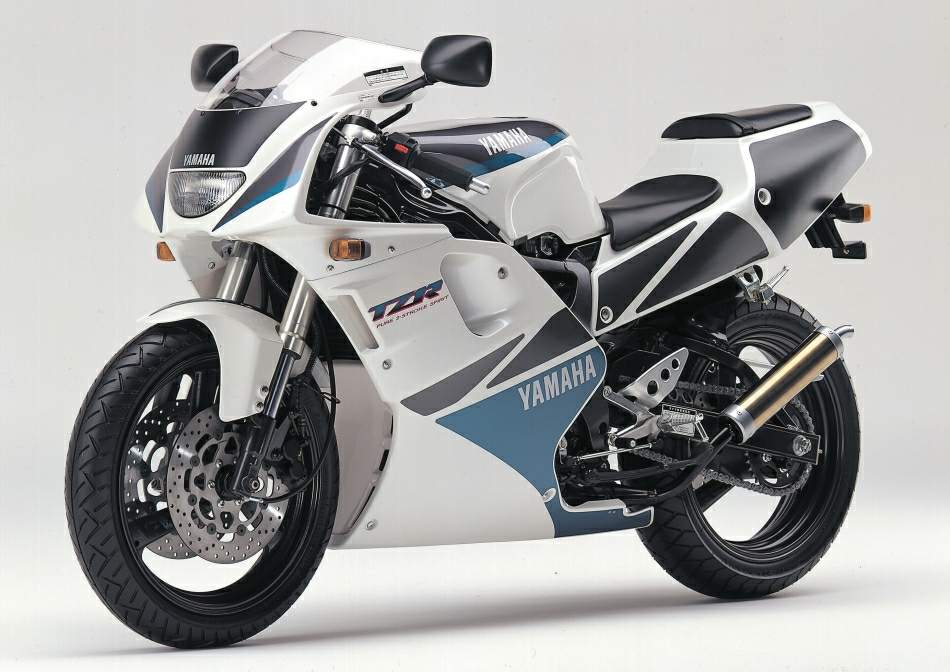
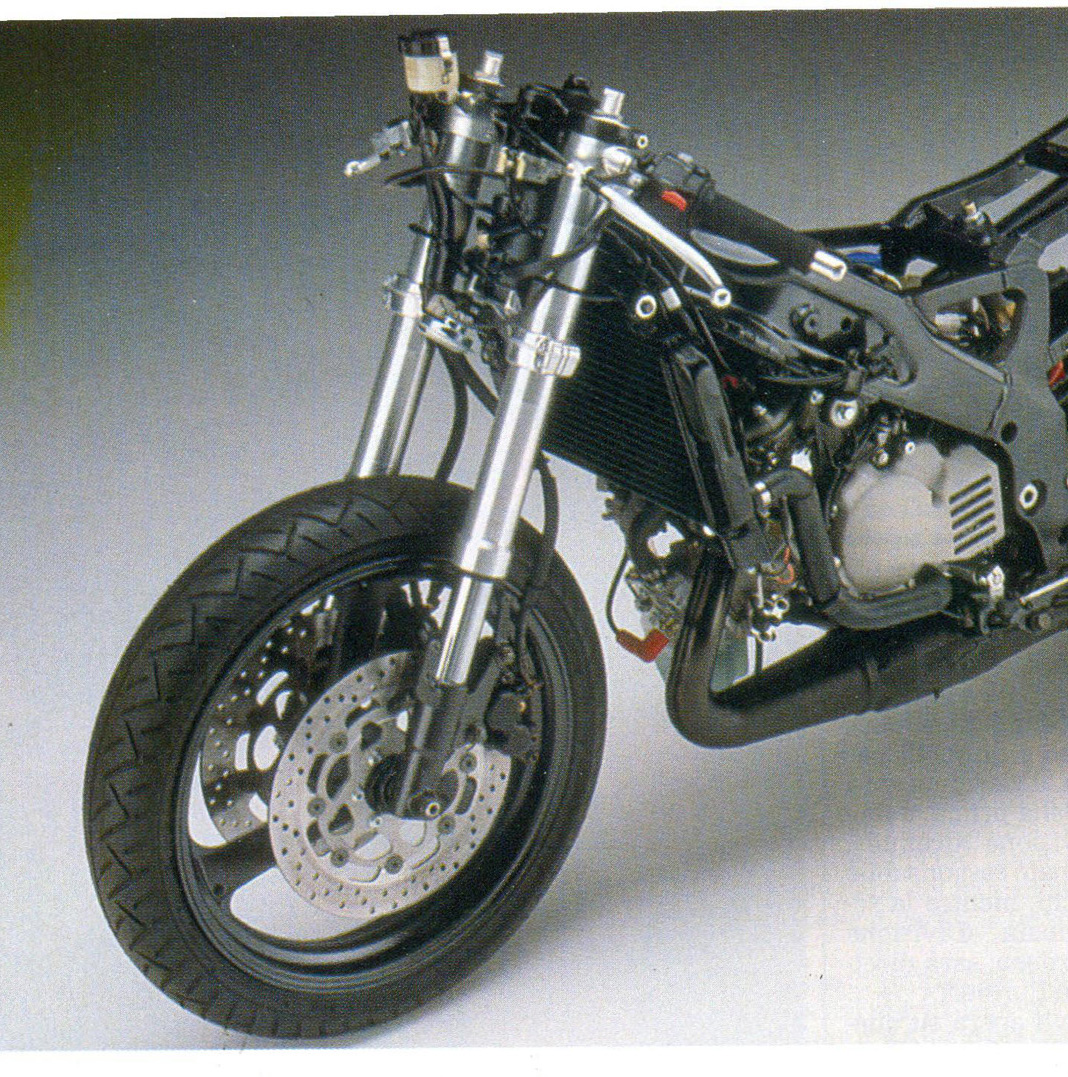
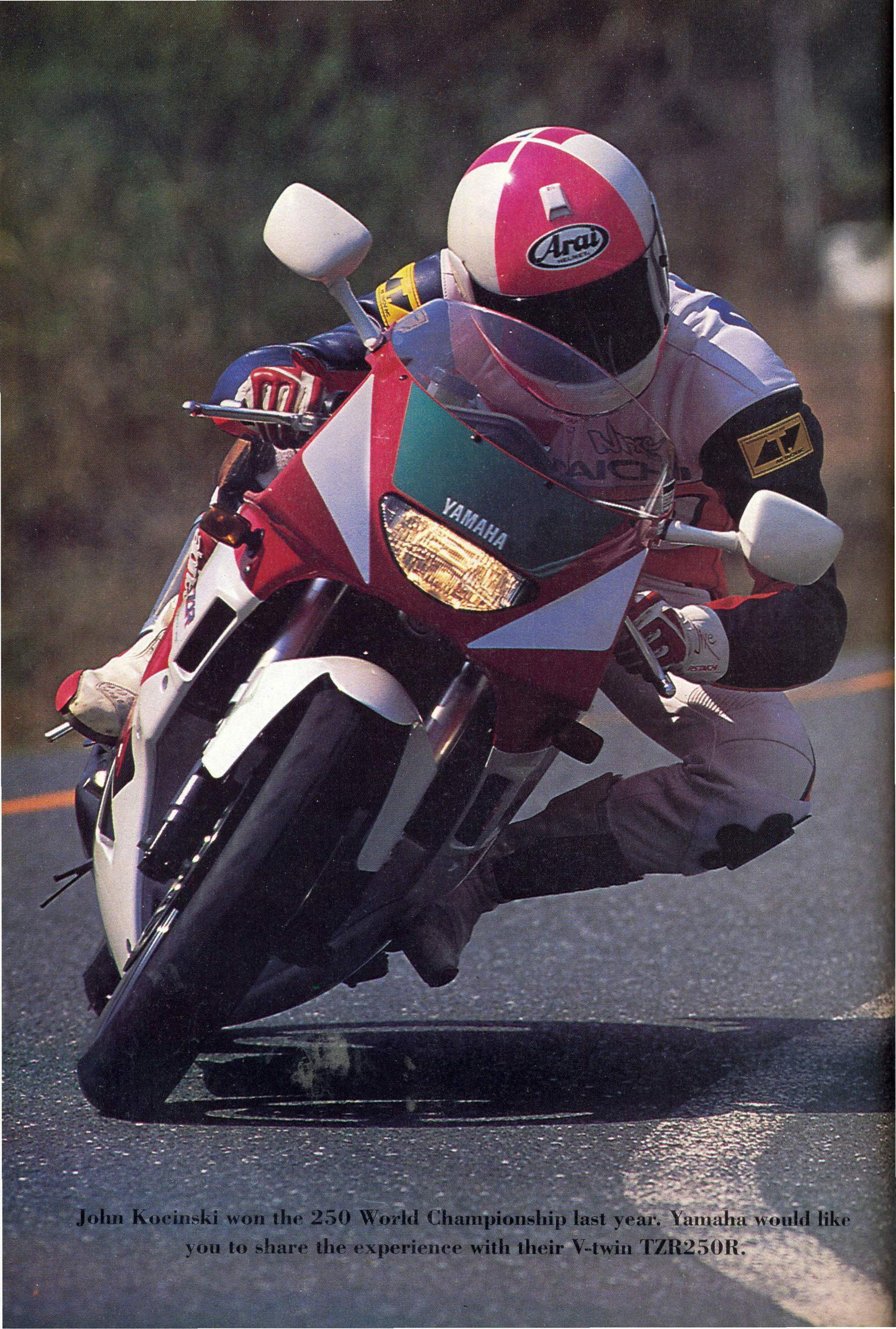
Visually, the TZR is a spitting image of John Kocinski's 1990 world-championship-winning works Yamaha YZR250, save for its lights, turnsignals, passenger perch and lack of sponsorship decals. In actual ancestry, the TZR is a close relative of Yamaha's TZ250D production racer, the two sharing the same crankcases, bore and stroke, displacement and 12,000-rpm redline. As on the TZ, the TZR is powered by a counterbalanced, two-stroke V-Twin with a bore and stroke of 56.0 x 50.7mm for a displacement of 249cc. TZ-style reed valves and a six-speed, cassette-type transmission add to the list of road-race-quality components. Bloom provided us with a 1991 TZR to sample at Laguna Seca Raceway. Unfortunately, the only one he had available at the time was a Japanese-spec model limited by that country's strict home-market regulations to a claimed 45 horsepower-about one-third less than on non-restricted versions. But despite its reduced power output, it still impressed us with its overall performance. For one thing, the engine possesses a surprisingly wide powerband, attributable to its computer-controlled engine-management system. An eight-bit microcomputer controls the advance curve of the electronic ignition, the actuation of the exhaust pow-ervalve, and the fuel mixture provided by the flat-slide 26mm Mikunis. All of this allows the little 250 to pull cleanly and steadily from low rpm, but the real but the real excitement is found on the upper floors of the rpm scale. Kept zinging between 8000 and 11,000 rpm, the engine is surprisingly potent and exciting, even if it does fall far short of the championship-caliber performance of the YZR250 roadracer, which pumps out nearly twice the power of the TZR. Though unable to measure top speed, we saw an indicated 155 kph (about 96 mph) over the crest of Laguna's Turn One. But those who lust after 250 race replicas don't expect Superbike-level engine performance. They place greater value on lightning-quick handling, which is the TZR's greatest virtue. The bike's aluminum, twin-beam Deltabox frame, allied with ultra-responsive steering geometry (24 degrees of rake, 3.5 inches of trail) and a 278-pound claimed dry weight, allowed the TZR to be flicked through Laguna's infamous Corkscrew with almost ridiculous ease. But that agility also has its drawbacks, as the TZR's responsive nature requires an equally light touch at the controls. Ham-fisted riders need not apply. Braking is outstanding. The TZR's 39mm inverted fork is fitted with four-piston calipers pinching a pair of floating discs. Even under repeated abuse around Laguna's 11-turn circuit, the brakes consistently provided excellent feel and were resistant to fade. Though our riding time on the Yamaha was limited, both fellow Associate Editor Don Canet and 1 came away with a strong appreciation for the TZR's phenomenal handling. No, the TZR250R will not break any speed records or set blazing quarter-mile times; but when it comes down to consuming corners, nothing currently in any manufacturer's U.S. lineup even comes close. Matthew Miles 1992
|
|
|
Any corrections or more information on these motorcycles will be kindly appreciated. |