|
|

|
|
|
|
Classic Bikes
Custom Bikes
Individual
Racing Bikes AJP
AJS
Aprilia
Ariel
Avinton / Wakan
Bajaj
Benelli
Beta
Bimota
BMW
Brough Superior
BRP Cam-Am
BSA
Buell / EBR
Bultaco
Cagiva
Campagna
CCM
CF Moto
Combat Motors
Derbi
Deus
Ducati
Excelsior
GASGAS
Ghezzi Brian
Gilera
GIMA
Harley Davidson
Hero
Highland
Honda
Horex
Husaberg
Husqvarna
Hyosung
Indian
Jawa
Kawasaki
KTM
KYMCO
Laverda
Lazareth
Magni
Maico
Mash
Matchless
Mondial
Moto Guzzi
Moto Morini
MV Agusta
MZ / MuZ
NCR
Norton
NSU
Paton
Peugeot
Piaggio
Revival Cycles
Roland Sands
Royal Enfield
Sachs
Sherco
Sunbeam
Suzuki
SWM
SYM
Triumph
TVS
Ural
Velocette
Vespa
Victory
Vincent
VOR
Voxan
Vyrus
Walt Siegl
Walz
Wrenchmonkees
Wunderlich
XTR / Radical
Yamaha
Zero
Video
Technical
Complete Manufacturer List
|
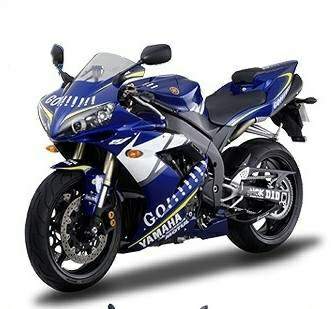
Yamaha YZF 1000 R1 Gauloises MotoGP Replica
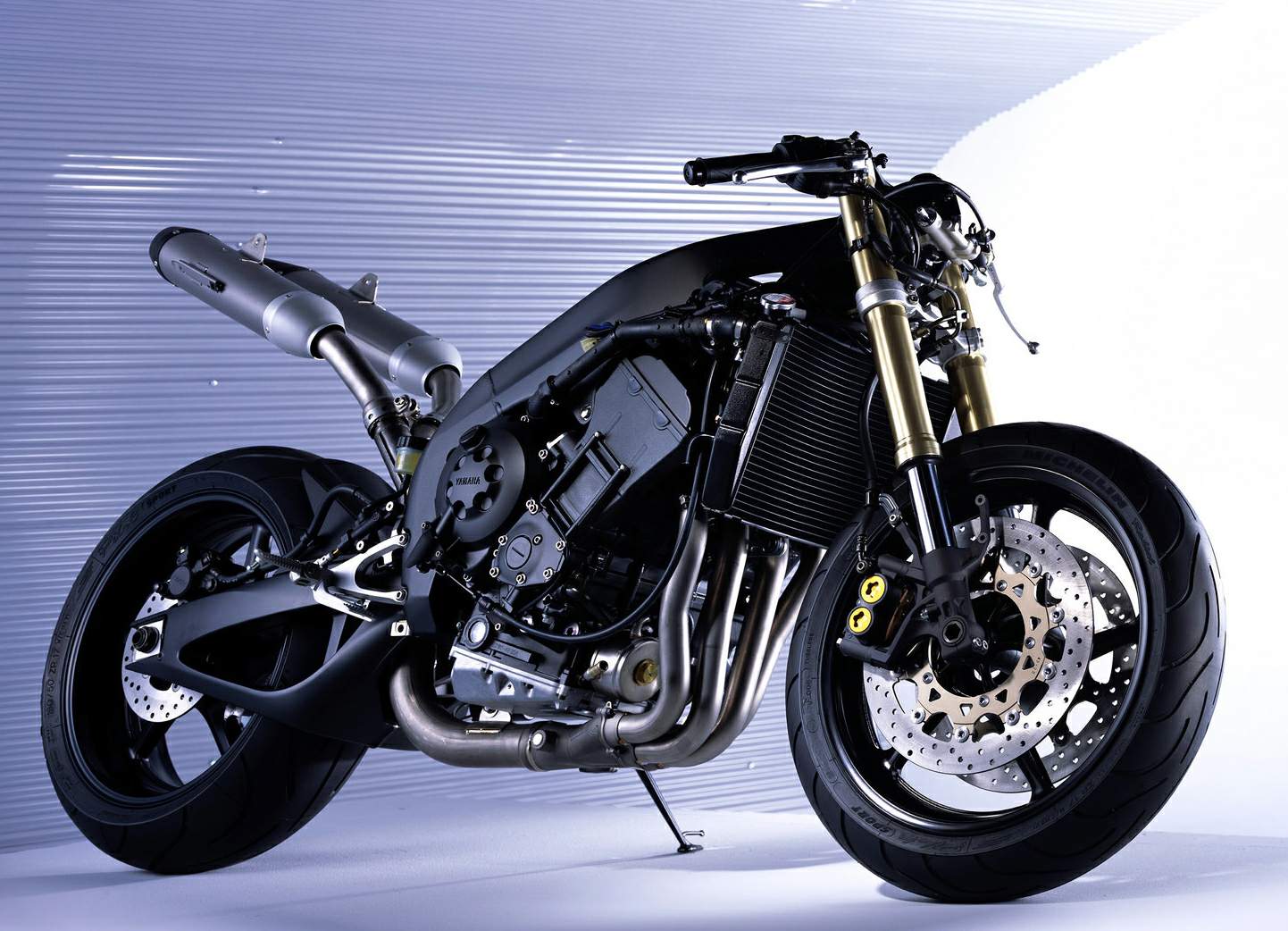
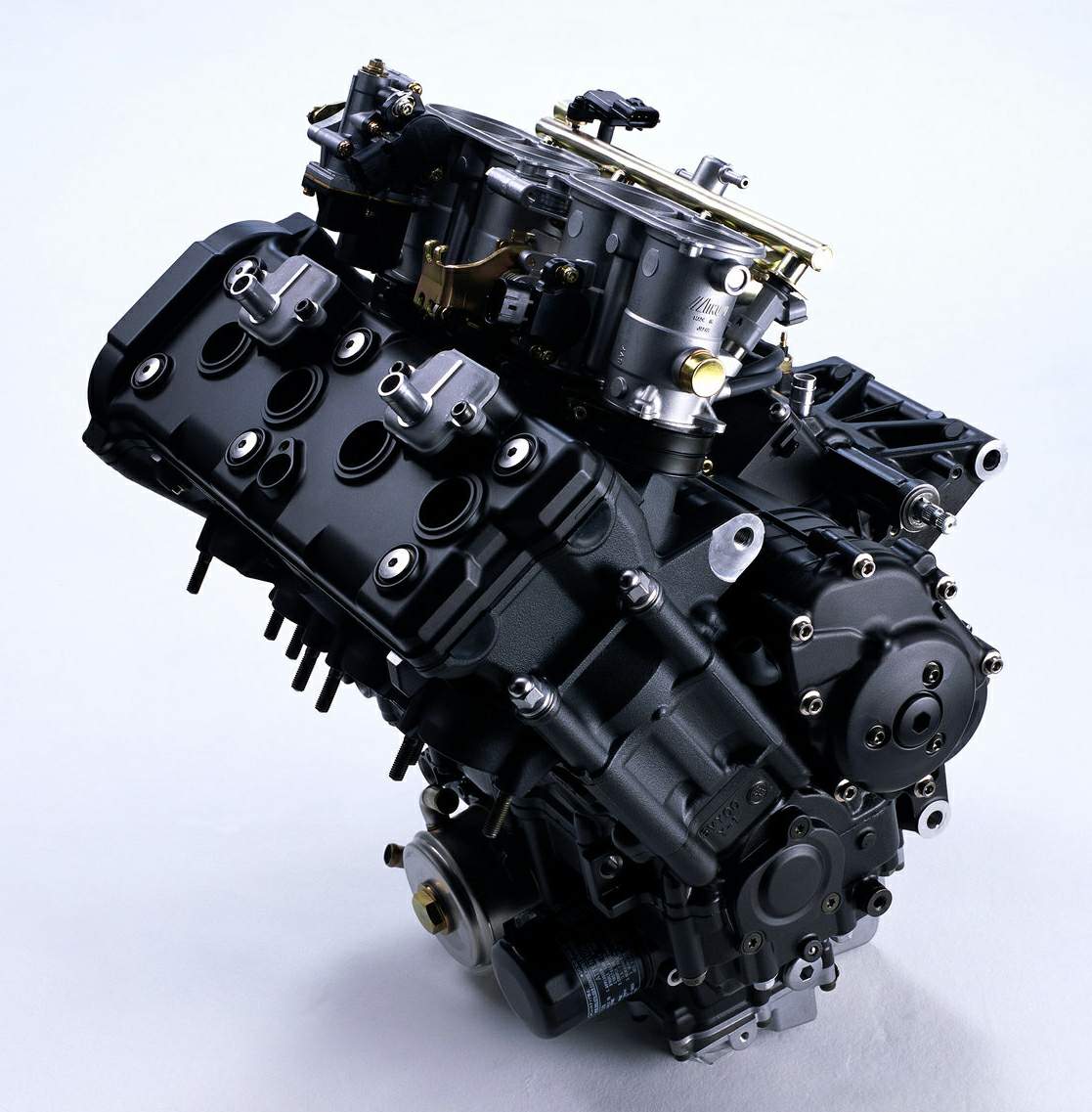
For 2004/05 Yamaha has released the third generation R1, and all I can say is, For starters, it has an entirely new engine that pumps out a claimed 180-ram air assisted horsepower at 12,500 rpm. You have to look back to the FZ 750 of 1985 for Yamaha’s first forward slanted five-valve engine. And sticking to their unique design, Yamaha’s engineers have tilted this year’s engine 10 degrees forward, for a total lean of 40 degrees from vertical.Inside the new cylinder head, the intake and exhaust valves have grown 5mm in diameter while shrinking in length. Both sets of valves have steeper angles and use stronger springs as the new engine revs some 2,000 rpm higher than the previous model. Opening and closing the 20 valves are new camshafts. Interestingly, the intake cams have more lift, while the exhaust cams now have less to reduce mechanical power loss. They have also been lightened 4% by the use of smaller journals, which allows them to spin faster. A hydraulic cam chain tensioner keeps the cam chain honest at the higher rpms.
Revised combustion chambers provide a 12.3:1 compression ratio,
up from last year’s 11.8:1. Providing the spark, shorter CR9EK spark plugs stay
well clear of the pistons. For 2004, piston diameter is enlarged to 77mm, while
the piston skirt height has been reduced. Running in sleeveless cylinders, the
bigger bore means a wider cylinder, even with a smaller 5mm gap between them.
The connecting rods are now 2mm shorter at 34mm. The journals have also been
reduced 2mm in size to help the crankshaft weigh in 16 percent lighter. This allows the surfaces to mate closer together for more
strength, as the two pieces are mirror images of themselves.
|
|
|
Any corrections or more information on these motorcycles will be kindly appreciated. |