|
|

|
|
|
|
Classic Bikes
Custom Bikes
Individual
Racing Bikes AJP
AJS
Aprilia
Ariel
Avinton / Wakan
Bajaj
Benelli
Beta
Bimota
BMW
Brough Superior
BRP Cam-Am
BSA
Buell / EBR
Bultaco
Cagiva
Campagna
CCM
CF Moto
Combat Motors
Derbi
Deus
Ducati
Excelsior
GASGAS
Ghezzi Brian
Gilera
GIMA
Harley Davidson
Hero
Highland
Honda
Horex
Husaberg
Husqvarna
Hyosung
Indian
Jawa
Kawasaki
KTM
KYMCO
Laverda
Lazareth
Magni
Maico
Mash
Matchless
Mondial
Moto Guzzi
Moto Morini
MV Agusta
MZ / MuZ
NCR
Norton
NSU
Paton
Peugeot
Piaggio
Revival Cycles
Roland Sands
Royal Enfield
Sachs
Sherco
Sunbeam
Suzuki
SWM
SYM
Triumph
TVS
Ural
Velocette
Vespa
Victory
Vincent
VOR
Voxan
Vyrus
Walt Siegl
Walz
Wrenchmonkees
Wunderlich
XTR / Radical
Yamaha
Zero
Video
Technical
Complete Manufacturer List
|
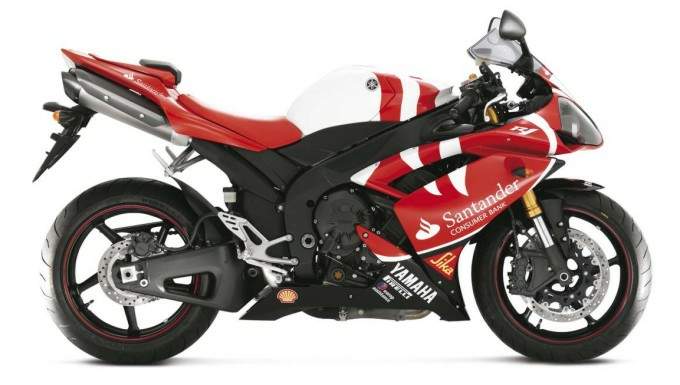
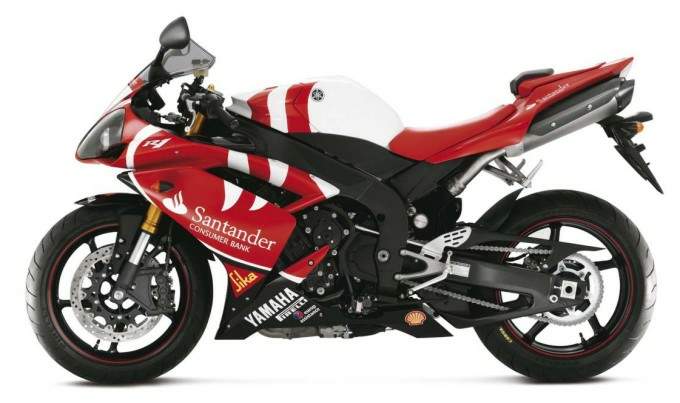
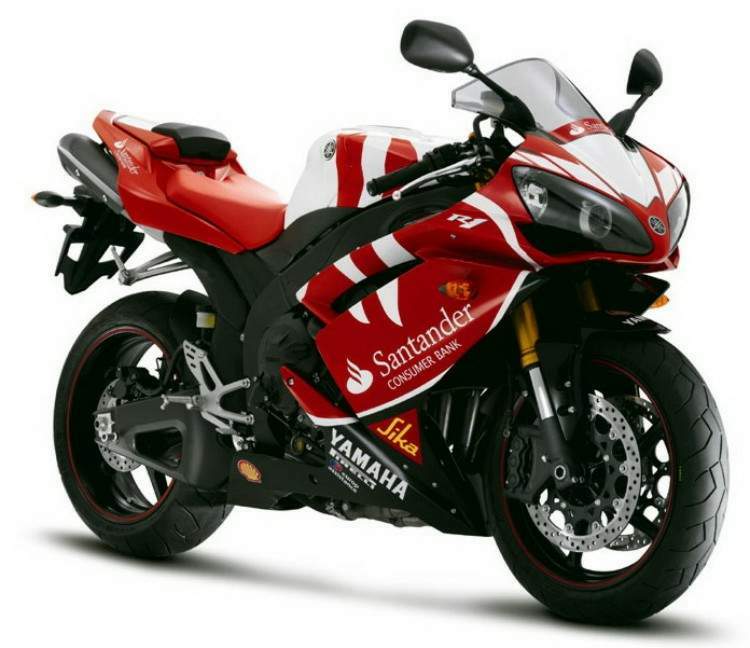
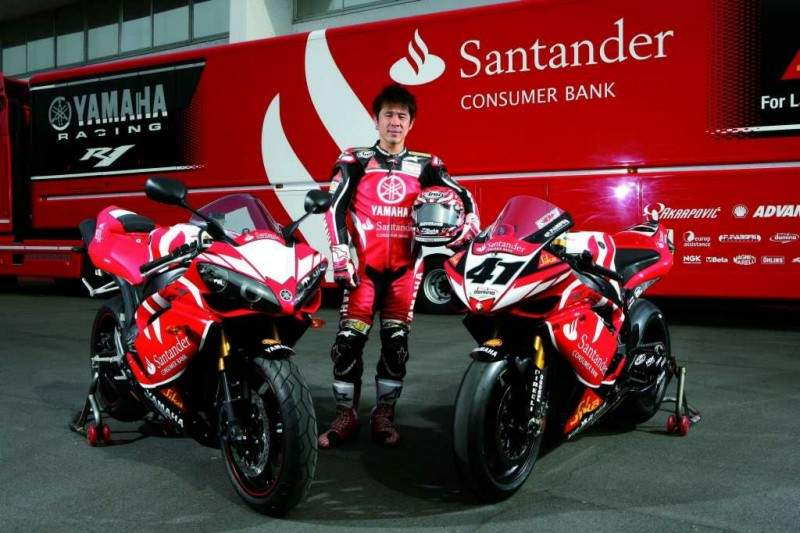
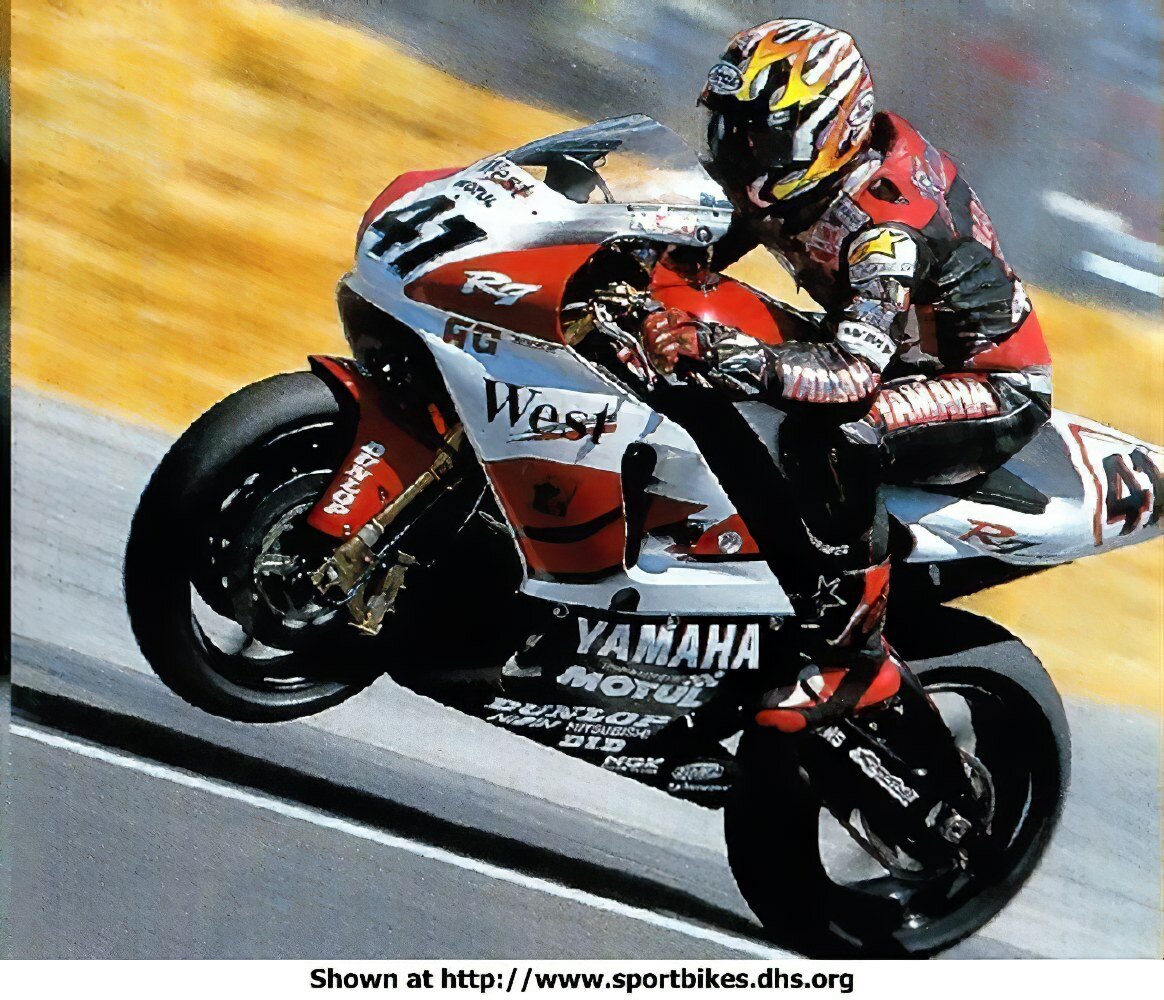
Yamaha YZF 1000 R1 10th Anniversery Haga Replica
For 2008, the R1 brings its traditional strong arsenal -
awesome performance and stunning good looks - and receives a technology
infusion and sharper styling to remain at the top of the literbike pack.
We've sat on it, and so we're confident in saying that R1 fans are going to
have wet dreams about this latest and greatest.
Below the cylinder head lies a bottom end not significantly changed. It uses
the same bore and stroke (77.0 x 53.6mm), already the most oversquare in the
class, so the redline remains at 13,750 rpm, still the highest among
four-cylinder literbikes. New con rods are beefier at the big end for
greater durability.
But that's not even the big news. This new R1 brings a performance feature
heretofore unseen on a production motorcycle. It's Yamaha Chip Controlled
Intake (YCC-I), Yamaha-speak for variable-length intake trumpets. At lower
revs, the intake snorkels are set at a height of 140mm for strong torque
production. Once the motor is at higher rpm, the trumpets drop down to a
height of 65mm for maximum power when screaming for vengeance (a reference
for Judas Priest fans...).
The new exhaust system, still with dual underseat canisters, is built
largely from titanium and features dual catalyzers and an EXUP valve to meet
Euro 3 and 2008 EPA emissions standards. The slipper clutch from last year's
high-dollar LE model is now standard. Surprisingly, there are no plans to
produce an Öhlins-equipped LE for 2007, making last year's
limited-production bike even more collectible. The addition of the slipper
clutch and catalyzers is expected to add a couple of pounds to the new bike,
likely making it the heaviest literbike of the superbike group.
Review
Apparently -- at least according to the Internet,
source of all the answers to all the questions in the world -- people, like fine
wines, mellow with age. A variety of studies -- some as recent as June 2006 --
indicate that older folk are much better at dealing with negative emotions and
generally have a better handle on their emotional roller coaster then their
younger, whippersnapper counterparts.
Are any of these descriptors hitting close to home?
After hearing these stats on the typical liter bike rider/owner, I reasoned that
Yamaha most certainly had sent a team of Men in Blue (MIB) to chart my every
move. Speaking for myself, I fit the liter bike rider mold pretty darn well. New head aside, the R1's other large overhaul was in fueling and all that it entails. More big numbers pop up when we look at the throttle bodies. Though they still have the same 45mm bore, they no longer use a measly four injector holes, but a whopping 12 holes are employed to improve atomization. But adding more holes is about as low-tech as improving the fueling gets. Borrowing from its little brother, the R6, the 2007 R1 now utilizes YCC-T or Yamaha Chip Controlled - Throttle. Some people just like to call it throttle by wire. Simply put, it's a system comprised of an accelerator position sensor (APS), throttle position sensor (TPS) and opening and closing throttle "wires." With the 32-bit Denso ECU calculating throttle grip position and throttle valve opening every one thousandth of a second, a tiny motor performs the actual work of opening and closing the throttle. For those of you paralyzed with fear after watching the Matrix trilogy, the rider can still close the throttle "mechanically" by wire if electricity is interrupted. Source Motorcycle.com
Haga Story For a Japanese racer, Haga-san is something of an enigma. Most Japanese riders toe the company line and have the personality of a wet fish, beaten into submission by years of corporate sponsorship brainwashing. Haga is a refreshing change, with a superb sense of humor. See him on the television before a race and he is totally committed to the job at hand. Try and get a word out of him before a race or qualifying session and, at best, you will be greeted with a curt nod. No smiles, no jokes, no playing around-a pure, single-minded focus on the task before him. But once that is over and done with, Haga is open, friendly and ready to talk to you all day and night about his passion-riding motorcycles hard and fast! When he arrived on the World Superbike scene in 1998, the world just saw him as another flash-in-the-pan, another kamikaze Japanese rider ready to upset the apple cart for one round, drift back into the lower top 10 positions and then back to Japan. How wrong could they be? Three years later Haga is still here, still looking out-of-shape but incredibly fast. Then in 2000, Haga had a chance at the championship. But where does such a rider come from? What molded him into the type of racer he is today? What are his goals and plans for each race and the future? Ladies and gentlemen, I give you Haga-san. Sport Rider: When did you start to race? SR: Which pocket bike did you start riding? SR: When you first started to race these pocket bikes, did
you win straight away? SR: How long did you stay on the pocket bikes before moving
on to a different class?
At 13, I moved to minibikes, but my birthday is March 2. So
already the season start. The championship is going, so I not do all races. SR: And from there? SR: Was it a big step from the NSR? SR: When did you move into the next class? SR: Did that put you off racing? SR: How long did you stay in the All Japan Championships? SR: How do you compare the competition from the All Japan
series to the World Superbike and who was your main rival in Japan, and now
here, in WSB? SR: Do you enjoy the Suzuka 8-Hour? SR: On the R7, you have spent a lot of time on both Dunlop
and Michelin. Which tire do you prefer? SR: You can hold a tight line, tighter than most other
riders. How can you do this? SR: When you set your bike up, what is most important to
you, traction, steering or stability? SR: What is the worst point of the R7? SR: In 1998, you rode at Suzuka on a 500 GP bike. Would you
like to go back to 500? SR: What are your feelings on the ephedrine controversy? We were using a diet supplement, but we did not know that there was ephedrine in it. There was nothing [about it] on the packet. Now I am a specialist in medicines since the tests. I have had many tests and know much more about the different drugs. Do you think that if Troy [Corser] took ephedrine he would be more faster? After I was tested, many riders [are lining up] at the medical center and asking if they had a cold or an injury, what [medicine] they could take. Many riders now do not take medicines because they fear the tests. This is not good because maybe they need to have the medicines to make them better. It is the one thing we find very difficult. As a privateer you never watch what you are eating or what there is in a diet supplement. [There isn't] testing in Japan, so we find this very difficult. Does this testing mean we should have a doctor with us and the team to make sure we are not going to eat the wrong things? The FIM want to test us now between races and in the off-season. This is very hard and seems very strange to us. How can drugs make us faster? We are not runners, we ride motorcycles. Career highlights This article originally appeared in the February 2001 issue of Sport Rider.
|
|
|
Any corrections or more information on these motorcycles will be kindly appreciated. |