|
|

|
|
|
|
Classic Bikes
Custom Bikes
Individual
Racing Bikes AJP
AJS
Aprilia
Ariel
Avinton / Wakan
Bajaj
Benelli
Beta
Bimota
BMW
Brough Superior
BRP Cam-Am
BSA
Buell / EBR
Bultaco
Cagiva
Campagna
CCM
CF Moto
Combat Motors
Derbi
Deus
Ducati
Excelsior
GASGAS
Ghezzi Brian
Gilera
GIMA
Harley Davidson
Hero
Highland
Honda
Horex
Husaberg
Husqvarna
Hyosung
Indian
Jawa
Kawasaki
KTM
KYMCO
Laverda
Lazareth
Magni
Maico
Mash
Matchless
Mondial
Moto Guzzi
Moto Morini
MV Agusta
MZ / MuZ
NCR
Norton
NSU
Paton
Peugeot
Piaggio
Revival Cycles
Roland Sands
Royal Enfield
Sachs
Sherco
Sunbeam
Suzuki
SWM
SYM
Triumph
TVS
Ural
Velocette
Vespa
Victory
Vincent
VOR
Voxan
Vyrus
Walt Siegl
Walz
Wrenchmonkees
Wunderlich
XTR / Radical
Yamaha
Zero
Video
Technical
Complete Manufacturer List
|
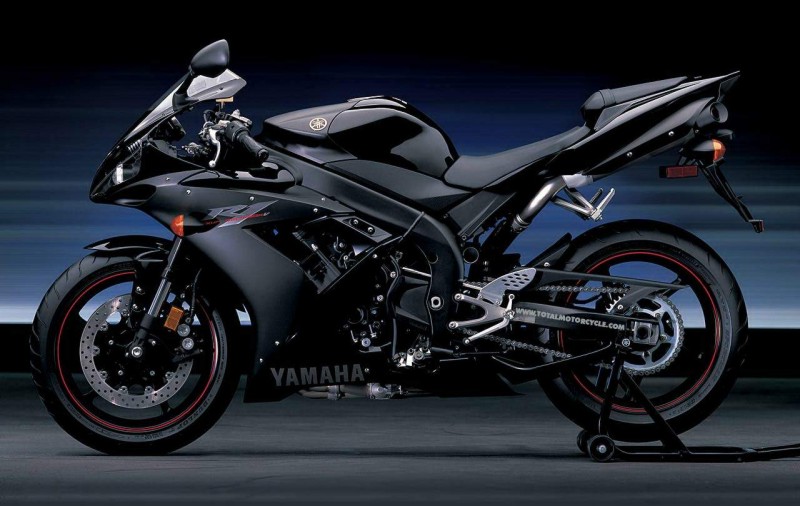
Yamaha YZF-1000 R1
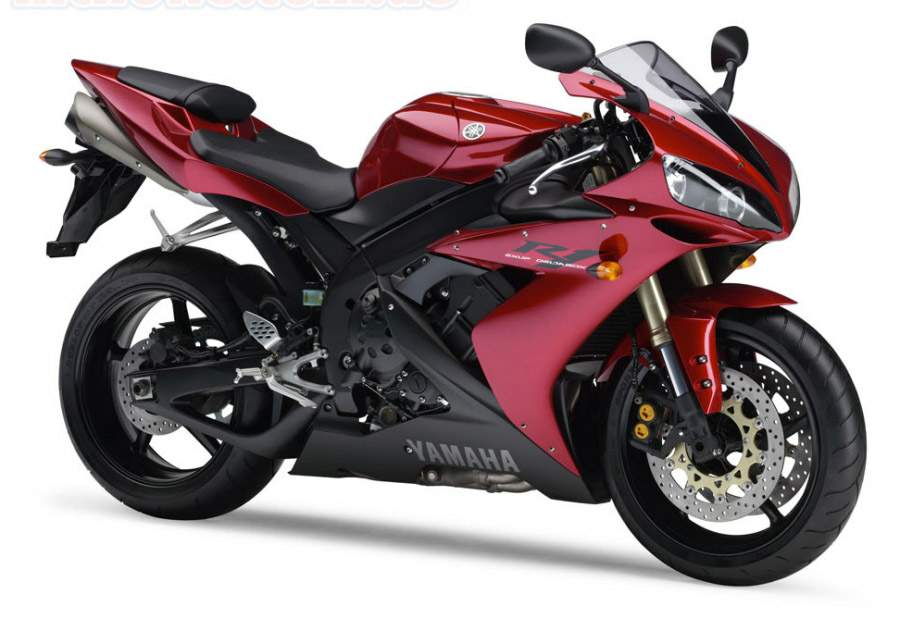
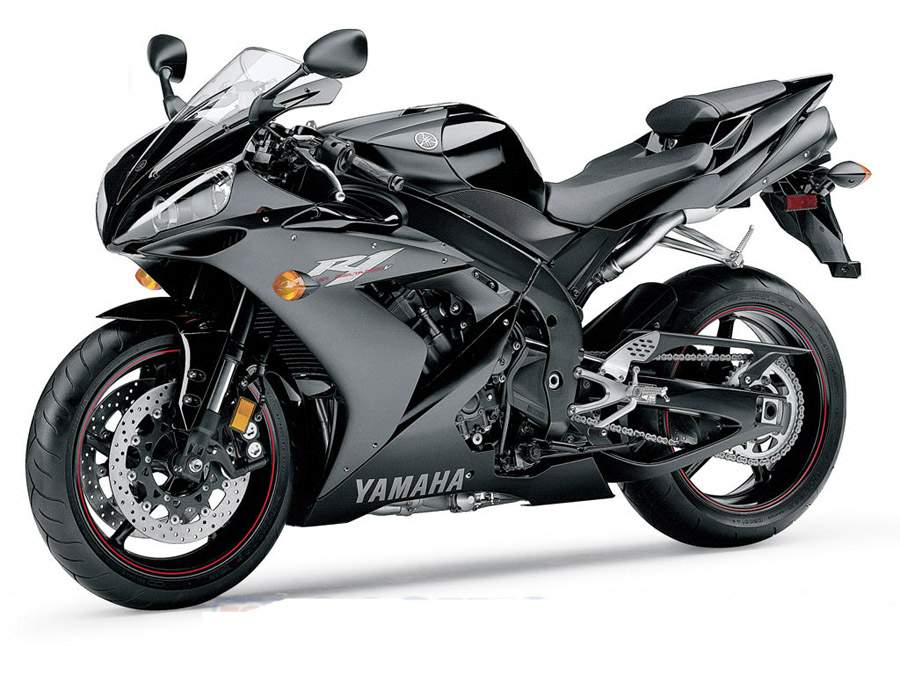
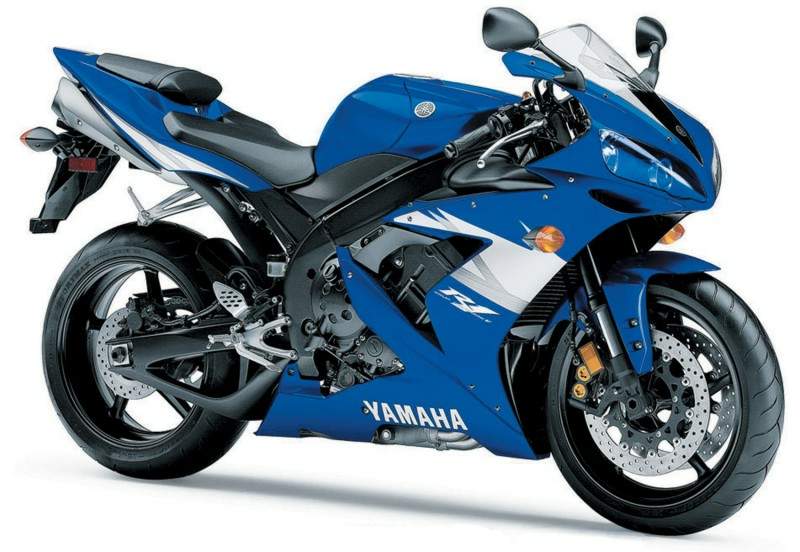
2004-2005 With the competition advancing, Yamaha made some major changes to the model.
This included style updates, like an under seat twin exhaust, and performance
upgrades including radial brakes, and, for the first time an R1 Ram-air intake.
Furthermore, the tendency for wheelies by earlier productions was reduced by
changing the geometry of the frame and weight distribution. The all-new engine
was no longer used as a stressed member of the chassis, and had a separate top
crankcase and cylinder block. The 2004 R1 weighs 172 kg (379 lb) dry. The conventional front brake calipers were replaced by radially mounted calipers, activated by a radial master cylinder. A factory-installed steering damper was also added this year. Combined with the changes to the frame, this helped to eliminate the tendency of the handlebars to shake violently during rapid acceleration or deceleration on less-than-perfect surfaces, a phenomenon known as a speed wobble or tank slapper. Motorcycle Consumer News tests of the 2004 model year YZF-R1S yielded a 0 to 60 mph (0 to 97 km/h) time of 3.04 seconds and 0 to 100 mph (0 to 161 km/h) of 5.42 seconds, a quarter-mile time of 9.90 seconds at 144.98 mph (233.32 km/h), and a top speed of 179 mph (288 km/h).
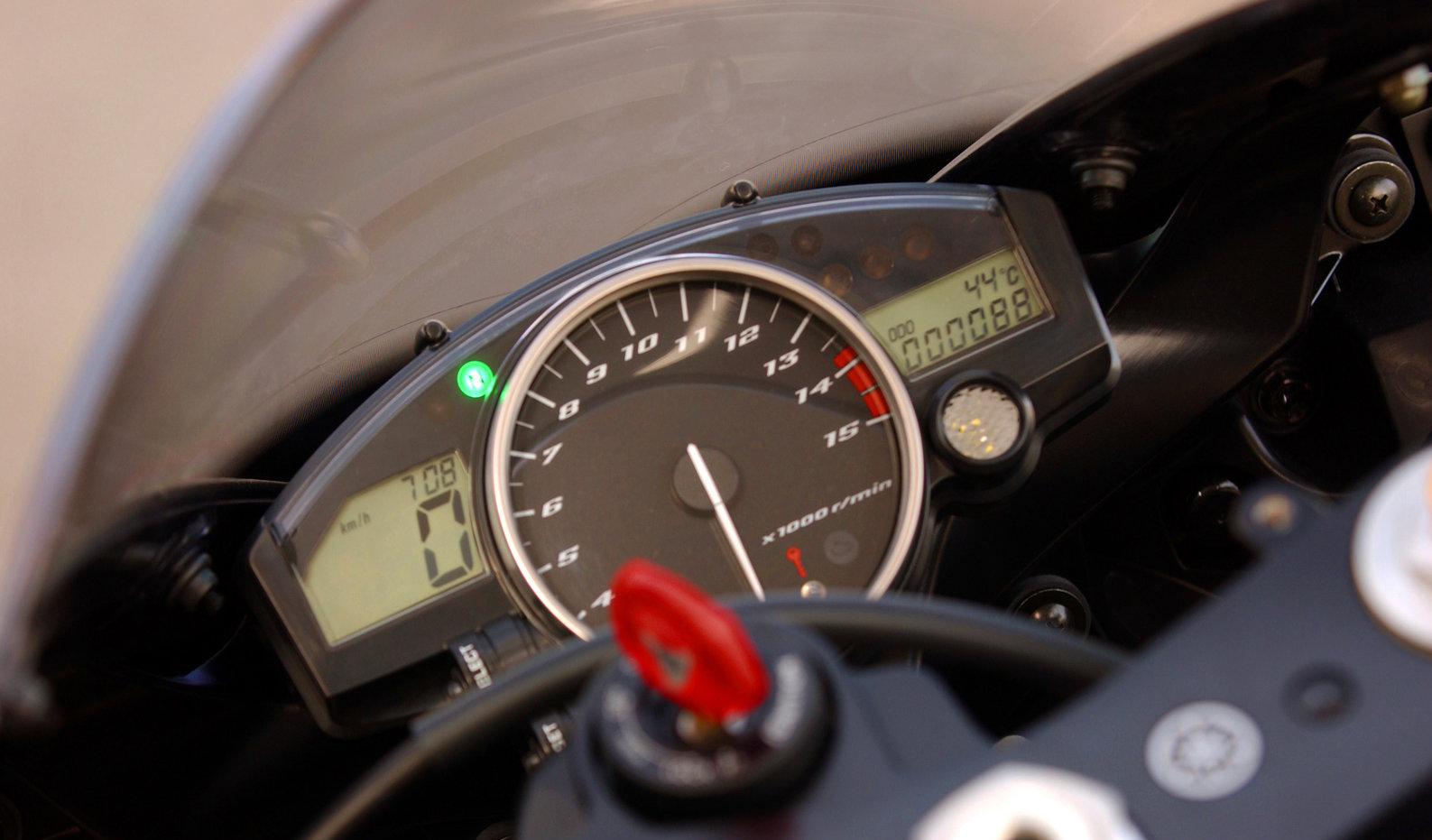
It was like a weird Biker Boyz deja vu. Tucked in behind the fairing of the new Yamaha R1, engine screaming toward its stratospheric 13,750 rpm redline, I looked over to see my reflection in a mirrored visor. Grinning wildly, I shifted right before the rev limiter, selected the next cog and whacked the throttle back to wide open. Snatching another look sideways as the front end started to go light yielded the same result: a face full of R1. Up shifting again, both bikes were still side-by-side running hard toward the brake markers for turn one. Someone was going to have to do the gentlemanly thing and back off, as we would soon be running over 160mph. Thankfully, it was Cycle News editor Paul Carruthers, pulling a Laurence Fishburne on me, who rolled off early. Actually, he was on the inside line and figured we didn't need to be inches apart at 120mph, especially if anything went wrong. Sensible chap. For the next lap I made myself as wide as possible, resorting to everything except sticking my boot out to keep him behind me. Banging off the rev limiter and lofting the front wheel out of the turns, I rode harder than I have in a long while. The R1 was unfazed by my meager efforts. Entering the front straight it was over. Paul got a better drive and rode on by. I saw my reflection in his mirrored visor for the last time. I did my best to hang on and pushed even harder, but by the end of the session he was gone and I was circulating Sydney's famous Eastern Creek racetrack alone.
The occasion was the World Press launch of Yamaha's new R1 in Sydney, Australia. With two days of riding split between track and street, we were able to get plenty of seat time to justify flying halfway round the world. Yamaha's Brad Bannister had budgeted a rest day for us to get acclimatized, and with air temperatures of 110 degrees at the track, I felt happy to be rested. The R1, on the other hand, was totally oblivious to the heat and ran just as hard at the end of the day as it did at the beginning. There is no doubting that the war raging in the liter bike class this year is as hot as the Eastern Creek track surface. With the Suzuki GSXR1000 firmly in everyone's sights, all the new models have now made their intros. I haven't ridden the Honda CBR1000RR yet, but I did ride the Kawasaki ZX-10R. There are certainly a number of differences between the ZX-10R and the R1, but it is impossible to say which is better without a comparison test. Entering the scene in 1998, the first generation R1 thrilled customers world wide with its stunning looks and blistering performance. Featuring the first long swing-arm seen on a street bike and an ultra-compact engine, it quickly became the benchmark for liter bikes. The year 2000 saw some 150 minor changes as the bike lost weight and changed its look a tad. 2002 saw the second-generation R1, featuring a departure from carburetors to vacuum-slide fuel injection. Journalists raved about the super smooth power delivery and, as with the 2000 model, a number of other minor changes were implemented.
Now for 2004, Yamaha has released the third-generation R1, and all I can say is, "Crikey mate, she's a beauty." For starters, it has an entirely new engine that pumps out 180-ram air assisted horsepower at 12,500 rpm. You have to look back to the FZ 750 of 1985 for Yamaha's first forward slanted, five-valve engine. Sticking to their unique design, Yamaha's engineers have tilted this year's engine 10 degrees forward for a total lean of 40 degrees from vertical. Inside the new cylinder head, intake and exhaust valves have grown 5mm in diameter while being reduced in length by 3.5mm and 1.5mm respectively. Both sets of valves have steeper angles and use stronger springs as the new engine revs some 2000-rpm higher than the previous model. Opening and closing the 20 valves are new camshafts. The intake cams have more lift, while the exhaust cams now have less to reduce mechanical power loss. They have also been lightened 4% by the use of smaller journals, which allows them to spin faster. And a hydraulic cam chain tensioner keeps the cam chain honest at the higher rpms. Combustion chambers have a 12.3:1 compression ratio, up from last year's 11.8:1. Shorter CR9EK spark plugs stay well clear of the pistons. For 2004, piston diameter is enlarged to 77mm, while the piston skirt height has been reduced. Running in sleeveless cylinders, the bigger bore means a wider cylinder, even with a smaller 5mm gap between them. To offset this increase in bore size, the connecting rods are now 2mm shorter at 34mm to maintain the engine's 998cc capacity. The journals have also been reduced by 2mm in size to help the crankshaft weigh in 16% lighter. Carbonized for greater strength, the quicker revving crank is also 23.7mm narrower. During the pre-ride presentation, I found it interesting to learn how the connecting rods are produced. Using a fracture split process, the rods are made as one piece and then split. This allows the surfaces to mate closer together for more strength, as the two pieces are mirror images.
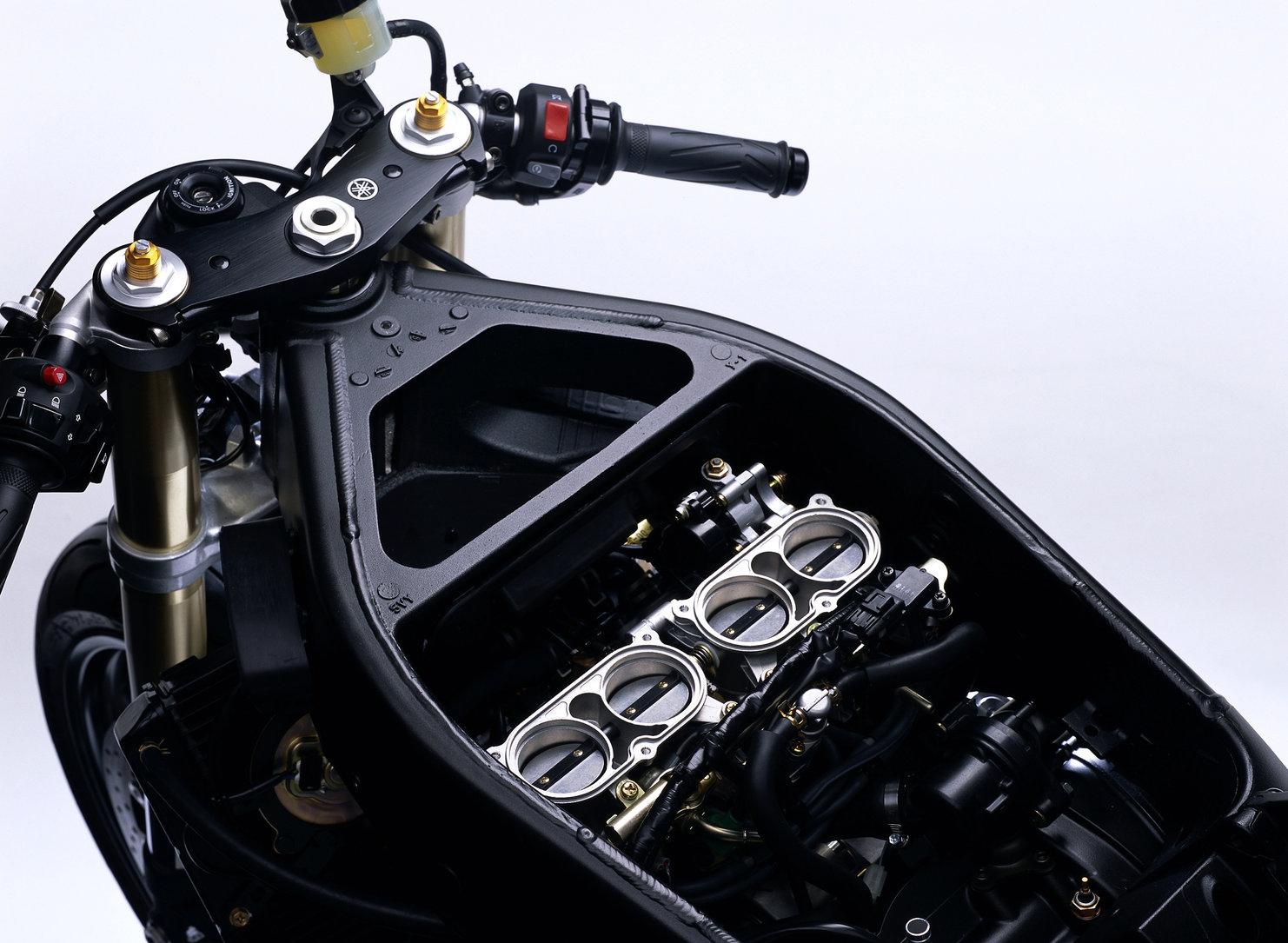
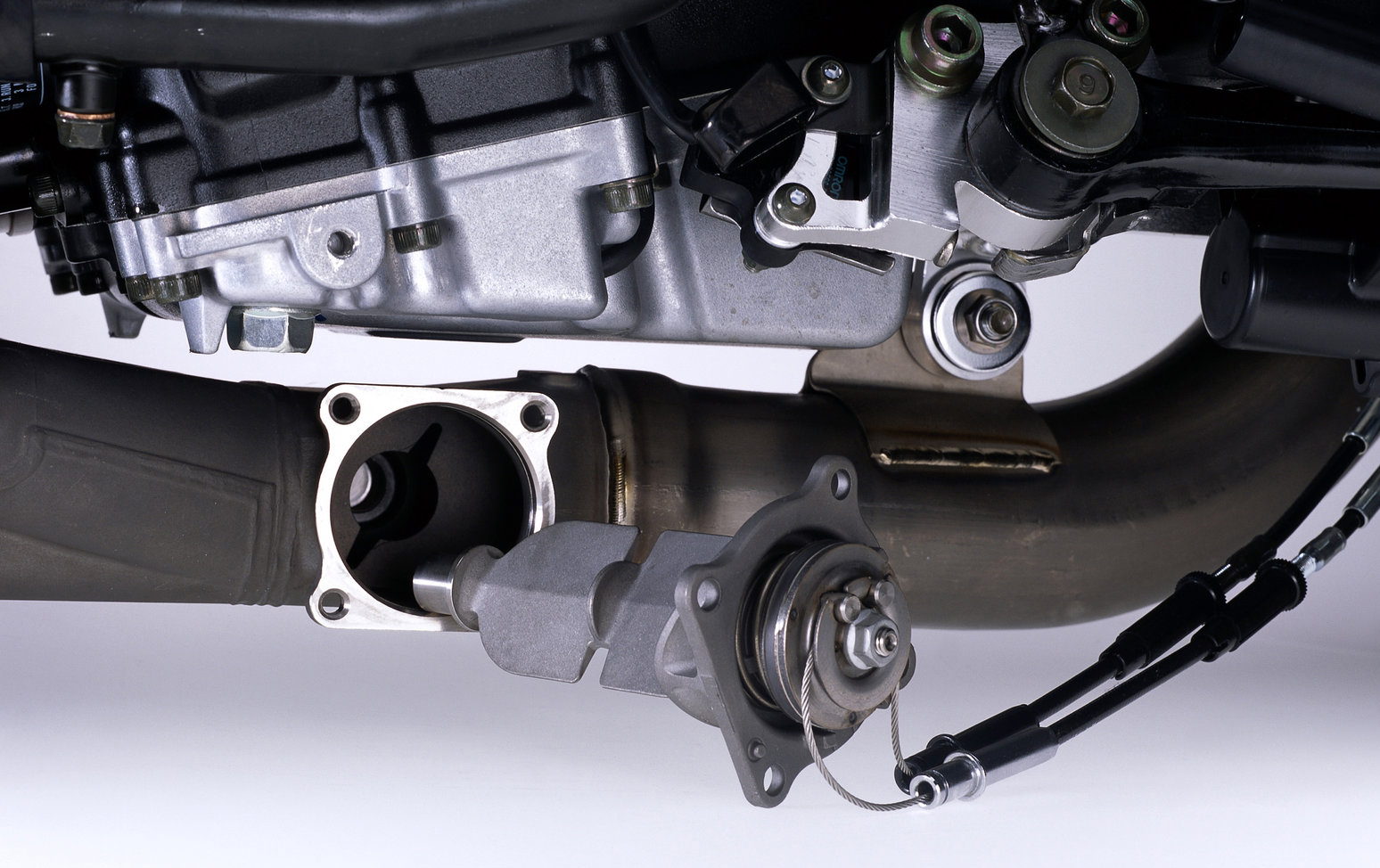
In keeping with the stronger and lighter theme, this year's clutch basket loses 5% of its weight. It's also narrower and uses six coil-type springs in place of last year's diaphragm type clutch spring. Three of the cork friction plates have also been changed to a paper base to better deal with the heat. The new clutch transfers power to a close ratio gearbox that gives no fuss on the racetrack. Start shifting at lower rpm on the street, however, and it needs a decisive foot to show it who is boss. Still it's never harsh. The ratios are very tall, with first gear being good for over 100mph. On the Eastern Creek, I only got into fifth gear once at the end of the main straight. Cranking out 180 horsepower and hitting nearly 14,000 rpms, the new R1 engine generates some serious heat. No worries mate, a new curved style radiator is in place with two ring-type fans. Even these are new, with an external ring around the blades to reduce flex and allow more cooling. Helping the engine make its truckloads of horsepower (up 20 from last year) is a new fuel-injection system. It uses larger 45mm throttle bodies with primary and secondary butterfly valves instead of generation two's diaphragm slides. The throttle opens the first butterfly, while a servomotor controls the second. Long-nose injectors fire fuel down the almost straight intake ports, before the burned gasses are whisked away into the sexy looking under tail exhaust system. Containing Yamaha's patent EXUP valve, the system is all titanium except for the stainless steel catalytic converter. While the pipes look extremely sweet, they do make for a very hot seat battling through traffic. To be fair, temperatures in Sydney were excruciatingly high, but asbestos underwear might be a good investment if you are male and haven't already fathered children. Any annoyance at the heat is soon forgotten when the engine revs start to rise and the rear exit pipes start to howl. Running over the slimmer engine instead of around the sides, the new black Delta box frame looks familiar, but is 68.4mm narrower. Borrowing technology from its own M1 GP race bike, Yamaha claims a 200% increase in vertical rigidity and a 30% increase in torsional rigidity. This basically means that unless you are Valentino Rossi, you are not going to be taxing this chassis. Attaching to the new frame, the foot pegs are now positioned 2.5mm further forward and 7.5mm lower. Allied to the handlebar's 10mm increase in height, sitting on the new R1 feels surprisingly roomy. The bike's lean angle is supposed to have stayed the same at 56%. I frequently had my boots on the floor, and Mr. Carruthers was complaining his foot pegs were touching, so I am not too sure about this.
Moving aft, the new swing arm is a tasty looking piece. It has its bracing on the underside so as not to interfere with the new exhaust. As with the main frame, torsional and side rigidity have both been increased. It also provides a home for a revised rear Soqi shock, which features damping and spring rates to suit the new chassis. This now has a horizontal reservoir tank in place of last year's vertical affair. For the track, the compression had been turned way in from the standard setting, some preload added and the rebound left alone. I had no complaints with the way the rear end behaved, and felt no need to question Yamaha's settings. This year the R1 rolls on five-spoke alloy wheels, in place of last year's three-spoke design. Even though they look very similar, they are not the same as the R6. For our testing in Australia, these were wrapped in premium Michelin Pilot Sport rubber: street compound in the morning, race compound in the afternoon. No complaints from me about the tires, although if I was doing track days I would definitely fit the race compounds. They are just so much better at dealing with the big Yamaha's phenomenal power and give so much more confidence. Interestingly, some suspension adjustments were made for the race compound tires and the rear compression was actually relaxed a few turns. Heading out for the first warm up lap, I would have guessed the suspension had been tightened up, as it felt less compliant, due, no doubt, to the firmer construction of the tire sidewalls. Up front, a five-spoke wheel is also used, held in place by the 43mm Kayaba forks. These have a stronger spring rate and more compression adjustment than last year. As with the rear shock, I certainly felt no need to make any changes and was just amazed at the way the forks behaved. Clamping down on the brakes at triple digit speeds gave no unsettling dive. Letting off as I pitched into the waiting corner the bike remained totally stable. Diving into turn one at over 120mph, the rough track had the bike bucking around some. The forks just sucked up the bumps, kept the front tire on line, and allowed me to rail through without drama.
Putting the front forks through their paces at the end of the straights, the new radial brakes also borrow from Yamaha's GP race program. I am certainly not qualified to put these things fully to the test. What I can say is how easy they are to use. There is no take up period followed by a huge rush of stopping power. They just start working, and the more you pull the more constant, predictable braking power you get. I did find the thickness of the lever strange. It seemed to me that it should be thinner in keeping with the rest of the bike's featherweight proportions. It is multi-adjustable by a trick adjuster knob that winds in or out, not in the usual circular fashion. The lever now pushes on a 2mm larger radial piston. Down at the business end, the Sumitomo four-piston calipers now have two mounting brackets to eliminate any flex. These bite on thinner rotors, although this year they have been enlarged from 298mm to 320mm. In the rear, Yamaha has changed the dual piston caliper to a single piston Nissin version to save weight. I didn't use it on the track, but it works fine on the street, with plenty of feel and a useful amount of travel before it locks up. We actually spent a whole day street riding, which gave a good chance to see how the R1 shapes up in the real world. Where the bike is beyond my ability to criticize on the track, there are a few issues to talk about on the street. Running at legal speeds on the highway, 5000 rpm in top gear, there is an annoying vibration that gets the bum tingling. The answer to this is to drop a gear or add a little speed because after a few minutes it gets pretty unpleasant. Gear change action, which is so slick on the track, is a tad deliberate on the street, requiring a good positive boot to change at low rpms. On a positive note, the engine's tall gearing makes for a stress-free ride on the highway, as you are not going to be feeding in too much throttle at the wrong moment. This was something I had been worried about after riding the ZX -10R. On a not-so-positive note, the suspension doesn't like rough roads, giving a pretty harsh ride. I'm not sure if it was on racetrack settings or not, but I would definitely need to relax it some for regular road duties. Hitting the smooth stuff, everything was fair dinkum, as the big four swallowed up the road ahead with consummate ease. With white lines, cars and other roadside obstacles, twisting the throttle in anger was something akin to hitting the fast forward button as the oncoming scenery got sucked through the windshield at an alarming rate. For the most part, I just short-shifted using the plentiful torque and enjoyed my cruise through the Australian landscape. Running at street legal velocities gave ample opportunity to enjoy the intoxicating intake noise as the throttle is opened. By the end of the day, we had covered around 200 miles. Flying home from Australia with time on my hands to reflect on the new Yamaha R1, I was having trouble comprehending that you can buy this motorcycle for $10,599. Kicking out 180 horsepower and capable of topping 180mph, while being civilized enough to ride to work, how is any sane bloke going to be able to resist this beauty? Source Neale Bayly -April 2004
|
|
|
Any corrections or more information on these motorcycles will be kindly appreciated. |