|
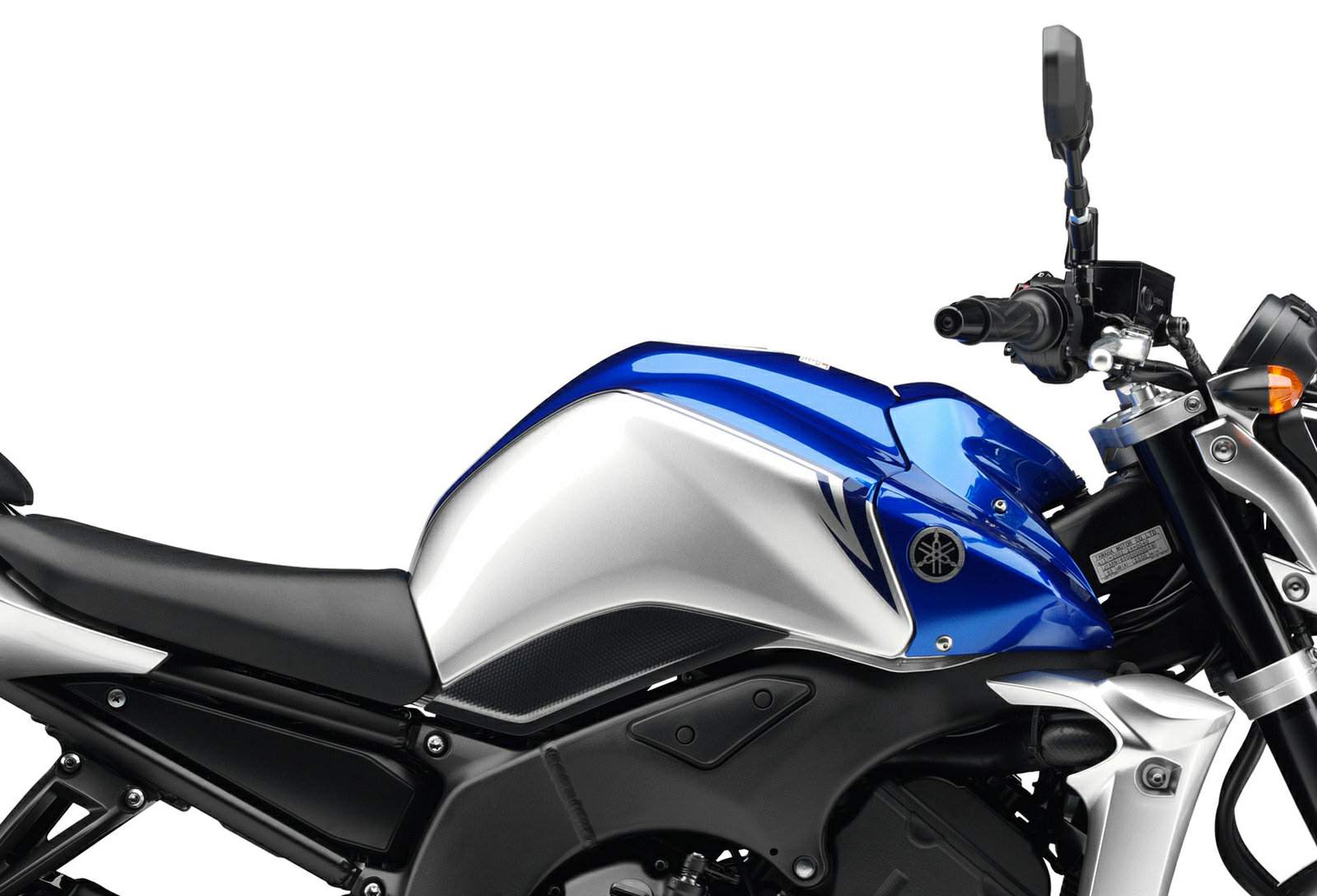
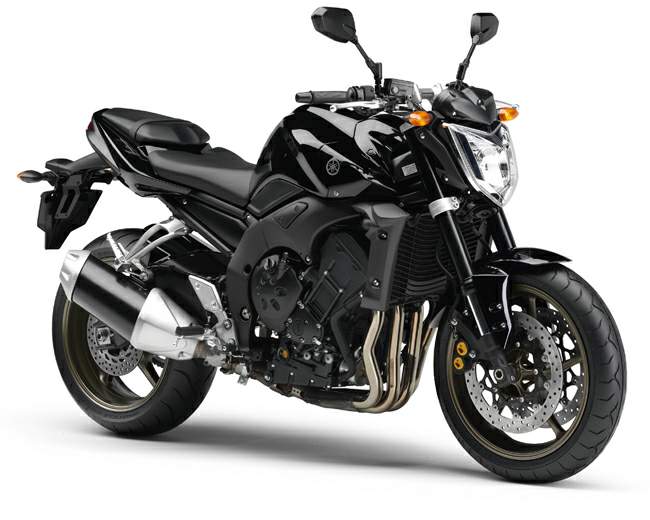
Yamaha FZ-1

|
Make Model |
Yamaha FZ-1 |
|
Year |
2008 |
|
Engine |
Liquid cooled, four stroke, transverse four
cylinder, DOHC, |
|
Capacity |
998 |
|
Bore x Stroke |
77 X 53.6 mm |
|
Compression Ratio |
11.5:1 |
|
Induction |
Fuel injection |
|
Ignition /
Starting |
Digital TCI / electric |
|
Max Power |
150
hp @ 10000 rpm |
|
Max Torque |
106 Nm @ 11000 rpm |
|
Transmission /
Drive |
6 Speed / chain |
|
Frame |
Aluminium die-cast, diamond shaped |
|
Front Suspension |
Telescopic upside forks, 130mm wheel
travel |
|
Rear Suspension |
Link-type swingarm, 130mm wheel travel. |
|
Front Brakes |
2x 320mm discs |
|
Rear Brakes |
Single 245mm disc |
|
Front Tyre |
120/70 ZR17 |
|
Rear Tyre |
190/50 ZR17 |
|
Seat Height |
815 mm |
|
Dry-Weight |
204 kg |
|
Fuel Capacity |
20 Litres |
|
Standing
¼ Mile |
11.1 sec |
|
Top Speed |
246.1 km/h |

Key Features:
* Our ultimate street brawler brings 998cc
of fuel-injected previous generation R1 power to the fray, in a
light-and-strong aluminum frame.
* Sculpted fuel tank and one-piece handlebar move the rider forward for
aggressive naked-bike excitement.
* Adjustable suspension lets the FZ1 be dialed in for a wide range of uses,
everything from urban assault to sport touring.
Engine:
* 998cc DOHC 20-valve previous generation R1 engine is tuned for
tremendous mid-range punch and massive top-end power.
* R1-style fuel injection with computer-controlled sub-throttle valves
provides precise fuel/air mixture for superb power delivery across the
entire rev range.
* Closed-deck cylinder block provides great strength while allowing a narrow
engine in spite of big, 77mm bores.
* Narrow-angle five-valve combustion chambers produce a highly efficient
11.5:1 compression ratio. Big valves and high-lift cams flow plenty of air.
* Carburized connecting rods with fractured big ends produce a quick-revving
engine with excellent high-rpm durability.
* High silicon-content ceramic-composite cylinder sleeves ensure great heat
dissipation for consistent power delivery and reduced friction.
* Four-into-one chamberless short-style exhaust contains stainless steel
EXUP and three-way catalyst with Oxygen sensor for outstanding power
delivery throughout the rev range and low emissions.
* Curved high-capacity radiator with twin ring-style fans keeps everything
cool under all conditions.

Review
First Ride: 2006 Yamaha FZ1
Smaller, lighter and cooler than before. But is that enough to make the FZ1 the
perfect liter-class naked bike?
From the February, 2009 issue of Motorcyclist
By Roland Brown
Photography by Paul Barshon, Friedman Kirn, Alessio Barbanti
Funny how things don't always turn out as expected.
I'd been slightly annoyed when, with about 25 miles of the afternoon's route
still to cover, the FZ1's digital fuel gauge began to flash. Having left my
South African cash in the hotel, I'd have to slow my pace to avoid running out
of gas before finishing the loop. But after easing back the revs, short-shifting
instead of chasing the tacho needle across the dial and slowing my cornering
speed on the wonderfully twisty coastal roads southeast of Cape Town, I was
surprised to find myself enjoying the ride more rather than less.
That wasn't what I'd expected from this striking new Yamaha which, with its
aggressive styling, 150-horse R1-derived inline-four and aluminum-frame chassis,
had looked to have the makings of a fast and fiery sportbike--albeit one with an
extra dose of practicality. But if I'd been somewhat disappointed by the FZ1
when I'd tried to make use of all its performance, at least that enforced
go-slow session showed the new Yamaha can be plenty entertaining if you ride it
with a little restraint.
I'd very much looked forward to riding the new FZ1, a bike that seemed to
incorporate everything good about the full-liter naked-bike category. Whereas
the original FZ1 had been compromised somewhat by its relatively low-tech
chassis and excess heft, this new-generation machine seemed to fit the sporty
all-rounder concept to perfection: styling was sharp and muscular, the parts
list seemed reasonably top-shelf, and few compromises appeared to have been
made. While the original FZ1 combined a detuned, first-generation R1 engine with
a tubular steel frame, the more compact new bike brings the naked concept boldly
into the 21st century with a die-cast-aluminum spar frame surrounding Yamaha's
latest 20-valve engine.
Most of this engine is identical to the latest YZF-R1's. The primary internal
changes are a 40 percent heavier crankshaft and revised balance shaft. New
camshafts with reduced lift and duration aim to boost performance at lower revs,
and the gearbox's top two ratios are taller to give a more relaxed feel at
cruising speeds.
The FZ1 has a new injection system that doesn't incorporate the R1's ram-air
intake. There's also a new stainless-steel 4-into-2-into-1 exhaust system
incorporating an EXUP valve and two catalyzers, all ending in a stubby single
silencer. The resultant peak output of 150 claimed horsepower arrives at 11,000
rpm. More importantly for a naked bike, the claimed peak torque figure of 78.2
pound-feet is delivered 3000 rpm earlier, at 8000 rpm, and comfortably exceeds
the old FZ1's maximum torque output.
First impressions were promising. The FZ1 looks sharp, compact and muscular, and
it felt raw and aggressive as the motor fired up with a muted but pleasant rasp.
On the roads around Cape Town--familiar to me from recent intros of Triumph's
Sprint ST and Yamaha's MT-01--the FZ felt as light, agile and manageable as I'd
expected of a bike weighing a claimed 439 pounds dry and sporting a compact,
57.5-inch wheelbase.
The Yamaha dealt with initial traffic easily, its upright riding position, tight
turning radius and docile low-rev response making it easy to slip through the
pickups and smoke-belching buses. Ergonomically, its handlebar is slightly lower
and more pulled back than the old FZ1's, while its footpegs are slightly higher
and more rearset. On the coast road near Pringle Bay, traffic dropped away and I
started enjoying the way the Yamaha pulled through its midrange with a smooth
four-cylinder feel and a shoulder-loosening charge of acceleration.
This is a fantastic place to ride a sporting motorcycle, with unbroken sunshine
on wide, well-surfaced and almost traffic-free roads where the performance of a
fast machine can really be used. The FZ1 is certainly fast, at least at higher
revs. From about 6000 rpm onward it ripped forward with all the violence you'd
expect of a midrange-boosted R1, howling toward its 12,000-rpm redline through a
sweet-shifting gearbox.
On one straight it put 150 mph on the digital speedo, which sits next to an
analog tacho in the new instrument console. Thanks to a slightly taller
winscreen the Yamaha cruised at 100-mph-plus speeds feeling as though it would
have done so all day, or at least until the 4.7-gallon tank--0.8 gallon smaller
than the old model's and arguably inadequate for a bike billed as an
all-rounder--ran dry.
Less impressive, however, was the FZ1's lack of grunt in the sub-4000-rpm range,
a power-zone that should have been its forte. On any sporty open-classer,
pulling a wheelie should involve nothing more difficult than cracking open the
throttle in first gear. But the FZ1 required a significant hoik on the bar, or
maybe a little clutch, to get the front wheel up. Surely, losing 25 bhp from the
R1's power peak should have resulted in more low-rev stomp, not less.
A more significant symptom of the same problem was this: when following traffic
at a typical 60 mph and 4000 rpm in top gear and suddenly wanting to accelerate,
generating real urge required a downshift or two. The bike's taller gearing
didn't help, though owners will be able to change this relatively easily. Don't
get me wrong; the FZ burned past cars without a downshift. But the engine felt
disappointingly flat at lower revs, especially compared with other bikes in its
class.
Still, the FZ was great fun on the winding Franschhoek Pass farther inland,
where its punchy midrange, light weight and agility came to the fore. But even
here the engine was flawed because of the injection system's somewhat jerky
response, which made precise cornering control more difficult than it should
have been. It's a surprising shortcoming given the sophistication of the latest
YZF-R6 and the crisp response of most recent injected Yamahas.
Overall handling was reasonably good, and there was no doubting the rigidity of
the new aluminum frame. Remarkably, it's more than 400 percent stiffer
vertically and laterally than the old steel cage, and has 140 percent more
torsional rigidity despite being nearly 20 pounds lighter. Yamaha used a curved
radiator to allow the engine to be moved forward, so that 51 percent of the
bike's weight is over the front wheel; front-loaded ergos help here as well. All
that helped keep the FZ1 stable despite its lack of steering damper. Fairly
conservative rake and trail figures--25 degrees and 4.3 inches--doubtless
contributed to this, as did suspension at both ends whose firmness contrasted
with the cushy feel of the old model.
Chassis performance wasn't all peaches, either, though. The bike's suspension
lacked sophistication, at least by modern superbike standards. The firmly sprung
shock and inverted fork sometimes gave a choppy ride over bumps that seemed to
overwhelm their damping ability. One fork leg contains rebound damping while the
other handles compression, a setup Yamaha says it utilizes on its M1 MotoGP
racebike. Sadly, the rear shock doesn't offer a remote spring-preload adjuster,
which means a spanner is needed. A brief attempt at suspension adjustment didn't
help things much, so we'll wait till we have more time for tuning before passing
final judgment.There was no doubting the power of the Yamaha's front brake, with
its larger, 320mm discs and familiar four-pot calipers. Michelin Pilot rubber,
the rear a fat, 190/50-spec bun, made the most of reasonably generous cornering
clearance, although really quick or aggressive riders might find the centerstand
touching down when carrying a passenger. Yes, you read that right--a
centerstand. The FZ1 has one, along with a reasonably roomy seat and useful
passenger grab handles.
Expect to pay extra for a top-box and hard bags, both featured on an accessory
list that also includes heated grips, carbon-fiber parts and full fairing
side-pieces. Standard-issue equipment includes wide mirrors and a comprehensive
digital instrument panel whose flashing low-fuel light had earlier forced me
into cruise mode.
At a less-than-frantic pace the FZ1 worked just fine, giving me plenty of chance
to appreciate the spectacular views as well as its light and easy handling. Even
so, I couldn't help feeling a little disappointed with the bike, partly because
I'd been expecting so much from it. There is much to like about this
comprehensively updated all-rounder, but its few weaknesses can't be ignored.
At $9099, the all-new FZ1 is nicely priced, and we suspect many owners will use
the savings (versus pricier naked bikes) to fix its gearing and suspension
problems. Thusly tweaked, we're pretty sure the new-gen FZ1 will fully live up
to the high expectations enthusiasts everywhere have for it. -MC
Source Motorcyclist
|