|
|

|
|
|
|
Classic Bikes
Custom Bikes
Individual
Racing Bikes AJP
AJS
Aprilia
Ariel
Avinton / Wakan
Bajaj
Benelli
Beta
Bimota
BMW
Brough Superior
BRP Cam-Am
BSA
Buell / EBR
Bultaco
Cagiva
Campagna
CCM
CF Moto
Combat Motors
Derbi
Deus
Ducati
Excelsior
GASGAS
Ghezzi Brian
Gilera
GIMA
Harley Davidson
Hero
Highland
Honda
Horex
Husaberg
Husqvarna
Hyosung
Indian
Jawa
Kawasaki
KTM
KYMCO
Laverda
Lazareth
Magni
Maico
Mash
Matchless
Mondial
Moto Guzzi
Moto Morini
MV Agusta
MZ / MuZ
NCR
Norton
NSU
Paton
Peugeot
Piaggio
Revival Cycles
Roland Sands
Royal Enfield
Sachs
Sherco
Sunbeam
Suzuki
SWM
SYM
Triumph
TVS
Ural
Velocette
Vespa
Victory
Vincent
VOR
Voxan
Vyrus
Walt Siegl
Walz
Wrenchmonkees
Wunderlich
XTR / Radical
Yamaha
Zero
Video
Technical
Complete Manufacturer List
|
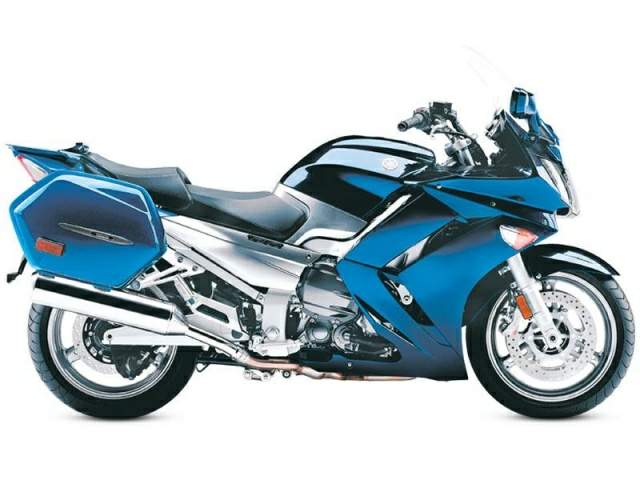
Yamaha FJR 1300A
Yamaha's long-running FJR1300 sports-tourer has been revised for 2006 with
new clothes, some intriguing chassis changes and, for Europe only, an
optional semi-automatic transmission . The new, larger headlights are individually
adjustable from inside the fairing and there's a 12-volt socket inside the
glove compartment on the left of the fairing – which also now locks when you
switch of the ignition. Anti-lock brakes, also previously an option,
are now standard, as is form of linked brakes Yamaha has called the unified
braking system (UBS).
First things first. The "automatic" FJR1300AE is not
an automatic. That's right, it features a manual transmission. The only
difference from a traditional motorcycle transmission is the automatic clutch.
The FJR1300AE requires manual gear changes (with the traditional left-foot
lever, or handlebar-mounted triggers) -- it is simply missing a clutch lever.
The motorcycle's computer controls engagement and disengagement of the clutch
(more about this later).
The re-designed, larger windscreen, with larger adjustment range, also proved a
big improvement. Prior FJR's tended to create a vacuum between the rider and the
windscreen -- effectively sucking the rider forward. This could be annoying, and
uncomfortable. The revised air management, and new windshield shape, seems to
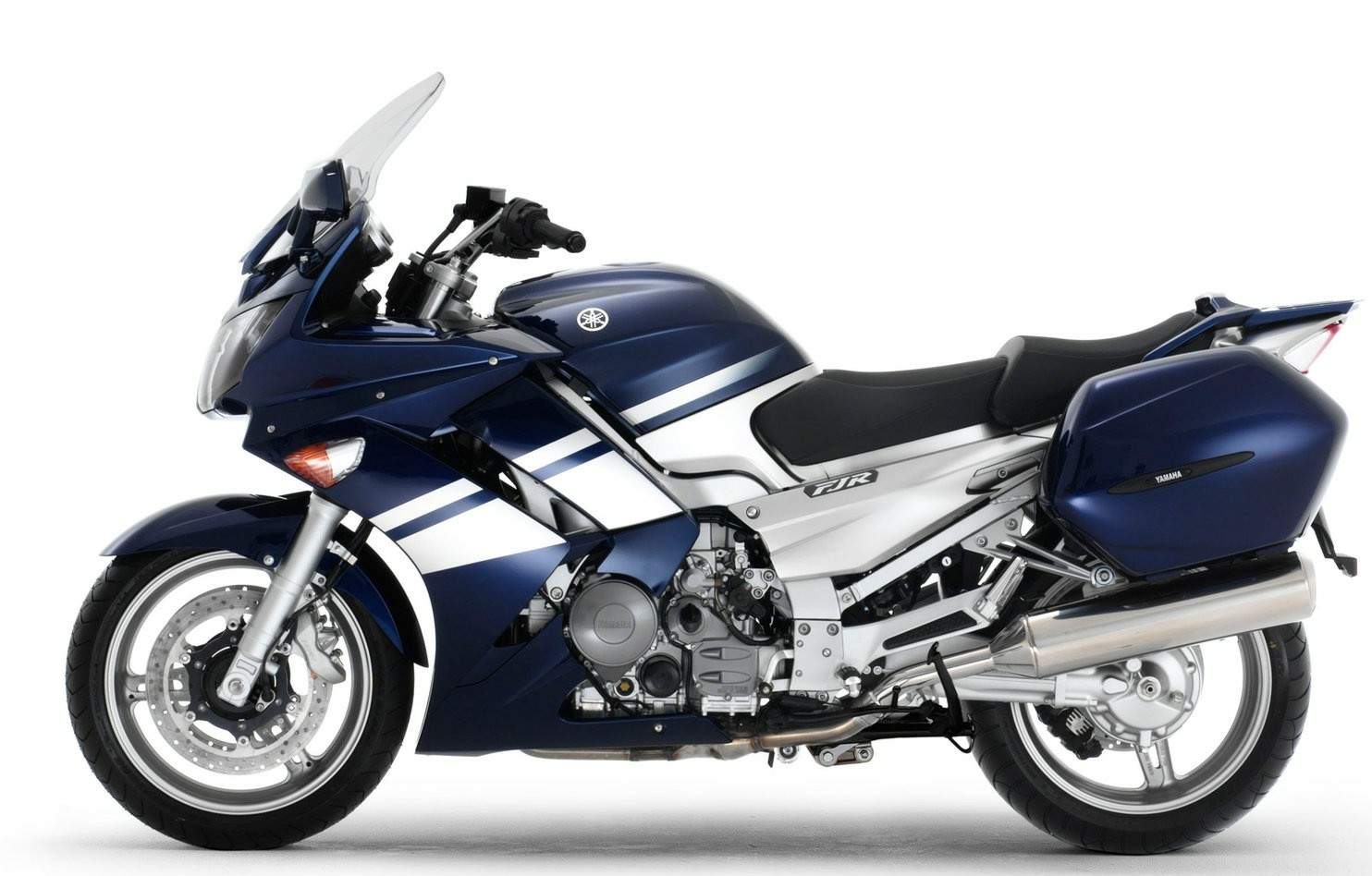
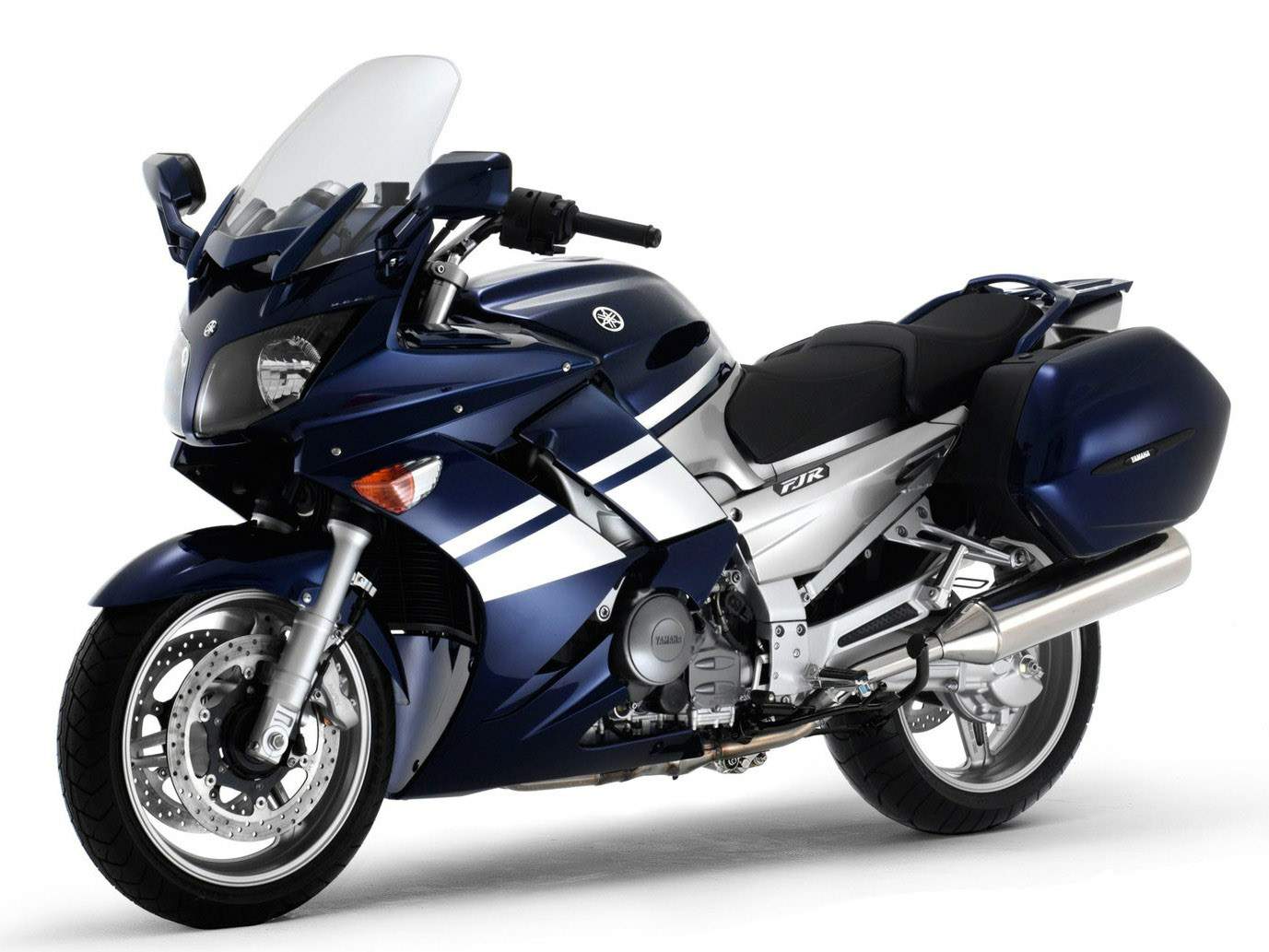
have solved this problem completely. Yamaha's long-running FJR1300 sports-tourer has been revised for 2006 with new clothes, some intriguing chassis changes and, for Europe only, an optional semi-automatic transmission . The new fairing allows a 40mm greater range of adjustment on the power-operated screen that now moves through 135mm vertically and 49.7mm fore and aft. A new mid-cowl on either side is adjustable over a range of 30mm to micro-manage the climate around the rider's and pillion's legs and a new central sub-screen duct channels cool air into the riding space to reduce wind pressure on the rider's body The new, larger headlights are individually adjustable from inside the fairing and there's a 12-volt socket inside the glove compartment on the left of the fairing – which also now locks when you switch of the ignition. Heatable grips are now standard and the handlebars are adjustable – although you need tools to do it – while the saddle can be mounted in a choice of two positions 20mm apart.
The footpegs have also been moved 20mm down and 40mm forward for a more relaxed ride. The previously optional panniers are now standard; for 2006 their mountings have been moved closer to the centreline of the bike so although they're actually bigger than the old ones, the bike is 50mm narrower than the previous model with cases in place. The 1298 cc / 79.2 cu-incc, 105kW engine and five-speed, shaft-drive transmission are unchanged but the swing-arm has been extended by 40mm to throw more weight on the front wheel Anti-lock brakes, also previously an option, are now standard, as is form of linked brakes Yamaha has called the unified braking system (UBS). In this set-up the footbrake pedal operates the rear brake and the lower two pistons on the right-side front calliper while the handlebar lever is responsible for the upper two pistons on the right and all four on the left. The net effect is that sports riders who do most of their braking with the front brakes won't feel the difference in the dry but riders at all levels will notice that the bike is steadier when using both brakes on wet tar. First things first. The "automatic" FJR1300AE is not an automatic. That's right, it features a manual transmission. The only difference from a traditional motorcycle transmission is the automatic clutch. The FJR1300AE requires manual gear changes (with the traditional left-foot lever, or handlebar-mounted triggers) -- it is simply missing a clutch lever. The motorcycle's computer controls engagement and disengagement of the clutch (more about this later). The first thing you may notice is new plastic. Body work changes are not just cosmetic. Air-management changes are designed to keep the rider cooler and reduce the "negative pressure" (vacuum effect) behind the windscreen. Among many detail changes, the fairing side panels in front of the rider's legs feature 1.2 inches of adjustability. FJR ergos are also adjustable this year. The new FJRs feature an adjustable seat (up or down by nearly an inch) and adjustable handlebar pull back angle (a 1/2 inch range with 3 possible positions). Both versions of the new FJR receive a larger windscreen with a wider range of adjustability (still electrically adjustable via handlebar thumb control). Slightly taller gearing reduces engine rpm while cruising on the freeway, and your passenger should be more comfortable on long rides with repositioned footpegs (1-1/2 inches forward, and 1/2 inch wider from the center line of the bike). From my perspective, among the most significant changes is the new swingarm which is 1.3 inches (35mm) longer than last year. Big deal? This is clearly the best handling FJR1300, yet.
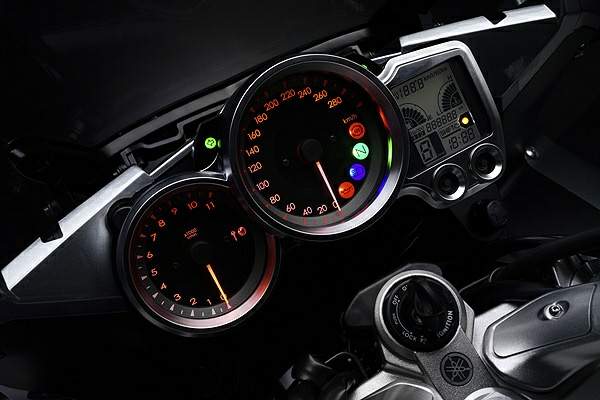
Yamaha stiffened the suspension of this bike back in 2004, and it made a large improvement in the way the original FJR1300 handled. The longer swingarm seems to have taken handling to yet another level -- adding both stability and improved cornering. A new instrument panel is not only extremely legible, and logically laid out, it now features additional, useful information like gear position, real-time fuel consumption and ambient air temperature. Another very practical and welcome change is the narrowing of the bike at its widest point. With bags attached, the new FJR1300 is two inches narrower than last year's model. Here in California, we are allowed to "split traffic", and most experienced riders do so. The old model frequently made you nervous about scraping the bags while splitting traffic. Two inches is a big deal, trust me. The re-designed, larger windscreen, with larger adjustment range, also proved a big improvement. Prior FJR's tended to create a vacuum between the rider and the windscreen -- effectively sucking the rider forward. This could be annoying, and uncomfortable. The revised air management, and new windshield shape, seems to have solved this problem completely. As it has for several years now, the FJR1300 features a sweet motor. Tons of power for a sport tourer (a claimed 141.4 horsepower and 99.1 pound feet of torque at the crank) is delivered smoothly and over a broad, usable range. A slight fuel injection surge from closed throttle to open throttle seemed to disappear with more time on the bike (particularly, the manual clutch version). The bike handled predictably and entertainingly through virtually every type of riding condition -- from high-speed, straight-line travel on the freeway to tight (and I mean very tight) switchbacks on a mountain road. Yamaha really has the suspension dialed on this bike, and it felt controlled during sport riding, as well as comfortable while touring. The bike also changes directions remarkably well -- hiding its considerable heft. Tweaks to the styling have really spruced up the look of the FJR, with the dual stalk rearview mirrors immediately coming to mind. The fit-and-finish of the FJR1300 is first rate, and it is a handsome bike that most owners would be proud to be seen on. Luggage capacity is apparently unchanged from prior years, with mounting points being the only difference (affording the 2 inch narrower width). The lockable bags still work well, opening and closing in a logical, efficient manner -- and offering space for a large helmet. I did not play with the ergonomics of the FJR1300 during our 1-day test.
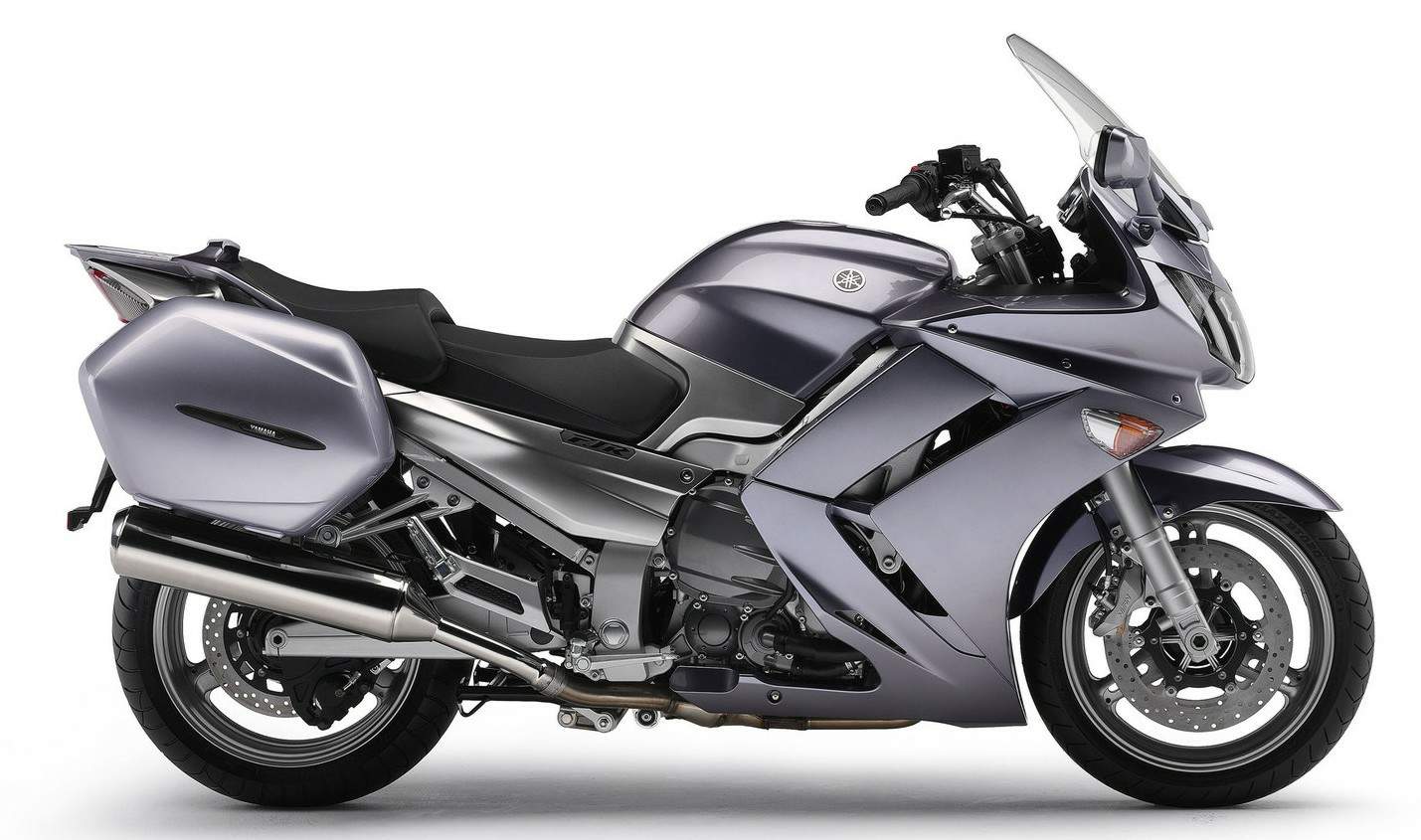
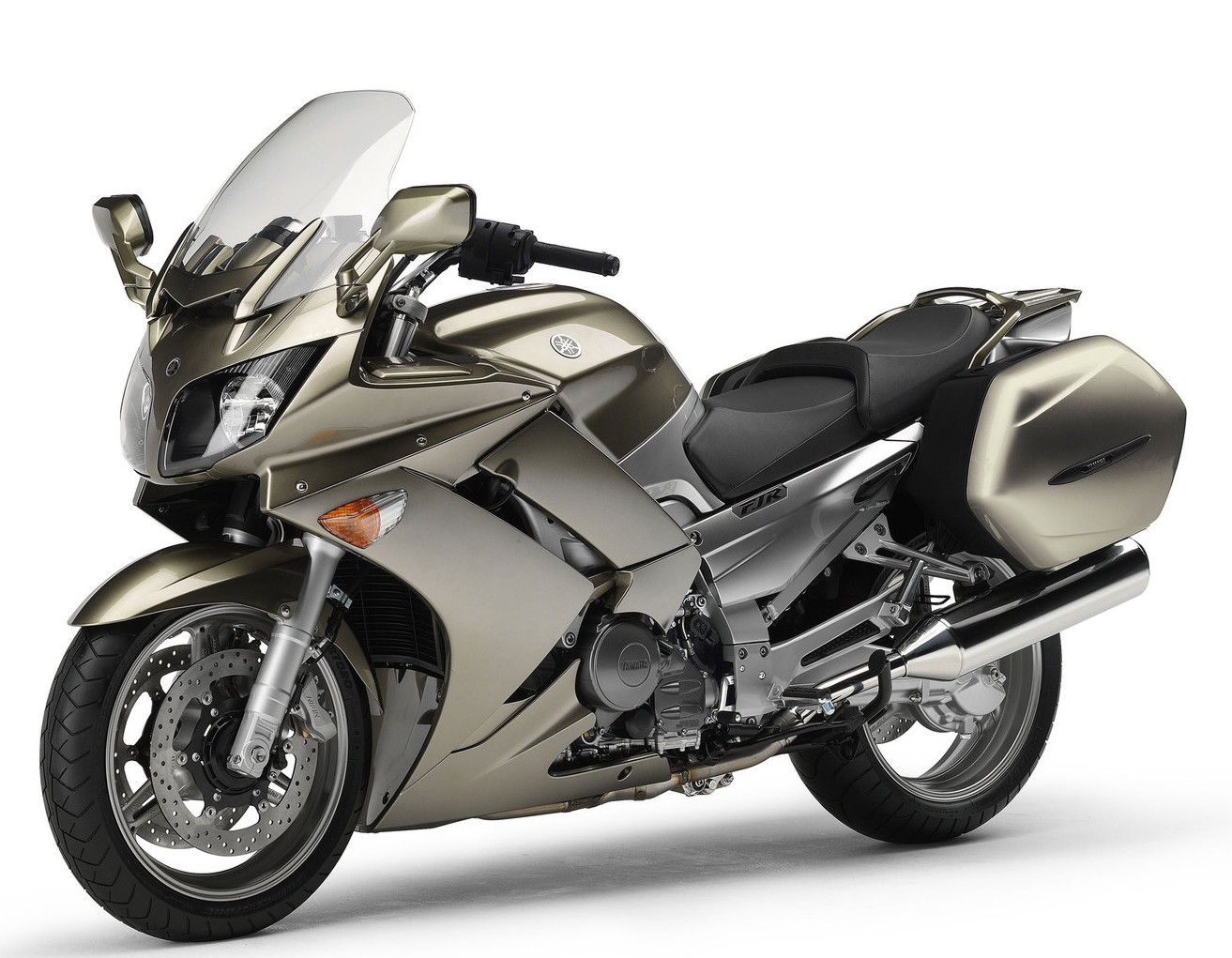
The stock settings (neutral settings for both bars and seat) were plenty comfortable for my 5'10" frame. It is nice to know that they are adjustable, nonetheless. All of the FJRs this year come with ABS and linked brakes. I don't generally like linked brakes (many experienced riders don't like them), but the Yamaha system works as advertised, and attempts to be as transparent as possible. Only the rear brake is linked (activating only one of the two front brake calipers). The front brake is completely independent. What about the automatic clutch? Yamaha's stated goal was to expand its market by offering this feature on the FJR1300AE. The intent, apparently, was to capture more riders from the "luxury" end of the sport touring spectrum. I started out riding the standard FJR1300 -- with a traditional manual clutch. After warming up on that bike, I jumped on the automatic clutch 1300AE model (which is silver -- the standard model is blue). I have ridden a number of scooters with automatic transmissions, and did not expect to have too much trouble adapting to a bike without a clutch. The FJR1300AE does not feel, or react, like a clutchless scooter, however. There are a couple of logical reasons for this. First of all, the scooters I am comparing it to are true automatics. That is, the transmission is an automatic (making gear changes automatically, not manually, like the FJR does). Second, the clutch mechanism on an automatic transmission scooter is different from the FJR "automatic clutch". As Yamaha describes it, the 1300AE features a standard manual transmission (identical to the manual clutch version) with a computer controlled clutch. The easiest way to think about it is by thinking about a computer that pulls the clutch in for you when you make gear changes, and lets it out smoothly after those gear changes. The computer will also magically "pull the clutch lever" when you come to a stop or when you are in danger of stalling the engine. If you are like me, with decades of riding experience -- all on motorcycles with traditional, manual clutches, at first, you probably won't like the FJR1300AE. The key words are "at first". It definitely takes some getting used to. The bike reacts differently is certain situations, and this is initially annoying. To begin with, it is going to feel odd without a clutch lever on the bike. If you have scooter riding experience, as I do, this is not such a big deal. Shifts can be made either with the push buttons near the left handgrip, or in the traditional lever position with the forefoot. The first time I got on the 1300AE, taking off from a stop seemed to be relatively smooth -- the computer manipulating the clutch at a fairly intuitive point after rolling on the throttle in first gear. I was immediately up to speed and then on the freeway, playing with gear changes at closed throttle, part throttle and even wide open throttle. The computer-controlled clutch seemed to deal with all of these well, and I marvelled at Yamaha's software programming prowess.
After a while, riding around without having to manipulate a heavy clutch (and the pull on this 1300cc machine is fairly heavy) seemed like cheating. It was a welcome reduction in effort. The first real issues I had with the automatic clutch came when we stopped to take photographs. Like virtually every other press intro, we stopped in a scenic mountain area, requiring journalists to file by a photographer one-by-one, make a u-turn in a somewhat unsafe position on a narrow, winding road, and repeat the process. It was those u-turns that drove home the importance of the finesse an experienced rider utilizes with a manual clutch -- smoothing out power pulses and fuel injection surges at low rpm. Without a traditional clutch, the FJR1300AE felt jerky, and a bit difficult to control in some of these tight confines (including brief, off-road excursions to complete the u-turns on the narrow roads). In time, however, I came to adjust my own riding technique to smooth out low speed operation. It essentially became a non-issue, but not until I had ridden the automatic clutch version for an hour or so. I learned to use the brakes to control unwanted surges -- sort of like I would use a manual clutch to do the same thing. In the end, low speed operation of the FJR1300AE really didn't bother me too much, but I think the skill level required at low speed is almost greater than with a manual clutch. As I said earlier, the computer programming seemed well-sorted, and you really couldn't get the machine to misbehave once underway. Up shifts and down shifts were quite smooth, and the machine will refuse to down shift if you attempt it at a speed too high for the particular gear you are trying to select. Although the bike does not automatically "rev match" down shifts, it manages to complete them pretty smoothly -- about as smoothly as most experienced riders would. You do need to remember that this is a fully manual transmission. The bike stays in the gear you select, even when you come to a stop. If you come to a stop in fifth gear, you will be in fifth gear when you attempt to take off (and it won't work very well). The gear indicator will flash -- warning you that you are stopped and not in first gear. Of course, if you are dumb enough to be in a taller gear, you probably aren't paying attention to the flashing indicator on the dash. The bike will not stall if you are going too slowly in a tall gear. The clutch will activate, and keep the engine running. As far as I could tell, the computer-controlled electronic clutch seems to mimic the decisions made by an experienced rider -- with the exception of the subtle clutch slipping a rider might utilize at lower speeds as discussed earlier. The more I rode the automatic clutch version of the FJR, the more I liked it. In fact, at the end of the day, facing the prospect of a long drone back to the hotel (roughly 80 miles), I looked for the FJR1300AE, and avoided the version with the manual clutch (it didn't feel like it had a heavy clutch pull before riding the automatic clutch version, but it felt very heavy afterwards). I was a bit disappointed when the Yamaha rep asked me to leave the automatic-clutch version behind for other journalists to ride. The bottom line is that I had figured out how to ride the automatic clutch version well enough that I was ready to enjoy the reduction in effort it offered. I suppose this is exactly what Yamaha intended. On the other hand, I am not sure that I would purchase the automatic clutch version if I were in the market for an FJR1300. I have been riding bikes too long, and I don't mind a manual clutch at all. Furthermore, there are subtle things I do with a manual clutch that I just can't duplicate on the automatic clutch version. In the end, I can see why some riders (focused on a more luxurious-heavyweight tourer type of experience) might choose the automatic clutch FJR1300AE. It seems like an interim step to me, however, as the fully automatic, large displacement scooters I have ridden appear to offer the ultimate "luxury touring" experience. Roll the throttle on and go; control both brakes with your hands. I like that, and I think that's where touring bikes will eventually end up. In the end, the Yamaha FJR1300 remains an outstanding sport touring motorcycle -- with significant, useful changes for 2006. Experienced, aggressive riders should steer themselves towards the traditional clutch version, in my opinion, which is substantially cheaper at the same time. Some riders may enjoy the benefits of the automatic clutch on the FJR1300AE (which essentially amounts to less effort), but if "luxury touring" is their bent, they might be better off waiting for a fully automatic sport tourer sometime down the road. The FJR1300 A and AE are available through prior order at your U.S. Yamaha dealer. The bike will again be available in limited numbers through pre-order. MSRP for the FJR1300A is $13,499, while the FJR1300AE is $15,299. Source Motorcycle Daily
Tweaks to the styling have really spruced up the look of the FJR, with the dual
stalk rearview mirrors immediately coming to mind. The fit-and-finish of the
FJR1300 is first rate, and it is a handsome bike that most owners would be proud
to be seen on.
Source Motorcycle Daily
|
|
|
Any corrections or more information on these motorcycles will be kindly appreciated. |