|
|

|
|
|
|
Classic Bikes
Custom Bikes
Individual
Racing Bikes AJP
AJS
Aprilia
Ariel
Avinton / Wakan
Bajaj
Benelli
Beta
Bimota
BMW
Brough Superior
BRP Cam-Am
BSA
Buell / EBR
Bultaco
Cagiva
Campagna
CCM
CF Moto
Combat Motors
Derbi
Deus
Ducati
Excelsior
GASGAS
Ghezzi Brian
Gilera
GIMA
Harley Davidson
Hero
Highland
Honda
Horex
Husaberg
Husqvarna
Hyosung
Indian
Jawa
Kawasaki
KTM
KYMCO
Laverda
Lazareth
Magni
Maico
Mash
Matchless
Mondial
Moto Guzzi
Moto Morini
MV Agusta
MZ / MuZ
NCR
Norton
NSU
Paton
Peugeot
Piaggio
Revival Cycles
Roland Sands
Royal Enfield
Sachs
Sherco
Sunbeam
Suzuki
SWM
SYM
Triumph
TVS
Ural
Velocette
Vespa
Victory
Vincent
VOR
Voxan
Vyrus
Walt Siegl
Walz
Wrenchmonkees
Wunderlich
XTR / Radical
Yamaha
Zero
Video
Technical
Complete Manufacturer List
|
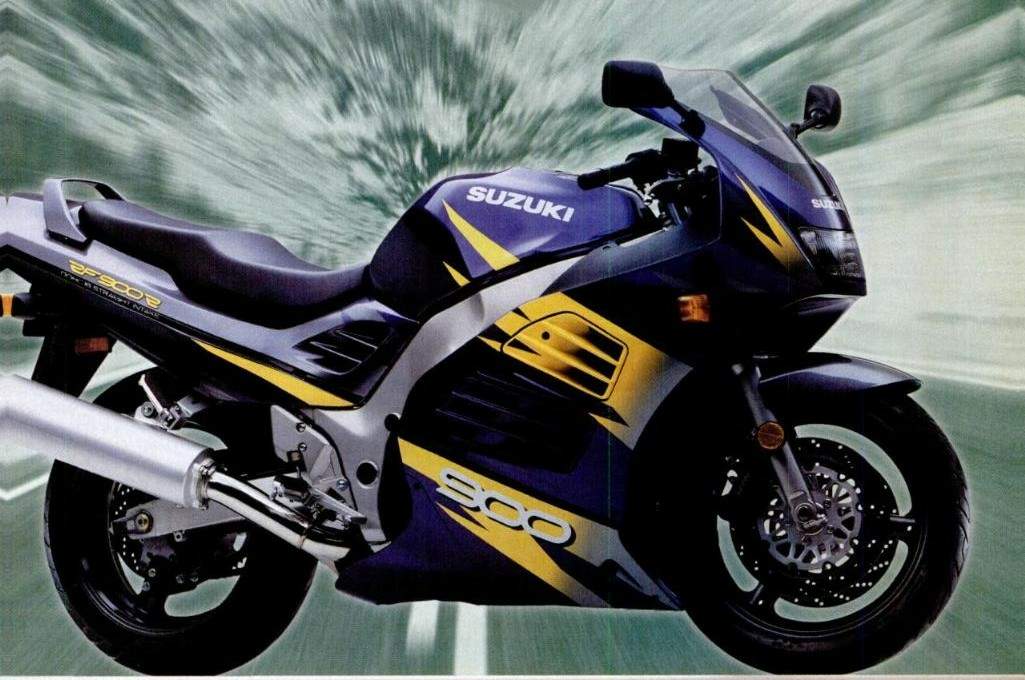
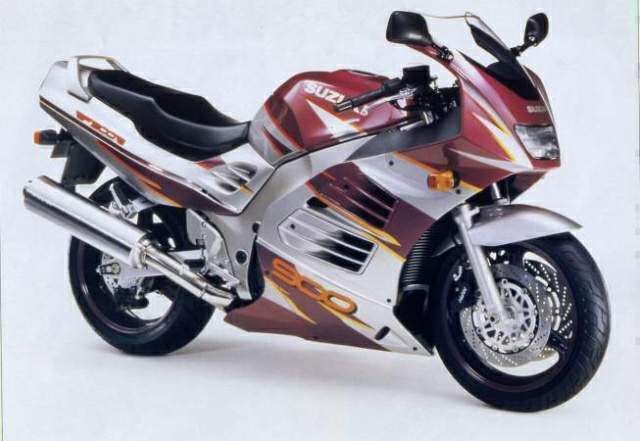
Suzuki RF 900RS2
Suzuki's RF900R seemed like a strange machine to launch when it appeared in 1994. The litre-class sportsbike market was dominated by Honda's CBR900RR FireBlade, and Suzuki's own GSX-R1100 was a highly developed sports machine, with massive power from its water-cooled engine. The distinctively styled RF900R with its steel frame and RF600 looks seemed like a distraction from the GSX-R range
However, when the first bikes appeared in showrooms, riders were immediately won over by the RF900. It had a winning combination of flexible engine power, comfortable riding position, decent handling and capable braking. The 16-valve liquid-cooled engine was all-new, and it produced its 93kW (125bhp) in a very user-friendly manner, with a broad spread of power all the way through the rev range.
The steel beam frame was used to save money over lighter, more sporting aluminium designs, but it is very stiff, and hasn't made the RF too heavy. The braking from the four-piston front brake calipers is impressive, with strong, progressive action. The suspension is rather firm when ridden solo, but with a pillion and a weekend's luggage it begins to work much better. Handling through twisty bends is impressive, with easy, neutral steering, good ground clearance and strong power instantly on tap to pull the rider through the bends.
Used as a fast budget sports tourer, the RF900 will not disappoint. The large dual-seat unit provides comfortable accommodation for two, the wide fairing gives good weather- and wind-protection and the 21-litre (4.6 gal) fuel tank easily gives 320km (200 miles) between refuelling stops at touring speeds.
Produced between 1994 and 1999, the RF was a good seller for Suzuki, however its uncertain identity placed it between two stools. It did not have the performance to match committed sportsbikes like Honda's CBR900RR or Suzuki's own GSX-R range, nor the dedicated touring ability of a large-capacity tourer. Whatever the reasons, the RF was not replaced by an updated model when Suzuki discontinued it. The RF900R has one major downfall, most people do not like the way it looks, I think it looks OKAY, some love it, most loathe it. But after you get past that first impression and have ridden the 937cc sports-tourer - opinions can change quickly. The RF9 was designed to fill the gap between Suzuki's all out fang machine, the GSXR-750 and the long in the tooth GSXR 1100. It fulfils this role quite well and is a far superior package to the GSXR-11. Fuel range from the 21 litre tank (16 main, 5 reserve) can be stretched to around 300 kilometres when exercising restraint or can be drained in around 220 kilometres if you let yourself get carried away. The dash layout is simple and uncluttered, although how Suzuki's low-spec GSX750F can get a fuel gauge, while the RF can't, I will never know. The horn is so pitiful it isn't even worth trying to use it. Suspension had little adjustment to offer up the front, preload is the only offering up the pointy end, while out back you have 7-way preload, step less compression damping adjustment and 4-way adjustable rebound damping. I didn't really find that much appreciable difference could be felt between the settings, unlike bikes with higher spec' suspension. The suspension does acquit itself admirably when a few bumps are thrown in to the equation, the RF9 shrugs them off as though they weren't there and instils supreme confidence in the rider. The RF does not have the technological brilliance of the VFR 800, but would well and truly shame the VFR when the time comes to press on a bit quicker than socially responsible. Source MCNEWS
|
|
|
Any corrections or more information on these motorcycles will be kindly appreciated. |