|
|

|
|
|
|
Classic Bikes
Custom Bikes
Individual
Racing Bikes AJP
AJS
Aprilia
Ariel
Avinton / Wakan
Bajaj
Benelli
Beta
Bimota
BMW
Brough Superior
BRP Cam-Am
BSA
Buell / EBR
Bultaco
Cagiva
Campagna
CCM
CF Moto
Combat Motors
Derbi
Deus
Ducati
Excelsior
GASGAS
Ghezzi Brian
Gilera
GIMA
Harley Davidson
Hero
Highland
Honda
Horex
Husaberg
Husqvarna
Hyosung
Indian
Jawa
Kawasaki
KTM
KYMCO
Laverda
Lazareth
Magni
Maico
Mash
Matchless
Mondial
Moto Guzzi
Moto Morini
MV Agusta
MZ / MuZ
NCR
Norton
NSU
Paton
Peugeot
Piaggio
Revival Cycles
Roland Sands
Royal Enfield
Sachs
Sherco
Sunbeam
Suzuki
SWM
SYM
Triumph
TVS
Ural
Velocette
Vespa
Victory
Vincent
VOR
Voxan
Vyrus
Walt Siegl
Walz
Wrenchmonkees
Wunderlich
XTR / Radical
Yamaha
Zero
Video
Technical
Complete Manufacturer List
|
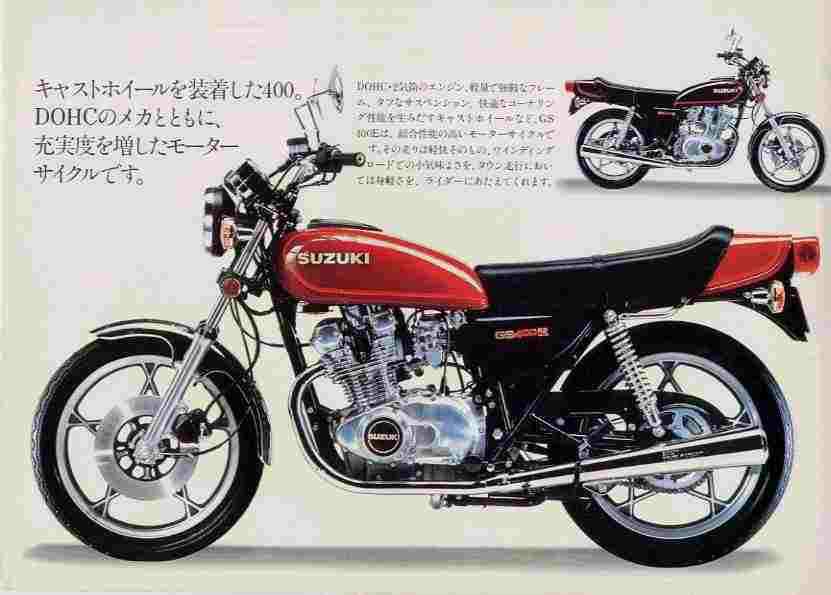
Suzuki GS 400E
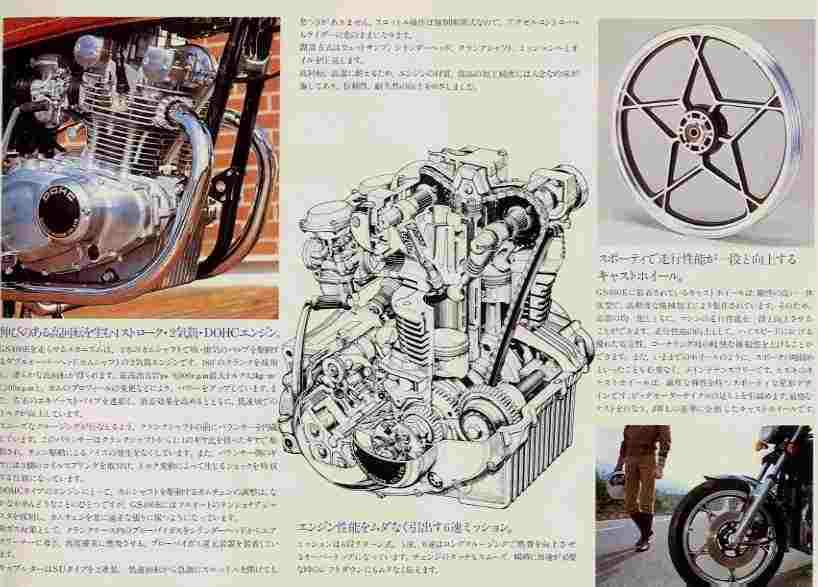
Source CYCLE BUYERS GUIDE 1978 Time has worked in Suzuki's favor. As a latecomer to the twin-cylinder, four-stroke 400cc market, Suzuki was both aware of their competitors' progress and able to begin with a fresh sheet of paper. Suzuki designers, utilizing their latest technological advances, made the GS400 a celebration of mechanical connections. The bike employs double overhead camshafts very similar in pattern to the GS750. The GS400 has the same bore—65mm— as the 750, and identical cam timing. The smaller GS has a gear-driven counter-balancer in its 180-degree twin engine and cannot develop chain slop to upset balancer phasing. By way of techno-trickle-down, the Suzuki has been strengthened in the areas of rider comfort, suspension compliance and handling. Motorcycle comfort relates primarily to considerations in three areas: overall fit and feel of the motorcycle, including saddle comfort, handlebar and peg positions; suspension compliance, or the ability of the suspension components to respond to pavement irregularities; and vibration control.
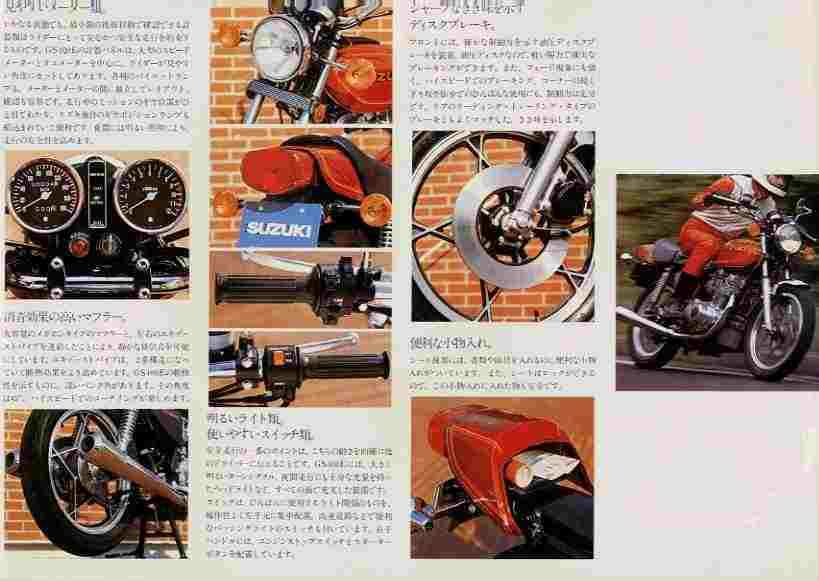
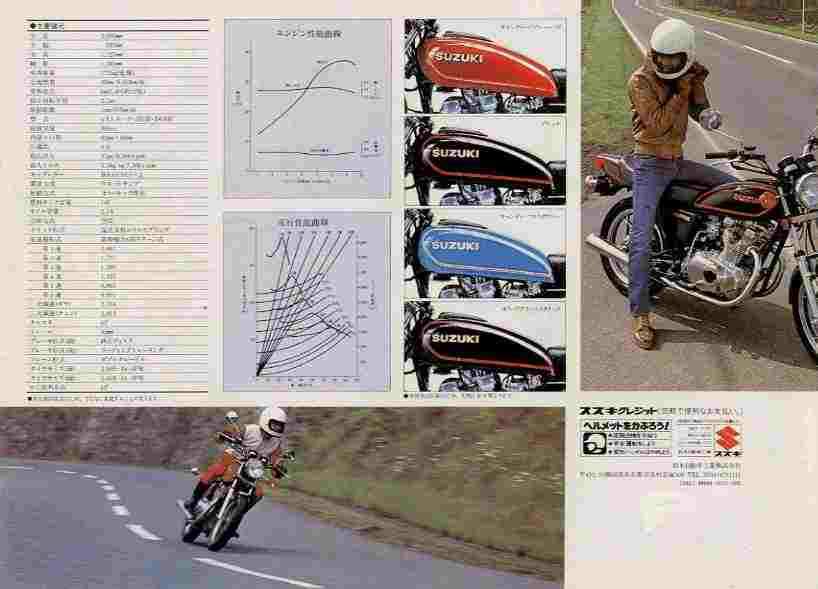
In the past, the Suzuki created a negative first impression in the area of overall fit and feel: the Suzuki seat—on the 1977 GS400—burned a hole in the average backside within 50 miles. However, for 1978, Suzuki is replacing the seats on the entire GS line; the GS550 and 750 have shared the same ailment. On the positive side, the handlebar position is good and Suzuki's sportier seating position directs the rider's feet up and back. The bike also has nice soft grips. And, in noticing details, we recommend some practice in using the kill switch: its roller action is inferior to a flip switch design. Suzuki has an up-to-date suspension system which goes beyond being merely soft; it is supple. Front fork stiction has been eliminated; the bike floats over minor ripples in the highway and responds equally well to larger pocks. Even on minimum pre-load, the Suzuki feels taut but controlled at the rear. The bike's Conestoga Wagon seat may have as much to do with that taut feeling as the rear shocks. The GS400 goes down the quarter-mile straight at 87.20 mph and in 15.04 seconds. A willing and responsive unit, its engine is eager to run-and-gun between 6000 and 9000 rpm and sounds the part: it has a very throaty exhaust. Moreover, because the gear-driven counter-balancer is genuinely effective, and because Suzuki has rubber-mounted many components, a rider will find himself confidently using the smooth-running engine's top-end performance.
Although driveline slop continues to plague most Japanese motorcycles, the GS400 suffers only marginally in this regard. What little problem it has arises primarily from the 400's sensitive constant-vacuum carburetors, which slam down the throttle slides when the twist grip is rolled back slightly. Stable and wallow-free in corners, the GS refuses to hunt down freeway rain grooves, holds as steady in crosswinds as any 400-pound bike can manage, and performs with agility around town. In general, only heavy riders will experience bothersome ground-clearance problems. While our 200-pound staffers ground the pegs and hardware, lighter riders encountered no problems, providing they raised the ride height by pre-loading the rear shock springs. Tire crawl signallf proach of reasonable speed through corners. Furthermore, the ( uses a very good front disc brake a almost equally good rear drum I outclassed only by some compel rear disc brakes. Using low-lead or unleaded fuel i normal riding conditions, we avei around 50 mpg, a figure well within norm for motorcycles in the 400cc stroke class. Nevertheless, the most outstan feature of the GS400 is its smooth en While the Suzuki isn't the quickest, fa or lightest 400 money can buy, it is smoothest. And this lack of vibration gether with the compliant suspend goes a long way to make it a great motorcycle. Source CYCLE BUYERS GUIDE 1978
|
|
|
Any corrections or more information on these motorcycles will be kindly appreciated. |