|
|

|
|
|
|
Classic Bikes
Custom Bikes
Individual
Racing Bikes AJP
AJS
Aprilia
Ariel
Avinton / Wakan
Bajaj
Benelli
Beta
Bimota
BMW
Brough Superior
BRP Cam-Am
BSA
Buell / EBR
Bultaco
Cagiva
Campagna
CCM
CF Moto
Combat Motors
Derbi
Deus
Ducati
Excelsior
GASGAS
Ghezzi Brian
Gilera
GIMA
Harley Davidson
Hero
Highland
Honda
Horex
Husaberg
Husqvarna
Hyosung
Indian
Jawa
Kawasaki
KTM
KYMCO
Laverda
Lazareth
Magni
Maico
Mash
Matchless
Mondial
Moto Guzzi
Moto Morini
MV Agusta
MZ / MuZ
NCR
Norton
NSU
Paton
Peugeot
Piaggio
Revival Cycles
Roland Sands
Royal Enfield
Sachs
Sherco
Sunbeam
Suzuki
SWM
SYM
Triumph
TVS
Ural
Velocette
Vespa
Victory
Vincent
VOR
Voxan
Vyrus
Walt Siegl
Walz
Wrenchmonkees
Wunderlich
XTR / Radical
Yamaha
Zero
Video
Technical
Complete Manufacturer List
|
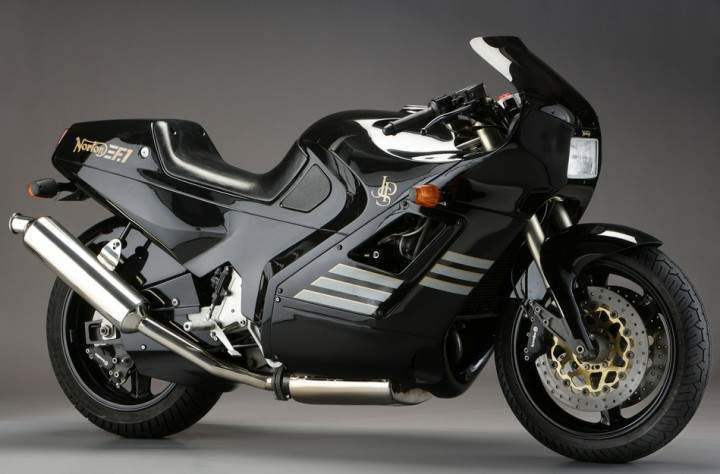
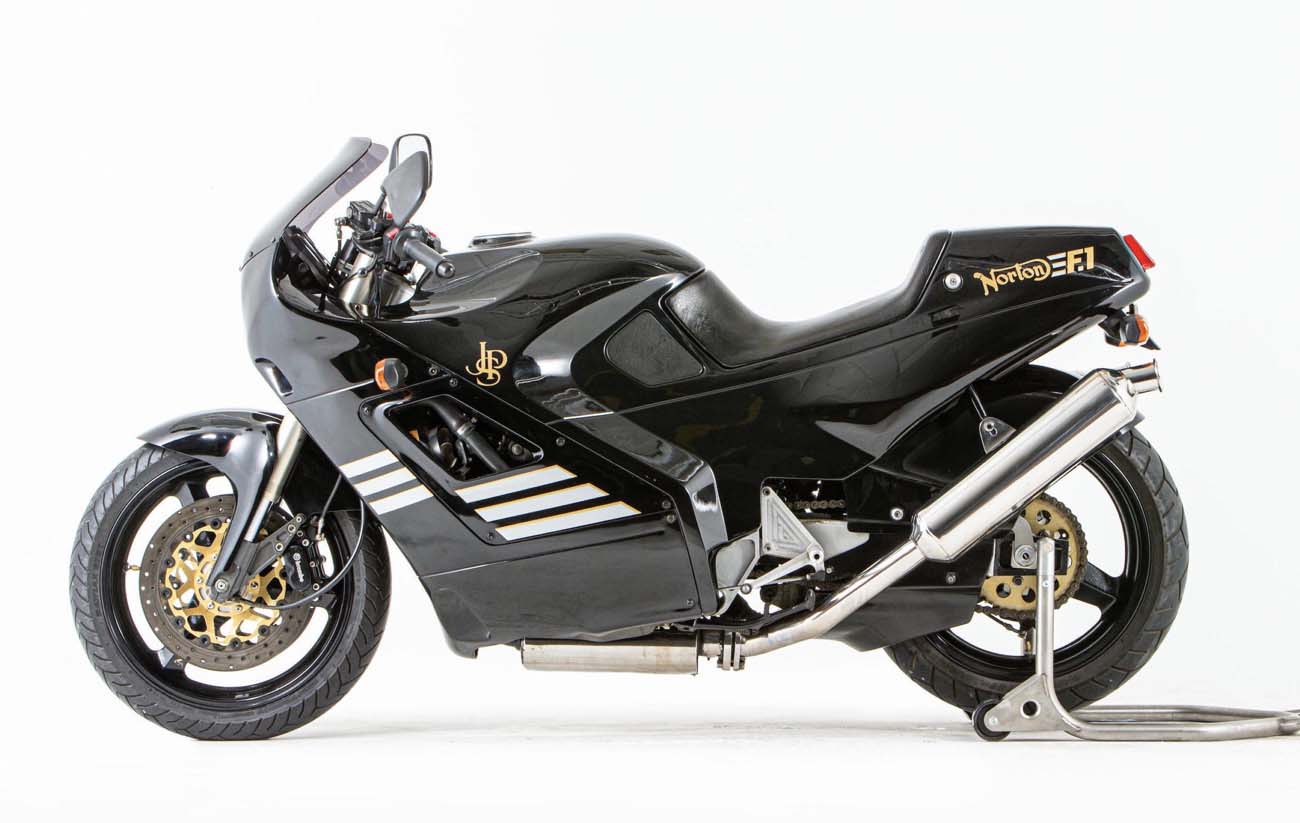
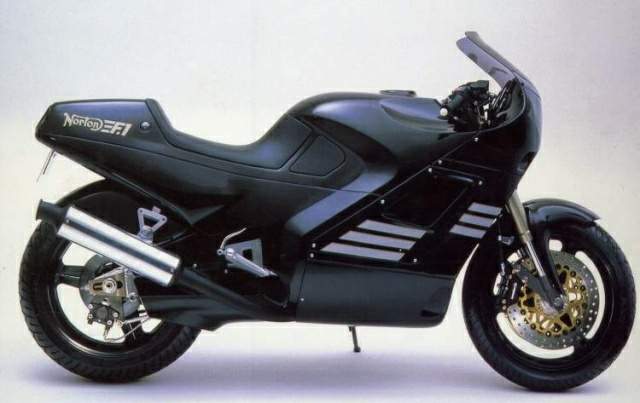
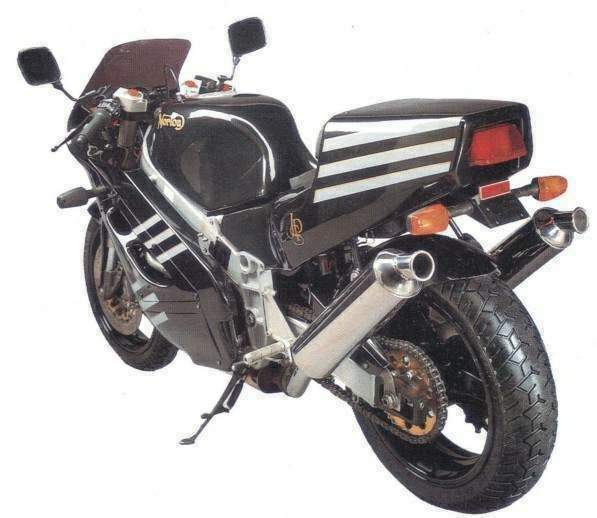
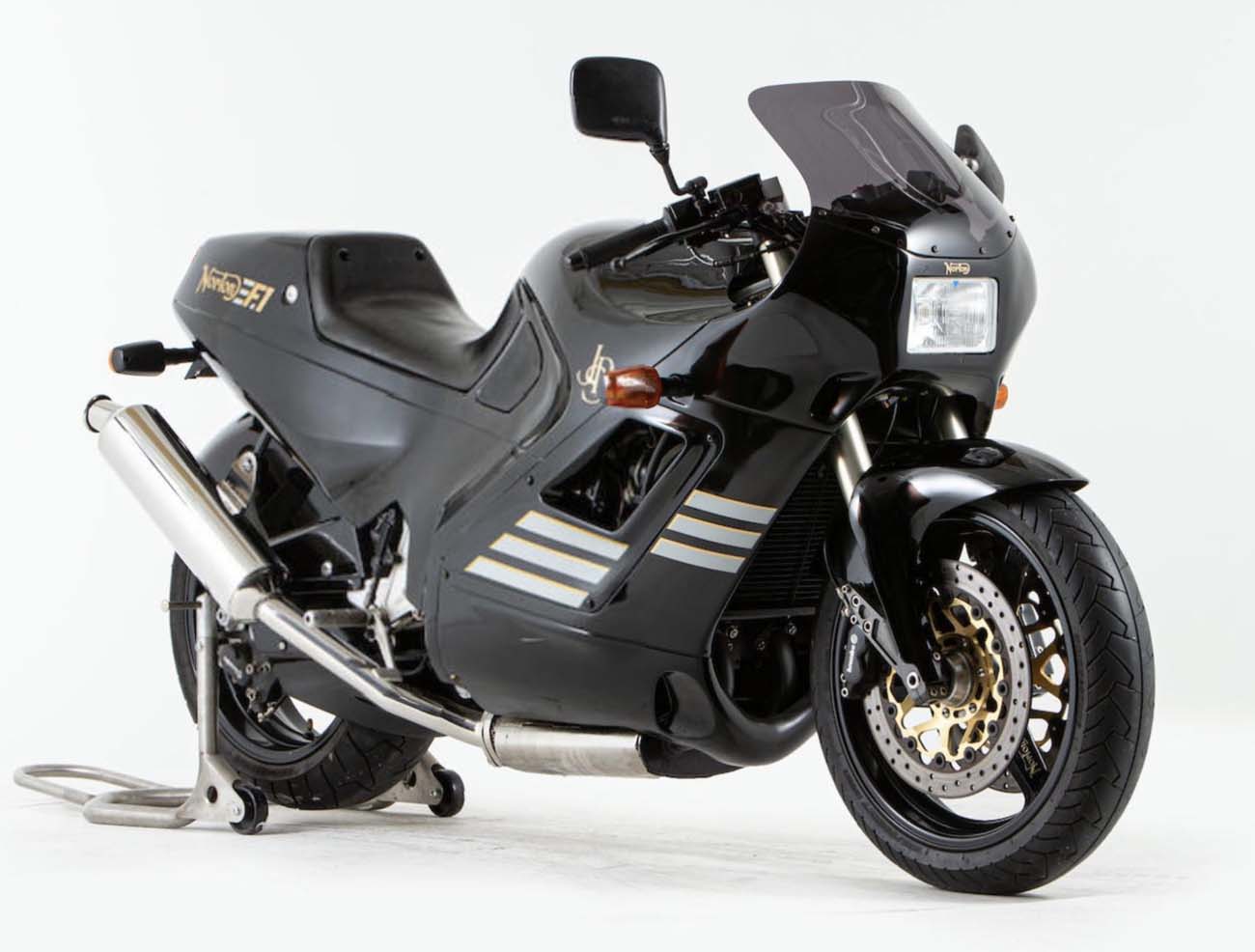
Norton F1 JPS
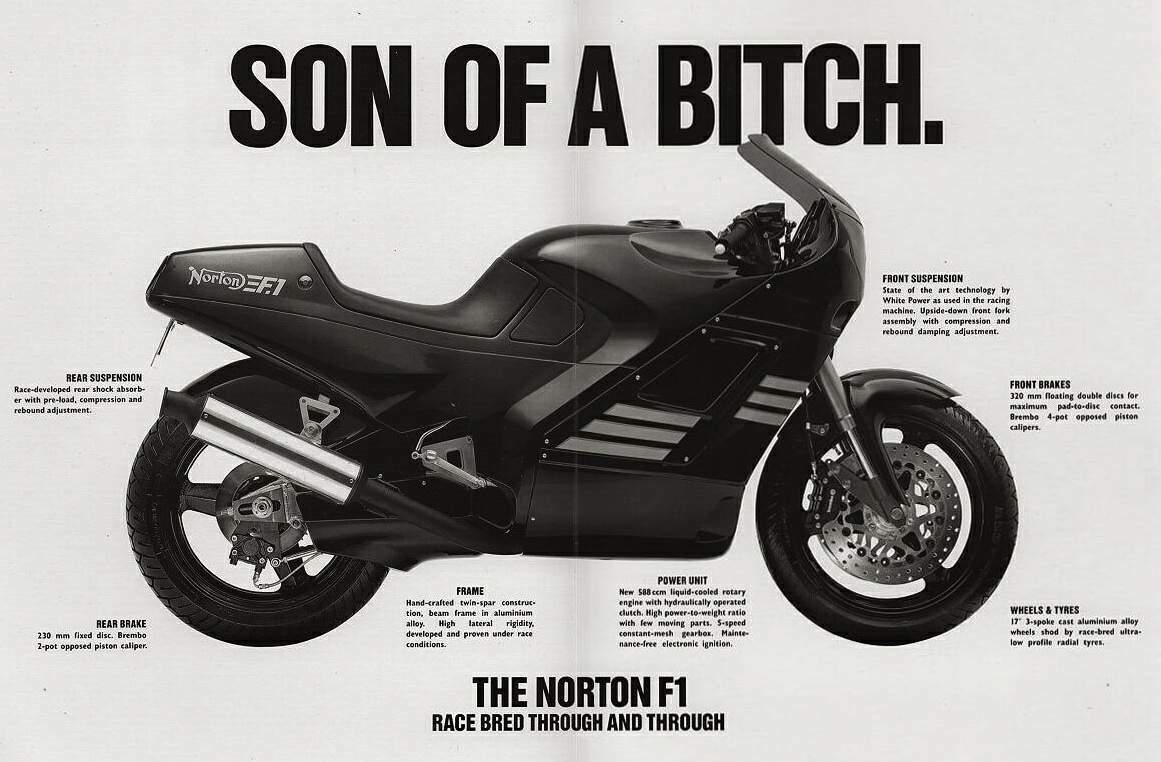
It was the howl that stayed in the memory; a smooth, high-pitched scream that ripped from twin mufflers as the Norton F1 rotary motor hit 6000rpm and surged toward the redline with renewed thrust. The F1 distinctive exhaust note emphasized that this bike was different not only from previous Nortons but also from every other sportster ever built. The launch of the F1 in 1990 was remarkable in itself. Norton's comeback had begun a few years earlier with the release, after 15 years of rotary development, of the Classic roadster. The touring Commander followed, and public interest in Norton snowballed when enthusiastic workers built an alloy-framed rotary racer that won two national championships in 1989. A roadgoing version was the obvious next step. The F1 was powered by a Commander engine, turned back-to-front, fitted with Mikuni carburetors and uprated with the five-speed gearbox from Yamaha's FZR1000. Enlarged ports and revised timing helped lift output from 85 to 95bhp at 9500rpm. The frame, built by local specialists Spondon Engineering, was similar to the race bike's but stronger and had slightly more conservative steering geometry. Dutch firm White Power provided the multi-adjustable upside-down forks and shock. Brembo brakes and Michelin radials completed an up market package.
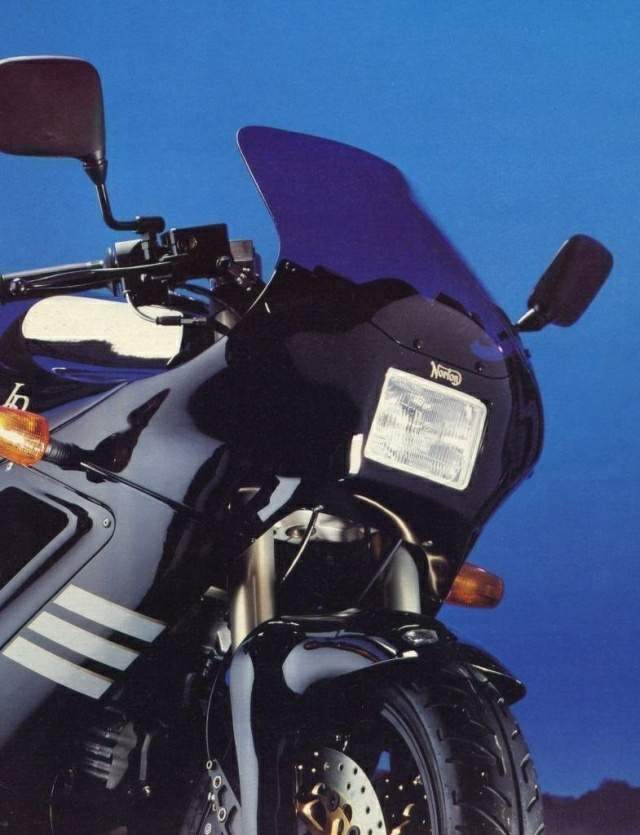
Styling incorporated smooth bodywork that hid much of the technology but left space for the cigarette-packet logos of race-team sponsors JPS. Riding position was sporty, with wide clip-ons and a single seat. The F1 power and weight figures were similar to a typical Japanese 600, and so was its 145mph to the road, the rotary felt totally different, though, smoothness, generous midrange punch and high-rev howl. But there were rough edges; was thirsty, its engine snatched at low revs and were overheating, and ground clearance was poor. The hand-built F1 was also extremely expensive. Norton addressed this a year later with the slight F1 Sport, which used simpler bodywork and lower parts. The Sport was a little less sleek and sophisticated, but like the F1, it was quick, agile and distinctive. Source of review: Roland Brown
The world’s only rotary-engined superbike was
hyper-expensive – about US$45,000 back in the early ’90s – but went like blazes.
Unlike a conventional piston driven engine, the F1’s 588cc, liquid-cooled rotary
engine had no reciprocating mass, and produced 95bhp@9500rpm in a smooth, linear
fashion. The Norton F1 RCW588 won the British F1 series in 1989, and the bike
was also raced in the Isle of Man TT races. The British Motorcycle Land Speed
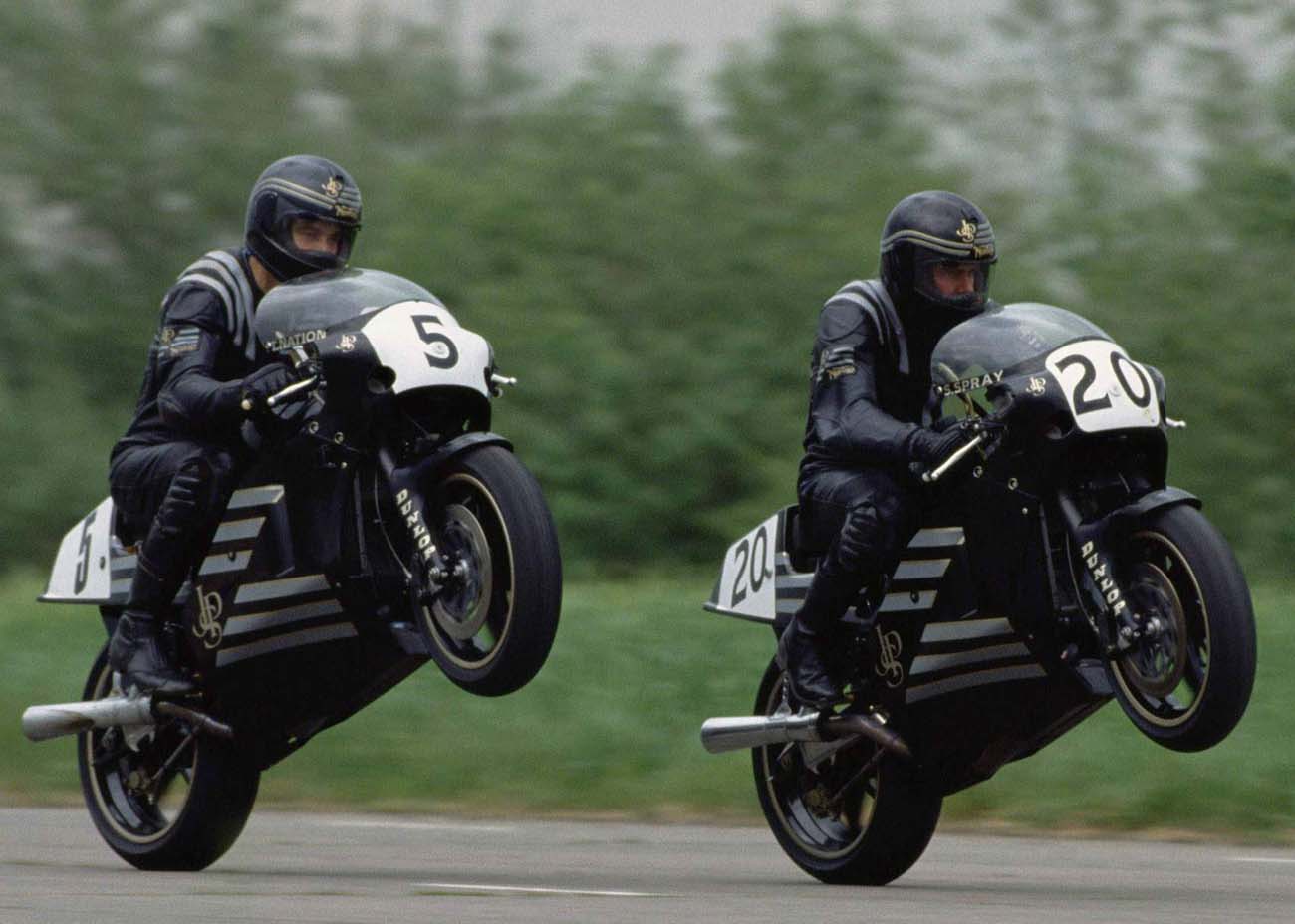
Record was also set at 307km/h in 1991 using a Norton rotary engine. Steve Spray
and Trevor Nation were the two British riders who raced the F1 successfully in
various events in the UK. Overview Back in the late-1980s / early-1990s, the rotary-engined Norton F1 was pretty much the most exotic superbike in the world. Yes, there were others, like the Honda RC30, Yamaha OW01 and the Bimota YB4, but none of those machines had what the Norton F1 had - a 588cc liquid-cooled twin-rotor rotary engine that revved like crazy, producing a frenzied 85bhp and pushing the bike to a top speed of 225kph. The F1's successor, the F1 Sport was even more powerful and racing versions of the bike notched up many race wins, including a particularly memorable win at the 1992 Isle of Man TT. With its Spondon-designed aluminium twin-spar chassis, PVM wheels, Brembo brakes and adjustable WP suspension, the Norton F1 definitely wasn't messing around - it meant business. We've always been big fans of the
Norton F1. Apart from its rotary engine, we also love its styling - the F1's
fully-enclosed fairing and its iconic black, gray and gold 'John Player Special'
paintjob make it stand out from from other 1980s/1990s machines. The bike was
designed by British designers, Richard Seymour and Dick Powell of seymourpowell,
a London-based industrial design outfit that was set up in 1984. We thought it
would be fascinating to get their take on the Norton F1 now, about 25 years
after the machine was launched. So we sent them a few questions, and here are
some excerpts from what Dick Powell, co-founder of
seymourpowell, had to
say about the legendary Norton F1: On how it all started
On problems with the Wankel rotary engine and how they dealt with those
problems
On the design brief given to them by Norton, for designing the F1
Norton F1 JPS On the Norton F1's fully-enclosed fairing and its futuristic design
On his thoughts on current Norton motorcycles
|
|
|
Any corrections or more information on these motorcycles will be kindly appreciated. |