|
|

|
|
|
|
Classic Bikes
Custom Bikes
Individual
Racing Bikes AJP
AJS
Aprilia
Ariel
Avinton / Wakan
Bajaj
Benelli
Beta
Bimota
BMW
Brough Superior
BRP Cam-Am
BSA
Buell / EBR
Bultaco
Cagiva
Campagna
CCM
CF Moto
Combat Motors
Derbi
Deus
Ducati
Excelsior
GASGAS
Ghezzi Brian
Gilera
GIMA
Harley Davidson
Hero
Highland
Honda
Horex
Husaberg
Husqvarna
Hyosung
Indian
Jawa
Kawasaki
KTM
KYMCO
Laverda
Lazareth
Magni
Maico
Mash
Matchless
Mondial
Moto Guzzi
Moto Morini
MV Agusta
MZ / MuZ
NCR
Norton
NSU
Paton
Peugeot
Piaggio
Revival Cycles
Roland Sands
Royal Enfield
Sachs
Sherco
Sunbeam
Suzuki
SWM
SYM
Triumph
TVS
Ural
Velocette
Vespa
Victory
Vincent
VOR
Voxan
Vyrus
Walt Siegl
Walz
Wrenchmonkees
Wunderlich
XTR / Radical
Yamaha
Zero
Video
Technical
Complete Manufacturer List
|
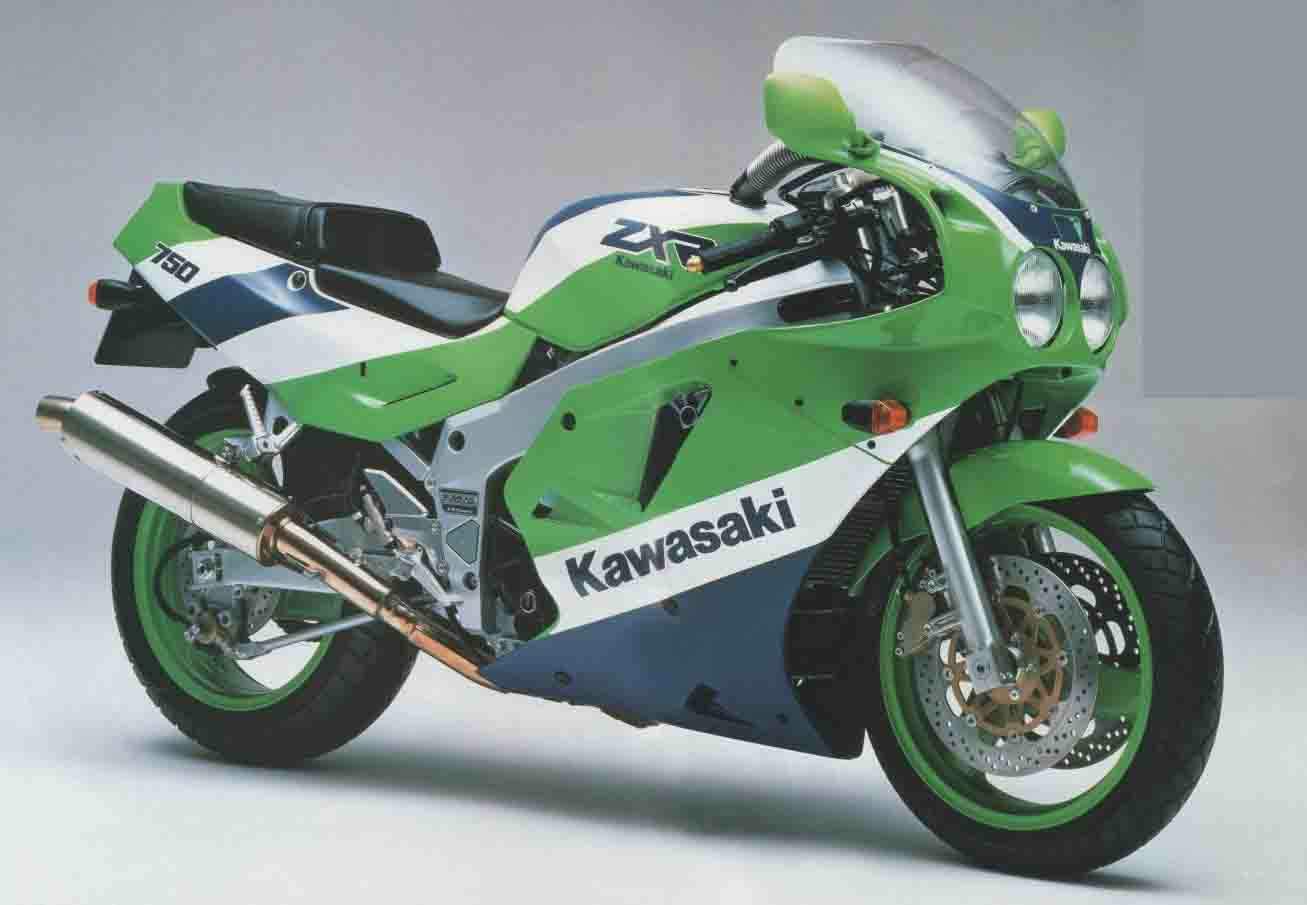
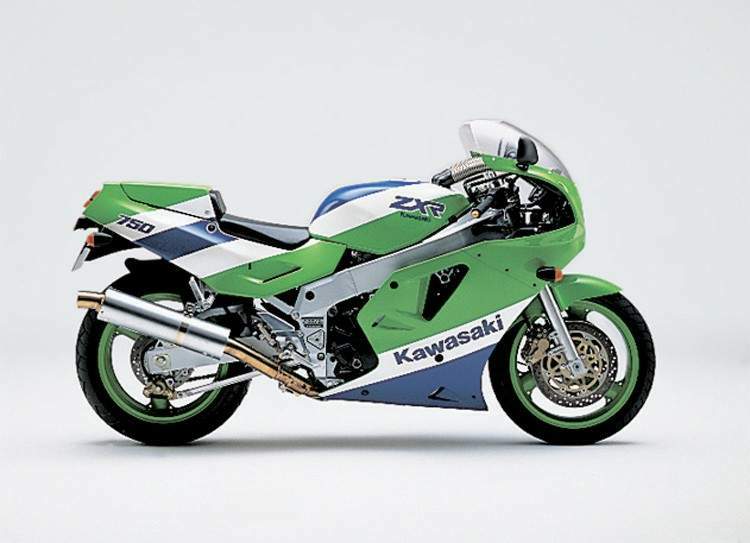
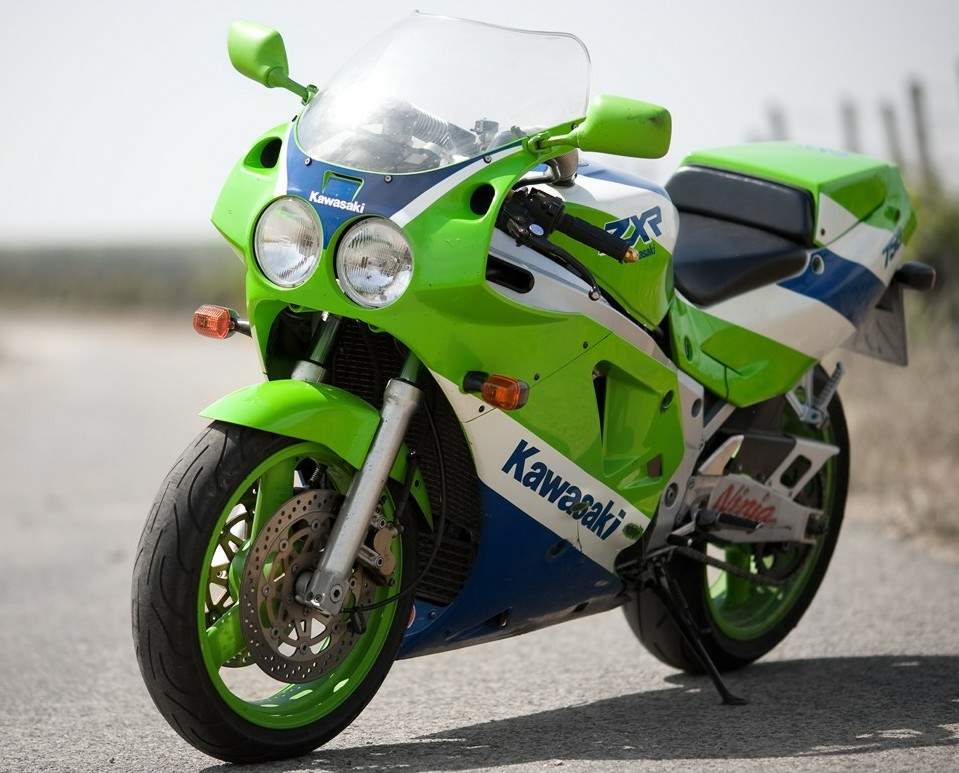
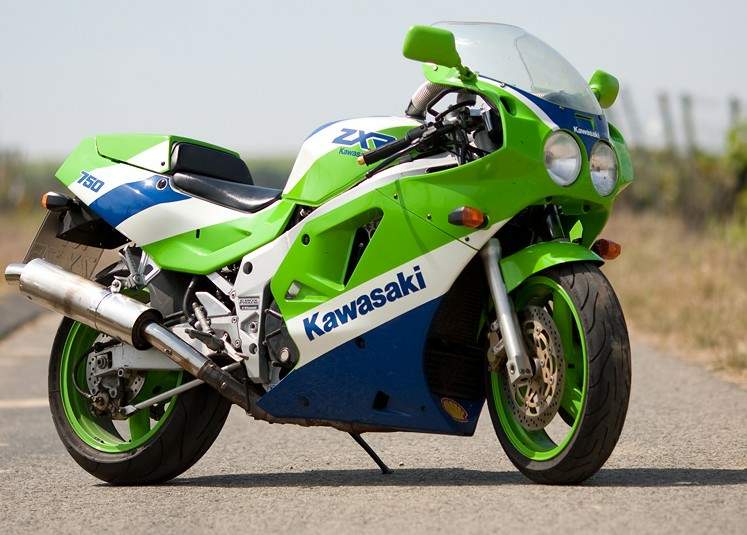
Kawasaki ZX-R 750-H2
The Kawasaki ZXR750: In squidgy little writing for those who can be bothered. The ZXR kind of evolved from the rubbery, bendy Kawasaki GPX750 - the first incarnation, the H1 was ergonomically best suited to strange shaped riders with short legs and very long arms, but introduced that very fashionable, though largely useless detail, the Hoover air pipes. It can be recognised by its more angular look and the strange, limping movement of anyone foolish enough to ride one regularly. It also began the ZXR's fearsome reputatation as a rock solid, rear ended thing, with a gonad mashing tank. The H2 was virtually the same but with a tweaked motor. Both were touted as an RC30 rival at half the price, neither really quite came up with the goods. I crashed one in the Finchley Road. Still, the Hs looked good and were the start of my soft spot for kWacker 750s.
Next off the production line was the ZXR750J1, which is the model I own. In an effort to keep faith with the traditional ZXR fan, the Hoover pipes remained and the suspension was just as ball bogglingly hard. Where the J really scored though was in being incredibly beautiful, especially in the plain metallic blue colour way and having the best front end in modern motorcycling. I fell desperately in love, especially when Kawasaki gave us one for a year... The other negative point was that the ZXR had a Euro-standard 100bhp motor - slower than the H2 but with good mid-range power. Oh, on early ones, the exhaust system cracks just in front of the collector box. The J1 was astonishingly enough followed by the J2 - the same bike but with a softer spring in an attempt to sort the ride quality. It still looked beautiful of course, but its days were numbered as the L1 was lurking on the drawing board. Just to digress, at the same time as the standard version with its CV carbs, Kawasaki also sold a single seat, homologation special with close ratio box, alloy tank, wapping great flat slide carbs and slightly more adjustable suspension. The fork diameter was down from 43mm to 41mm allegedly to reduce weight and stiction. The RR was the basis for the highly successful WSB race bikes, but a bit of a pig on the road, not least because you could do around 70mph in first gear... Still, the different cams and pistons (higher compression) made it snot fast at the top end, even if the smooth bores needed more sensitive handling to avoid bogging the motor. I once rode a 125bhp (rear wheel figure) ZXR750K on the road and it was insanely quick. The R's suspension is always reckoned to be slightly better than the standard road bike's, though contrary to what some might tell you, the rear linkage is the same part number... With the arrival of the L1, it was goodbye to the Hoover pipes and hello to Ram Air. Unfortunately it was also hello to more weight as they had to reinforce the frame to compensate for the big holes they made in it for the air ducts and hello to slower steering geometry. No L I rode ever had the gorgeous roll in cornering and steering characteristics of the earlier ZXR and the motor was much peakier, though top end was now much more impressive. The suspension, fork diameter down to 41mm, was much softer due to a revised linkage and shock, but in my opinion at least the thing felt heavier and just didn't handle with the precision of the J. The L sort of turned into the M and carried on pretty much unchanged until last year when the ZX-7 was introduced Source nozzer.demon.co.uk
Review The Kawasaki ZXR750: In squidgy little writing for those who can be bothered. The ZXR kind of evolved from the rubbery, bendy Kawasaki GPX750 - the first incarnation, the H1 was ergonomically best suited to strange shaped riders with short legs and very long arms, but introduced that very fashionable, though largely useless detail, the Hoover air pipes. It can be recognised by its more angular look and the strange, limping movement of anyone foolish enough to ride one regularly. It also began the ZXR's fearsome reputatation as a rock solid, rear ended thing, with a gonad mashing tank. The H2 was virtually the same but with a tweaked motor. Both were touted as an RC30 rival at half the price, neither really quite came up with the goods. I crashed one in the Finchley Road. Still, the Hs looked good and were the start of my soft spot for kWacker 750s. Next off the production line was the ZXR750J1, which is the model I own. In an effort to keep faith with the traditional ZXR fan, the Hoover pipes remained and the suspension was just as ball bogglingly hard. Where the J really scored though was in being incredibly beautiful, especially in the plain metallic blue colour way and having the best front end in modern motorcycling. I fell desperately in love, especially when Kawasaki gave us one for a year... The other negative point was that the ZXR had a Euro-standard 100bhp motor - slower than the H2 but with good mid-range power. Oh, on early ones, the exhaust system cracks just in front of the collector box. The J1 was astonishingly enough followed by the J2 - the same bike but with a softer spring in an attempt to sort the ride quality. It still looked beautiful of course, but its days were numbered as the L1 was lurking on the drawing board. Just to digress, at the same time as the standard version with its CV carbs, Kawasaki also sold a single seat, homologation special with close ratio box, alloy tank, wapping great flat slide carbs and slightly more adjustable suspension. The fork diameter was down from 43mm to 41mm allegedly to reduce weight and stiction. The RR was the basis for the highly successful WSB race bikes, but a bit of a pig on the road, not least because you could do around 70mph in first gear... Still, the different cams and pistons (higher compression) made it snot fast at the top end, even if the smooth bores needed more sensitive handling to avoid bogging the motor. I once rode a 125bhp (rear wheel figure) ZXR750K on the road and it was insanely quick. The R's suspension is always reckoned to be slightly better than the standard road bike's, though contrary to what some might tell you, the rear linkage is the same part number... With the arrival of the L1, it was goodbye to the Hoover pipes and hello to Ram Air. Unfortunately it was also hello to more weight as they had to reinforce the frame to compensate for the big holes they made in it for the air ducts and hello to slower steering geometry. No L I rode ever had the gorgeous roll in cornering and steering characteristics of the earlier ZXR and the motor was much peakier, though top end was now much more impressive. The suspension, fork diameter down to 41mm, was much softer due to a revised linkage and shock, but in my opinion at least the thing felt heavier and just didn't handle with the precision of the J. The L sort of turned into the M and carried on pretty much unchanged until last year when the ZX-7 was introduced Source nozzer.demon.co.uk Performance Bike 1990 A GSX-R with a noisy pipe flew past between me and the armco. I was doing about 90 in the fast lane and he came by so fast and so close it made me jump. There was only one thing for it. The workman's bottom that was riding the R was rapidly getting smaller. I stamped down two gears (essential for any acceleration at all) and sunk the rev counter into the red. That was more like it, but by now the R was nearly out of sight. The ZXR's engine note had changed altogether. Gone was the whistle of straight cut gears, and now my Arai was filled with the sound of induction growl and manic engine revs. Between 10 and 12,000 rpm the engine was finally smooth and on-song, and the riding position was finally working as the wind pressure took the weight off my wrists.
The dual carriageway turned
into comers that warranted chevrons, but the ZXR, needle nudging
150, sliced through them with pinpoint accuracy. It reeled the
GSX-R in as if it had engaged reverse. I want to like the ZXR.
Anything that looks so good on paper and in the flesh has to be
some use. Pity it's not. The motor and suspension tell you 'faster, faster' while your conscience reminds you about your licence. You just can't ride it slowly because it feels horrible, rough, harsh, uncomfortable and gutless. I wonder if that would stand up in court? The ZXR is crying out for better suspension and the ZZ-R1100's engine. Then it would make sense. The frame and weight distribution can take another 30bhp because they keep the ZXR together at twice the national speed limit. Long sweeping corners are its forte, but tight, twisting switchbacks aren't a problem either. It's not the fastest steering superbike, but use a lot of body English and it does as it's told. Stable is the key word in the ZXR's vocabulary. Compared to the slim GSX-R,
the ZXR feels like riding a sheet of 8 x 4 hardboard: big, top
heavy, wide and long. But bumbling around in traffic the size is
soon forgotten — it's very manageable, and those short in the
leg department will be pleased to know the seat is low. The softest rear damping still has the back end chattering under power as the rear tyre fights for traction. There's not enough adjustment. Even on the softest setting it's slightly too hard two-up. If you're over 20 stone it should be about right. We recommend that all ZXR750 owners either buy a decent back shock or indulge in a crash course of fish and chips and Boddingtons until the standard unit starts to work as it should. The clutch feels dead and is noticeable two-up when smooth, quick gear changes are essential to avoid accidents. It's as if the clutch lever is a couple of seconds behind the plates' action. We also had a spot of bother with the clutch after three standing quarters. Fifty quid's-worth of new plates were the only remedy. The gear box is clunky but always accurate, the headlights have been designed by someone who rides at night, and the mirrors by someone who does a lot of serious speeding. The ZXR's also economical,
although that won't be on the top of the shopping list for
anyone buying a race replica. On bumble mode 50mpg wasn't out of
the question. The stock tyres on the ZXR won't last very long. The compound is very soft and sticky. Still, you can't have long life and high grip I suppose. I'm sure people will buy the ZXR on account of its looks, but if a race replica is what you want buy a GSX-R750L: at least it's a race replica that wins races. Mark Forsyth Source Trevor Franklyn
|
|
|
Any corrections or more information on these motorcycles will be kindly appreciated. |