|
|

|
|
|
|
Classic Bikes
Custom Bikes
Individual
Racing Bikes AJP
AJS
Aprilia
Ariel
Avinton / Wakan
Bajaj
Benelli
Beta
Bimota
BMW
Brough Superior
BRP Cam-Am
BSA
Buell / EBR
Bultaco
Cagiva
Campagna
CCM
CF Moto
Combat Motors
Derbi
Deus
Ducati
Excelsior
GASGAS
Ghezzi Brian
Gilera
GIMA
Harley Davidson
Hero
Highland
Honda
Horex
Husaberg
Husqvarna
Hyosung
Indian
Jawa
Kawasaki
KTM
KYMCO
Laverda
Lazareth
Magni
Maico
Mash
Matchless
Mondial
Moto Guzzi
Moto Morini
MV Agusta
MZ / MuZ
NCR
Norton
NSU
Paton
Peugeot
Piaggio
Revival Cycles
Roland Sands
Royal Enfield
Sachs
Sherco
Sunbeam
Suzuki
SWM
SYM
Triumph
TVS
Ural
Velocette
Vespa
Victory
Vincent
VOR
Voxan
Vyrus
Walt Siegl
Walz
Wrenchmonkees
Wunderlich
XTR / Radical
Yamaha
Zero
Video
Technical
Complete Manufacturer List
|
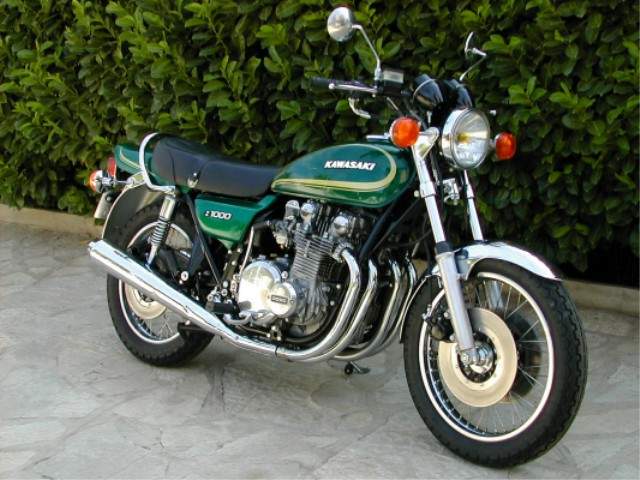
Kawasaki Z 1000 A2
ENGINE NUMBER: KZT00AE-042501 > COLOUR: LUMINOUS GREEN OR LUMINOUS RED Kawasaki replaces its 900 per Z Z 1000 in 1976 after 4 years of loyal
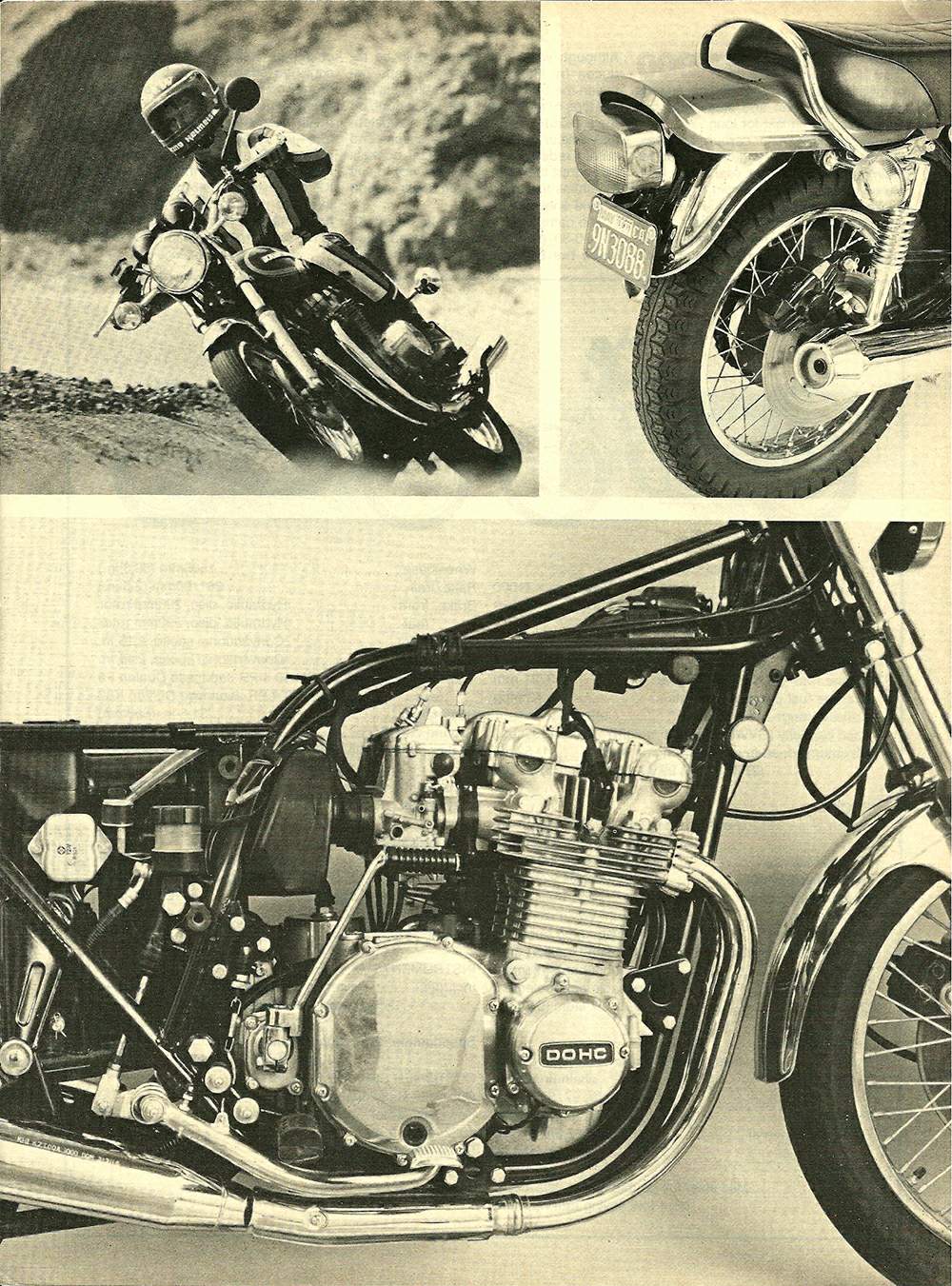
service. The race for the engine is now open between manufacturers. The engine is increased to 1015 cm3 by réalésage cylinders. Despite the increased displacement, the power of the Z1000 is barely higher than the first Z900 (83 hp instead of 82 CV). Vis-à-vis the rest of the machine, the main visible changes concern the exhaust and braking system. Towards the exhaust, the machine is now equipped with a 4 to 2, which significantly reduces the general thrust of the machine. Towards braking, the Z1000 is now equipped than disc brakes. Indeed, in its evolution towards Z1000, the machine has lost its rear brake drum. During his short career the machine will not undergo a change alone. In 1978, the model A1 is replaced by the model A2. The main developments concerning pass technical calipers front brake behind the fork, twin disc. The general line of the machine are also benefiting from a trend to differentiate the model A1. After Kawasaki were trounced by the arrival of the Honda CB750 they must have
been extremely piqued, but they definitely had the last laugh, and fortunately
shared it with us all. The original Z1, The King, was the original muscle-bike
and spawned a whole new range of machines, not the least of them from
themselves. The Z1000s didn't quite have the looks of the Z1 but they were an
improvement in the handling and braking departments. The Z1 is •virtually
unobtainable for anything less than silly money, but the Z1000s in their various
guises can offer all the performance and most of the charisma of the original
Zed. Models and Years The Z1 of legend hit these gob-smacked shores in 1972. It hit with 82bhp at
8500rpm and 120mph. although handling was a bit behind. It was all so The Z1000A3, or Mkll as it is known, came in 1979 and was heavily modified.
Ten more ponies appeared, from an engine now all in black, with electronic
ignition. The styling was much more squared-off, from engine fins to fuel tank
while the frame was heavily modded to try to cope with the power. Cast wheels
appeared on a model that came in luminous navy blue or luminous dark red, with
engine numbers from 081566 to 096200. (The interim A2 had numbers from 042501 to
040605.) About the same time they even brought out another model, this time the Z1R, a
dressed-up Z1000 with an extra 7bhp, a four-into-one pipe, 18in wheels front and
rear, a host of dials within a handlebar fairing and even a choice of fuel tank
size. Faults and Quirks Most problems will be caused more by age than anything else. However early
models had bronze valve guides which wore out and were replaced on later models
by iron ones. Many of the engine parts from Z900s through Z1000As to Mklls are
interchangeable, which is handy, but check if you are buying a Z1000 that it has
1015cc stamped on the barrels rather than 903cc. It should be stamped on the
front
|
|
|
Any corrections or more information on these motorcycles will be kindly appreciated. |