|
Make Model |
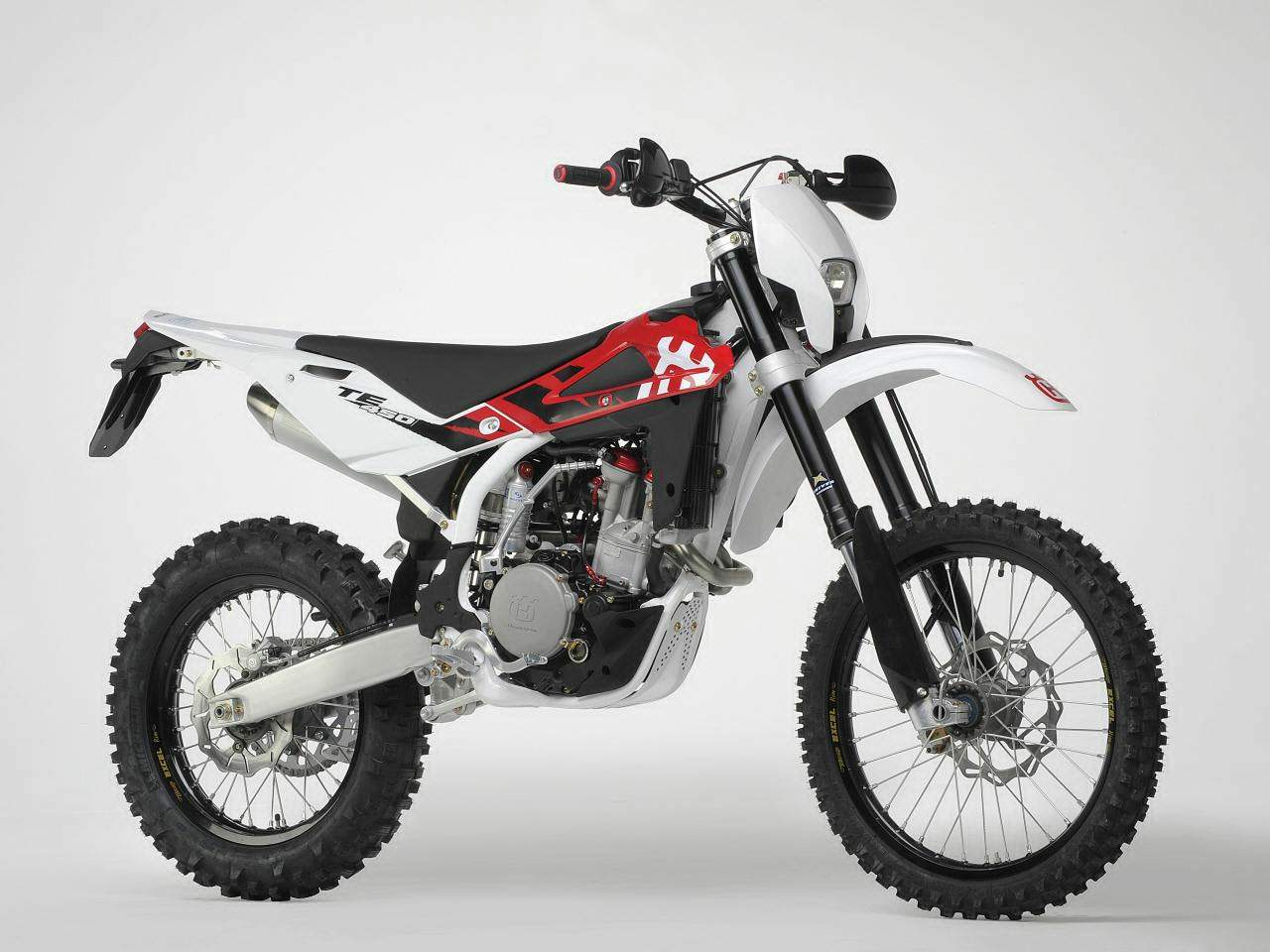
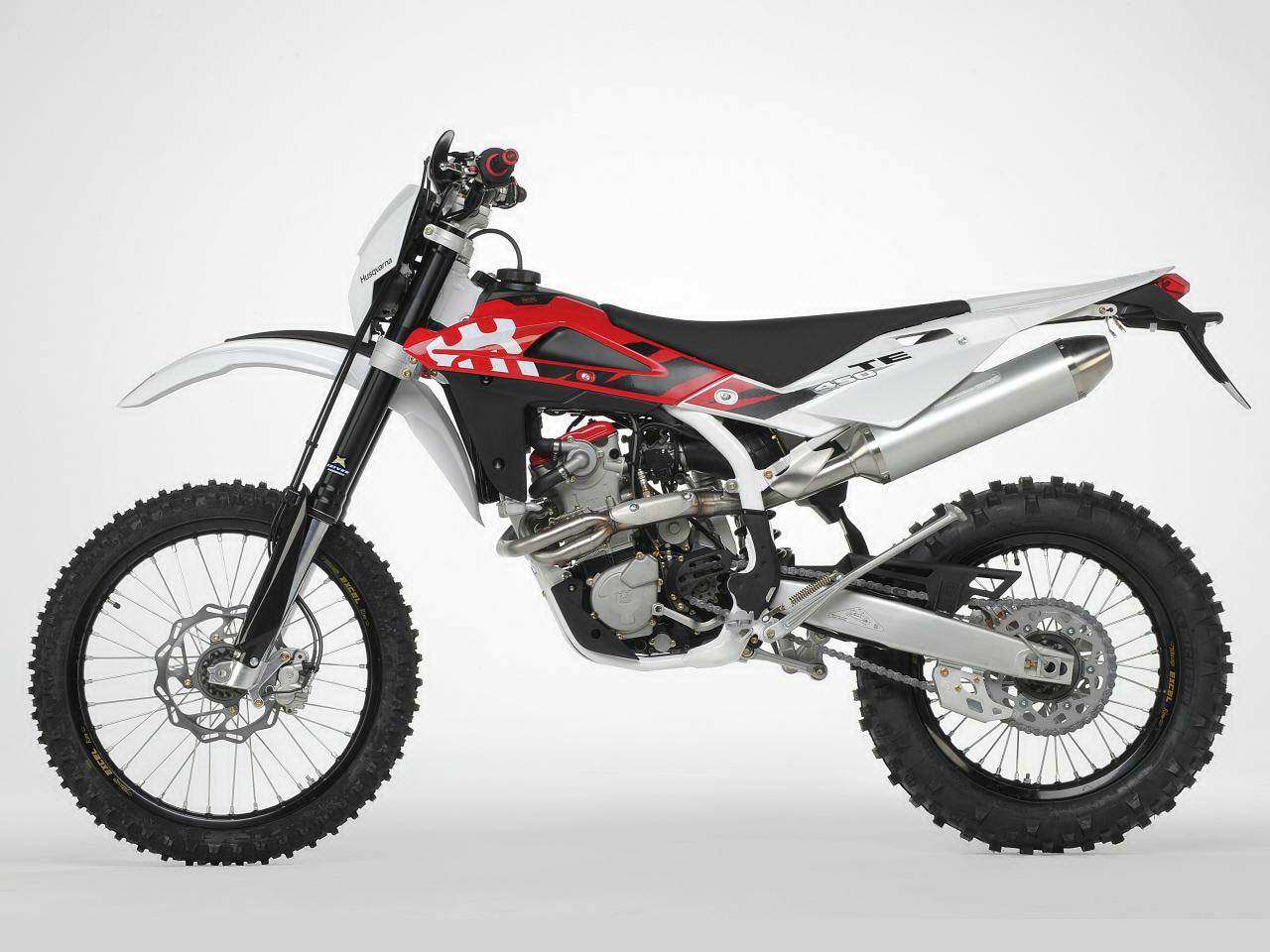
Husqvarna TE 450ie |
|
Year |
2008-09 |
|
Engine |
Liquid cooled, four stroke, single cylinder,
DOHC, 4 valves per
cylinder. |
|
Capacity |
449 |
|
Bore x Stroke |
97 x 60.7 mm |
|
Compression Ratio |
12.9;1 |
|
Induction |
Electronic Fuel Injection |
|
Ignition /
Starting |
CDI electronic with digital advance control.
/ electric |
|
Max Power |
|
|
Max Torque |
|
|
Transmission /
Drive |
6 Speed / chain |
|
Gear Ratio |
1e 2.000 (28/14), 2nd 1.611 (29/18), 3th 1.333
(24/18), 4th 1.086 (25/23), 5th 0.920 (23/25), 6th 0.814 (22/27) |
|
Clutch |
Hydraulically-actuated multiplate wet clutch |
|
Frame |
Steel single tube cradle (round tubes);
rear frame in light alloy
|
|
Front Suspension |
50mm Marzocchi upside-down
telescopic hydraulic adjustable fork (diam. 45 mm), 300 mm wheel travel |
|
Rear Suspension |
Sachs progressive "Soft Damp" type with single hydraulic
shock absorber, spring
preload adjustment, compression and rebound adjustment
|
|
Front Brakes |
Single 260mm disc |
|
Rear Brakes |
Single 220mm disc |
|
Seat Height |
980mm |
|
Front Tyre |
90/90-21 |
|
Rear Tyre |
140/80-18 |
|
Dry-Weight |
116 kg |
|
Fuel Capacity |
7.7 Litres |
The biggest Enduro models in Husqvarna’s lineup are
considered to be among the most impressive built and performing machines
that have ever been rode on the trails. Packed with technology and
innovative features, the TE450 and TE510 see their way on top of customer’s
preferences and we’re about to find out why.
For starters, the semi-perimeter steel frame with oval and box tubes is
designed to offer advanced ergonomics so that anyone will have the
opportunity to get a feel of the impressive machine, no matter their
stature. The fuel injection powerplants are definitely worth testing and
they have also received a new valve lifting system and new exhausts so the
blast would be justified. Keeping things in control are the new subrame and
rear suspension system which were designed to reduce the stress on the frame
and make everything more interesting.
Husqvarna had first introduced the models featuring either a
440 or 510cc liquid-cooled four-stroke DOHC with four vales engine that was
about to be revved off the road in 2004. You will find that it isn’t a great
difference between the “old” and the new models, but it’s the little things
that make it special. The engine was fed through a 41mm Keihin FCR with
electronic throttle position sensor (that would be a difference) and it came
to life be either a kick or a push of a button (that would be the
similitude).
The fork was made by Marzocchi all along and the rear shock by Sachs while
the Brembo brake pistons were applied on 260mm front respective 240mm rear
discs. There is also not much difference in weight.
Next year, the two Husky models received their set of
improvements which were aimed at improving every single characteristic. The
engine received larger valve stems, a metal head gasket, revised starter
system, CNC aluminum clutch basket, as well as redesigned ducts for the
Keihin carburetor. Concerning chassis, the revised suspension settings,
shock absorbers with lighter reservoir and new sealing ring as well as the
lower shock pivot on roller bearings were aimed at improving overall
efficiency. The rear disc featured no holes and the front brake master
cylinder was brand new. Apart from the new bodywork, the two models were
also spoiled in 2005 with a new generator featuring improved battery
recharging circuit, timing at 0 rpm modified in order to facilitate
starting, new CPU with recognition of individual gears the switch on clutch
to prevent accidental starting of the engine.
So 2005 was a pretty big year following the bike’s launch, but 2006 couldn’t
have brought anything along with it. So it did bring engine improvements
such as increased intake valves (37mm instead of 33mm) and Arrow exhaust
(from 28.5 to 31mm). The Marzocchi forks were increased to 50mm from 45mm
and the rear Sachs shock absorber was also tuned for better soaking up the
bumps. What was also new and well worth mentioning is the digital instrument
panel.
Most important for 2007 model year is the color change, from yellow and blue
to red and white, while for 2008 is the electronic fuel injection system.
During the years, Husqvarna gradually dropped all of the
unnecessary plastic, reaching in 2008 its slimmest appearance. It all starts
with the white front fender featuring the Husqvarna logo. These two small
and apparently insignificant things are the ones that get your interested
going as you get near the bike and what directs your eyes to the black
headlight fairing black stripe of plastic. The contrast is pretty unique:
black and white in the front.
But what make this bike easily distinguishable out on the trails are the Red
(on the side panels) and White (also present at the rear end). I don’t know
if designers came up with the black so that their bikes wouldn’t look too
girly, but I do know that it is there and it looks damn good.
By simply admiring these two models, apart from which you won’t make a
difference until you read the model’s name on the side, you will reach to
the conclusion that you are facing a truly able trail machine that will have
you covered in an instant.
But let’s quit watching and start riding!
Once you through a leg over each one of the Husqvarnas you
will feel no need to go back either on the KTM models or on any of the
Japanese bikes. You will have at your disposal a really impressive motor
that delivers tractable power and proves suitable for any situations that
the track or the off-road may through at you at.
I first met with the Husqvarna TE450 and felt on my own skin what a fuel
injected 450cc four-stroke engine means on a very light and versatile dirt
bike. The motor, which is a four-stroke, four-valves, DOHC, liquid cooled
single, managed to amaze me in an instant because, frankly, I kind of
underestimated these two. Don’t ask me why, I don’t know. This fact is even
more unjustified considering the blast I experienced when riding the KTM 450
EXC-R and 530 EXC-R models. I now consider the Husqvarna models as being a
step upper than the competition and I can explain why.
Awesome power is delivered at any rpm range so that you won’t have to deal
with the gears very often, but simply rev the engine higher and sort
everything out. I especially enjoyed doing fast and long take offs in second
gear because torque from down low is excellent and I love the never ending
power that kicks in once you’ve reached the mid range. I twisted the
throttle even further and reached the impressive top end, but by now, I was
already craving for another tractable power action. Shift first gear and
there we go again.
Quickly passing through corners and heading for the steepest hills, I
noticed that the ergonomics are absolutely great, proof that the engineer’s
work never manages to pass unnoticed. And boy, they did work! The frame
features a new steering angle (between 26 and 28 degrees) and their plan of
making this the bike of the many succeeded, because stature isn’t now a
problem.
Riders can simply enjoy the impressive powerplant underneath them and the
easy handling that clears out their minds that this is not a top notch
product. It is very easy to steer and so take it through tight corners and
it all comes as result to extensive testing and fine tuning. Personally, I
love the idea of getting on what seems to be an off-road bike and feed with
the throttle a race-inspired engine. And when a corner comes along, I would
be so well accommodated that it would all come naturally. I must say that is
the motocross track looks tempting, you are strongly recommended to give it
a go, or maybe two.
The six-speed gearbox is the only track enemy you will find on these two
bikes, but, as I said earlier, the engine is very enjoyable and gets you
covered in an instant. Clutch is also very precise so shifting will be more
of a kid’s play instead of an adult rider’s tool.
I also got on the 510 model and noticed that fun comes at a whole new level
and erases the “why did they built two engines?” thought for ever out of
your head. It is practically the same motorcycle with a motor that never
forgets going to the gym and enjoys burning more calories. It still needs a
little bit of getting used to, because second gear take offs are now even
more delighting.
What you’re going to notice on either one of the TE models is the brand new
rear suspension system. During the bike’s evolution the Marzocchi forks had
grown to 50mm, but the Sachs rear suspension were kind of left behind and it
was now time to cover up the lost ground. A new shock absorber featuring an
18mm piston instead of the previous 16mm unit, definitely do the trick and
the rear end doesn’t end up wondering where you’d like to go. Not to mention
the forks; they don’t bottom up easily (I only managed to do so once and
that was when I jumped over a log from higher ground).
BREMBO braking systems is what it is all about on all Husqvarna models and
these two weren’t willing to become the exception. All the stopping power
that this kind of machinery requires is being applied on 260mm respective
240mm front and rear brake discs. I felt the well capable of stopping even
when the going got rough, but with a bit of handling and adherence, no grip
loses will result into a ruined day, and not only.
The most cheerful thing for an ex motocross rider that heads
down the trails is to hear that the bike he was prospecting from last year,
when he was still jumping from bump to bump on the track, now received fuel
injection. Nobody who had ever considered either the Husqvarna TE450 or
TE510 will be capable of ignoring such an outstanding new offering.
Building a great and reliable product has always been the best strategy for
the best sales numbers, but this beats them all.
Source Top Speed