|
|
|
|
Classic Bikes
Custom Bikes
Individual
Racing Bikes AJP
AJS
Aprilia
Ariel
Avinton / Wakan
Bajaj
Benelli
Beta
Bimota
BMW
Brough Superior
BRP Cam-Am
BSA
Buell / EBR
Bultaco
Cagiva
Campagna
CCM
CF Moto
Combat Motors
Derbi
Deus
Ducati
Excelsior
GASGAS
Ghezzi Brian
Gilera
GIMA
Harley Davidson
Hero
Highland
Honda
Horex
Husaberg
Husqvarna
Hyosung
Indian
Jawa
Kawasaki
KTM
KYMCO
Laverda
Lazareth
Magni
Maico
Mash
Matchless
Mondial
Moto Guzzi
Moto Morini
MV Agusta
MZ / MuZ
NCR
Norton
NSU
Paton
Peugeot
Piaggio
Revival Cycles
Roland Sands
Royal Enfield
Sachs
Sherco
Sunbeam
Suzuki
SWM
SYM
Triumph
TVS
Ural
Velocette
Vespa
Victory
Vincent
VOR
Voxan
Vyrus
Walt Siegl
Walz
Wrenchmonkees
Wunderlich
XTR / Radical
Yamaha
Zero
Video
Technical
Complete Manufacturer List
|
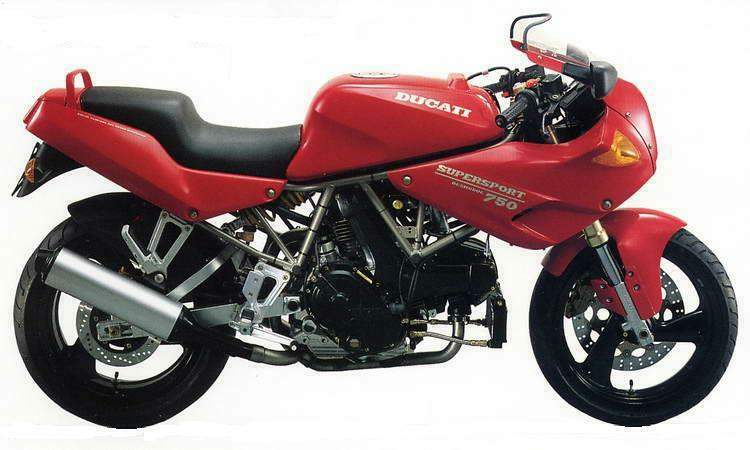
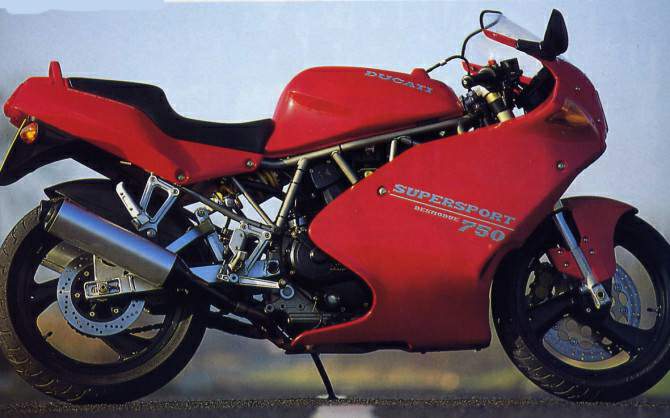
Ducati 750SS
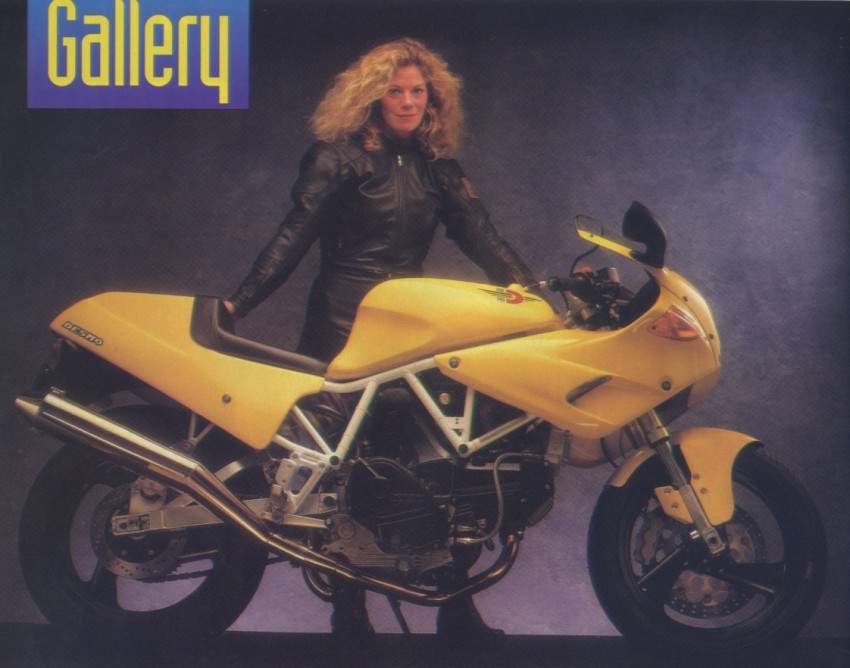
The Ducati 750SS is ignored by Ducat fans because the 900SS is fantastic So now the 750 is targeting new prey at £6250 it's cheaper than a ZXR. AT 20 PACES you realise the thing missing from your life is a 750SS. At ten paces, you've sold the midi-sys-tem, extended the bank loan and decided you can do without food for a while. One pace away and your whole being longs for an extortionate hire-purchase scheme. This is a seriously beautiful motorcycle. And so it should be. Ever since the 750SS turned up in 1991 it's looked almost identical to the 900SS and people have been dribbling over that for years. The shock, for those who see Ducatis only in terms of second mortgages, is the 750's price. This year it gets a new bronze-painted frame and a £6000 price tag (£6250 for the full faired version). Not exactly bargain basement, but Ducati is now definitely on the ground floor; Kawasaki's ZXR750L costs £6300, Suzuki's GSX-R750WN, £6259. The rear suspension is unsophisticated but effective. Trellis frame looks too spindly to work, but does
To achieve a competitive price, corners have not been cut, but snipped. The air-cooled V-twin engine, for instance, started life thinking it was heading for a 900SS, and ended up getting bored and stroked down to 748cc. But it works. If you hop straight onto a 900SS, the 750 inevitably feels a bit drippy, and if you expect it to zap like a four-cylinder 750 (or 600 for that matter), you'll be disappointed, but it is a long way from being a sexy embarrassment. Torque and weight are its saviours - it's got lots and not much, respectively. A high first gear handicaps the motor at low speeds - lots of slipping the clutch in 10mph traffic queues and lurching round mini-roundabouts - but once away, the engine chugs happily from 3000rpm, while making plenty of boomy, clattery Ducati noises. By 6000rpm you can graduate from overtaking small cars and onto articulated lorries, and by 8000rpm it's time to go up a gear.
Red hot The redline is at 9000, but nothing improves dramatically over eight -especially the noise because by then it sounds like chunks of red hot engine are about to fire up through the saddle. The 750's maximum power may only be 60bhp (at 8500rpm), but it is accessible and usable enough to make it feel like more - certainly more than the 60bhp of, say, a ZXR400. Not only does a dry weight of 3881b (that's 191b lighter than a CBR600) rescue the SS from diabolical slowness, but it lets the 750 handle and feel like a relaxed, lanky sports 400. If looks and noise don't sell the 750SS to a dubious punter, then the first fast dry bend should. Steering is so light yet steady that sunny corners are superb even when you're on auto pilot and not really trying. Slamming it in and gassing it from 5000rpm might gain milliseconds, but guiding the SS round just using the pegs and savouring the booming and clattering from 6000rpm is far more pleasing. Easier too. That the Showa upside-downies are not adjustable (they arc on the 900SS) shouldn't be a problem, because you'd have to a real fusspot to want to alter them. The more you study the SS the smaller and skinnier it gets, yet the riding position is comfortable. The in-line engine makes the 750 so slim that the fully-faired version has 3in of daylight between the side panel and the engine, but the SS's Incredible Shrinking Bike qualities are imperceptible in the saddle. Rather than being scrunched up, as you are on similarly small, but shorter, sports 400s, on the Ducati you can relax; pegs are moderately rearset, bars arc an easy stretch away and the saddle gives you well over lOOmiles before forcing you to fidget and shuffle until the petrol light comes on and lets you stop at a garage for a rest. And despite the busy workshop noises coming from down below, vibration through bars and pegs are easily tolerated. But the 750SS can turn you into a seething ball of irritation faster than Jimmy Hill. Major gripe is the brakes. There you are on a light, strong, well set up bike with sticky Sportmax tyres that just begs to gain yards and yards and yards on the brakes and what happens when you squeeze the non-adjustable lever? For nearly 2in, nothing. Aaaaargh.
Waffly feel And when the brakes do get going (just as your two winter glove clad fingers are starting to get crushed) there's a waffly feel, as if the twin opposed pistons are made of plasticine. Some people call this type of brake responsive, but crap is more like it. Being one disc down on the 900SS might be the problem, but the spongincss feels like it could be sorted by some braided steel hosing. And then there was the oil light. At first ours glimmered faintly. Ducati idiot lights usually glow; this was merely a glimmer, but I stopped immediately, let the bike cool off and checked all the sight glasses, because it's a Ducati and you never know. But oil levels were fine. When restarted, the oil light went out and waited until I was approaching the finest corner in the world before coming on again. And this wasn't a glimmer, but a full blown glow, so I aborted and stopped. Oil levels were unchanged. The light glimmered then went off after a mile, glowed again, then went out and never came back on. Jimmy Hill is soothing compared to this. OK, it was a freak, but freaks happen less on Japanese machines. And the Ducati sprung sidestand must keep the spares department running 24 hours a day. But despite the irritants, some splattery welds on the frame and poor engine finish, there's little doubt the 750SS is cheap enough to entice people into the Ducati clan and good enough to keep them. The only problem Ducati foresees for the 750 is the usual one: after a ride on the superb 900SS many people mysteriously come up with another £1200 and the 750 stays in the showroom. Source By John Westlake Bike Magazine 1993 
|
|
|
Any corrections or more information on these motorcycles will be kindly appreciated. |