|
|

|
|
|
|
Classic Bikes
Custom Bikes
Individual
Racing Bikes AJP
AJS
Aprilia
Ariel
Avinton / Wakan
Bajaj
Benelli
Beta
Bimota
BMW
Brough Superior
BRP Cam-Am
BSA
Buell / EBR
Bultaco
Cagiva
Campagna
CCM
CF Moto
Combat Motors
Derbi
Deus
Ducati
Excelsior
GASGAS
Ghezzi Brian
Gilera
GIMA
Harley Davidson
Hero
Highland
Honda
Horex
Husaberg
Husqvarna
Hyosung
Indian
Jawa
Kawasaki
KTM
KYMCO
Laverda
Lazareth
Magni
Maico
Mash
Matchless
Mondial
Moto Guzzi
Moto Morini
MV Agusta
MZ / MuZ
NCR
Norton
NSU
Paton
Peugeot
Piaggio
Revival Cycles
Roland Sands
Royal Enfield
Sachs
Sherco
Sunbeam
Suzuki
SWM
SYM
Triumph
TVS
Ural
Velocette
Vespa
Victory
Vincent
VOR
Voxan
Vyrus
Walt Siegl
Walz
Wrenchmonkees
Wunderlich
XTR / Radical
Yamaha
Zero
Video
Technical
Complete Manufacturer List
|
Cagiva Raptor 1000
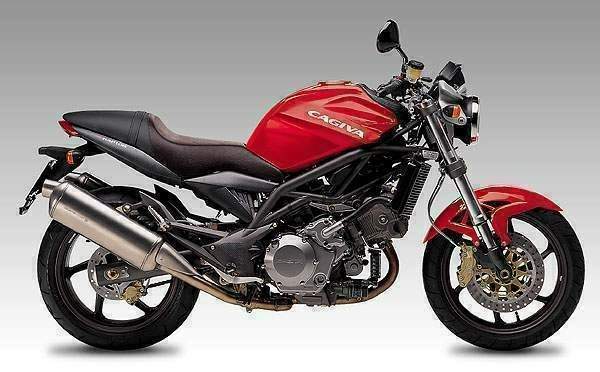
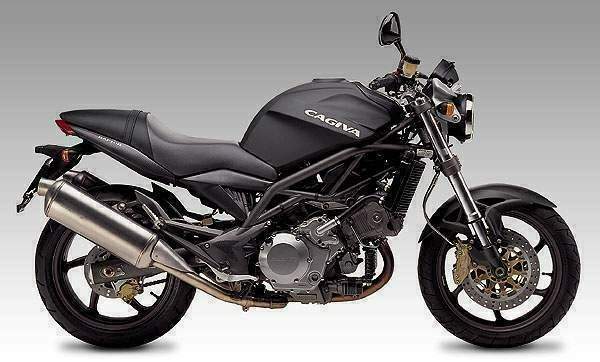
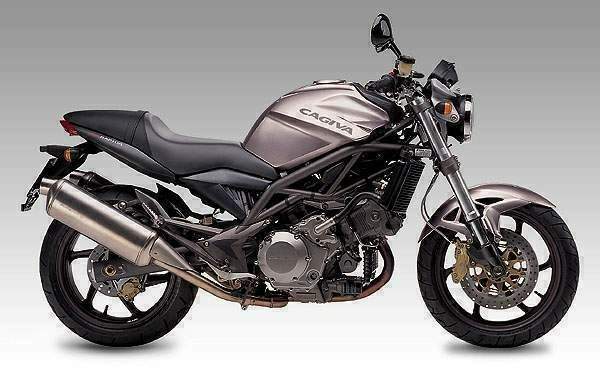
The naked-style city bike has long been popular in Europe, and with unique design elements it can command a premium price. Ducati led the way with its Monster range in 1993, and Cagiva has moved the sector on with the Raptor, fittingly designed by Miguel Galluzzi, father of the Monster design. The Raptor 1000 uses Suzuki's TL1000 engine in a classy roadster chassis, which oozes Latin design. From the angular steel-tube frame to the sharp, teeth-like footrest hangers and the muscular fuel tank, this is an exceptionally stylish machine. It also has the performance to back-up the style. The TL engine has been revised for better low-down performance, and the Raptor also has lower gearing, for strong acceleration. There was a time when the Japanese could make a powerful and reliable engine but struggled to build a good handling chassis to compliment it. In those days only the Italians or the British could make a bike that handled properly. However, they found it almost impossible to make an engine that could match the best coming from Japan. Today, only a complete bigot would claim that the Japanese haven't got the handling game down to a pretty fine art. So where does that leave the Europeans? According to the Italians it leaves them taking care of style. To an Italian, style is everything. Form and function follow style, they do not preceed it as in the Japanese culture. When Cagiva decided to launch a new superbike -- the MV Augusta F4 -- they spent a small fortune developing their own motor. They wrapped it in exquisitely styled bodywork and ensured that all of this was complimented with class-leading handling. The problem was that it lead to a sticker price that would have the average motorcyclist leaving the showroom -- pronto. What Cagiva needed was something that was equally stylish but with a more down-to-earth price tag. Their solution was the Raptor (and the V-Raptor). Both have stunning looks but lack a price tag that leaves you equally stunned. How did they do it? Simple, they went back to a tried and tested formula; they let someone else build the motors. In some ways the Cagiva Raptors could be called the new Rickmans (these were superbikes built in the UK in the Seventies that used a trick frame, made from Reynolds tubing). These tasteful frames often housed a breathed-on Japanese motor pirated from a CB750 or a Z1. They worked because they matched proven engineering with an in-house ability to build a chassis that worked. There's no doubt that Cagiva can build a working chassis, and the donor motor from Suzuki's TL1000, is already well- known for power and reliability. Cagiva has arguably out TL'd the TL by adding some sensational Italian styling that works well on the eye. Actually, the styling was done by none other than Miguel Angel Galluzzi, an Argentinean. If the name seems familiar its because he's the same bloke that penned Ducati's original Monster and then persuaded management to build it. We all know the Monster story; good on the eye, good for the soul and good on the street. So, how does the Cagiva recipe work on the road?
The 90 degree V-Twin, liquid-cooled engine was an inspired choice since Cagiva wanted to out-do Ducati, the company they had recently sold. Cagiva needed an engine that would square up to Ducati's brilliant eight-valve liquid-cooled Vee which they knew would be in the Monster chassis before too long. The Suzuki engine is a perfect choice. The motor is narrow like a Ducati and also powerful like a Ducati. Cagiva was hoping that the Japanese heritage would add reliability, a point that is sometimes questioned with the Ducati option. The 98 x 66mm 996cc and 105 horsepower engine certainly delivers the poke you'd expect from a big V-twin and it seems to be reliable enough, at least when fitted in the Suzuki TL range. Get the needle up to around 4,000 rpm on that wacky triangular analog tach and the engine is ready to rip up the pavement. Suzuki claimed 120bhp from the same motor, so where's the missing 15bhp? The answer lies in the method of measurement, with Suzuki running the Dyno off the crank and Cagiva taking a reading at the rear tire, where it matters.
Whatever the output, when combined with only 192 kg (423 lbs) of weight, that power leads to performance, and lots of it. As for the torque, we didn't have the bike long enough to get it to a dyno, but rest assured there's loads of the stuff. Wind the needle on from a lazy 2,000 rpm or hold onto the throttle all the way past the 10,300 rpm redline and you'll be rewarded with loads of go. This is a brilliant motor, make no mistake. Whether you're flying away from the lights, blasting past a row of cars or punching out of a slow corner, this little baby smokes 'em. The feeling is so good you'll keep slowing down just to wind it on again and revel in that satisfyingly fat power band.
Source Dank
Cyber-Bistro, August 11, 2000
|
|
|
Any corrections or more information on these motorcycles will be kindly appreciated. |