Progressive with hydralyc shock, adjustable
spring preload, 133mm wheel travel.
Front Brakes
Single 320mm disc 4 piston caliper
Rear Brakes
Single 230mm disc 2 piston caliper
Front Tyre
110/70 ZR17
Rear Tyre
150/60 ZR17
Seat Height
760 mm / 29.9 in
Dry-Weight
129 kg
Fuel Capacity
14 Litres / 3.9 gal
Cagiva is proud to have been able to change what
a being "two-stroke engine" means and to have been able to blend the new
technology into the Mito 125. The research and investments made by Cagiva, mean
that those days when the words "two stroke" implied only great performance are
finally gone. They now also mean caring for the environment.
The integrated ECS (Electronic Carburetion System) administers exactly the right
amount of fuel (both the air/petrol and oil mix) and was developed in
collaboration with Dell’Orto. The control unit also governs the ignition system.
While keeping costs under control and sales prices competitive, this brings the
two-stroke 125 engine to Euro 3 standards, yet maintains all the advantages that
two-stroke engines can offer: lightness, performance and low running costs.
MCN road testers give their verdict on the
latest 125 racer-replicas
Honda CBR125R
For many years Honda's CBR125R was the perfect way to through your bike test. It
was cheap, uber reliable, modern and easy to ride. But if you’ve got money to
burn, the Honda is hopelessly outclassed.
Five years ago the CBR was fresh and sporty, but today, even with funky HRC
colour scheme and gold wheels, it looks are comparable to the best of cheap
Chinese imports. Sorry Honda, but that’s how it is when compared to the
illustrious company it’s trying to hang with.
And it’s horribly under-tyred – the front tyres on the other three bikes have
more girth than the Honda’s rear – and the IRC supplied rubber borders on Teflon
coated. Chasing the others there’s a king-sized sensation of feebleness from the
front brake, forks and chassis.
The Honda’s simple liquid-cooled, fuel-injected engine performs with the same
brutal efficiency of any Honda engine. No matter how badly you abuse it, like a
faithful, slabbering Labrador it will do what it’s told until old age takes its
toll.
* CBR125R Review
Yamaha YZF-R125
This is the modern equivalent of the CBR125R. It has big bike looks, ride
quality and styling which all come together to give its rider a glimpse of
what’s in store after a full licence has been granted. But while we all like the
Yamaha, there are two other bikes that deliver the same pleasures with greater
purity.
Styled around Rossi’s dominant M1, the Yamaha is, for want of a better word,
sharp. Its modern look will snare today’s new riders because it’s so
recognisable.
The Yamaha engine is strong but gives no real indication of what it is doing. It
could be the same engine from the Honda just with a tad more top end performance
from its four-valve engine. It gets to 60mph fairly easily, struggles a little
to hit 70mph and then after that every 1mph on top is a bonus.
The main difference between the Yamaha and Honda motors is the Yamaha will pull
70mph all day, whereas the Honda’s top two gears see considerably more action
uphill and into headwinds.
A tall tail section/pillion perch gives the impression the Yamaha has a
considerably taller seat height than it actually has. At 818mm high the Yamaha’s
seat is only 42mm taller than the Honda. But where the Honda’s rear shock
collapses at the mention of someone riding it, the Yamaha’s remains composed to
retain its bigger bike ride quality. Of which there is plenty. It could be the
wide bars, spacious seating position and overall build quality.
The downside is the Yamaha lacks ride quality. We mean there’s very little
feedback from the front end so you never know how close to the limit the front
tyre is. Or how hard you can really corner when emulating racing greats, which
is how anyone acts when sat on a bike made to look as if it can cut it. But I
guess we are nit-picking here. Yamaha’s YZF-R125 lifted MCN’s 2008 award for
Best Sports bike Under 600cc and with good reason it is good.
* YZF-R125 Review
But there is something better for 2009.
Aprilia RS125R
Today’s crop of racer-replica 125s are extremely desirable – none more so than
the Aprilia with its superb braking and rigid chassis. The Aprilia’s polished
frame and race bodywork are as effective as Viagra in pumping blood round my
tired body.
Old agrees with young once more when it comes to two-stroke over four-stroke
power. Aprilia’s RS125 is a very, very polished performer. From the moment the
electronic dash flickers into life and the engine starts with familiar smell of
a cold two-stroke on choke, the RS125 tells you fun is coming your way.
Unfortunately, the unmistakable rasp of a crisp engine is short lived when cold.
It coughs, splutters and struggles to pull cleanly until thoroughly warmed. But
even when that time comes and the bike’s given its head, the way the tacho
needle limply seeps past 8000rpm is greatly disturbing. It doesn’t need us to
remind you this bike’s Rotax-supplied engine is restricted to meet legal
requirements.
Even so, there is still a step in the powerband
to excite anyone. It’s this burst of performance after 7000rpm – even though it
is mechanically and electrically neutered – that makes a stunningly created
125cc machine even better.
* RS125R Review
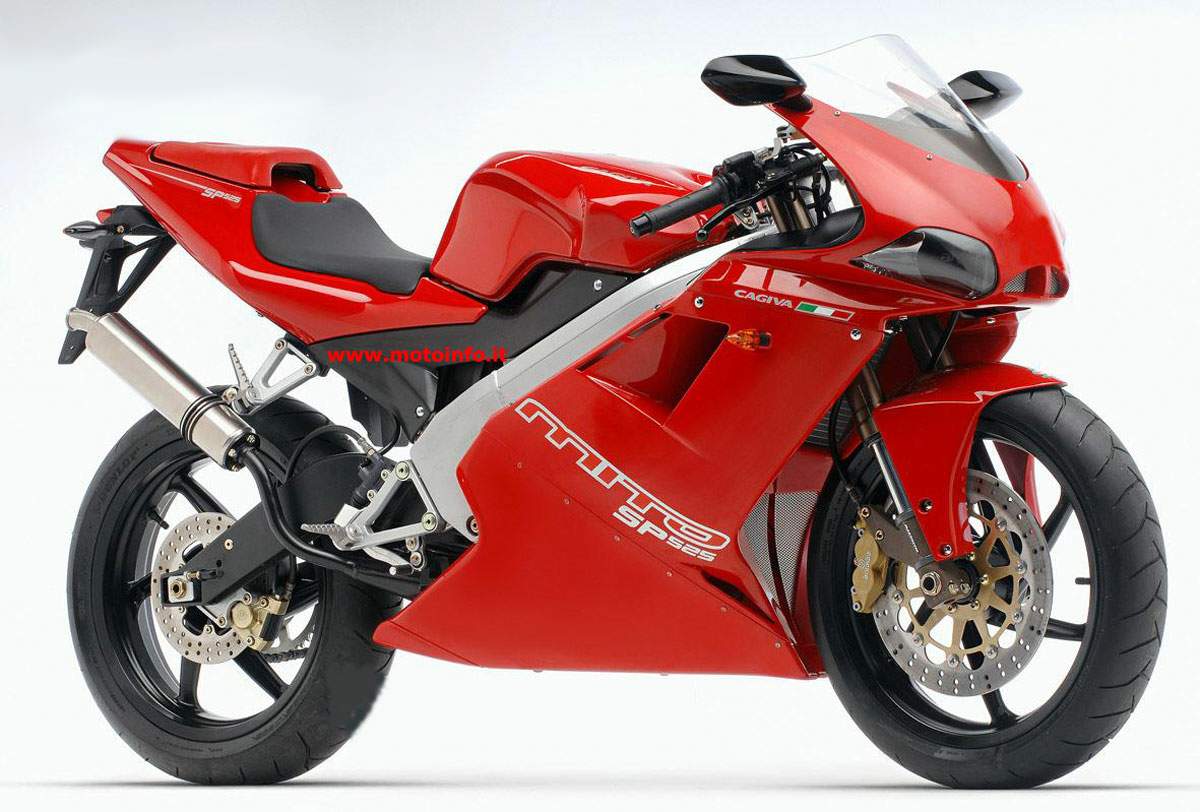
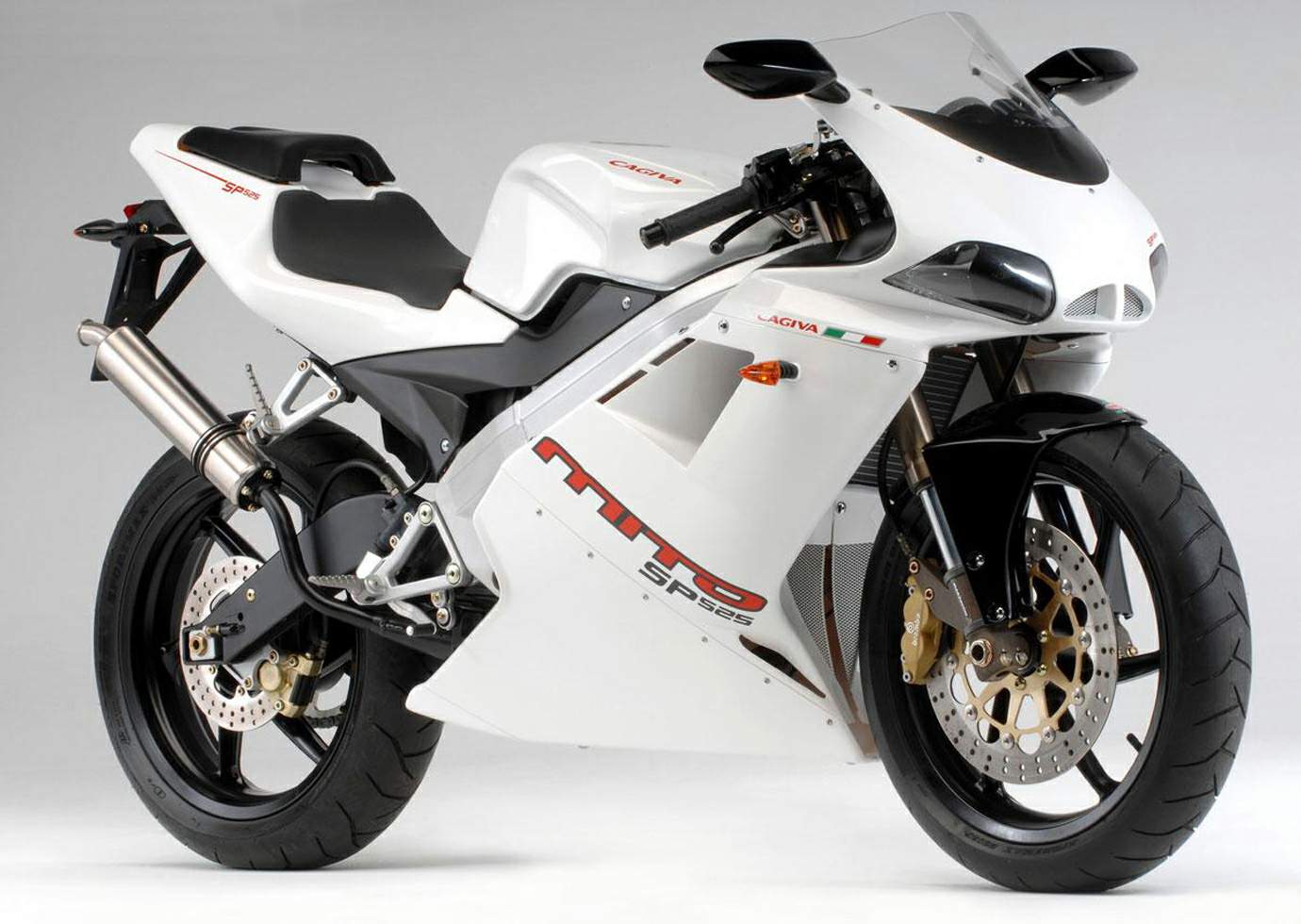
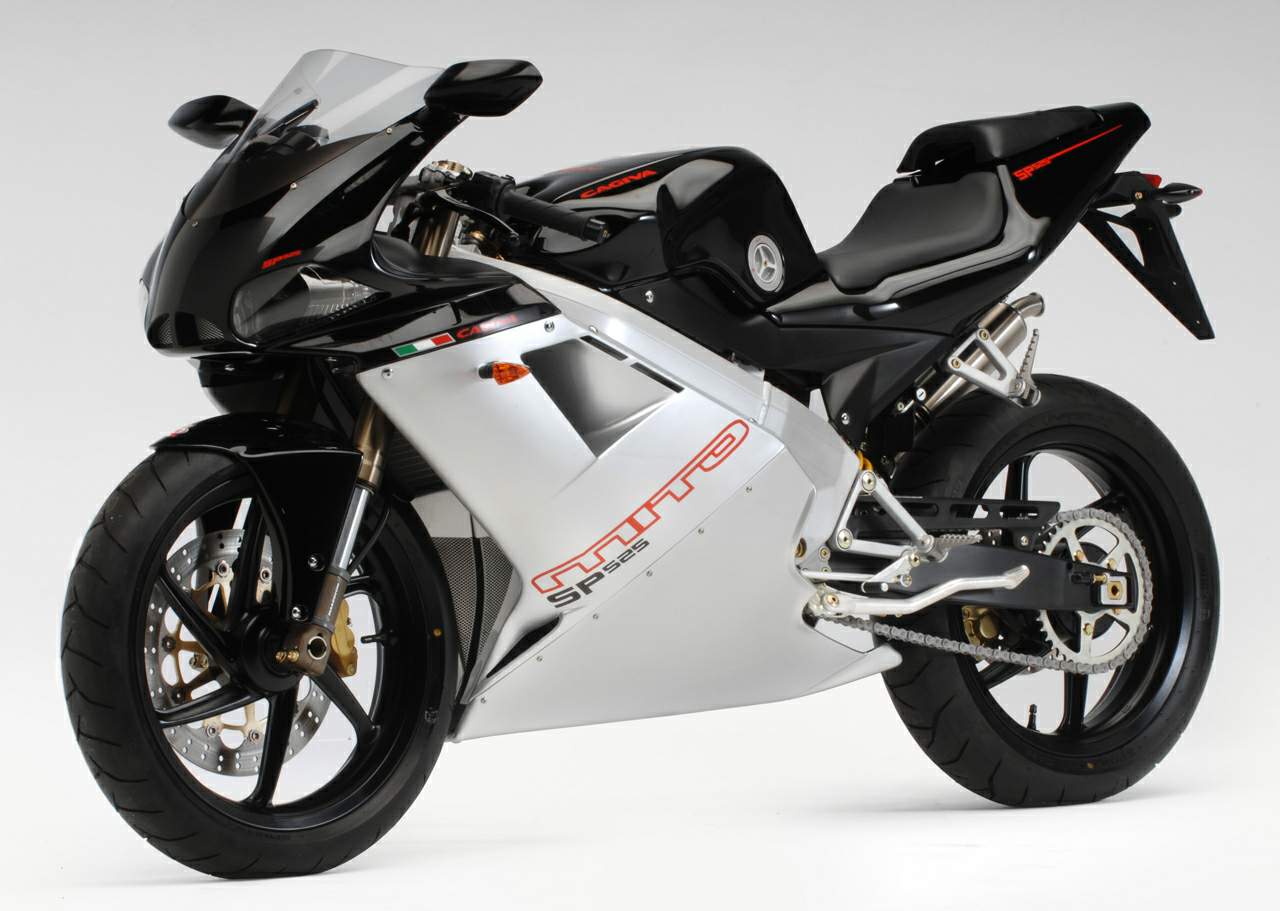
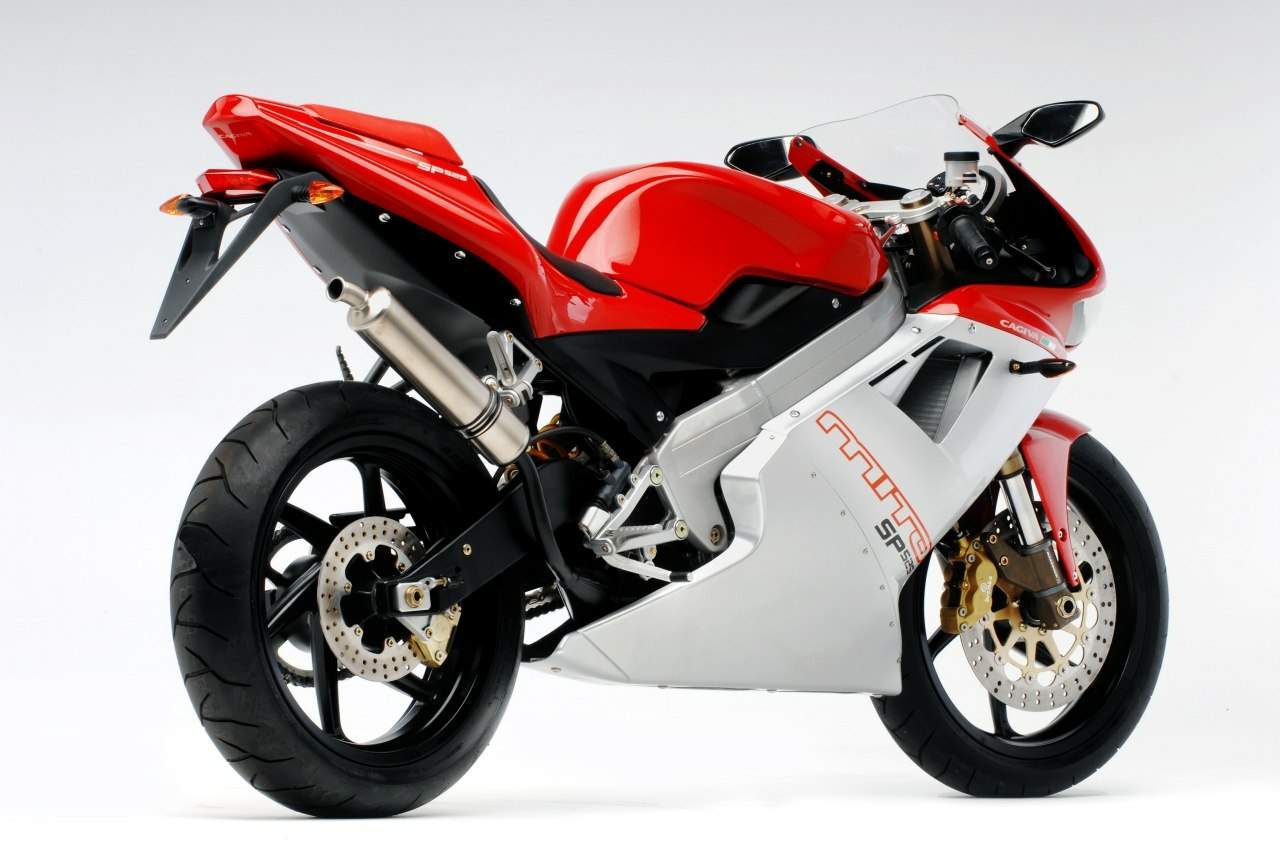
Cagiva Mito 525
The new Cagiva is similar. Revived from under the wing of MV Agusta, the Mito
dates back to 1989, undergoing several makeovers over the interim before
reappearing now as the Mito 525. Along with a new Euro 3 emissions compliant
engine, it has a new look paying homage to the C594 two-stroke GP500 bikes of
Mamola and Lawson. This makes it arguably the sweetest looking 125cc machine out
there.
But it is also the most tractable of the two strokers – easily keeping with the
Yamaha in the first two gears before pulling ahead. It’s the corner exit
throttle control that makes the Mito more thrilling than the Aprilia. Not
because there’s a bigger jump in power delivery, but because it’s a smoother
delivery. The Aprilia cracks into go fast mode because the engine revs have to
be higher to get the desired drive, whereas the Mito rushes forward with precise
throttle input.
Ok I know we’re talking about piddly 125cc machines that make hard work of
carrying a 15-stone rider let alone a pillion, but every little bit of
pleasantness helps the performance of a restricted 125. This also includes the
chassis and running gear around it.
Decent screen height, usable mirrors and ergonomics meant the old duffers again
chose the Mito over the youngsters’ choice of the Aprilia.
* Mito 525 Review
Verdict
The two-stroke Aprilia and Cagiva beat their four-stroke rivals in all but
practicality. They are intense machines that demand nothing less than 95%
concentration and 100% skill to wring the most out of them. Which one is the
best for you is difficult to say: both are brilliant and both can be
derestricted to release their full potential (approx 21bhp for the Aprilia,
25bhp for the Cagiva). This means not having to buy another bike to make use of
the 33bhp allowed during the regulation two-year probation period. The young
irresponsible mind inside this old body says go for the Cagiva...
NOTE: Some of the photos on
Motorcycle Specs are owned by somebody. If you see any of your
photos, you can let me know so that I can acknowledge it, or if
you object to it, I can remove it altogether. If any copyright
holder objects to their articles being placed on Motorcycle
Specs, it will be removed upon request. Any correction or more
info on these bikes will kindly beappreciated
Contact MePrivacy
Policy
Website Stats