|
|

|
|
|
|
Classic Bikes
Custom Bikes
Individual
Racing Bikes AJP
AJS
Aprilia
Ariel
Avinton / Wakan
Bajaj
Benelli
Beta
Bimota
BMW
Brough Superior
BRP Cam-Am
BSA
Buell / EBR
Bultaco
Cagiva
Campagna
CCM
CF Moto
Combat Motors
Derbi
Deus
Ducati
Excelsior
GASGAS
Ghezzi Brian
Gilera
GIMA
Harley Davidson
Hero
Highland
Honda
Horex
Husaberg
Husqvarna
Hyosung
Indian
Jawa
Kawasaki
KTM
KYMCO
Laverda
Lazareth
Magni
Maico
Mash
Matchless
Mondial
Moto Guzzi
Moto Morini
MV Agusta
MZ / MuZ
NCR
Norton
NSU
Paton
Peugeot
Piaggio
Revival Cycles
Roland Sands
Royal Enfield
Sachs
Sherco
Sunbeam
Suzuki
SWM
SYM
Triumph
TVS
Ural
Velocette
Vespa
Victory
Vincent
VOR
Voxan
Vyrus
Walt Siegl
Walz
Wrenchmonkees
Wunderlich
XTR / Radical
Yamaha
Zero
Video
Technical
Complete Manufacturer List
|
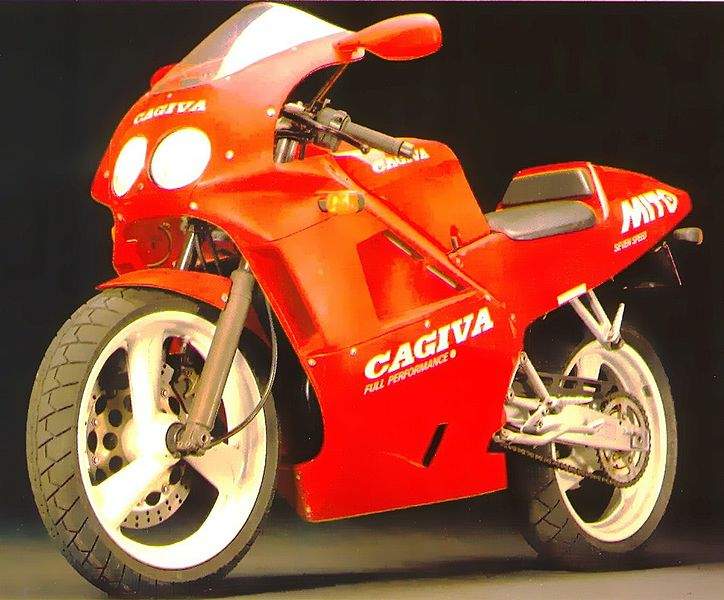
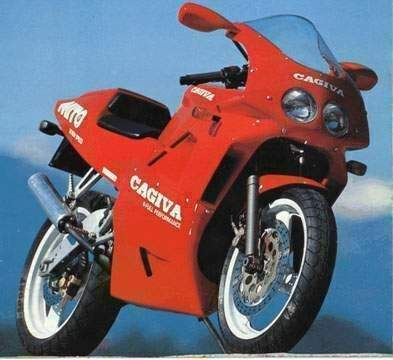
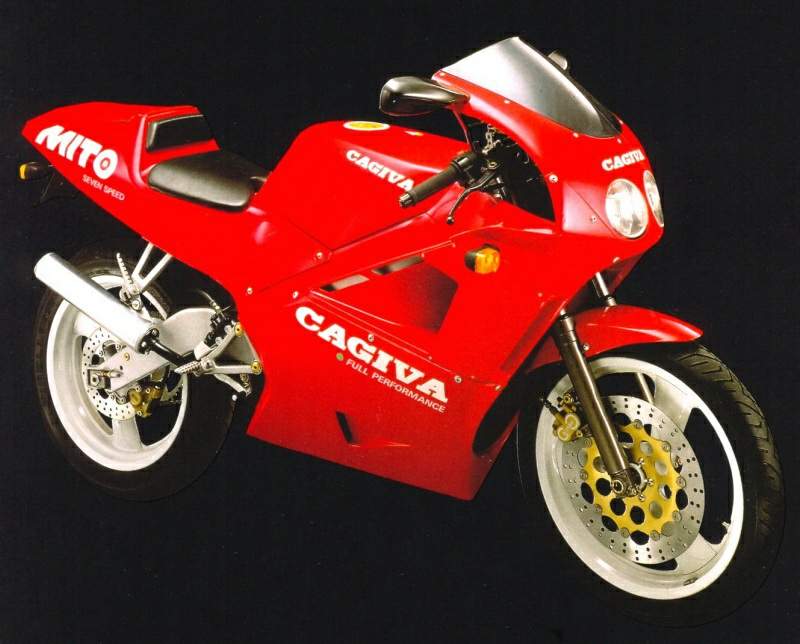
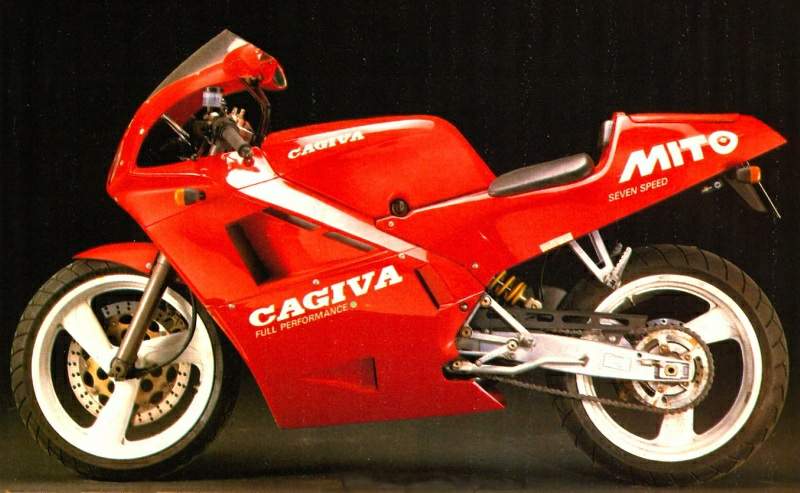
Cagiva Mito I25
Submitted May 18, 1990 in the frame of the Nations
Grand Prix in Misano Adriatico and marketed from June, the Cagiva Mito, excuse
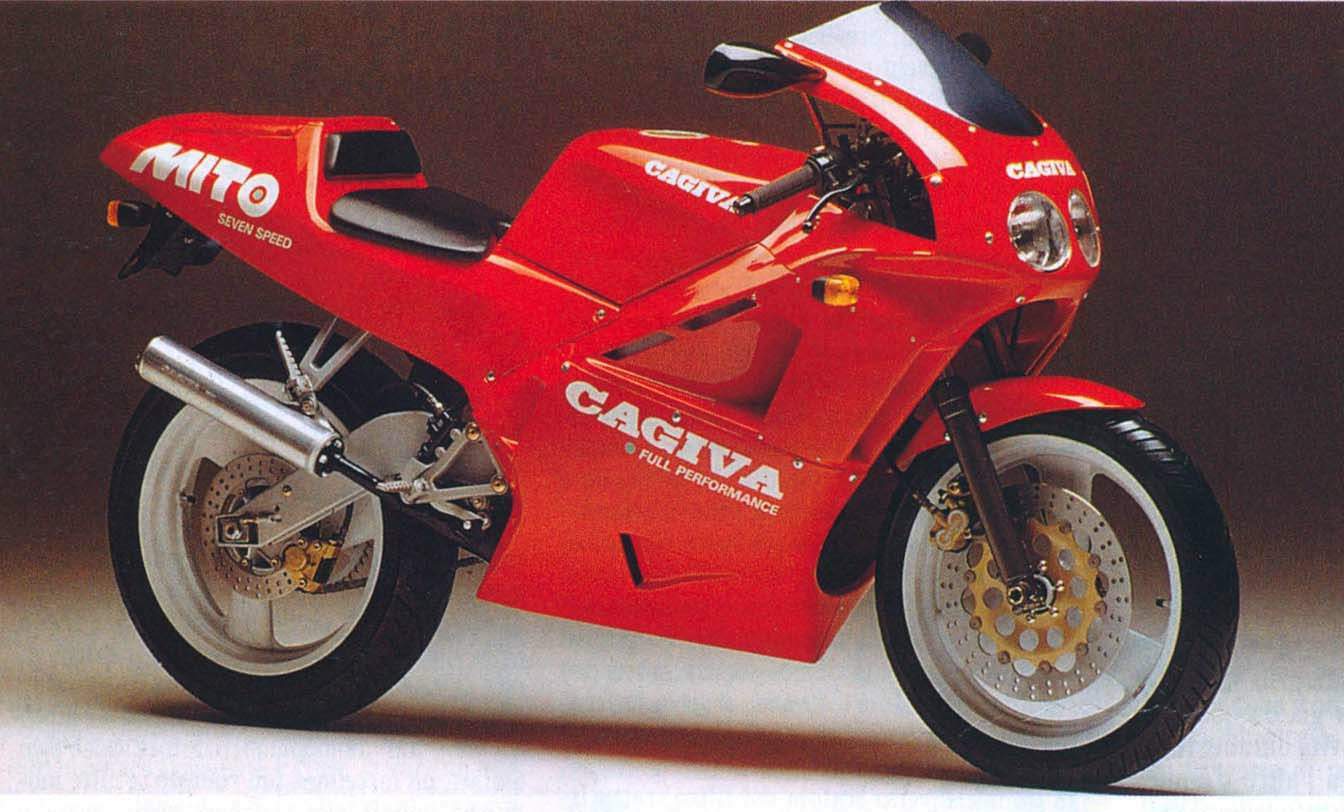
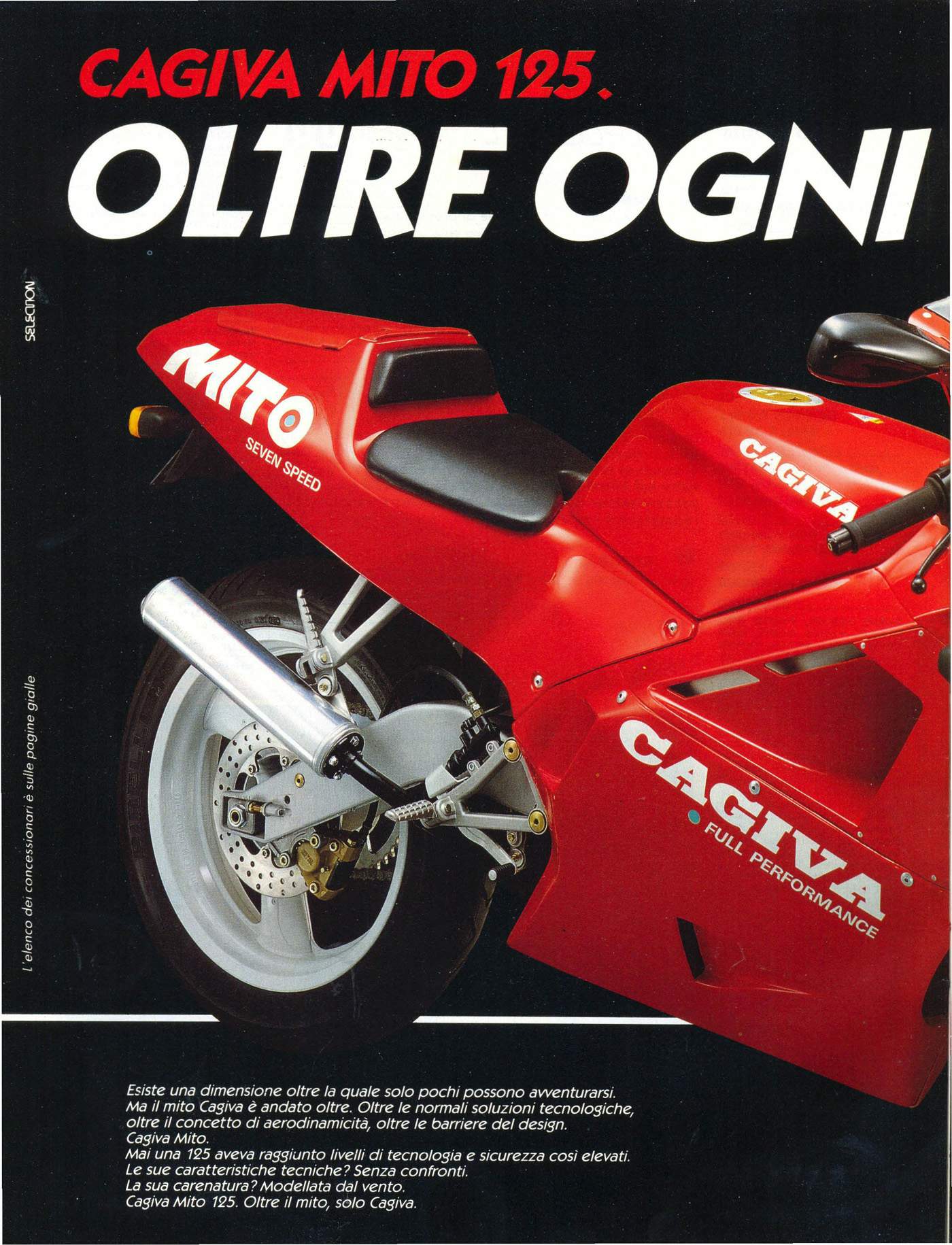
the pun, a real myth. Aprilia and Cagiva decide to go their own way in of naked until then had exclusive jurisdiction Honda. Aprilia presents his interpretation of the theme with the beautiful nude and classical Europe, directly inspired by a motorcycle naked 70s, and presents the Cagiva Mito, a 125, which although initially marketed without casing is directly inspired by Cagiva 500 grand prix. However, both bikes collect a commercial success only fair, although for two different reasons: if Europe is a motorcycle might taste too retro to be fully appreciated by a sixteen year old, the Myth, however, is too much racing to be free Hull. Definitely is rather misleading comparison with the NSR-IFI be far from the 125 sold more than just the absence of the hull, the real key to the success of Honda scarenata home is certainly less aggressive character and the overall approach that combines some sportiness and ease of riding with technical equipment of all respect, but at a price. If this was the winning formula of Atessa, Varese could not take a much more different: the uncompromised Myth is a thoroughbred race-inspired machines and requires experience to be taken to the limit. If Cagiva wanted to present a motion to rival the NSR-IFI could not choose a bike more 'unfit: Myth and the hull without' really like a fish out of water. Fortunately, in the autumn of 1990, the house has a beautiful version faired Varese accompanied by a kit specifically marketed to dress even the Myth previously sold without a fairing. Wanting to quote President Claudio Castiglioni "
The bikes are objects that make you dream. Have
different colors and sounds, have forms that reveal the inspiration of those who
have conceived. Sometimes these creations are real works of art engineering that
make the project artist. "With the introduction of Myth faired a myth was born.
A motion which has undergone a remarkable commercial success and although
subject to physiological changes and restlying, there are still in list after
eighteen years after its launch, confirming a bestseller among the sixteen
today.
The bike soon The headlight and turn indicators do not fit perfectly into the general lines of the bike, even if we look at many years later, we note a distant resemblance to the Triumph Speed Triple. The radiator, curved type as the motorcycle grand prix, but leans over and was particularly unpleasant to look at especially when you are riding a bike. Very different, of course, the front view of cabinet. The housing in two pieces and 'formed by the beautiful dome which conceals the view of instrumentation and optical unit and the bottom with beautiful front and side air inlets that reproduce the forms of those taken on racing cars.
The whole structure is very well planned and easy to
fit, going to work seamlessly with the tank and side panels, and then
unfortunately precluding the sight of the beautiful frame. Well-thought-even the
unusual frame Reggi-fairing that keeps the whole well-anchored. If the version
scarenata mirrors appear to be a wig and quality 'questionable Release carinate
carinated two splendid mirrors in body color are very nice and well made.
Road Test TREVOR SAT at the lights. His foot dancing on the accelerator, 2 Unlimited blurting one of their very interesting songs at 100 watts. Bass wound up, window wound down, fag on and looking good. Green light, foot down, go... But something was wrong. Instead of "happenin' sounds" his ears rang with the manic shriek of 36 wild stallions stampeding the High Street. He saw a flash of red, but it was gone before he realised what it was, leaving only blue haze and the taste of finest two-stroke. Trev felt sick, and had he known this was only 125 cubic centimetres, he probably would have been. The latest Cagiva Mito looks, sounds, smells and probably tastes more like a full blown grand prix racer than any other bike. Carbon fibre stickers may be a slightly tacky addition to what was already a great looking machine, but with them it makes its forebears, along with virtually every other bike on the road, look bland. It's a bike people can't help looking at and if you like to be noticed, this is an essential piece of hardware. As far as equipment goes it's got the lot - from banana swing-arm (once more, adorned with top quality imitation carbon fibre) to Marzocchi upside-down forks, and so much rubber you'd feel at home riding in a barbed wire G-string. I believe the Mito would have got away with a little less than a 110/70 front and the huge 150/60 rear Sportmax, but who am I to spoil the fun? Genuine carbon front mudguard and silencer can take the image even higher. As do the new-for-'93 belly pan and fake air intakes, but not the mirrors. No, these are reminiscent of sad rabbit ears usable if you stick your neck out far enough but otherwise its all armpits. And those 'Eddie' stickers would be jet washed away at the earliest convenience.
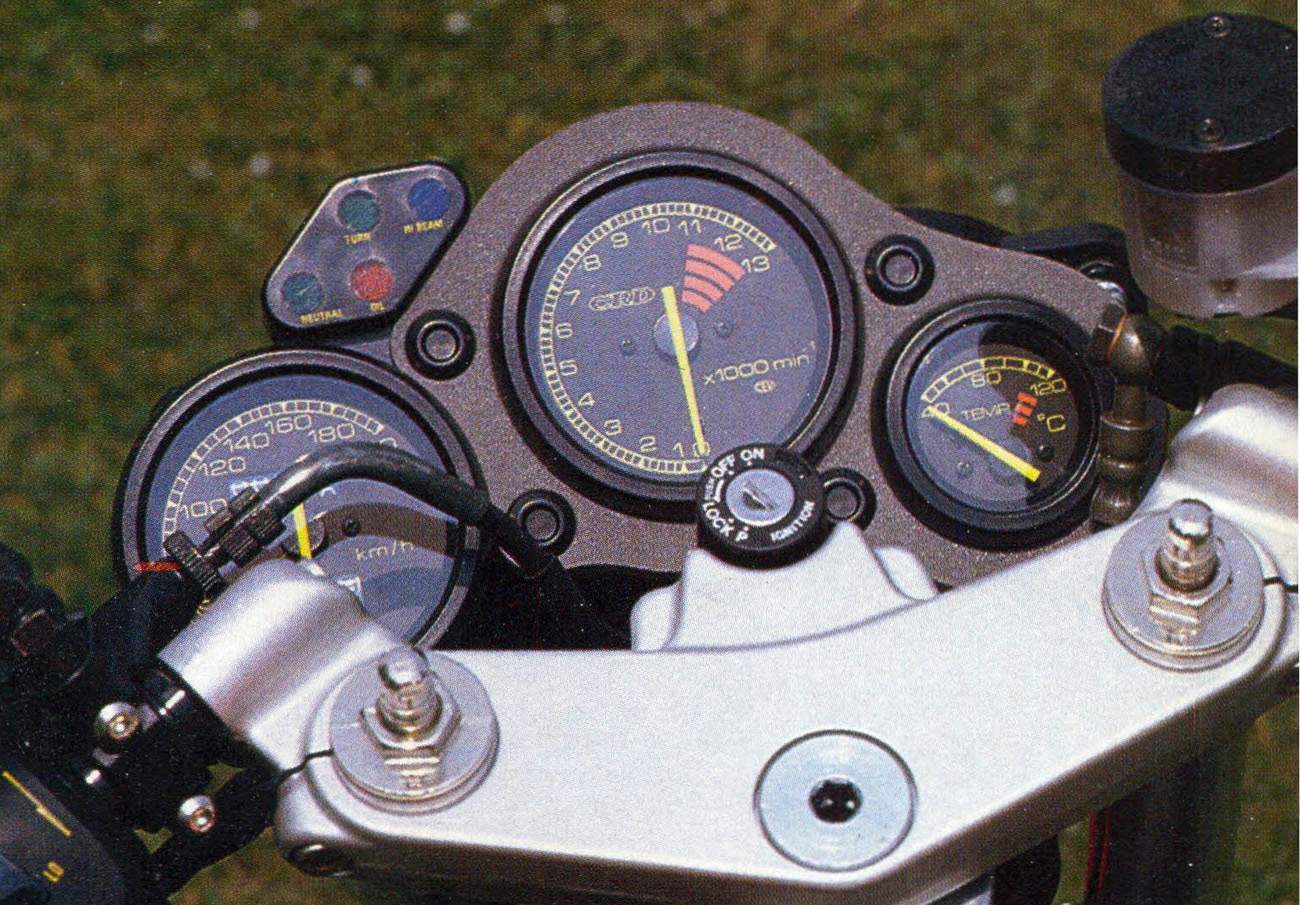
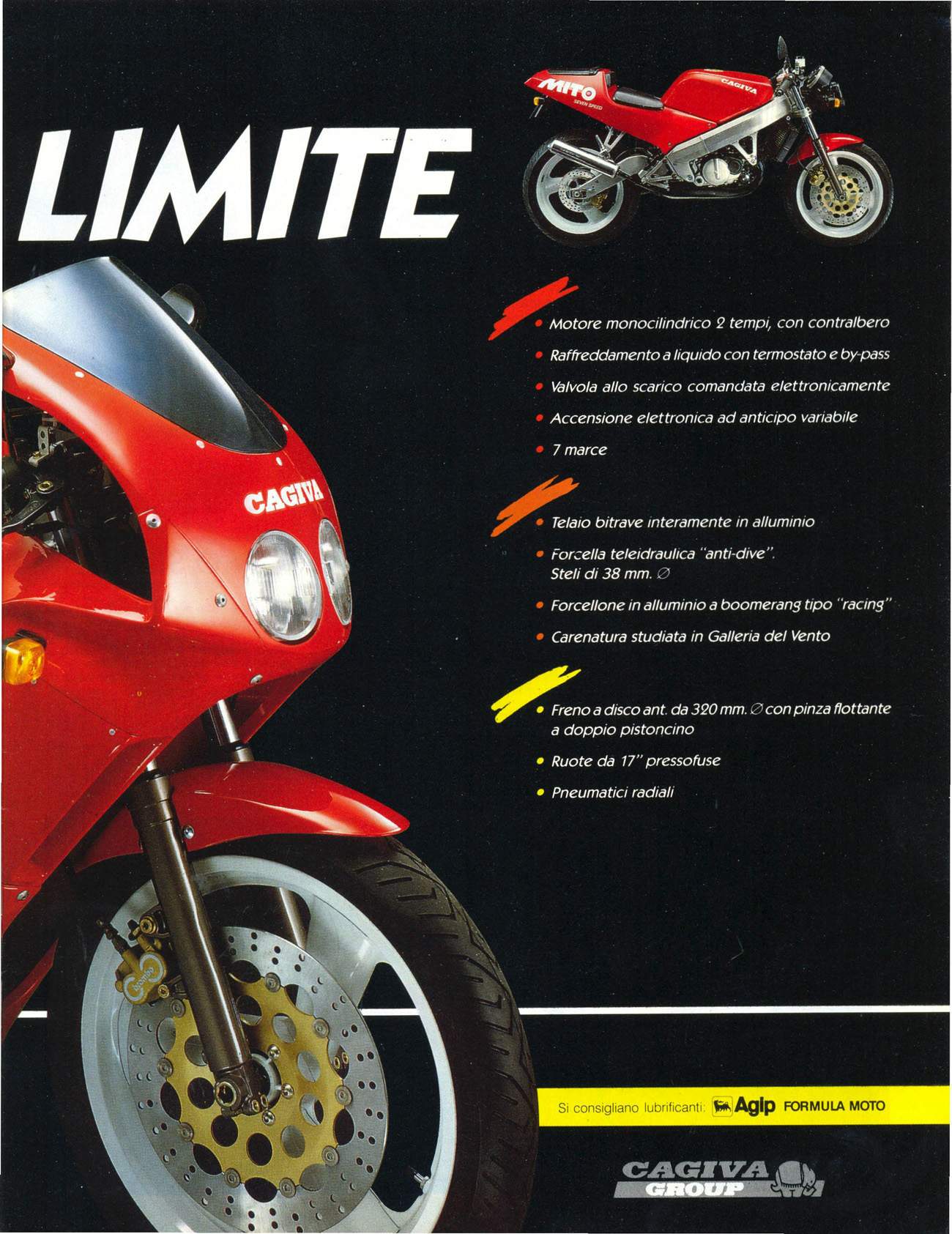
After ten minutes of confusion in search of the oil reservoir I was advised to look under the petrol tank. Pull off a rubber catch, lift the hinged tank car bonnet style and then simply gaze in awe at the wonders that lie below. An oil reservoir that can be filled cleanly without a funnel and one of the most accessible spark plugs in history. All nestle between the twin spar, aluminium, pentagonal section frame which is a joy to behold. The hexentric chain adjusters are also good: neat and tidy and the simplest I've come across. Riding the Mito is a near sexual experience. The no compromise arse up, chin down riding position is far more comfortable than you would imagine. True, your wrists get loaded, especially around town, but the seat is wide and well padded, so essential stops are probably only about every 40 miles. The Mito pulls cleanly from six, flies from nine and redlines at 11 but party time doesn't stop until way after 12. Sometimes even in seventh (yes, it has seven gears) the tacho will indicate over 12,000rpm which gives a speedo reading of llOmph. But around 9000rpm a deafening howl resonates from the exhaust. Riding in a suburban area like this would entice a multitude of fist waving old folk into a chorus of "when I was your age.. ..etc, etc". The Mito is in its element on bendy A roads. You can ride carefree for hours. Handling is good and the brakes are excellent. The single semi-floater on the front is armed with a four pot Brembo caliper and is powerful and progressive. Coupled with superb feedback from the front-end this is one of the best stoppers in the business. Head butt The back brake, on the other hand, is not. The twin caliper disc bites far too hard and locks up easily. But this is rarely used except when loaded down by a pillion. Generally, however, riding with a pillion is not really advisable. Touch the brakes and your passenger head-butts you. Squeeze harder and they lovingly push themselves into your back. Which inevitably means you slide forwards down the seat until you meet the tank. Definitely not funny. Solo, the only time I felt unsafe was on bumpy roads. The Mito's suspension is so tight that the back-end kicks like a mule, while the front-end threatens to work itself into a lock to lock tank slapper. On the one occasion I found myself wrestling with the bars it was made worse by the brake lever (non-adjustable) bashing the fairing every time the bars swung to left lock. Also, be especially careful of overlay and road seams as the Mito tracks even on white lines. Switchgear is well positioned, clocks are good and easily visible day or night and for '93 the Mito gets a new cylinder head, barrel and piston according to Cagiva it now puts out 36bhp rather than last year's 34bhp. The gear selection mechanism is also improved and it will now run on unleaded. We ran ours on leaded and the fuel return was a creditable 50mpg. Basically, this little beast is a top performer. But just imagine a Mito 250...D Source Bike Magazine
|
|
|
Any corrections or more information on these motorcycles will be kindly appreciated. |